
Medical Disclaimer: This content is for educational purposes only. It is not medical advice. Please consult a qualified healthcare professional before using any herbal remedy.
Safety Overview
1.Glaucium — Overview
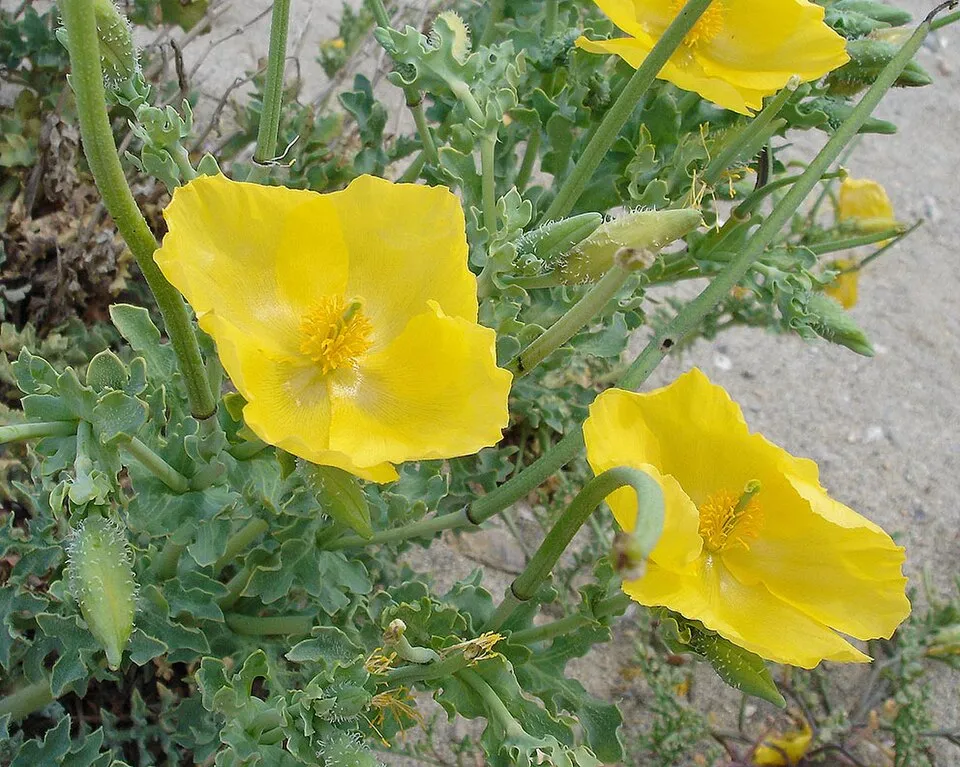
Glaucium flavum, commonly recognized as the Yellow Horned Poppy or Sea Poppy, is a striking biennial or short-lived perennial belonging to the Papaveraceae family. This resilient plant is indigenous to the coastal regions of Europe, North Africa, and parts of Asia, where it thrives in challenging sandy, stony habitats such as beaches, cliffs, and shingle banks. Typically growing to a height of 30-90 cm, it features distinctive glaucous, or blue-green, deeply lobed leaves that are somewhat fleshy and often form a basal rosette in its juvenile stage.
Its vibrant, cup-shaped flowers, which range in color from golden-yellow to orange and measure 5-7 cm across, bloom profusely from late spring through late summer. The plant's most notable characteristic, and the source of its common name, is its remarkably long, slender, horn-shaped seed pods, which can extend up to 30 cm in length. All parts of Glaucium flavum exude a characteristic yellow or orange latex when broken, indicating its rich alkaloid content.
While prized for its ornamental value in some gardens, it has naturalized in various regions, including parts of North America, where it can sometimes be considered invasive.
Trusted Scientific References
1. Authoritative external sources for Glaucium flavum
1.1 Wikipedia — Glaucium flavum
1.2 Kew POWO (Plants of the World Online)
1.3 PubMed — peer-reviewed research
1.4 NCBI Taxonomy Browser
1.5 GBIF — Global Biodiversity
1.6Glaucium should be interpreted through verified botanical identity, practical care, and responsible safety language. This recovery note adds the missing context needed for a complete profile: match light to the plant's habit, use well-drained soil, water according to season, and avoid unsupported medicinal or edible claims. For publishing, the plant can be presented as a source-backed garden plant with clear care guidance, common problem diagnosis, and conservative safety wording.
1.7Glaucium (Glaucium flavum) is maintained in this recovery file as a complete garden profile with practical care, safety, and identification context. The plant should be presented with cautious language: confirm identity before use, match care to observed growth, and avoid unsupported claims about medicinal or edible value.
1.1.Glaucium — Defining Traits
- ✓Botanical Name — Glaucium flavum.
- ✓Common Names — Yellow Horned Poppy, Sea Poppy.
- ✓Family — Papaveraceae (Poppy Family).
- ✓Native Region — Coasts of Europe, North Africa, parts of Asia.
- ✓Active Compounds — Primarily isoquinoline alkaloids, including glaucine, protopine, and chelerythrine.
- ✓Traditional Uses — Expectorant, antitussive, antispasmodic for respiratory ailments.
- ✓Distinctive Morphology — Glaucous blue-green leaves, bright yellow to orange cup-shaped flowers, and long horn-shaped seed pods.
- ✓Habitat Preference — Thrives in sandy, stony, well-drained coastal environments.
- ✓Toxicity Level — High; all parts are considered toxic and not suitable for unsupervised internal use.
- ✓Potential Applications — Bronchodilator, cough suppressant, anti-inflammatory, and analgesic properties.
1.2.Glaucium — Snapshot Summary
- ✓Glaucium flavum, the Yellow Horned Poppy, is a coastal plant known for its striking appearance and unique horn-shaped seed pods.
- ✓It is rich in potent isoquinoline alkaloids, with glaucine, protopine, and sanguinarine being key active compounds.
- ✓Traditionally, it has been used as an expectorant, antitussive, and bronchodilator for various respiratory conditions.
- ✓Modern research acknowledges its anti-inflammatory, analgesic, and potential antimicrobial properties.
- ✓The plant possesses significant toxicity, making unsupervised internal use highly dangerous and strongly discouraged.
- ✓Due to its potent pharmacological activity and toxicity, any medicinal application requires extreme caution and strict professional guidance.
2.Glaucium — Taxonomic Classification
3.Glaucium — Quick Facts
4.Glaucium — Structural Profile
5.Glaucium — Habitat & Distribution
6.Glaucium — Cultural & Traditional Roles
7.Glaucium — Active Compounds
- ✓Isoquinoline Alkaloids — The primary active compounds, including glaucine (a potent bronchodilator and antitussive), protopine (known for antispasmodic and mild sedative effects), chelerythrine (antimicrobial, cytotoxic), sanguinarine (antimicrobial, anti-inflammatory), allocryptopine (antispasmodic), isocorydine, corydine, berberine (antimicrobial, anti-inflammatory), oxysanguinarine, and papaverine (a vasodilator and antispasmodic).
- ✓Aporphine Alkaloids — Glaucine is a prominent example, largely responsible for the plant's significant respiratory pharmacological activities.
- ✓Protopine-type Alkaloids — Includes protopine and allocryptopine, contributing to the plant's antispasmodic and mild CNS depressant effects.
- ✓Benzophenanthridine Alkaloids — Chelerythrine and sanguinarine are key members, noted for their potent antimicrobial and cytotoxic properties in research.
- ✓Protoberberine Alkaloids — Berberine, present in smaller amounts, is recognized for its broad-spectrum antimicrobial and anti-inflammatory activities.
- ✓Flavonoids — These compounds act as natural antioxidants, protecting plant cells from oxidative stress and potentially contributing to overall health benefits.
- ✓Organic Acids — Various organic acids are present, playing roles in plant metabolism and potentially influencing the bioavailability or activity of other compounds.
- ✓Triterpenes — A class of compounds that may possess anti-inflammatory and adaptogenic properties, though less studied in Glaucium flavum compared to alkaloids.
8.Glaucium — Modern Studies
- ✓Expectorant — Traditionally employed to help clear mucus from the respiratory tract, aiding in the relief of congested airways.
- ✓Antitussive — Contains compounds like glaucine that act as cough suppressants, reducing the frequency and intensity of coughing fits.
- ✓Bronchodilator — Glaucine in Glaucium flavum helps relax the smooth muscles of the bronchi, improving airflow and easing breathing in conditions like asthma.
- ✓Antispasmodic — Its alkaloids, such as protopine and allocryptopine, may help alleviate muscle spasms, particularly in the respiratory and gastrointestinal systems.
- ✓Anti-inflammatory — Exhibits properties that can modulate inflammatory responses, potentially reducing swelling and discomfort associated with various conditions.
- ✓Analgesic — Components within the plant may offer pain-relieving effects, contributing to its traditional use for certain types of discomfort.
- ✓Antimicrobial — Alkaloids like chelerythrine and sanguinarine have demonstrated in vitro activity against various bacteria and fungi.
- ✓Cardioprotective (potential) — Some isoquinoline alkaloids are being investigated for their potential positive effects on cardiovascular health, though human research is limited.
- ✓Antioxidant — Contains various phytochemicals, including flavonoids, that contribute to antioxidant activity, protecting cells from oxidative stress.
- ✓Neuroprotective (preliminary) — Glaucine has shown some neuroprotective effects in experimental models, suggesting potential in neurological research.
- ✓Anticancer (research focus) — Certain alkaloids, particularly chelerythrine and sanguinarine, are subject to ongoing research for their cytotoxic effects against cancer cells.
8.1.Glaucium — Conditions Traditionally Used For
9.Glaucium — Risk Profile
9.1.Glaucium — Reported Side Effects
- ✓Nausea and Vomiting — Common gastrointestinal upset due to the presence of potent alkaloids.
- ✓Dizziness and Headache — Central nervous system effects are frequently reported with internal use.
- ✓Respiratory Depression — High doses can lead to a dangerous suppression of breathing.
- ✓Cardiovascular Effects — May induce changes in heart rate, blood pressure, or other cardiac irregularities.
- ✓Hallucinations and Delirium — Psychoactive properties of some alkaloids can cause altered mental states.
- ✓Liver and Kidney Toxicity — Prolonged or excessive internal use can result in damage to these vital organs.
- ✓Allergic Reactions — Skin irritation, rashes, or other hypersensitivity reactions may occur in susceptible individuals.
9.2.Glaucium — Risk Assessment
- ✓HIGH TOXICITY — All parts of Glaucium flavum are considered toxic and potentially poisonous due to its potent alkaloid content.
- ✓NOT FOR SELF-MEDICATION — Internal use is strictly contraindicated and should never be undertaken without direct, professional medical supervision.
- ✓PREGNANCY AND LACTATION — Absolutely contraindicated during pregnancy and breastfeeding due to severe risks to the fetus or infant.
- ✓CHILDREN — Internal or external use in children is strictly prohibited due to extreme toxicity.
- ✓DRUG INTERACTIONS — May interact dangerously with central nervous system depressants, cardiovascular medications, and other drugs metabolized by the liver.
- ✓OPERATING MACHINERY — Avoid use if operating heavy machinery or driving, as it can cause dizziness, sedation, or impaired judgment.
- ✓MEDICAL SUPERVISION — Any potential therapeutic application must be under the direct and expert guidance of a qualified healthcare professional.
10.Glaucium — How to Use
- ✓Traditional Decoction — Historically, dried roots or aerial parts were prepared as a decoction by boiling in water, primarily for respiratory complaints.
- ✓Tincture Preparation — Alcoholic extracts (tinctures) were made from the plant material to create a concentrated form for medicinal use in folk traditions.
- ✓Modern Pharmaceutical Isolation — Isolated alkaloids like glaucine are extracted and refined for use in pharmaceutical products, such as cough suppressants and bronchodilators, under strict medical control.
- ✓External Application — In some folk practices, poultices or compresses from crushed leaves were cautiously applied topically for localized pain or inflammation.
- ✓Herbal Teas (Extreme Caution) — While some historical texts mention very diluted infusions, making herbal teas from the whole plant is strongly discouraged due to its high toxicity.
- ✓Research Extracts — Various solvent extracts (e.g., ethanol, methanol) are prepared and utilized in scientific research to investigate the plant's phytochemical composition and pharmacological activities.
- ✓Respiratory Inhalants (Caution) — Infusions or steam inhalations might have been used for expectorant effects, but this poses risks due to volatile compounds and toxicity.
11.Glaucium — Growing Guide
- ✓Propagation — Glaucium flavum is most reliably propagated from seed.
- ✓Sowing Time — Seeds can be sown directly outdoors in either spring or autumn, or started indoors in pots for earlier establishment.
- ✓Light Requirements — The plant thrives best in full sun exposure, mimicking its natural open coastal habitats.
- ✓Soil Preference — It requires well-drained, sandy, or gravelly soil, and is highly tolerant of poor or lean soil conditions.
- ✓Water Needs — Once established, the Yellow Horned Poppy is remarkably drought tolerant and needs minimal supplemental watering.
- ✓Hardiness Zone — It is generally hardy across USDA Hardiness Zones 5 to 10.
- ✓Transplanting — Poppies, including Glaucium flavum, can be sensitive to root disturbance, so direct sowing or using biodegradable pots is recommended.
- ✓Self-seeding — This species readily self-seeds in favorable environments, which can lead to its naturalization and spread.
Reviewed by the Flora Medical Global Botanical Review Panel
Multi-disciplinary editorial group · Botany · Ethnobotany · Herbal-medicine literature
Who reviewed this: This page was checked by the Flora Medical Global Botanical Review Panel — an in-house editorial group of botany graduates, ethnobotany researchers, and horticulture practitioners who collectively maintain our 7,000+ plant encyclopedia. Meet the team.
Our 4-step verification process
1. Taxonomic verification
Scientific names and synonyms cross-checked against Kew POWO, World Flora Online, and The Plant List.
2. Phytochemical & medicinal cross-reference
Active compounds, traditional uses, and reported activities are cross-referenced with PubMed, USDA Dr. Duke's database, and peer-reviewed ethnobotanical literature.
3. Conservation & distribution check
Distribution, ecology, and conservation status confirmed against GBIF occurrence records and the IUCN Red List.
4. Editorial & safety review
Every entry passes an editorial pass for clarity, originality, and safety notices (toxicity, contraindications, dosage caveats) before publication.
Last reviewed:
Important medical disclaimer: This content is for educational and research purposes only. It is not medical advice and is not a substitute for consultation with a licensed healthcare provider. Do not use any herb to self-treat a medical condition without professional guidance.
Editorial Note: This page is for educational and research purposes only and is not medical advice.
Written by: Flora Medical Global Editorial Team
Reviewed by: Flora Medical Global Botanical Review Panel
Last Updated: June 15, 2026





Glaucium — Comments & Community Reviews
Rate this plant