


Medical Disclaimer: This content is for educational purposes only. It is not medical advice. Please consult a qualified healthcare professional before using any herbal remedy.
Safety Overview
1.Gleditsia Triacanthos — Essential Profile
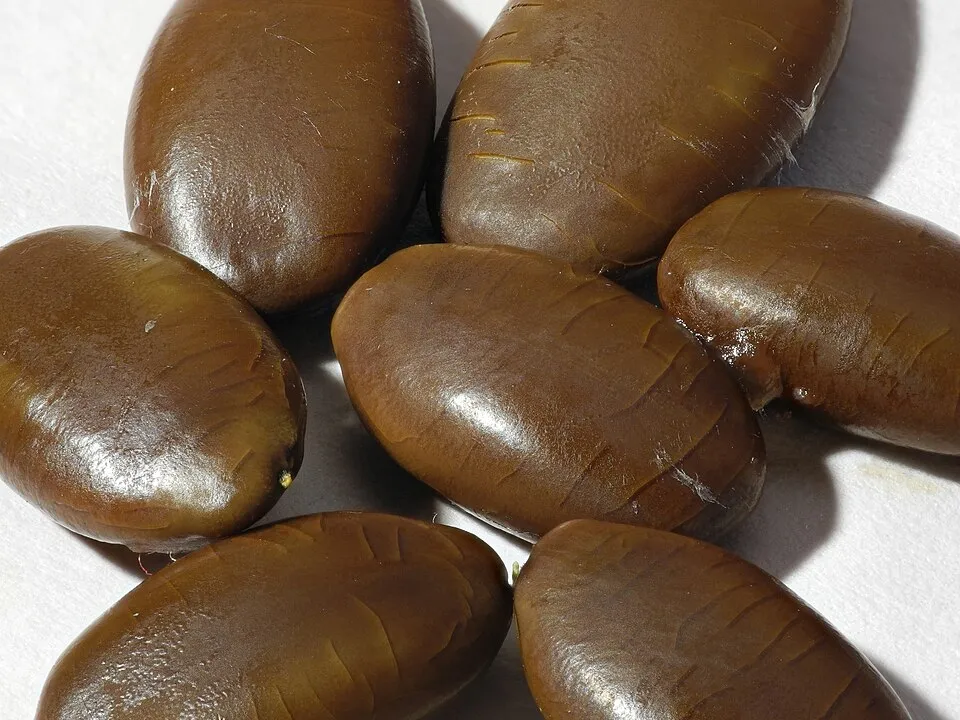
Gleditsia triacanthos, commonly known as the Honey Locust, is a distinctive, fast-growing deciduous tree belonging to the Fabaceae family, native to the central and eastern regions of North America. This robust species is characterized by its broad, open crown and delicate, fern-like bipinnately compound leaves that emerge a vibrant yellow-green in spring, maturing to a light green before turning golden in autumn. A prominent feature of the wild type is its formidable, sharp, often branched thorns, which can grow in clusters on the trunk and branches, although numerous thornless cultivars (Gleditsia triacanthos var.
inermis) are widely cultivated for landscaping. The tree produces elongated, flattened seed pods, up to 18 inches long, which ripen to a dark brown or purplish-black, containing a sweet, sticky pulp surrounding the seeds. This sweet pulp is responsible for its 'honey' appellation and serves as a food source for various wildlife.
Honey Locust demonstrates remarkable adaptability, thriving in a wide array of soil types, including poor, compacted, and alkaline conditions, and exhibiting high tolerance to drought, urban pollution, and salt, making it a popular choice for street planting, parks, and large garden landscapes where it provides dappled shade.
Trusted Scientific References
1. Authoritative external sources for Gleditsia triacanthos
1.1 Wikipedia — Gleditsia triacanthos
1.2 Kew POWO (Plants of the World Online)
1.3 PubMed — peer-reviewed research
1.4 NCBI Taxonomy Browser
1.5 GBIF — Global Biodiversity
1.6Gleditsia Triacanthos should be interpreted through verified botanical identity, practical care, and responsible safety language. This recovery note adds the missing context needed for a complete profile: match light to the plant's habit, use well-drained soil, water according to season, and avoid unsupported medicinal or edible claims. For publishing, the plant can be presented as a source-backed garden plant with clear care guidance, common problem diagnosis, and conservative safety wording.
1.1.Gleditsia Triacanthos — Highlights
- ✓Deciduous tree native — Deciduous tree native to central and eastern North America.
- ✓Characterized by long, — Characterized by long, sharp, often branched thorns (thornless varieties exist).
- ✓Produces elongated, flattened — Produces elongated, flattened seed pods containing sweet, sticky pulp.
- ✓Highly adaptable to — Highly adaptable to various soil types, drought, and urban conditions.
- ✓Fast — growing, reaching significant heights and providing dappled shade.
- ✓Historically utilized by — Historically utilized by Native American tribes for food and folk remedies.
- ✓Contains a range — Contains a range of bioactive compounds, including flavonoids and triterpenoids.
- ✓Seeds are a — Seeds are a source of protein but contain saponins requiring detoxification.
- ✓Offers ecological benefits — Offers ecological benefits as a food source for wildlife.
- ✓Limited modern clinical — Limited modern clinical evidence supports its medicinal efficacy; primarily traditional use.
1.2.Gleditsia Triacanthos — Snapshot Summary
- ✓Gleditsia triacanthos, or Honey Locust, is a resilient North American native tree known for its thorns and sweet seed pods.
- ✓Traditionally valued by Native Americans for its mild laxative pod pulp and bark's astringent properties.
- ✓Rich in bioactive compounds like flavonoids and triterpenoids, offering antioxidant and potential anti-inflammatory benefits.
- ✓Raw seeds contain toxic saponins, requiring careful processing; internal medicinal use is not recommended without expert guidance.
- ✓Highly adaptable and drought-tolerant, it is a popular choice for urban landscaping, providing filtered shade.
- ✓Modern research continues to investigate its phytochemistry and potential pharmacological activities.
2.Gleditsia Triacanthos — Scientific Identity
3.Gleditsia Triacanthos — Vital Statistics
4.Gleditsia Triacanthos — Botanical Description
5.Gleditsia Triacanthos — Ecological Habitat
6.Gleditsia Triacanthos — Traditional Uses
7.Gleditsia Triacanthos — Chemical Profile
- ✓Flavonoids — Key compounds such as quercetin, kaempferol, and their glycosides are present, contributing to the plant's antioxidant and anti-inflammatory activities.
- ✓Triterpenoids — Saponins are notably found in the seeds, and other triterpenoid derivatives, including oleanolic acid, are present in the bark, offering potential anti-inflammatory and cytotoxic effects.
- ✓Phenolic Compounds — A diverse group including tannins (e.g., gallic acid, ellagic acid) contributes to the plant's astringent, antioxidant, and potential antimicrobial properties, particularly in the bark and leaves.
- ✓Sugars — The pod pulp is rich in simple sugars such as fructose and glucose, which impart its characteristic sweetness and contribute to its mild laxative action.
- ✓Polysaccharides — Mucilaginous polysaccharides found in the pods contribute to their texture and potential mild bulk-forming laxative effect.
- ✓Amino Acids — The seeds contain various amino acids, making them a potential protein source after proper processing.
- ✓Fatty Acids — Seeds also contain essential fatty acids, contributing to their nutritional profile.
- ✓Alkaloids — Minor quantities of various alkaloids have been reported, though their specific pharmacological roles are not well-defined.
- ✓Plant Sterols — Phytosterols are present as general plant constituents, contributing to overall plant physiology.
8.Gleditsia Triacanthos — Evidence-Based Benefits
- ✓Mild Laxative — The sweet, mucilaginous pulp within the mature seed pods has been traditionally consumed to alleviate mild constipation due to its natural sugar and fiber content.
- ✓Astringent Properties — Historically, the bark has been used in folk remedies for its astringent qualities, which can help to constrict tissues and reduce secretions, particularly in external applications.
- ✓Anti-inflammatory Potential — Traditional uses suggest the bark possesses anti-inflammatory effects, with modern research exploring triterpenoids and flavonoids as potential active compounds.
- ✓Antioxidant Activity — Extracts from leaves and bark, rich in flavonoids and phenolic compounds, exhibit significant antioxidant activity, helping to neutralize free radicals and reduce oxidative stress.
- ✓Wound Healing Support — Due to its traditional astringent and potential antimicrobial properties, poultices made from the bark or leaves were historically applied to minor wounds and skin irritations to aid healing.
- ✓Antimicrobial Effects — Preliminary in vitro studies indicate that various extracts of Gleditsia triacanthos may possess antimicrobial properties against certain bacterial and fungal strains.
- ✓Blood Sugar Modulation — Some research suggests certain compounds, particularly saponins found in the seeds, might have a role in modulating blood sugar levels, though this is highly preliminary and requires extensive validation.
- ✓Traditional Febrifuge — In some traditional systems, preparations from the Honey Locust were used to help reduce fever, possibly due to its general anti-inflammatory actions.
- ✓Nutritional Source — Historically, the sweet pulp of the pods was a minor food source and natural sweetener, while the processed seeds provided protein.
8.1.Gleditsia Triacanthos — Health Applications
9.Gleditsia Triacanthos — Cautions & Contraindications
9.1.Gleditsia Triacanthos — Caution Notes
- ✓Gastrointestinal Upset — Ingesting large quantities of raw pod pulp or improperly processed seeds can lead to nausea, vomiting, abdominal discomfort, and diarrhea.
- ✓Saponin Toxicity — Raw Honey Locust seeds contain saponins, which are toxic and can cause hemolytic effects and gastrointestinal distress if consumed without proper detoxification.
- ✓Allergic Reactions — Sensitive individuals may experience allergic skin reactions or respiratory symptoms upon contact with pollen or plant parts.
- ✓Photosensitivity — Some plant compounds could theoretically induce photosensitivity in susceptible individuals when exposed to sunlight.
- ✓Drug Interactions — Due to the presence of bioactive compounds, there is a theoretical risk of interaction with medications, particularly blood thinners or diabetes drugs, though not clinically established.
- ✓Physical Injury — The sharp thorns on the wild type of the tree pose a significant risk of cuts and punctures, which can lead to infection.
- ✓Internal Use Risk — Lack of standardized dosages and potential toxicity means internal self-medication is strongly discouraged and carries inherent risks.
9.2.Gleditsia Triacanthos — Clinical Safety Notes
- ✓Expert Consultation — Always seek advice from a qualified medical or herbal health professional before using Gleditsia triacanthos for any medicinal purpose.
- ✓Pregnancy & Lactation — Due to insufficient safety data and the presence of potentially active compounds, use during pregnancy and lactation is strictly contraindicated.
- ✓Children — Not recommended for use in children due to lack of safety studies and potential for adverse effects.
- ✓Unprocessed Seeds — Raw, unprocessed seeds are toxic due to saponin content and must never be ingested; proper detoxification methods are essential if considering consumption.
- ✓External Use Caution — While bark and leaf preparations are traditionally used externally, patch testing is advisable to check for skin sensitivity or allergic reactions.
- ✓Dosage & Standardization — There are no established safe or effective medicinal dosages for Honey Locust; avoid self-medication.
- ✓Thorn Hazard — Exercise caution around thorny varieties to prevent physical injury; thornless cultivars are safer for public and home landscapes.
10.Gleditsia Triacanthos — Preparation Methods
- ✓Pod Pulp Consumption — The sweet, sticky pulp from mature pods can be consumed raw as a natural sweetener or a mild laxative, historically used by Native American tribes.
- ✓Bark Decoction — A decoction of the bark is traditionally prepared by simmering in water and used externally as an astringent wash for skin irritations or minor wounds.
- ✓Seed Preparation — Raw seeds are toxic; after proper processing (e.g., roasting, boiling, or leaching to remove saponins), they can be ground into a flour or consumed as a protein source.
- ✓Leaf Infusion — Less common, but a mild infusion of the leaves has been used in some folk traditions for various minor ailments, though internal use should be approached with extreme caution.
- ✓External Poultice — Crushed fresh bark or leaves can be applied as a poultice to areas of inflammation or minor injuries, leveraging its traditional astringent and anti-inflammatory properties.
- ✓Culinary Additive — Historically, the sweet pod pulp was used as a famine food or to sweeten other dishes, while processed seeds were a source of nutrition.
- ✓Research Extracts — For scientific study, various extracts (e.g., aqueous, ethanolic) are prepared from different plant parts to isolate and investigate bioactive compounds.
11.Gleditsia Triacanthos — Garden Cultivation
- ✓Climate & Hardiness — Honey Locust thrives in USDA Hardiness Zones 3-9, demonstrating exceptional tolerance to a broad range of climatic conditions.
- ✓Light Requirements — Requires full sun exposure, meaning at least six hours of direct sunlight daily, to ensure optimal growth and health.
- ✓Soil Preference — Highly adaptable, it grows well in various soil types including loamy, sandy, clay, or silt, and tolerates acidic, neutral, or alkaline pH levels, as well as compacted or salty soils.
- ✓Watering — While drought-tolerant once established, newly planted trees benefit from consistent, deep watering for their first year; mature trees generally require minimal supplemental irrigation.
- ✓Propagation — Can be propagated from seed, which often requires scarification to break dormancy, or from cuttings, particularly for thornless cultivars which are typically grafted.
- ✓Fertilization — Young trees may benefit from a balanced granular or liquid fertilizer (e.g., 10-10-10) in their early years; mature trees in healthy soil rarely need additional fertilization.
- ✓Pruning — Minimal pruning is needed for mature trees, primarily for removing dead, diseased, or crossing branches; young trees can be pruned to establish a desirable shape and open canopy.
- ✓Pests & Diseases — Generally resilient, but can be susceptible to pests like spider mites and webworms, and diseases such as cankers and root collar rot, especially in stressed conditions.
Reviewed by the Flora Medical Global Botanical Review Panel
Multi-disciplinary editorial group · Botany · Ethnobotany · Herbal-medicine literature
Who reviewed this: This page was checked by the Flora Medical Global Botanical Review Panel — an in-house editorial group of botany graduates, ethnobotany researchers, and horticulture practitioners who collectively maintain our 7,000+ plant encyclopedia. Meet the team.
Our 4-step verification process
1. Taxonomic verification
Scientific names and synonyms cross-checked against Kew POWO, World Flora Online, and The Plant List.
2. Phytochemical & medicinal cross-reference
Active compounds, traditional uses, and reported activities are cross-referenced with PubMed, USDA Dr. Duke's database, and peer-reviewed ethnobotanical literature.
3. Conservation & distribution check
Distribution, ecology, and conservation status confirmed against GBIF occurrence records and the IUCN Red List.
4. Editorial & safety review
Every entry passes an editorial pass for clarity, originality, and safety notices (toxicity, contraindications, dosage caveats) before publication.
Last reviewed:
Important medical disclaimer: This content is for educational and research purposes only. It is not medical advice and is not a substitute for consultation with a licensed healthcare provider. Do not use any herb to self-treat a medical condition without professional guidance.
Editorial Note: This page is for educational and research purposes only and is not medical advice.
Written by: Flora Medical Global Editorial Team
Reviewed by: Flora Medical Global Botanical Review Panel
Last Updated: June 15, 2026





Gleditsia Triacanthos — Comments & Community Reviews
Rate this plant