


Medical Disclaimer: This content is for educational purposes only. It is not medical advice. Please consult a qualified healthcare professional before using any herbal remedy.
Safety Overview
1.Graptopetalum Paraguayense — Introduction & Highlights
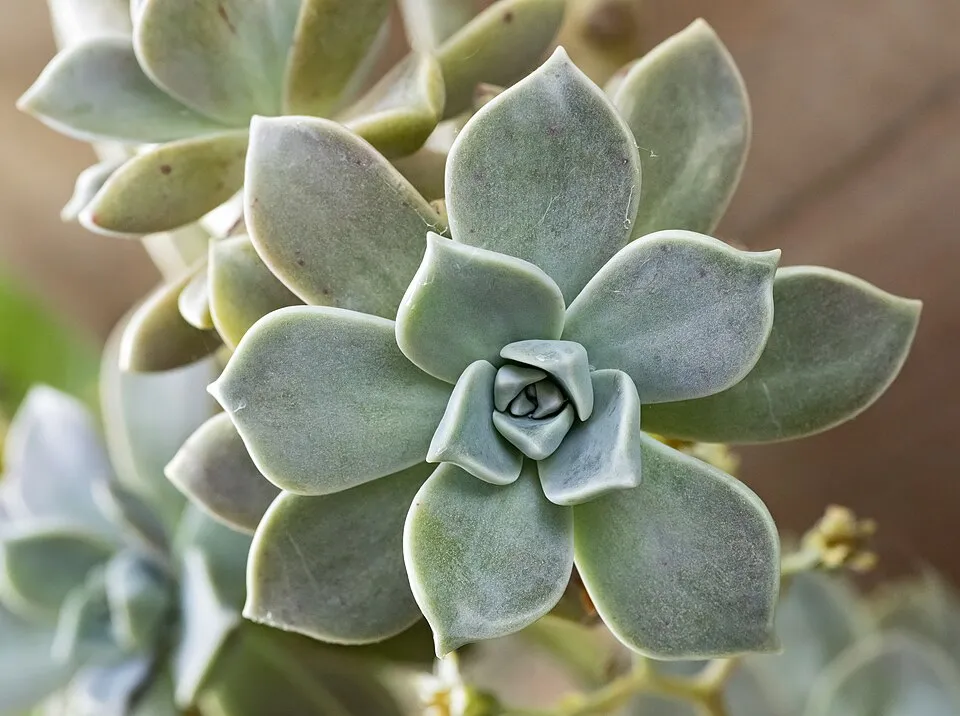
Graptopetalum paraguayense, widely recognized as the Ghost Plant or Mother of Pearl, is an exquisite succulent species belonging to the Crassulaceae family. This resilient perennial typically forms compact rosettes of fleshy leaves at the tips of its stems, often reaching an overall spread of 3 to 6 inches across and growing up to 1 foot in height with a sprawling width of 2 to 3 feet as its stems mature and become pendulous, gracefully cascading over edges. The distinctive leaves are obovate to spatulate, approximately 3 inches long and 2 inches wide, characterized by a thick, waxy surface and a pointed tip.
Their coloration is remarkably dynamic, ranging from a pale, almost ghostly whitish-green or bluish-gray in partial shade to striking shades of pink, peach, or lavender when exposed to intense sunlight or dry, hot conditions. This chameleon-like pigmentation is a key aesthetic feature. In late spring to early summer, slender stalks emerge, bearing delicate, star-shaped flowers, typically white with subtle red dots, adding to its ornamental appeal.
The plant's stems, while not woody, develop a grayish hue at the base, indicative of its succulent nature. Indigenous to the arid, rocky terrains of Mexico, particularly within regions like the Sierra Madre Oriental, Graptopetalum paraguayense is exceptionally adapted to low-water environments, making it a favored choice for xeriscaping, rock gardens, containers, and as an adaptable houseplant. Its ability to thrive in harsh conditions underscores its robust nature and ease of cultivation.
Trusted Scientific References
1. Authoritative external sources for Graptopetalum paraguayense
1.1 Wikipedia — Graptopetalum paraguayense
1.2 Kew POWO (Plants of the World Online)
1.3 PubMed — peer-reviewed research
1.4 NCBI Taxonomy Browser
1.5 GBIF — Global Biodiversity
1.6Graptopetalum Paraguayense should be interpreted through verified botanical identity, practical care, and responsible safety language. This recovery note adds the missing context needed for a complete profile: match light to the plant's habit, use well-drained soil, water according to season, and avoid unsupported medicinal or edible claims. For publishing, the plant can be presented as a source-backed indoor plant with clear care guidance, common problem diagnosis, and conservative safety wording.
1.1.Graptopetalum Paraguayense — Defining Traits
- ✓Succulent Perennial — A resilient, long-lived plant adapted to arid conditions.
- ✓Color — Changing Foliage — Leaves shift from pale green/blue to pink/peach/lavender in sunlight.
- ✓Rosette Growth Habit — Forms attractive, symmetrical rosettes of fleshy leaves.
- ✓Drought Tolerant — Requires minimal watering once established, ideal for xeriscaping.
- ✓Low Maintenance — Easy to care for, making it suitable for beginners and busy gardeners.
- ✓Native to Mexico — Thrives in rocky, dry environments in its natural habitat.
- ✓Ornamental Value — Highly prized for its unique aesthetics in gardens and containers.
- ✓Traditional Medicinal Use — Valued in folk medicine for topical healing and soothing properties.
- ✓Non — Toxic for Pets — Safe to have around common household animals.
- ✓Easy Propagation — Readily reproduces from leaf or stem cuttings.
1.2.Graptopetalum Paraguayense — Snapshot Summary
- ✓Graptopetalum paraguayense is an ornamental succulent known as Ghost Plant or Mother of Pearl.
- ✓Traditionally used topically in Mexican folk medicine for wound healing, antibacterial, and mild analgesic properties.
- ✓Features distinctive pale, fleshy rosettes that change color with sun exposure.
- ✓Easily cultivated as a low-maintenance, drought-tolerant houseplant or garden specimen.
- ✓Contains beneficial compounds like flavonoids, mucilage, and tannins supporting its traditional uses.
- ✓Primarily recommended for external applications; scientific research on medicinal efficacy is ongoing.
2.Graptopetalum Paraguayense — Systematic Position
3.Graptopetalum Paraguayense — Botanical Stats
4.Graptopetalum Paraguayense — Morphological Account
5.Graptopetalum Paraguayense — Where It Grows
6.Graptopetalum Paraguayense — Ethnobotanical Uses
7.Graptopetalum Paraguayense — Bioactive Constituents
- ✓Flavonoids — These potent plant pigments, such as quercetin and kaempferol derivatives, are known for their significant antioxidant, anti-inflammatory, and antimicrobial activities, contributing to the plant's protective and healing properties.
- ✓Polysaccharides/Mucilage — The succulent leaves are rich in complex carbohydrates and mucilaginous compounds, which provide emollient, hydrating, and wound-healing benefits by forming a protective layer and promoting cell proliferation.
- ✓Tannins — Astringent compounds that can help contract tissues, reduce inflammation, and possess antiseptic qualities, supporting the plant's traditional use in wound care and as an antimicrobial agent.
- ✓Phytosterols — Plant-derived sterols, including beta-sitosterol, are recognized for their anti-inflammatory effects and their role in supporting skin barrier function and integrity.
- ✓Organic Acids — Such as malic acid, characteristic of CAM photosynthesis, these compounds can contribute to the plant's pH balance and may possess mild antimicrobial properties.
- ✓Triterpenoids — A diverse group of compounds with potential anti-inflammatory, antimicrobial, and cytoprotective activities, often involved in plant defense mechanisms.
- ✓Saponins — These naturally occurring glycosides may exhibit mild detergent-like properties and have been investigated for potential anti-inflammatory and antimicrobial effects.
- ✓Vitamins and Minerals — The plant likely contains essential vitamins (e.g., Vitamin C, Vitamin E) and minerals (e.g., Calcium, Magnesium) crucial for cellular health and metabolic processes, contributing to overall tissue vitality.
- ✓Phenolic Acids — Compounds like caffeic acid or ferulic acid, which are common in plants, provide additional antioxidant and anti-inflammatory benefits, enhancing the plant's therapeutic potential.
- ✓Alkaloids — While generally in low concentrations in succulents, certain alkaloids might contribute to subtle pharmacological effects, such as mild analgesic properties.
8.Graptopetalum Paraguayense — Modern Studies
- ✓Antibacterial Properties — Extracts from Graptopetalum paraguayense have been traditionally applied topically to wounds, suggesting an inhibitory effect against bacterial growth, which aids in preventing infection and promoting cleaner healing.
- ✓Wound Healing Acceleration — The succulent leaves contain compounds that are believed to stimulate cellular regeneration and tissue repair, making it a traditional remedy for cuts, abrasions, and minor skin lesions.
- ✓Anti-inflammatory Action — Anecdotal evidence suggests the plant possesses mild anti-inflammatory properties, which can help reduce swelling and redness associated with minor injuries or skin irritations when applied externally.
- ✓Mild Analgesic Effects — Historically, poultices made from the plant's leaves have been used to alleviate localized discomfort and minor aches, potentially due to compounds that interact with pain pathways on the skin surface.
- ✓Emollient and Soothing Agent — The high water content and mucilaginous texture of the leaves provide a natural hydrating and soothing effect, beneficial for dry, irritated, or sun-exposed skin.
- ✓Antioxidant Support — While specific research is limited, many succulent plants contain flavonoids and other phenolic compounds that offer antioxidant protection, helping to neutralize free radicals and protect skin cells from oxidative stress.
- ✓Skin Regeneration — Beyond simple wound closure, the plant is thought to support the overall regeneration of skin cells, contributing to improved scar appearance and healthier epidermal tissue after injury.
- ✓Traditional Burn Treatment — In folk medicine, the cooling and soothing properties of Ghost Plant leaves have been utilized as a first-aid remedy for minor burns, helping to reduce pain and prevent blistering.
- ✓Insect Bite Relief — The topical application of crushed leaves or sap is reported to soothe irritation and reduce swelling from insect bites and stings, providing localized relief.
- ✓Astringent Qualities — The presence of tannins may contribute to mild astringent effects, helping to tighten tissues and potentially reduce minor bleeding from superficial cuts.
8.1.Graptopetalum Paraguayense — Therapeutic Indications
9.Graptopetalum Paraguayense — Adverse Effects
9.1.Graptopetalum Paraguayense — Reported Side Effects
- ✓Allergic Dermatitis — Some individuals may experience localized skin irritation, redness, or itching upon topical application, indicating a contact allergy.
- ✓Photosensitivity — While rare, certain plant compounds can increase skin sensitivity to sunlight, potentially leading to sunburn or rash in susceptible individuals.
- ✓Improper Ingestion — Although generally considered non-toxic for pets, internal consumption by humans is not recommended and could lead to mild gastrointestinal upset.
- ✓Cross-Contamination — Using unsterilized plant material on open wounds may introduce bacteria, leading to secondary infections.
- ✓Exacerbation of Existing Conditions — Application to severe or infected wounds without professional medical advice may worsen the condition.
- ✓Skin Discoloration — In some cases, repeated topical application of plant sap might temporarily tint the skin, though this is typically harmless.
- ✓Interaction with Medications — Theoretical risk of interaction with topical medications if applied concurrently, though specific data is lacking.
9.2.Graptopetalum Paraguayense — Safety Overview
- ✓External Use Only — Graptopetalum paraguayense is primarily intended for topical application; internal consumption is not traditionally documented or recommended.
- ✓Patch Test Recommended — Before widespread application, perform a patch test on a small, inconspicuous area of skin to check for allergic reactions.
- ✓Non-Toxic for Pets — The plant is generally considered non-toxic to common household pets like dogs, cats, and horses, as per horticultural data.
- ✓Avoid Broken Skin — While used for wounds, exercise caution on deep, profusely bleeding, or severely infected skin without medical consultation.
- ✓Pregnancy and Lactation — Due to limited research, pregnant or breastfeeding individuals should consult a healthcare professional before using the plant medicinally.
- ✓Children's Use — For use on children, always dilute preparations and supervise application, consulting a pediatrician for any significant concerns.
- ✓Consult Healthcare Professional — For chronic conditions, severe injuries, or before incorporating into a health regimen, seek advice from a qualified medical herbalist or doctor.
10.Graptopetalum Paraguayense — Application Forms
- ✓Direct Leaf Application — Gently break off a fresh, mature leaf and apply the exuding sap directly to minor cuts, scrapes, or insect bites for immediate soothing.
- ✓Poultice Preparation — Crush several fresh leaves to create a pulp, which can then be applied directly to larger wounds, burns, or inflamed areas and secured with a bandage.
- ✓Infused Salve — Macerate dried or fresh leaves in a carrier oil (like olive or coconut oil) for several weeks, then strain and combine with beeswax to create a topical healing salve.
- ✓Compress Application — Steep fresh or dried leaves in hot water, allow to cool, then soak a clean cloth in the infusion and apply as a compress to soothe irritated skin.
- ✓Juiced Extract — Carefully extract the juice from several leaves using a mortar and pestle or a juicer, then apply the fresh liquid to affected skin areas with a cotton swab.
- ✓Topical Cream Formulation — Incorporate a concentrated extract of Graptopetalum paraguayense into a base cream or lotion for broader application on dry or compromised skin.
- ✓Traditional Wound Dressing — In traditional practices, whole or split leaves were sometimes bound directly onto wounds, utilizing their natural moisture and compounds for healing.
11.Graptopetalum Paraguayense — Growth Requirements
- ✓Soil Requirement — Plant Graptopetalum paraguayense in extremely well-draining soil, ideally a succulent or cactus mix, to prevent root rot.
- ✓Light Conditions — Provide full sun to partial shade; intense direct sun enhances leaf coloration, while partial shade results in a bluer hue.
- ✓Watering Schedule — Water thoroughly but infrequently, allowing the soil to dry out completely between waterings, especially during dormant periods.
- ✓Temperature Tolerance — This hardy succulent can tolerate temperatures down to 15°F (-9°C) if protected from frost, but thrives in warmer climates.
- ✓Propagation — Easily propagated from stem cuttings, individual leaves, or by dividing established rosettes, making it simple to expand your collection.
- ✓Pruning and Maintenance — Prune leggy stems to encourage a bushier growth habit and remove spent flower stalks for aesthetic appeal and plant vigor.
- ✓Container Growing — Excellent for container gardening, where its pendulous stems can cascade attractively over the pot's edge.
Reviewed by the Flora Medical Global Botanical Review Panel
Multi-disciplinary editorial group · Botany · Ethnobotany · Herbal-medicine literature
Who reviewed this: This page was checked by the Flora Medical Global Botanical Review Panel — an in-house editorial group of botany graduates, ethnobotany researchers, and horticulture practitioners who collectively maintain our 7,000+ plant encyclopedia. Meet the team.
Our 4-step verification process
1. Taxonomic verification
Scientific names and synonyms cross-checked against Kew POWO, World Flora Online, and The Plant List.
2. Phytochemical & medicinal cross-reference
Active compounds, traditional uses, and reported activities are cross-referenced with PubMed, USDA Dr. Duke's database, and peer-reviewed ethnobotanical literature.
3. Conservation & distribution check
Distribution, ecology, and conservation status confirmed against GBIF occurrence records and the IUCN Red List.
4. Editorial & safety review
Every entry passes an editorial pass for clarity, originality, and safety notices (toxicity, contraindications, dosage caveats) before publication.
Last reviewed:
Important medical disclaimer: This content is for educational and research purposes only. It is not medical advice and is not a substitute for consultation with a licensed healthcare provider. Do not use any herb to self-treat a medical condition without professional guidance.
Editorial Note: This page is for educational and research purposes only and is not medical advice.
Written by: Flora Medical Global Editorial Team
Reviewed by: Flora Medical Global Botanical Review Panel
Last Updated: June 15, 2026





Graptopetalum Paraguayense — Comments & Community Reviews
Rate this plant