
Medical Disclaimer: This content is for educational purposes only. It is not medical advice. Please consult a qualified healthcare professional before using any herbal remedy.
Safety Overview
1.Graptoveria Debbie — Overview
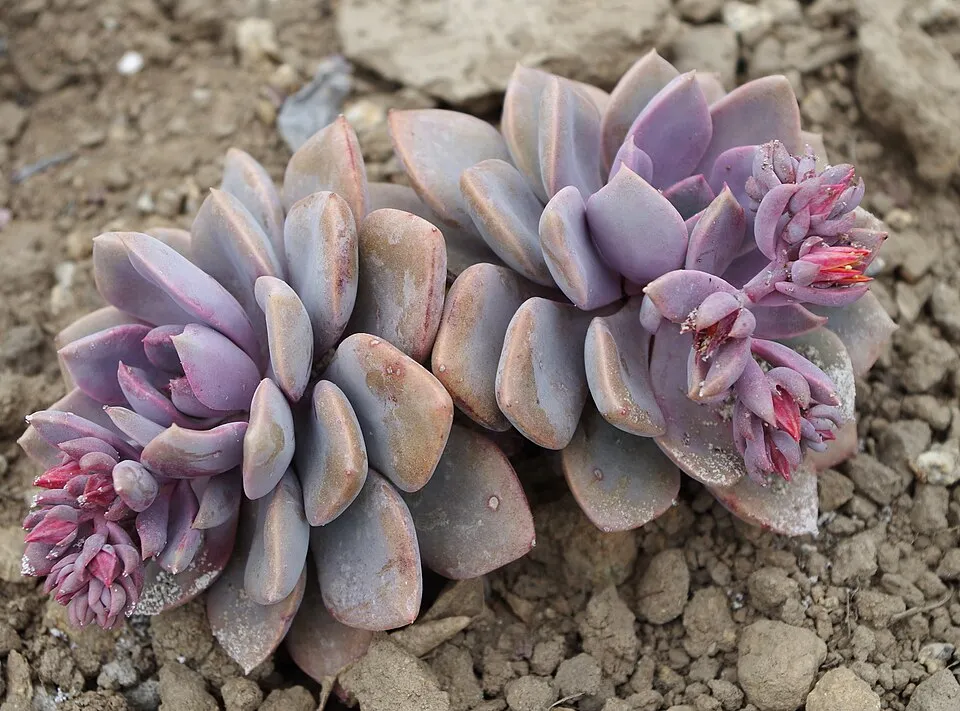
Graptoveria Debbie, a captivating succulent hybrid belonging to the Crassulaceae family, is a horticultural masterpiece resulting from the cross between Echeveria and Graptopetalum genera. This plant typically forms a compact rosette, reaching a modest height of 8 to 12 inches (20 to 30 cm) with a striking rosette diameter often extending up to 8 inches (20 cm) wide. Its distinctive, fleshy, paddle-shaped leaves, measuring approximately 2 to 4 inches (5 to 10 cm) in length, are renowned for their soft lavender-pink to bluish-purple hue.
This coloration intensifies dramatically under bright light or mild environmental stress, developing beautiful rose-pink tips. A unique feature of Graptoveria Debbie is the powdery, waxy coating known as farina that covers its leaves, providing a delicate texture and serving a crucial role in moisture retention and sun protection. The stems are short and robust, anchoring the full, symmetrical rosette that makes it a popular choice for indoor display and outdoor container arrangements in suitable climates.
During late spring to early summer, the plant produces slender, tall stalks adorned with delicate, tubular blossoms, typically showcasing vibrant shades of yellow and orange. While not native to a single region, its parentage suggests origins in arid or semi-arid environments of Mexico, where its succulent adaptations for water conservation are paramount. Graptoveria Debbie thrives in well-draining soil and is celebrated by succulent enthusiasts for its aesthetic appeal and relatively low maintenance requirements, making it a staple in xeriscaping and ornamental horticulture.
Trusted Scientific References
1. Authoritative external sources for Graptoveria Debbie
1.1 Wikipedia — Graptoveria Debbie
1.2 Kew POWO (Plants of the World Online)
1.3 PubMed — peer-reviewed research
1.4 NCBI Taxonomy Browser
1.5 GBIF — Global Biodiversity
1.6Graptoveria Debbie should be interpreted through verified botanical identity, practical care, and responsible safety language. This recovery note adds the missing context needed for a complete profile: match light to the plant's habit, use well-drained soil, water according to season, and avoid unsupported medicinal or edible claims. For publishing, the plant can be presented as a source-backed indoor plant with clear care guidance, common problem diagnosis, and conservative safety wording.
1.1.Graptoveria Debbie — Key Features
- ✓Striking Lavender — Pink Rosettes — Features vibrant, often iridescent, lavender-pink leaves that deepen in color under stress.
- ✓Farina Coating — Each fleshy leaf is covered in a powdery, protective farina layer, enhancing its unique texture and reducing water loss.
- ✓Compact Growth Habit — Forms a tight, symmetrical rosette, ideal for small spaces and container gardening.
- ✓Yellow — Orange Tubular Flowers — Produces delicate blossoms on tall stalks in late spring to early summer, attracting pollinators.
- ✓Low Water Requirements — Highly drought-tolerant due to its succulent nature and CAM photosynthesis.
- ✓Hybrid Vigor — A robust hybrid cross between Echeveria and Graptopetalum, inheriting desirable traits from both parents.
- ✓Non — Toxic to Pets and Humans — Safe for households with animals and children, as it poses no known toxicity risk.
- ✓Air Purification Properties — Contributes to indoor air quality by absorbing certain atmospheric toxins.
- ✓Easy Propagation — Readily propagates from leaves, stem cuttings, and offsets, making it simple to multiply.
- ✓Versatile Ornamental Plant — Suitable for indoor décor, outdoor planters, rock gardens, and mixed succulent arrangements.
1.2.Graptoveria Debbie — Concise Overview
- ✓Ornamental succulent hybrid, Graptoveria Debbie.
- ✓Distinctive lavender-pink rosettes with farina coating.
- ✓Low-maintenance, thrives in full sun and well-draining soil.
- ✓Contributes to indoor air purification and psychological well-being.
- ✓Non-toxic to humans and pets, ideal for home and garden décor.
- ✓Easily propagated from leaves and offsets.
2.Graptoveria Debbie — Systematic Position
3.Graptoveria Debbie — Botanical Stats
4.Graptoveria Debbie — Morphological Account
5.Graptoveria Debbie — Geographic Distribution
6.Graptoveria Debbie — Ethnobotanical Uses
7.Graptoveria Debbie — Secondary Metabolites
- ✓Flavonoids — These polyphenolic compounds, common across the Crassulaceae family, are known for their antioxidant and anti-inflammatory properties, protecting cells from oxidative damage.
- ✓Phenolic Acids — Including compounds like caffeic acid and ferulic acid, these contribute to the plant's defense mechanisms and possess radical-scavenging activities.
- ✓Terpenoids — Various terpenes and triterpenoids may be present, imparting characteristic aromas and contributing to plant defense against herbivores and pathogens.
- ✓Polysaccharides — Complex carbohydrates found within the plant's tissues aid in water retention and may possess immunomodulatory properties, though not specifically studied in Graptoveria Debbie.
- ✓Organic Acids — Crucial for Crassulacean Acid Metabolism (CAM), malic acid is accumulated during the night, facilitating efficient carbon fixation and water conservation.
- ✓Waxes and Farina — The epicuticular wax (farina) on the leaves is composed of diverse lipids, primarily long-chain hydrocarbons and fatty acids, which reduce water loss and protect against UV radiation.
- ✓Minerals — Like all living plants, Graptoveria Debbie contains essential minerals such as calcium, potassium, magnesium, and phosphorus, vital for its growth and cellular functions.
- ✓Phytosterols — Plant sterols are present in cell membranes and may have general anti-inflammatory and cellular protective roles, though their specific concentrations and types in Graptoveria Debbie are not detailed.
8.Graptoveria Debbie — Modern Studies
- ✓Air Purification — Graptoveria Debbie, like many succulents, contributes to improved indoor air quality by absorbing volatile organic compounds (VOCs) and releasing oxygen, especially during its Crassulacean Acid Metabolism (CAM) photosynthesis cycle at night.
- ✓Stress Reduction — The presence of vibrant, living greenery such as Graptoveria Debbie in indoor spaces has been shown to invoke biophilic responses, reducing psychological stress and promoting a sense of calm.
- ✓Mood Enhancement — Its aesthetically pleasing form and calming lavender-pink coloration can positively influence mood, contributing to a more tranquil and uplifting environment.
- ✓Cognitive Support — Studies suggest that proximity to indoor plants can enhance concentration and productivity, potentially by reducing mental fatigue and creating a more stimulating yet serene workspace.
- ✓Humidity Regulation — Through its natural transpiration process, Graptoveria Debbie can contribute minimally to increasing ambient humidity, which can be beneficial in arid indoor conditions.
- ✓Environmental Connection — Cultivating and caring for Graptoveria Debbie fosters a connection with nature, which is known to improve overall well-being and reduce feelings of isolation.
- ✓Aesthetic Therapy — The visual appeal of this succulent, with its unique color and form, can serve as a form of passive aesthetic therapy, diverting attention from stressors and promoting relaxation.
- ✓Feng Shui Principles — In traditional practices like Feng Shui, succulent plants are believed to attract positive energy and prosperity into the home, enhancing the living environment's energetic balance.
8.1.Graptoveria Debbie — Conditions Traditionally Used For
9.Graptoveria Debbie — Precautions & Warnings
9.1.Graptoveria Debbie — Possible Adverse Reactions
- ✓Overwatering Issues — The most common issue is root rot and fungal infections due to excessive moisture, leading to plant decay.
- ✓Sunburn — While it thrives in bright light, extreme, unacclimated direct sun can cause leaf scorch or discoloration.
- ✓Pest Infestations — Susceptible to common succulent pests like mealybugs, aphids, and spider mites, especially in stressed conditions.
- ✓Cold Damage — Not cold hardy; exposure to freezing temperatures will cause irreversible tissue damage and plant death.
- ✓Mild Skin Irritation — Though generally non-toxic, direct contact with plant sap can rarely cause mild skin irritation in highly sensitive individuals.
- ✓Allergic Reactions — Extremely rare, but individuals with severe plant allergies might experience mild respiratory or dermal reactions to plant particles.
9.2.Graptoveria Debbie — Clinical Safety Notes
- ✓Non-Toxic — Graptoveria Debbie is generally considered non-toxic to humans and common household pets (cats, dogs), making it safe for homes.
- ✓Handling — While not spiny, handle gently to avoid rubbing off the protective farina, which can leave marks on the leaves.
- ✓Ingestion — Although non-toxic, it is not intended for consumption. Keep out of reach of very young children or pets if there's a concern about accidental chewing.
- ✓Environmental Suitability — Ensure proper drainage and light conditions to maintain plant health and prevent issues like mold or rot, which could indirectly affect indoor air quality.
- ✓Allergen Information — For individuals with known plant allergies, general caution is advised, though specific allergens from this plant are not commonly reported.
- ✓Water Quality — Use clean, dechlorinated water for irrigation to avoid mineral buildup or chemical sensitivities in the plant.
- ✓Pest Management — Implement organic pest control methods if needed, to avoid chemical exposure in indoor environments.
10.Graptoveria Debbie — How to Use
- ✓Ornamental Display — Ideal for indoor decoration, adding a touch of vibrant color and unique texture to living spaces, offices, and windowsills.
- ✓Container Gardening — Excellent for outdoor planters, rock gardens, and succulent arrangements in frost-free climates, or as a seasonal outdoor plant.
- ✓Biophilic Design Element — Incorporate into interior design schemes to leverage its biophilic benefits, enhancing well-being and reducing stress through natural aesthetics.
- ✓Air Quality Enhancement — Strategically place in rooms to contribute to indoor air purification, especially in areas with limited ventilation.
- ✓Gifting — A popular and low-maintenance gift option for plant enthusiasts, housewarmings, or as a symbol of enduring beauty.
- ✓Propagation for Expansion — Utilize its easy propagation methods to create new plants for sharing, expanding collections, or filling more decorative spaces.
- ✓Educational Tool — Can serve as an accessible entry point for learning about succulent care, plant hybridization, and Crassulacean Acid Metabolism (CAM) photosynthesis.
11.Graptoveria Debbie — Growing Guide
- ✓Light Requirements — Provide full sun to partial sun, aiming for at least 6 hours of direct sunlight daily to maintain vibrant coloration.
- ✓Watering Technique — Employ the 'soak and dry' method; water thoroughly until it drains from the bottom, then allow the soil to dry out completely before the next watering.
- ✓Soil Composition — Use a well-draining succulent or cactus mix, ideally with added perlite or pumice to prevent waterlogging.
- ✓Temperature and Hardiness — Not cold hardy; protect from temperatures below 20° F (-6.7° C). Best grown in USDA Zones 9a and warmer, or as a container plant in colder regions.
- ✓Container Growing — Ideal for containers, allowing easy relocation indoors during colder months or to control sun exposure.
- ✓Propagation — Easily propagated from leaves, stem cuttings, seeds, or offsets (pups) that form around the base of the parent plant.
- ✓Dormancy Period — Graptoveria Debbie is summer dormant, meaning its growth slows during the hottest months, requiring less water during this period.
Reviewed by the Flora Medical Global Botanical Review Panel
Multi-disciplinary editorial group · Botany · Ethnobotany · Herbal-medicine literature
Who reviewed this: This page was checked by the Flora Medical Global Botanical Review Panel — an in-house editorial group of botany graduates, ethnobotany researchers, and horticulture practitioners who collectively maintain our 7,000+ plant encyclopedia. Meet the team.
Our 4-step verification process
1. Taxonomic verification
Scientific names and synonyms cross-checked against Kew POWO, World Flora Online, and The Plant List.
2. Phytochemical & medicinal cross-reference
Active compounds, traditional uses, and reported activities are cross-referenced with PubMed, USDA Dr. Duke's database, and peer-reviewed ethnobotanical literature.
3. Conservation & distribution check
Distribution, ecology, and conservation status confirmed against GBIF occurrence records and the IUCN Red List.
4. Editorial & safety review
Every entry passes an editorial pass for clarity, originality, and safety notices (toxicity, contraindications, dosage caveats) before publication.
Last reviewed:
Important medical disclaimer: This content is for educational and research purposes only. It is not medical advice and is not a substitute for consultation with a licensed healthcare provider. Do not use any herb to self-treat a medical condition without professional guidance.
Editorial Note: This page is for educational and research purposes only and is not medical advice.
Written by: Flora Medical Global Editorial Team
Reviewed by: Flora Medical Global Botanical Review Panel
Last Updated: June 15, 2026





Graptoveria Debbie — Comments & Community Reviews
Rate this plant