
Medical Disclaimer: This content is for educational purposes only. It is not medical advice. Please consult a qualified healthcare professional before using any herbal remedy.
Safety Overview
1.Gymnocalycium Baldianum — Plant Snapshot
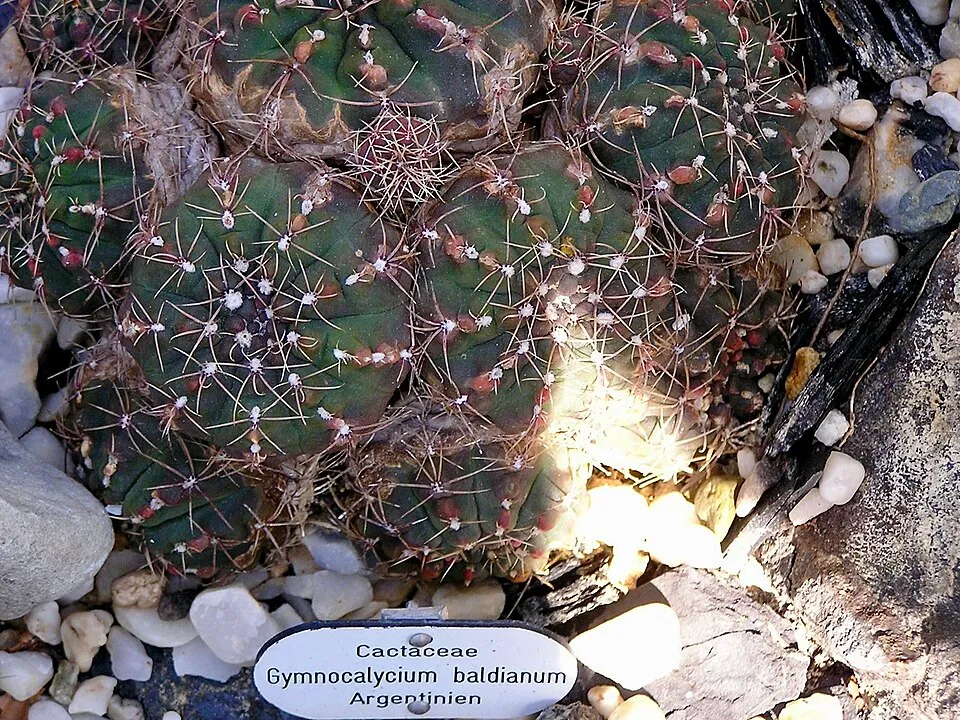
Gymnocalycium baldianum, commonly known as the bald cacti or dwarf chin cactus, is a captivating member of the Cactaceae family, renowned for its aesthetic appeal rather than its medicinal applications. This species typically forms a solitary, globular to short-cylindrical stem, reaching modest dimensions of 10 to 15 centimeters (4 to 6 inches) in height and spreading about 15 to 20 centimeters (6 to 8 inches) wide. Its distinctive morphology is characterized by 5 to 7 prominent, somewhat undulated ribs that give the plant a ridged, segmented appearance. Each rib is adorned with small, slender spines, typically less than 1 centimeter long, emerging from the areoles.
The epidermis of Gymnocalycium baldianum presents a vibrant green hue, which can intensify to beautiful red or purple tones when exposed to bright, direct sunlight, adding to its ornamental value. This species produces striking, funnel-shaped blooms measuring approximately 5 to 8 centimeters (2 to 3 inches) in diameter, showcasing a spectrum of colors including shades of pink, red, or white. These magnificent flowers typically emerge from the plant's apex during late spring to early summer, creating a stunning contrast against its body. Native to the semi-arid regions of Argentina, particularly in the provinces of Catamarca and La Rioja, Gymnocalycium baldianum is well-adapted to thrive in well-draining, sandy or gravelly soils.
Taxonomically, it belongs to the genus Gymnocalycium, a group celebrated for its diverse adaptations to arid environments and often referred to as 'chin cacti' due to the protuberances below their areoles. In cultivation, it is a favored choice for novice growers due to its manageable size, reliable flowering, and relatively low maintenance requirements, preferring moderate light and infrequent watering.
Trusted Scientific References
1. Authoritative external sources for Gymnocalycium baldianum
1.1 Wikipedia — Gymnocalycium baldianum
1.2 Kew POWO (Plants of the World Online)
1.3 PubMed — peer-reviewed research
1.4 NCBI Taxonomy Browser
1.5 GBIF — Global Biodiversity
1.1.Gymnocalycium Baldianum — Defining Traits
- ✓Globular to Short — Cylindrical Stem — Distinctive body shape, typically 10-15 cm tall.
- ✓Prominent Ribs — Features 5-7 pronounced, often undulated ribs.
- ✓Small, Slender Spines — Areoles bear spines usually less than 1 cm long.
- ✓Vibrant Epidermis — Green body, developing red/purple tones in bright light.
- ✓Striking Flowers — Produces 5-8 cm wide blooms in shades of pink, red, or white.
- ✓Spring/Summer Blooms — Flowers typically appear from late spring to early summer.
- ✓Native to Argentina — Indigenous to semi-arid regions of Catamarca and La Rioja.
- ✓Easy to Cultivate — Considered low-maintenance, suitable for novice cactus growers.
- ✓Drought Tolerant — Adapted to dry conditions, requiring infrequent watering.
- ✓Ornamental Appeal — Highly valued for its aesthetic contribution to indoor and outdoor spaces.
1.2.Gymnocalycium Baldianum — At-a-Glance Summary
- ✓Gymnocalycium baldianum is a small, globular cactus from Argentina, known for its striking red, pink, or white flowers.
- ✓Primarily valued as an ornamental houseplant due to its ease of care and aesthetic appeal.
- ✓Belongs to the Cactaceae family, characterized by ribbed stems and small spines.
- ✓Folk medicine uses for some cacti exist, but specific scientific evidence for G. baldianum's medicinal properties is scarce.
- ✓Requires well-draining soil, bright indirect light, and infrequent watering.
- ✓Handling precautions are necessary due to small spines.
2.Gymnocalycium Baldianum — Taxonomic Classification
3.Gymnocalycium Baldianum — Quick Facts
4.Gymnocalycium Baldianum — Structural Profile
5.Gymnocalycium Baldianum — Where It Grows
6.Gymnocalycium Baldianum — Historical Applications
7.Gymnocalycium Baldianum — Active Compounds
- ✓Alkaloids — Cacti, including some Gymnocalycium species, are known to contain various alkaloids, which can have diverse physiological effects, though specific alkaloids in G. baldianum are not extensively studied.
- ✓Flavonoids — These are common plant pigments and antioxidants found broadly in the plant kingdom, including cacti, contributing to cellular protection against oxidative stress.
- ✓Terpenoids — A large class of organic compounds, terpenoids are present in many plants and can contribute to aroma, defense, and potential medicinal properties; their specific role in G. baldianum is not detailed.
- ✓Mucilage — Many cacti, including the Cactaceae family to which G. baldianum belongs, contain mucilaginous polysaccharides that are known for their hydrating and soothing properties, especially in digestive health.
- ✓Betalains — These nitrogen-containing pigments are responsible for the red/purple coloration in some cacti (though less prominent in G. baldianum than other species) and possess antioxidant activity.
- ✓Phenolic Compounds — A broad group of plant metabolites with antioxidant and anti-inflammatory potential, widely distributed in plants, likely present in G. baldianum but uncharacterized.
- ✓Organic Acids — Various organic acids are involved in plant metabolism and may contribute to the plant's chemical profile, though specific to G. baldianum remains to be explored.
- ✓Sterols — Plant sterols are present in cell membranes and can have various biological activities; their specific composition in G. baldianum is not established.
8.Gymnocalycium Baldianum — Modern Studies
- ✓Ornamental Value — Gymnocalycium baldianum is primarily esteemed for its significant ornamental appeal, enhancing living spaces and contributing to aesthetic wellness.
- ✓Indirect Air Purification — Like many houseplants, it contributes to indoor air quality by absorbing carbon dioxide and releasing oxygen, indirectly supporting respiratory health.
- ✓Stress Reduction — The presence of plants like Gymnocalycium baldianum in indoor environments has been anecdotally linked to reduced stress levels and improved mood through biophilic design principles.
- ✓Hydration Support (General Cactus) — While not specific to G. baldianum, some traditional practices with other Gymnocalycium species or cacti suggest their mucilaginous content may support hydration when prepared as teas.
- ✓Digestive Aid (General Cactus) — Folk medicine, particularly with other Gymnocalycium species, has occasionally noted their potential to aid digestion, possibly due to mucilage content, though scientific evidence for G. baldianum is lacking.
- ✓Minor Ailment Relief (General Cactus) — Dried flowers and stems of some Gymnocalycium species have been used in traditional teas for general minor ailments, a practice not specifically substantiated for G. baldianum.
- ✓Cultural Significance — For some indigenous communities, cacti hold cultural and spiritual significance, which can contribute to holistic well-being, though specific to G. baldianum is not widely documented.
- ✓Drought Adaptation Research — While not a direct human benefit, studying Gymnocalycium baldianum's resilience offers insights into plant adaptation to harsh conditions, relevant for agricultural and ecological research.
8.1.Gymnocalycium Baldianum — Reported Uses
9.Gymnocalycium Baldianum — Precautions & Warnings
9.1.Gymnocalycium Baldianum — Reported Side Effects
- ✓Spines — Handling Gymnocalycium baldianum requires caution due to its small, sharp spines, which can cause skin irritation or minor punctures if not handled carefully.
- ✓Ingestion — While not known to be toxic, ingestion of any part of Gymnocalycium baldianum is not recommended due to lack of specific safety data and potential for digestive upset.
- ✓Allergic Reactions — Sensitive individuals might experience mild allergic reactions upon contact with plant sap or spines, though this is rare.
- ✓Overwatering Damage — The most common issue is root rot from overwatering, leading to plant decay rather than direct human side effects, but it signifies improper care.
- ✓Sunburn — Excessive, unfiltered direct sunlight can cause scorching or discoloration of the plant's epidermis, impacting its health and appearance.
- ✓Lack of Research — Due to limited scientific study on G. baldianum's internal compounds, potential long-term effects of consumption are unknown and therefore discouraged.
9.2.Gymnocalycium Baldianum — Clinical Safety Notes
- ✓Handling Precautions — Always wear gloves when handling Gymnocalycium baldianum to protect against its spines, especially during repotting or maintenance.
- ✓Non-Edible — Gymnocalycium baldianum is not cultivated or recognized as an edible plant, and internal consumption is strongly advised against due to insufficient research.
- ✓Pet and Child Safety — Keep the plant out of reach of curious children and pets to prevent accidental ingestion or injury from spines.
- ✓Allergic Sensitivity — Individuals with known plant allergies should exercise caution during contact, although severe allergic reactions are uncommon.
- ✓Environmental Suitability — Ensure the plant is grown in appropriate conditions (well-draining soil, proper light) to maintain its health and prevent issues like fungal growth.
- ✓Research Gap — The lack of comprehensive toxicological studies on Gymnocalycium baldianum means its internal safety profile for human consumption remains largely uncharacterized.
- ✓Ornamental Use Only — It is safest to consider Gymnocalycium baldianum strictly as an ornamental plant, appreciating its beauty without attempting medicinal applications.
10.Gymnocalycium Baldianum — Preparation & Dosage
- ✓Ornamental Display — Primarily used as a decorative houseplant or in xeriscaping, valued for its unique form and vibrant flowers.
- ✓Botanical Collection — Cultivated by enthusiasts and botanical gardens for its distinctive characteristics and ease of care within the Gymnocalycium genus.
- ✓Traditional Teas (General Cactus) — While not specific to G. baldianum, some related cactus species have traditionally been used to brew teas from dried stems or flowers for minor ailments, emphasizing hydration.
- ✓Educational Specimen — Utilized as a living example for teaching about succulent adaptations, Cactaceae family characteristics, and desert ecology.
- ✓Artistic Inspiration — Its sculptural form and striking blooms make it a popular subject for botanical art, photography, and design.
- ✓Indoor Air Enhancement — Placed in homes or offices to contribute to a healthier indoor environment through natural air purification, alongside other beneficial plants.
- ✓Xeriscape Gardening — Integrated into water-wise garden designs in suitable climates, providing texture and color with minimal water requirements.
11.Gymnocalycium Baldianum — Growth Requirements
- ✓Soil — Plant Gymnocalycium baldianum in a well-draining cactus or succulent mix, ideally with added perlite or pumice to prevent waterlogging.
- ✓Light — Provide bright, indirect light; direct morning sun is beneficial, but protect from intense afternoon sun to prevent scorching, which can enhance epidermal coloration.
- ✓Watering — Water thoroughly when the soil is completely dry, typically every 2-4 weeks during the growing season (spring/summer), and reduce significantly or stop in winter.
- ✓Temperature — Thrives in temperatures between 18-28°C (65-82°F) and can tolerate brief drops to 5°C (41°F) in winter, but protect from frost.
- ✓Fertilizing — Fertilize sparingly with a diluted, low-nitrogen cactus fertilizer once or twice during the active growing season.
- ✓Repotting — Repot every 2-3 years or when root-bound, preferably in spring, ensuring the new pot has drainage holes and is only slightly larger.
- ✓Pests and Diseases — Monitor for common cactus pests like mealybugs and spider mites; ensure good air circulation to prevent fungal issues, especially root rot from overwatering.
Reviewed by the Flora Medical Global Botanical Review Panel
Multi-disciplinary editorial group · Botany · Ethnobotany · Herbal-medicine literature
Who reviewed this: This page was checked by the Flora Medical Global Botanical Review Panel — an in-house editorial group of botany graduates, ethnobotany researchers, and horticulture practitioners who collectively maintain our 7,000+ plant encyclopedia. Meet the team.
Our 4-step verification process
1. Taxonomic verification
Scientific names and synonyms cross-checked against Kew POWO, World Flora Online, and The Plant List.
2. Phytochemical & medicinal cross-reference
Active compounds, traditional uses, and reported activities are cross-referenced with PubMed, USDA Dr. Duke's database, and peer-reviewed ethnobotanical literature.
3. Conservation & distribution check
Distribution, ecology, and conservation status confirmed against GBIF occurrence records and the IUCN Red List.
4. Editorial & safety review
Every entry passes an editorial pass for clarity, originality, and safety notices (toxicity, contraindications, dosage caveats) before publication.
Last reviewed:
Important medical disclaimer: This content is for educational and research purposes only. It is not medical advice and is not a substitute for consultation with a licensed healthcare provider. Do not use any herb to self-treat a medical condition without professional guidance.
Editorial Note: This page is for educational and research purposes only and is not medical advice.
Written by: Flora Medical Global Editorial Team
Reviewed by: Flora Medical Global Botanical Review Panel
Last Updated: June 15, 2026





Gymnocalycium Baldianum — Comments & Community Reviews
Rate this plant