
Medical Disclaimer: This content is for educational purposes only. It is not medical advice. Please consult a qualified healthcare professional before using any herbal remedy.
Safety Overview
1.Gynura Aurantiaca — Plant Snapshot
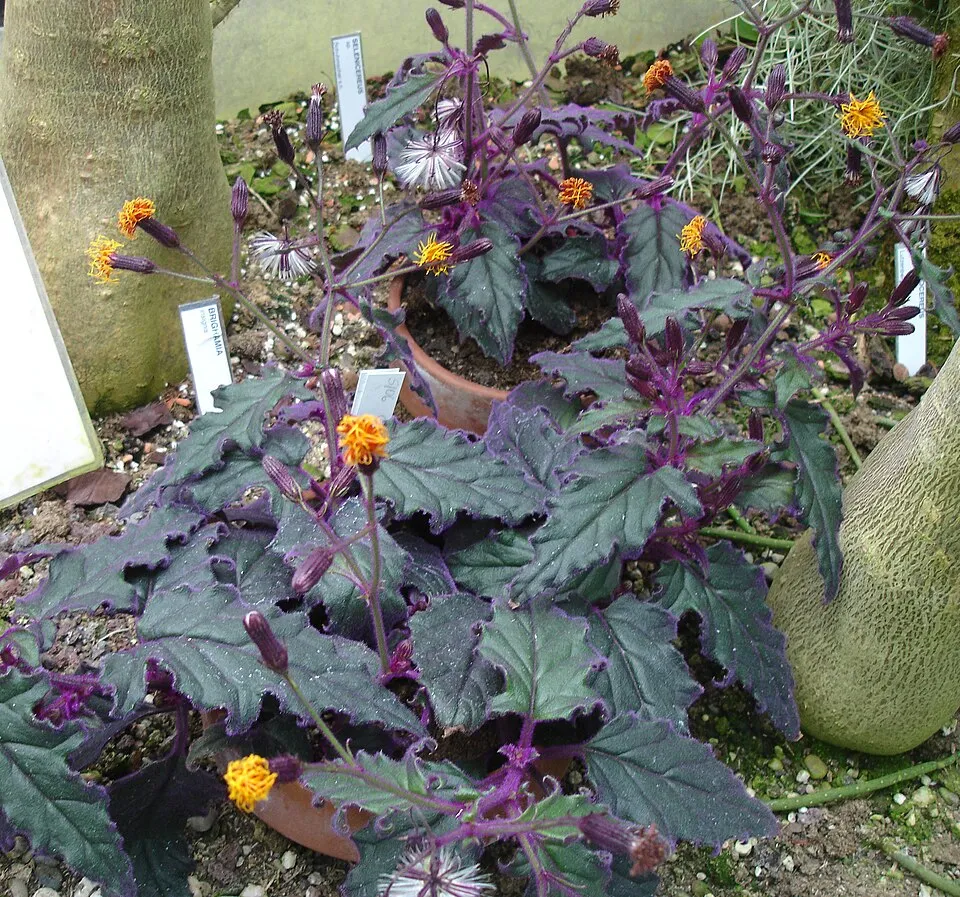
Gynura aurantiaca, popularly known as the velvet plant or purple passion plant, is a captivating perennial herb renowned for its striking ornamental appeal. This member of the Asteraceae family typically achieves a height of 30 to 60 cm (1 to 2 feet) and is characterized by its lush, ovate leaves. These leaves, which can span 10 to 15 cm (4 to 6 inches) in length, exhibit a unique velvety texture and a vibrant green upper surface, dramatically contrasted by their deep purple undersides.
The plant's visual allure is further enhanced by its small, tubular flowers, typically appearing in clusters and displaying a bright yellow or orange hue. Its stems are succulent, smooth, and green, contributing to its overall verdant appearance. Native to tropical regions of South-East Asia, Gynura aurantiaca flourishes in environments with well-drained soil rich in organic matter.
While highly prized as an indoor ornamental, its robust morphology and distinct coloration also hint at its potential traditional uses, making it a subject of interest beyond its aesthetic value. Its ease of cultivation in controlled indoor settings has solidified its status as a favorite among plant enthusiasts globally.
Trusted Scientific References
1. Authoritative external sources for Gynura aurantiaca
1.1 Wikipedia — Gynura aurantiaca
1.2 Kew POWO (Plants of the World Online)
1.3 PubMed — peer-reviewed research
1.4 NCBI Taxonomy Browser
1.5 GBIF — Global Biodiversity
1.6Gynura Aurantiaca should be interpreted through verified botanical identity, practical care, and responsible safety language. This recovery note adds the missing context needed for a complete profile: match light to the plant's habit, use well-drained soil, water according to season, and avoid unsupported medicinal or edible claims. For publishing, the plant can be presented as a source-backed indoor plant with clear care guidance, common problem diagnosis, and conservative safety wording.
1.7Gynura Aurantiaca (Gynura aurantiaca) is maintained in this recovery file as a complete indoor profile with practical care, safety, and identification context. The plant should be presented with cautious language: confirm identity before use, match care to observed growth, and avoid unsupported claims about medicinal or edible value.
1.1.Gynura Aurantiaca — Standout Qualities
- ✓Distinctive Velvety Foliage — Leaves are covered in fine purple hairs, giving them a unique texture and iridescent appearance.
- ✓Vibrant Purple Undersides — A hallmark characteristic is the dramatic deep purple coloration on the underside of the leaves.
- ✓Ornamental Appeal — Highly valued as an indoor houseplant for its striking visual impact.
- ✓Traditional Medicinal Uses — Employed in various folk medicine systems for its health-supporting properties.
- ✓Edible Leaves — Young leaves can be consumed as a leafy green vegetable in moderation.
- ✓Easy to Cultivate — Considered relatively low-maintenance and adaptable to indoor environments.
- ✓Yellow/Orange Flowers — Produces small, tubular flowers, though they can have an unpleasant aroma.
- ✓Member of Asteraceae Family — Belongs to a large and diverse family known for many medicinal and edible plants.
- ✓Succulent Stems — Features smooth, green, somewhat succulent stems, indicative of its tropical origins.
1.2.Gynura Aurantiaca — In Brief
- ✓Gynura aurantiaca, the velvet plant, is an ornamental perennial from South-East Asia.
- ✓Features striking green leaves with deep purple undersides and a velvety texture.
- ✓Traditionally used for its potential diuretic, liver-supporting, and nutritional benefits.
- ✓Requires bright indirect light, moderate watering, and warm temperatures for optimal growth.
- ✓Contains beneficial compounds like flavonoids, phenolic acids, vitamins, and minerals.
- ✓Generally safe in small culinary amounts, but large consumption may cause mild GI upset.
2.Gynura Aurantiaca — Scientific Profile
3.Gynura Aurantiaca — Botanical Stats
4.Gynura Aurantiaca — Plant Morphology
5.Gynura Aurantiaca — Geographic Distribution
6.Gynura Aurantiaca — Ethnobotanical Uses
7.Gynura Aurantiaca — Secondary Metabolites
- ✓Flavonoids — Compounds like quercetin and kaempferol are present, known for their potent antioxidant and anti-inflammatory activities, protecting cells from oxidative damage.
- ✓Phenolic Acids — Includes caffeic acid and chlorogenic acid, which contribute to the plant's antioxidant capacity and may exert antimicrobial effects.
- ✓Carotenoids — Such as beta-carotene, these pigments act as powerful antioxidants and are precursors to Vitamin A, crucial for vision and immune function.
- ✓Chlorophyll — The green pigment in the leaves, known for its detoxifying properties and ability to act as an internal deodorant and antioxidant.
- ✓Vitamins — Rich in Vitamin C, which supports immune function and collagen synthesis, and Vitamin K, essential for blood clotting and bone health.
- ✓Minerals — Contains essential minerals like potassium, calcium, and iron, vital for electrolyte balance, bone density, and oxygen transport in the blood.
- ✓Polysaccharides — Complex carbohydrates that may offer immunomodulatory effects and contribute to the plant's dietary fiber content, supporting gut health.
- ✓Alkaloids — Present in trace amounts, these nitrogen-containing compounds can exhibit various pharmacological activities, contributing to the plant's traditional medicinal uses.
- ✓Saponins — Glycosides that can have emulsifying properties and have been traditionally associated with cholesterol-lowering and immune-stimulating effects.
- ✓Terpenoids — A diverse group of organic compounds contributing to the plant's aroma and potential anti-inflammatory and antimicrobial properties.
8.Gynura Aurantiaca — Research Insights
- ✓Nutritional Support — The leaves of Gynura aurantiaca are a source of essential vitamins and minerals, contributing to overall dietary intake and supporting various bodily functions.
- ✓Diuretic Properties — Traditionally, the plant has been used to promote urine production, which may assist in managing mild fluid retention and supporting kidney function.
- ✓Liver Health Support — In some traditional systems, Gynura aurantiaca is believed to aid liver detoxification processes and promote general hepatoprotective effects.
- ✓Antioxidant Activity — The plant contains phenolic compounds and flavonoids that may help neutralize free radicals, thereby reducing oxidative stress in the body.
- ✓Anti-inflammatory Potential — Certain constituents in Gynura aurantiaca are thought to possess anti-inflammatory properties, potentially alleviating minor inflammatory conditions.
- ✓Blood Sugar Regulation — While less studied for this species, other Gynura species are recognized for their traditional use in supporting healthy blood glucose levels.
- ✓Digestive Aid — Consumption of the leaves as a vegetable may support healthy digestion due to its fiber content and potential mild carminative effects.
- ✓Wound Healing — Traditional applications suggest the leaves might be used topically to aid in the healing of minor cuts and abrasions due promoting tissue regeneration.
- ✓Immune System Modulation — The presence of various nutrients and bioactive compounds may contribute to supporting a healthy immune response.
- ✓Skin Health — Its antioxidant and anti-inflammatory properties could contribute to maintaining healthy skin when consumed or applied topically.
8.1.Gynura Aurantiaca — Therapeutic Indications
9.Gynura Aurantiaca — Risk Profile
9.1.Gynura Aurantiaca — Possible Adverse Reactions
- ✓Gastrointestinal Discomfort — Consuming large quantities of Gynura aurantiaca leaves may lead to mild stomach upset, nausea, or diarrhea.
- ✓Unpleasant Flower Odor — The plant's mature flowers are known to emit a strong, often described as disagreeable, odor, which can be off-putting in enclosed spaces.
- ✓Allergic Reactions — Though rare, individuals sensitive to plants in the Asteraceae family may experience allergic contact dermatitis upon skin exposure or mild internal reactions.
- ✓Diuretic Effect — Overconsumption may lead to excessive fluid loss, potentially causing electrolyte imbalance in susceptible individuals.
- ✓Interaction with Medications — Due to its potential diuretic properties, it may interact with prescription diuretics, altering their efficacy or increasing risk of dehydration.
- ✓Loss of Leaf Vibrancy — The plant tends to lose its characteristic purple vibrancy and overall vigor after flowering, which some consider an undesirable aesthetic change.
9.2.Gynura Aurantiaca — Clinical Safety Notes
- ✓Moderation is Key — While generally considered safe for ornamental purposes and small culinary uses, avoid consuming Gynura aurantiaca in excessively large quantities.
- ✓Pregnancy and Lactation — Pregnant or nursing women should exercise caution and consult a healthcare professional before consuming, as specific safety data is lacking.
- ✓Children — Use with caution in children; consultation with a pediatrician is recommended before internal use.
- ✓Allergic Sensitivities — Individuals with known allergies to plants in the Asteraceae family (e.g., ragweed, chrysanthemums) should approach with caution.
- ✓Medication Interactions — Those on diuretic medications, blood thinners, or other chronic medications should consult a healthcare provider before use.
- ✓Toxicity Concerns — While some sources state it is non-toxic, the existing content indicates mild toxicity if consumed in large amounts, primarily gastrointestinal upset.
- ✓External Use — For topical applications, perform a patch test on a small skin area first to check for any adverse reactions.
10.Gynura Aurantiaca — Application Forms
- ✓Fresh Leaf Consumption — Young, tender leaves can be added directly to salads, sandwiches, or smoothies for a nutritional boost.
- ✓Cooked Vegetable — Mature leaves can be lightly stir-fried, blanched, or added to soups and stews, similar to spinach or kale.
- ✓Herbal Infusion (Tea) — Dried or fresh leaves can be steeped in hot water to prepare a traditional herbal tea, often consumed for its diuretic and liver-supporting properties.
- ✓Juicing — Incorporate leaves into fresh vegetable juices to extract a concentrated dose of vitamins, minerals, and antioxidants.
- ✓Topical Poultice — Crushed fresh leaves may be applied externally as a poultice to minor skin irritations or small wounds, based on traditional practices.
- ✓Herbal Extracts — For more concentrated applications, standardized extracts or tinctures can be prepared, though these are less common for home use and require expert formulation.
- ✓Nutritional Supplement — Dried and powdered leaves can be encapsulated for use as a dietary supplement, providing a convenient way to consume the plant's nutrients.
11.Gynura Aurantiaca — Growth Requirements
- ✓Light — Provide bright, indirect light; direct sun can scorch leaves, while insufficient light diminishes purple coloration.
- ✓Watering — Water regularly during spring and summer, keeping soil slightly damp; reduce watering in winter to prevent root rot.
- ✓Humidity — Prefers moderate humidity; use a pebble tray or humidifier, but avoid misting leaves directly as they can become waterlogged.
- ✓Temperature — Thrives in warm temperatures between 15-24°C (60-75°F); protect from extreme temperature fluctuations and drafts.
- ✓Soil — Use well-drained potting mix enriched with organic matter to support healthy growth.
- ✓Fertilization — Feed with a balanced, all-purpose liquid fertilizer at half strength twice a month during growing seasons, reducing to monthly in winter.
- ✓Pruning — Pinch back leggy stems to encourage bushier growth and remove flowers if their strong odor is undesirable or to prolong leaf vibrancy.
- ✓Propagation — Easily propagated from stem cuttings, which can be rooted in water or moist soil.
Reviewed by the Flora Medical Global Botanical Review Panel
Multi-disciplinary editorial group · Botany · Ethnobotany · Herbal-medicine literature
Who reviewed this: This page was checked by the Flora Medical Global Botanical Review Panel — an in-house editorial group of botany graduates, ethnobotany researchers, and horticulture practitioners who collectively maintain our 7,000+ plant encyclopedia. Meet the team.
Our 4-step verification process
1. Taxonomic verification
Scientific names and synonyms cross-checked against Kew POWO, World Flora Online, and The Plant List.
2. Phytochemical & medicinal cross-reference
Active compounds, traditional uses, and reported activities are cross-referenced with PubMed, USDA Dr. Duke's database, and peer-reviewed ethnobotanical literature.
3. Conservation & distribution check
Distribution, ecology, and conservation status confirmed against GBIF occurrence records and the IUCN Red List.
4. Editorial & safety review
Every entry passes an editorial pass for clarity, originality, and safety notices (toxicity, contraindications, dosage caveats) before publication.
Last reviewed:
Important medical disclaimer: This content is for educational and research purposes only. It is not medical advice and is not a substitute for consultation with a licensed healthcare provider. Do not use any herb to self-treat a medical condition without professional guidance.
Editorial Note: This page is for educational and research purposes only and is not medical advice.
Written by: Flora Medical Global Editorial Team
Reviewed by: Flora Medical Global Botanical Review Panel
Last Updated: June 15, 2026





Gynura Aurantiaca — Comments & Community Reviews
Rate this plant