
Medical Disclaimer: This content is for educational purposes only. It is not medical advice. Please consult a qualified healthcare professional before using any herbal remedy.
Safety Overview
1.Hairy Vetch — Plant Snapshot
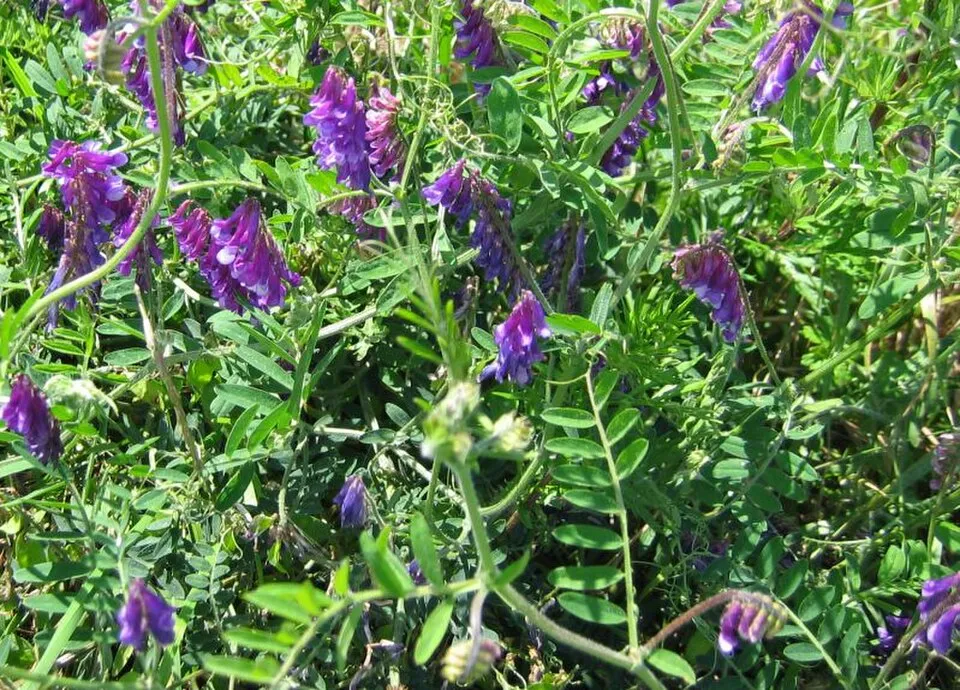
Hairy Vetch, scientifically known as Vicia villosa, is a remarkably adaptable herbaceous legume, typically growing as an annual or biennial. This vine-like plant exhibits weak, sprawling stems that can stretch up to six feet (approximately 1.8 meters) in length, often covered in a dense layer of fine, silvery hairs, giving it a distinctive woolly appearance, hence its common name, woollypod vetch. Its leaves are alternate and pinnately compound, each comprising 4 to 12 pairs of linear to narrow oval-shaped leaflets, typically measuring between 0.75 to 1 inch (19 to 25 mm). The plant secures itself to surrounding structures with branched spiral tendrils located at the leaflet tips. Below ground, Hairy Vetch develops a robust taproot system that can penetrate the soil to depths of three feet (about 0.9 meters), playing a crucial role in its ecological functions.
The inflorescence of Hairy Vetch is a striking raceme, extending approximately six inches (15 cm) and bearing a dense cluster of 20 to 60 individual flowers arranged unilaterally along the stalk. These beautiful blossoms, which typically appear from May to August, range in color from pale violet to deep purple, each measuring about 2 to 3 centimeters and featuring a prominent banner petal. Following successful pollination, the plant produces light green, hairy pods that mature to contain 2 to 8 spherical seeds, which turn black upon full maturity. Native to Europe, northern Africa, and West Asia, Hairy Vetch has been introduced and naturalized worldwide, including extensively throughout North and South America. Its widespread distribution is largely due to its significant utility as a cover crop and forage plant.
It thrives in a variety of habitats, from grasslands and open fields to disturbed sites, preferring well-drained soils with a pH range of 6.0 to 7.0. The plant's remarkable winter hardiness and ability to survive in wetter soil conditions contribute to its success in diverse agricultural systems. As a member of the Fabaceae family, it forms a vital symbiotic relationship with rhizobia bacteria in its root nodules, enabling it to fix atmospheric nitrogen, thereby significantly enhancing soil fertility and organic matter. This nitrogen-fixing capability, combined with its capacity for high biomass production and weed suppression, underscores its ecological importance beyond its traditional medicinal considerations, making it a cornerstone of sustainable agricultural practices. Trusted Scientif ...[CURRENT TEXT EXISTS: 2709 chars]
1.1.Hairy Vetch — Standout Qualities
- ✓Nitrogen — Fixing Legume
- ✓Excellent Cover Crop — Excellent Cover Crop
- ✓Green Manure Benefits — Green Manure Benefits
- ✓Soil Erosion Control — Soil Erosion Control
- ✓Weed Suppression Capabilities — Weed Suppression Capabilities
- ✓Winter Hardy Plant — Winter Hardy Plant
- ✓Attracts Pollinators — Attracts Pollinators
- ✓Provides Wildlife Food — Provides Wildlife Food Source
- ✓Rich in Flavonoids — Rich in Flavonoids & Phenolic Acids
- ✓Seeds Contain Toxic — Seeds Contain Toxic Cyanogenic Glycosides
- ✓Distinctive Vine — Like Growth Habit
- ✓Silvery — Hairy Foliage
- ✓Produces Striking Purple — Produces Striking Purple Raceme Flowers
- ✓Exhibits Moderate Drought — Exhibits Moderate Drought Tolerance
- ✓Adaptable to Various Soil Types (Prefers pH 6 — 7)
1.2.Hairy Vetch — At-a-Glance Summary
- ✓Hairy Vetch (Vicia villosa) is an annual or biennial herbaceous legume native to Europe, now widespread globally.
- ✓Renowned for its critical role as a cover crop and green manure, significantly improving soil fertility through nitrogen fixation.
- ✓Characterized by vine-like growth, distinctive hairy stems, tendrils, and striking purple flowers.
- ✓Contains a complex phytochemical profile including flavonoids, alkaloids, terpenoids, and phenolic acids.
- ✓Its seeds are toxic due to cyanogenic glycosides and should never be consumed by humans or livestock.
- ✓Traditionally associated with immune support, anti-inflammatory properties, and general wellness, primarily for external or historical applications.
- ✓Important for attracting pollinators and serving as a food source for wildlife.
- ✓Cultivation is straightforward, thriving in well-drained soils and exhibiting winter hardiness.
2.Hairy Vetch — Scientific Profile
3.Hairy Vetch — Reference Facts
4.Hairy Vetch — Plant Morphology
5.Hairy Vetch — Habitat & Distribution
6.Hairy Vetch — Cultural & Traditional Roles
7.Hairy Vetch — Secondary Metabolites
- ✓Flavonoids — These polyphenolic compounds, such as various glycosides of quercetin and kaempferol, are potent antioxidants. They contribute to cellular protection against free radical damage and may exert anti-inflammatory and immunomodulatory effects.
- ✓Alkaloids — While specific individual alkaloids require further detailed investigation, these nitrogen-containing organic compounds are often associated with diverse pharmacological activities, potentially influencing physiological systems or acting as plant defense mechanisms.
- ✓Terpenoids — A vast and diverse group of organic chemicals, including monoterpenes, sesquiterpenes, and triterpenes, are present in Hairy Vetch. They are frequently responsible for characteristic plant aromas and can possess anti-inflammatory, antimicrobial, and adaptogenic properties.
- ✓Phenolic Acids — Compounds like caffeic acid, ferulic acid, and p-coumaric acid are strong antioxidants, effectively neutralizing free radicals and reducing oxidative stress. They also exhibit anti-inflammatory and potential anticarcinogenic activities.
- ✓Cyanogenic Glycosides — Primarily concentrated in the seeds, these compounds, notably vicianin, release toxic hydrogen cyanide upon enzymatic hydrolysis. This is a critical antinutritional factor and the primary source of the plant's toxicity, especially if seeds are ingested.
- ✓Diglucosides — Specific complex sugars linked to other molecules, such as the cyanogenic diglucosides, contribute to the plant's chemical defense mechanisms. Their presence, particularly in the seeds, is directly implicated in potential toxicity.
- ✓Proteins and Amino Acids — As a legume, Hairy Vetch is rich in proteins and various amino acids, including non-protein amino acids like L-canavanine, which acts as an antimetabolite and insecticidal agent in plants.
- ✓Saponins — These triterpenoid glycosides can be found throughout the plant. They are known for their foam-forming properties and can have various biological effects, including hemolytic activity, but also potential anti-inflammatory or immune-stimulating properties in specific contexts.
- ✓Tannins — Astringent polyphenolic compounds that can bind to proteins. They may contribute to the plant's defense against herbivores and pathogens, and in some contexts, offer antioxidant or antimicrobial benefits.
- ✓Polysaccharides — Complex carbohydrates that play roles in plant structure and energy storage. Some plant polysaccharides are known for their immunomodulatory properties, though specific types in Hairy Vetch require further study.
- ✓Fatty Acids — The seeds contain various fatty acids, which are essential components of plant lipids and energy reserves, though specific profiles for Hairy Vetch's medicinal relevance are less emphasized.
- ✓Minerals — Like most plants, Hairy Vetch accumulates essential minerals from the soil, including macronutrients like potassium, phosphorus, and calcium, and micronutrients, contributing to its overall nutritional profile as forage.
- ✓Vitamins — It contains various vitamins, particularly B vitamins and vitamin C, which are common in green leafy plants and contribute to general plant health and nutritional value.
8.Hairy Vetch — Research Insights
- ✓Immune System Support — Flavonoids and phenolic acids present in Hairy Vetch are known antioxidants, which can help protect cells from oxidative stress. This protective action may indirectly contribute to a more robust immune response, supporting the body's natural defense mechanisms against various pathogens.
- ✓Anti-inflammatory Action — Traditional uses suggest Hairy Vetch possesses properties that may help modulate inflammatory pathways. The presence of terpenoids and certain phenolic compounds could contribute to this effect by influencing cytokine production or inhibiting pro-inflammatory enzymes, offering relief from minor inflammatory discomforts.
- ✓General Wellness Enhancement — Historically, Hairy Vetch has been associated with promoting overall vitality and well-being. This broad benefit is likely attributed to its complex phytochemical profile, which collectively supports various bodily functions and helps maintain physiological balance.
- ✓Antioxidant Protection — The rich array of flavonoids and phenolic acids acts as powerful free radical scavengers within the plant. When traditionally applied or studied, these compounds can help mitigate cellular damage caused by environmental stressors and metabolic byproducts.
- ✓Skin Soothing Properties (Topical) — Certain traditional applications indicate Hairy Vetch could be used externally to calm skin irritations. Its potential anti-inflammatory components might help reduce redness and discomfort associated with minor dermal conditions.
- ✓Minor Aches and Pains Relief (Topical) — In traditional herbalism, poultices or compresses made from the non-seed parts of Hairy Vetch might have been applied to alleviate localized muscle soreness or minor joint discomfort. This is linked to its purported anti-inflammatory effects.
- ✓Wound Care Support (Traditional External) — Historically, some cultures may have utilized Hairy Vetch extracts or poultices for their astringent or antiseptic-like qualities to support the healing of minor cuts and abrasions. This would be based on anecdotal evidence rather than modern clinical trials.
- ✓Digestive Aid (Historical, with Caution) — While internal use is cautioned due to toxicity, some traditional systems might have explored specific preparations for digestive support. This would involve highly specific methods and careful processing to minimize harmful compounds, focusing on non-seed components.
- ✓Blood Sugar Regulation (Potential) — As a legume, Hairy Vetch contains compounds that in other related species have shown potential to influence glucose metabolism. Further research is needed, but this is a speculative benefit based on general plant family characteristics.
- ✓Cardiovascular Health (Speculative) — Flavonoids often contribute to cardiovascular benefits by improving blood vessel function and reducing oxidative stress. While not directly proven for Hairy Vetch, this is a general benefit associated with its phytochemical class.
- ✓Antimicrobial Potential (In vitro) — Some plant constituents, including certain alkaloids and terpenoids, exhibit antimicrobial activity in laboratory settings. This suggests a potential, though unproven in vivo, role in inhibiting the growth of various microorganisms.
- ✓Detoxification Support (Indirect) — Antioxidant compounds aid the body's natural detoxification processes by neutralizing harmful free radicals. While Hairy Vetch itself isn't a direct detoxifier, its constituents can support this biological function.
- ✓Respiratory Comfort (Traditional) — In some traditional contexts, Hairy Vetch preparations might have been used to ease minor respiratory discomforts, possibly through its anti-inflammatory or soothing properties. This is an area requiring significant historical and scientific validation.
- ✓Hair and Scalp Health (Topical) — Extracts could potentially be incorporated into traditional hair rinses or scalp treatments, based on the general belief in the plant’s nourishing or soothing properties, though specific benefits are not well-documented.
- ✓Stress Reduction (General Tonic) — The 'general wellness' aspect can extend to a traditional belief in its ability to support the body's resilience against daily stressors, possibly acting as a mild adaptogen in traditional contexts, though not a primary action.
8.1.Hairy Vetch — Indications & Uses
9.Hairy Vetch — Risk Profile
9.1.Hairy Vetch — Possible Adverse Reactions
- ✓Cyanide Poisoning Risk — Ingestion of Hairy Vetch seeds, which contain cyanogenic glycosides, can lead to the release of hydrogen cyanide in the digestive tract. Symptoms can range from nausea, vomiting, and headaches to more severe respiratory distress and neurological impairment in significant doses.
- ✓Gastrointestinal Distress — Consumption of plant material, particularly seeds, may cause digestive upset, including abdominal pain, bloating, and diarrhea, due to the presence of antinutritional factors beyond cyanogenic compounds.
- ✓Allergic Reactions — As with many plants, individuals may experience allergic reactions, such as skin rashes, itching, or respiratory symptoms, upon contact or ingestion of Hairy Vetch. Patch testing is advisable for topical uses.
- ✓Animal Toxicity — Documented cases of toxicity in grazing animals like cattle and horses underscore the plant's potential for adverse effects, manifesting as neurological symptoms, dermatitis, or even mortality, particularly from seed ingestion.
- ✓Photosensitivity (Potential) — Some Vicia species have been associated with photosensitivity in livestock; while not definitively linked to Hairy Vetch, it's a consideration for extensive exposure, especially in light-skinned individuals or animals.
- ✓Interference with Nutrient Absorption — Antinutritional compounds in vetch, if consumed, could potentially interfere with the absorption of essential nutrients, leading to deficiencies over time, particularly for iron and zinc.
- ✓Weediness in Subsequent Crops — Hairy Vetch has a strong self-reseeding capacity, and its hard seeds can persist in the soil, leading to it becoming a problematic weed in subsequent cash crops if not properly managed or terminated.
- ✓Skin Irritation from Trichomes — The dense hairs (trichomes) on the stems and leaves, which give the plant its 'hairy' appearance, can cause mechanical irritation or contact dermatitis in sensitive individuals upon prolonged direct contact.
9.2.Hairy Vetch — Risk Assessment
- ✓Avoid Seed Ingestion — Due to the presence of toxic cyanogenic glycosides, Hairy Vetch seeds should never be consumed by humans or livestock. Proper identification and complete segregation of seeds from other plant parts are crucial.
- ✓Not for Internal Human Use — Given the documented toxicity in animals and the presence of antinutritional factors, Hairy Vetch is generally not recommended for internal human consumption without extensive, validated research and expert medical guidance.
- ✓Topical Use with Extreme Caution — While some traditional uses might suggest external applications, perform a patch test on a small, inconspicuous skin area first to check for allergic reactions or sensitivities before widespread application.
- ✓Pregnancy and Lactation — Due to insufficient safety data and potential toxicity concerns, pregnant and breastfeeding individuals should strictly avoid Hairy Vetch in any form.
- ✓Children — Hairy Vetch should be kept out of reach of children, as accidental ingestion of any part, especially seeds, could pose a significant health risk.
- ✓Interaction with Medications — No specific drug interactions are well-documented for Hairy Vetch; however, its potential antinutritional compounds could theoretically interfere with medication absorption or efficacy. Consult a healthcare professional before any use, especially if taking prescribed medications.
- ✓Veterinary Consultation — If considering Hairy Vetch as forage for livestock, ensure it is within safe parameters, and always consult a veterinarian regarding potential risks to specific animal species and appropriate feeding practices.
- ✓Proper Identification — Always ensure correct botanical identification of Hairy Vetch to avoid confusion with other Vicia species or toxic look-alikes. Misidentification can lead to serious health consequences.
10.Hairy Vetch — How to Use
- ✓Herbal Infusion (External Use) — Infusions of the aerial parts, excluding seeds, could traditionally be prepared by steeping dried Hairy Vetch in hot water. This may have been applied topically as a compress or wash to soothe skin irritations or mild inflammation, utilizing its purported anti-inflammatory properties.
- ✓Poultice Application — Freshly crushed leaves and stems, free from seeds, might have been used as a poultice applied directly to the skin. This method would aim to deliver localized relief for minor aches or swelling, leveraging the plant's traditional use for inflammatory conditions.
- ✓Tincture Preparation (Research Only) — For research purposes or by qualified practitioners, tinctures could hypothetically be prepared from specific non-seed parts of the plant. This process involves macerating plant material in alcohol to extract bioactive compounds, though internal use would require rigorous safety assessment and is generally not recommended.
- ✓Dried Herb for Incense/Fumigation (Traditional Ritual) — In some traditional practices, dried Hairy Vetch may have been burned as incense or for fumigation purposes, believed to purify spaces or aid in spiritual rituals, without direct internal consumption.
- ✓Decoction for External Baths — A decoction made by simmering the non-seed plant material in water could be added to bathwater. This method might have been employed for its general wellness benefits, potentially aiding in skin health or relaxation through dermal absorption.
- ✓Herbal Oils (Topical) — Infused oils, created by steeping dried Hairy Vetch aerial parts (without seeds) in a carrier oil, could be used for massage or as a component in salves. This method aims to extract fat-soluble compounds for external application to sore muscles or minor skin issues.
- ✓Traditional Animal Forage (with Caution) — Historically, Hairy Vetch has been used as forage for livestock, but careful management is crucial due to the toxicity of seeds, which can cause adverse effects in some animals if consumed in large quantities.
- ✓Green Manure Incorporation — While not a direct human usage, incorporating the whole plant biomass into the soil as green manure is a primary 'use' that benefits human agriculture indirectly by improving soil health and crop yields.
- ✓Soil Conditioner — The extensive root system and biomass contribute to soil structure improvement, increasing organic matter and enhancing water retention, a significant ecological 'usage' of the plant.
- ✓Pollinator Habitat Creation — Planting Hairy Vetch provides a valuable food source for a wide variety of insects and pollinators, contributing to biodiversity and supporting agricultural ecosystems.
- ✓Cover Crop for Erosion Control — Its dense vegetative cover is effectively used to prevent soil erosion, particularly on fallow land or during vulnerable periods, safeguarding agricultural land.
11.Hairy Vetch — Growing Guide
- ✓Soil Preference — Hairy Vetch thrives in well-drained soils with a pH range of 6.0 to 7.0, although it can tolerate a broader range of 5.0 to 7.5.
- ✓Planting Time — It is typically planted in late summer or early fall, following the harvest of summer crops, to establish before winter.
- ✓Germination Temperature — Optimum germination occurs at soil temperatures ranging from 60 to 70°F (15 to 23°C).
- ✓Seed Preparation — Inoculate seeds with an appropriate Rhizobium strain (e.g., Rhizobium leguminosarum biovar viceae) prior to planting to ensure effective nitrogen fixation.
- ✓Seeding Method & Rate — Seeds can be broadcast (20-30 lb/acre) or drilled (15-20 lb/acre). Higher rates may be needed for broadcasting or on steep slopes.
- ✓Planting Depth — Drill seeds into the seedbed at a depth of ½ to ¾ inch. For broadcast seeds, light disking or rolling is recommended to ensure good seed-to-soil contact.
- ✓Mixed Cropping — Often planted in combination with small grains like cereal rye, oats, or wheat, which provide support for the vining stems and protect young vetch seedlings from winterkill.
- ✓Water Requirements — Hairy Vetch is relatively drought tolerant once established in the fall, requiring less soil moisture compared to many other cover crops.
- ✓Nutrient Management — Nitrogen fertilization is not required due to its nitrogen-fixing capabilities, but it benefits from adequate levels of phosphorus, potassium, and sulfur.
- ✓Weed Control — Its abundant lateral growth and biomass production effectively suppress weeds, reducing the need for chemical herbicides during its growth phase.
- ✓Termination Methods — Termination can be achieved mechanically using roller crimpers (best at late bloom stage), mowers, or flail choppers, or chemically with herbicides such as glyphosate.
- ✓Seed Viability — Hairy Vetch seeds are highly viable and can remain capable of germination for five years or longer when stored properly.
Reviewed by the Flora Medical Global Botanical Review Panel
Multi-disciplinary editorial group · Botany · Ethnobotany · Herbal-medicine literature
Who reviewed this: This page was checked by the Flora Medical Global Botanical Review Panel — an in-house editorial group of botany graduates, ethnobotany researchers, and horticulture practitioners who collectively maintain our 7,000+ plant encyclopedia. Meet the team.
Our 4-step verification process
1. Taxonomic verification
Scientific names and synonyms cross-checked against Kew POWO, World Flora Online, and The Plant List.
2. Phytochemical & medicinal cross-reference
Active compounds, traditional uses, and reported activities are cross-referenced with PubMed, USDA Dr. Duke's database, and peer-reviewed ethnobotanical literature.
3. Conservation & distribution check
Distribution, ecology, and conservation status confirmed against GBIF occurrence records and the IUCN Red List.
4. Editorial & safety review
Every entry passes an editorial pass for clarity, originality, and safety notices (toxicity, contraindications, dosage caveats) before publication.
Last reviewed:
Important medical disclaimer: This content is for educational and research purposes only. It is not medical advice and is not a substitute for consultation with a licensed healthcare provider. Do not use any herb to self-treat a medical condition without professional guidance.
Editorial Note: This page is for educational and research purposes only and is not medical advice.
Written by: Flora Medical Global Editorial Team
Reviewed by: Flora Medical Global Botanical Review Panel
Last Updated: June 15, 2026




Hairy Vetch — Comments & Community Reviews
Rate this plant