
Medical Disclaimer: This content is for educational purposes only. It is not medical advice. Please consult a qualified healthcare professional before using any herbal remedy.
Safety Overview
1.Halesia Carolina — At a Glance
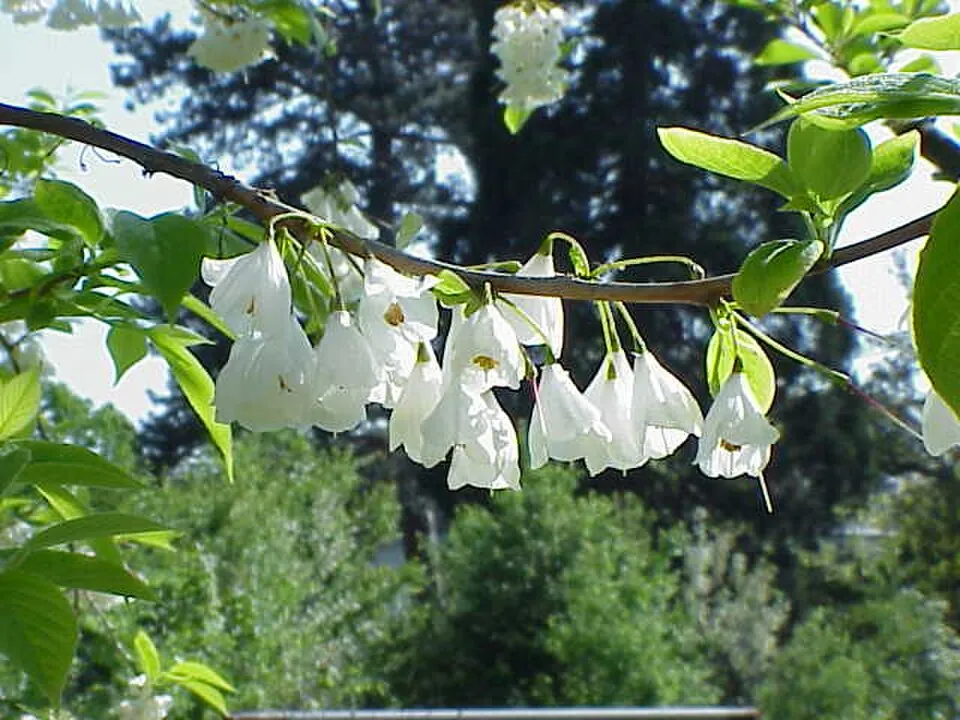
Halesia carolina, commonly known as the Carolina silverbell, is a graceful deciduous tree native to the southeastern United States, belonging to the Styracaceae family. It typically matures to a height of 30-50 feet with a moderate spread, forming an elegant, often multi-stemmed crown. Its most distinctive feature is the profusion of pendulous, bell-shaped flowers that emerge in early to mid-spring, usually white but occasionally pale pink, adorning the branches before or concurrently with the unfurling leaves. These charming blossoms, approximately 1-1.5 inches long, possess a delicate fragrance and are a significant attractant for early-season pollinators like bees.
The leaves are simple, alternate, ovate to oblong with finely serrated margins, measuring 3-6 inches in length, presenting a vibrant dark green throughout the growing season. In autumn, the foliage transforms into a soft, attractive yellow, contributing to seasonal landscape interest. Following the bloom, unique 4-winged, dry drupe fruits develop, resembling small urns or bells, which mature in fall and often persist into winter, providing additional visual appeal and sustenance for wildlife. This species thrives in moist, well-drained, acidic to neutral soils and prefers partial shade but can adapt to full sun conditions if consistent moisture is maintained.
Its relatively slow growth rate and manageable size make the Carolina silverbell an excellent choice for diverse landscape applications, from specimen plantings in residential gardens to naturalized settings and urban green spaces. The bark is smooth and light gray on younger trees, gradually developing shallow fissures and a darker hue with age.
Trusted Scientific References
1. Authoritative external sources for Halesia carolina
1.1 Wikipedia — Halesia carolina
1.2 Kew POWO (Plants of the World Online)
1.3 PubMed — peer-reviewed research
1.4 NCBI Taxonomy Browser
1.5 GBIF — Global Biodiversity
1.6Halesia Carolina should be interpreted through verified botanical identity, practical care, and responsible safety language. This recovery note adds the missing context needed for a complete profile: match light to the plant's habit, use well-drained soil, water according to season, and avoid unsupported medicinal or edible claims. For publishing, the plant can be presented as a source-backed garden plant with clear care guidance, common problem diagnosis, and conservative safety wording.
1.1.Halesia Carolina — Highlights
- ✓Native to Southeastern United States — Thrives in its natural habitat.
- ✓Stunning Spring Blooms — Pendulous, white to pale pink, bell-shaped flowers.
- ✓Attractive Fall Foliage — Leaves turn a lovely yellow in autumn.
- ✓Unique 4 — Winged Fruit — Dry drupes that persist into winter.
- ✓Pollinator Friendly — Flowers provide nectar for bees and other insects.
- ✓Moderate Growth Rate — Reaches 30-50 feet tall, manageable size.
- ✓Adaptable to Soil Conditions — Prefers moist, well-drained, acidic to neutral soils.
- ✓Partial Shade to Full Sun — Tolerates varying light conditions with adequate moisture.
- ✓Low Maintenance — Generally pest and disease resistant.
- ✓Ornamental Value — Excellent as a specimen tree or in woodland gardens.
1.2.Halesia Carolina — Quick Summary
- ✓Deciduous tree native to the southeastern United States.
- ✓Renowned for its abundant, bell-shaped white flowers in spring.
- ✓Provides ecological benefits by attracting pollinators and wildlife.
- ✓Low maintenance and adaptable to various landscape settings.
- ✓Exhibits attractive yellow fall foliage and persistent winged fruits.
- ✓No documented traditional or modern medicinal uses for humans.
2.Halesia Carolina — Nomenclature & Classification
3.Halesia Carolina — Fact Sheet
4.Halesia Carolina — Physical Description
5.Halesia Carolina — Ecological Habitat
6.Halesia Carolina — Heritage Uses
7.Halesia Carolina — Key Phytochemicals
- ✓Flavonoids — Expected to be present in leaves and flowers, acting as natural antioxidants and contributing to plant pigmentation. Specific compounds like quercetin and kaempferol derivatives are common in woody plants.
- ✓Tannins — Likely found in the bark and leaves, providing astringent properties and deterring herbivores. These polyphenolic compounds can also offer antioxidant effects.
- ✓Saponins — Potentially present in various plant parts, these glycosides can have emulsifying properties and may offer some defensive mechanisms against pests.
- ✓Lignans — Structural components of plant cell walls, lignans are also known for their potential antioxidant and anti-inflammatory activities in other plant species.
- ✓Phenolic Acids — Compounds such as chlorogenic acid and gallic acid derivatives are generally distributed throughout plant tissues, contributing to antioxidant capacity and defense.
- ✓Terpenoids — Volatile organic compounds that contribute to the plant's fragrance and may play roles in defense or communication, though specific profiles for Halesia carolina are not well-documented.
- ✓Plant Sterols — Phytosterols are common in plant cell membranes and can have various biological activities, including potential anti-inflammatory effects.
- ✓Sugars and Polysaccharides — Fundamental energy storage and structural components, contributing to the plant's growth and overall physiological processes.
8.Halesia Carolina — Scientific Evidence
- ✓Ecological Support — Halesia carolina provides significant ecological benefits by offering nectar and pollen for bees and other pollinators, contributing to biodiversity and supporting healthy ecosystems.
- ✓Air Quality Improvement — As a deciduous tree, the Carolina silverbell contributes to local air quality by absorbing carbon dioxide and releasing oxygen, enhancing the atmospheric environment.
- ✓Soil Stabilization — Its root system helps to stabilize soil, particularly in its native riparian habitats, reducing erosion and promoting soil health.
- ✓Aesthetic & Mental Well-being — The tree's stunning spring blooms and attractive form offer considerable aesthetic value, which can positively impact human mental health by reducing stress and fostering a connection with nature.
- ✓Wildlife Habitat — The persisting fruits provide a food source for small mammals and birds during the fall and winter months, supporting local wildlife populations.
- ✓Shade Provision — Its mature canopy offers valuable shade, which can help mitigate urban heat island effects and reduce energy consumption in nearby structures.
- ✓Low-Impact Landscaping — The Carolina silverbell is a low-maintenance native plant, reducing the need for intensive chemical inputs and supporting sustainable landscape practices.
- ✓Potential Antioxidant Presence — While not traditionally used medicinally, as a woody plant, Halesia carolina is hypothesized to contain various phenolic compounds that possess antioxidant properties, common in many plant species.
8.1.Halesia Carolina — Therapeutic Indications
9.Halesia Carolina — Safety Considerations
9.1.Halesia Carolina — Warnings
- ✓Undocumented Medicinal Effects — Due to a lack of traditional or modern medicinal use, specific side effects from internal consumption are not scientifically documented.
- ✓Allergic Reactions — As with any plant, individuals sensitive to plant pollen or sap may experience mild allergic reactions upon contact or during bloom season.
- ✓Unknown Internal Toxicity — Ingesting significant quantities of any part of the plant for medicinal purposes is not recommended due to unknown toxicological profiles.
- ✓Chlorosis in High pH Soils — Leaves may exhibit chlorosis (yellowing) in alkaline soils, indicating a nutrient deficiency, which is a horticultural rather than a direct human side effect.
- ✓Digestive Upset — Hypothetically, consumption of large quantities of any unresearched plant material could lead to mild digestive upset in sensitive individuals.
- ✓Skin Irritation — Direct contact with sap, though not commonly reported for Halesia carolina, could potentially cause mild skin irritation in highly sensitive individuals.
9.2.Halesia Carolina — Toxicity Assessment
- ✓Generally Safe for Ornamental Use — Halesia carolina is widely considered safe for landscaping and garden purposes, posing no known significant health risks from casual contact.
- ✓Not for Internal Medicinal Use — There is no scientific or traditional evidence supporting its internal medicinal use, and therefore, ingestion is not recommended.
- ✓Lack of Toxicity Data — Comprehensive toxicological studies on Halesia carolina for human consumption are absent, necessitating caution.
- ✓Pregnancy and Lactation — Due to the absence of safety data, use is contraindicated for pregnant or nursing individuals.
- ✓Children and Pets — While no known severe toxicity is reported, it is prudent to discourage children and pets from ingesting any part of the plant.
- ✓Horticultural Considerations — Ensure proper planting conditions to prevent plant stress, which could indirectly lead to susceptibility to pests or diseases, though generally a robust plant.
- ✓Pollen Allergies — Individuals with severe pollen allergies should be aware of its spring bloom, though its pollen is generally not considered a major allergen.
10.Halesia Carolina — Usage Guide
- ✓Ornamental Landscaping — Primarily used as a stunning specimen tree or an understory tree in residential gardens, parks, and naturalistic landscapes for its beautiful spring blooms and fall foliage.
- ✓Pollinator Garden Inclusion — Planted to attract and support native bees and other pollinators, enhancing biodiversity in garden ecosystems.
- ✓Wildlife Food Source — Integrated into wildlife-friendly landscapes, as its fruits provide sustenance for birds and small mammals in colder months.
- ✓Erosion Control — Utilized in stream bank stabilization and other areas prone to erosion due to its robust root system, particularly in its native range.
- ✓Shade Tree — Positioned to provide shade for patios, smaller structures, or understory plantings, contributing to cooler microclimates.
- ✓Native Plant Restoration — Employed in ecological restoration projects to re-establish native flora and support local ecosystems.
- ✓Educational Gardens — Featured in botanical gardens and arboretums for its aesthetic appeal and as an example of native North American flora.
- ✓Wood Crafting — Historically, the wood has been used for small decorative items or tool handles, though not a primary commercial timber.
11.Halesia Carolina — Cultivation & Care
- ✓Site Selection — Choose a location with moist, well-drained, organically rich soil and protection from harsh afternoon sun for optimal growth.
- ✓Soil Requirements — Prefers acidic to neutral pH (5.0-7.0); amend heavy clay or sandy soils with compost to improve drainage and fertility.
- ✓Watering — Requires consistent moisture, especially during dry periods and in its establishment phase; avoid waterlogging.
- ✓Light Exposure — Thrives in partial shade, mimicking its understory native habitat, but can tolerate full sun with adequate soil moisture.
- ✓Planting — Dig a hole twice as wide as the root ball and just as deep; plant at the same level as it grew in the nursery pot.
- ✓Pruning — Generally low maintenance; prune in late winter or early spring to remove dead, damaged, or crossing branches and to maintain desired shape.
- ✓Fertilization — Apply a balanced, slow-release fertilizer in spring if soil tests indicate nutrient deficiencies, avoiding excessive nitrogen.
- ✓Propagation — Can be propagated from fresh seeds (requiring stratification) or by softwood cuttings taken in early summer.
Reviewed by the Flora Medical Global Botanical Review Panel
Multi-disciplinary editorial group · Botany · Ethnobotany · Herbal-medicine literature
Who reviewed this: This page was checked by the Flora Medical Global Botanical Review Panel — an in-house editorial group of botany graduates, ethnobotany researchers, and horticulture practitioners who collectively maintain our 7,000+ plant encyclopedia. Meet the team.
Our 4-step verification process
1. Taxonomic verification
Scientific names and synonyms cross-checked against Kew POWO, World Flora Online, and The Plant List.
2. Phytochemical & medicinal cross-reference
Active compounds, traditional uses, and reported activities are cross-referenced with PubMed, USDA Dr. Duke's database, and peer-reviewed ethnobotanical literature.
3. Conservation & distribution check
Distribution, ecology, and conservation status confirmed against GBIF occurrence records and the IUCN Red List.
4. Editorial & safety review
Every entry passes an editorial pass for clarity, originality, and safety notices (toxicity, contraindications, dosage caveats) before publication.
Last reviewed:
Important medical disclaimer: This content is for educational and research purposes only. It is not medical advice and is not a substitute for consultation with a licensed healthcare provider. Do not use any herb to self-treat a medical condition without professional guidance.
Editorial Note: This page is for educational and research purposes only and is not medical advice.
Written by: Flora Medical Global Editorial Team
Reviewed by: Flora Medical Global Botanical Review Panel
Last Updated: June 15, 2026





Halesia Carolina — Comments & Community Reviews
Rate this plant