
Medical Disclaimer: This content is for educational purposes only. It is not medical advice. Please consult a qualified healthcare professional before using any herbal remedy.
Safety Overview
1.Haworthiopsis Attenuata — Overview
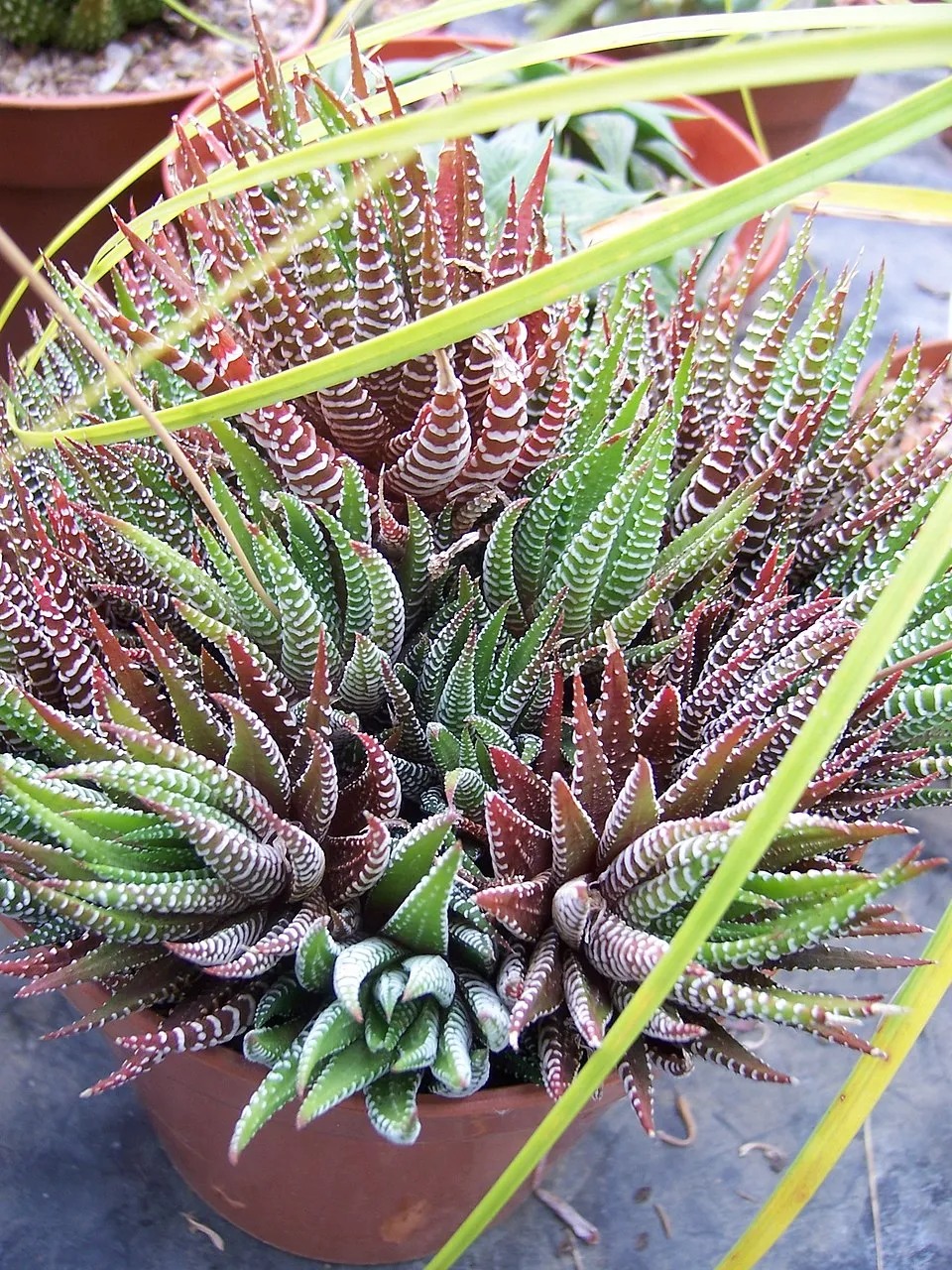
Haworthiopsis attenuata, commonly known as the zebra plant or zebra haworthiopsis, is a striking succulent species native to the Eastern Cape Province of Southern Africa, belonging to the family Asphodelaceae. This resilient perennial is celebrated for its distinctive foliage, characterized by dense, stemless rosettes of rigid, triangular, dark green leaves.
Each leaf, typically 5 to 10 cm in length, tapers to a sharp point and is adorned with prominent white tubercle bands that create a unique, zebra-like pattern, giving the plant its popular common name. These raised, pearl-like markings are present on both upper and lower leaf surfaces, distinguishing it from the similar Haworthiopsis fasciata.
The plant typically maintains a compact form, reaching a modest height of 15 to 20 cm, with rosettes up to 150 mm in diameter, making it an ideal choice for indoor cultivation and small ornamental displays. Its fibrous root system is shallow, adapted for efficient water absorption from infrequent rainfall in its arid natural habitat. During the summer months, Haworthiopsis attenuata produces slender, erect inflorescences that can extend up to 40 cm above the rosette.
These stalks bear numerous small, tubular flowers, typically white to pale pink or greenish-white, clustered loosely along the spike, primarily blooming in November and December. The inconspicuous flowers lead to small, capsular fruits containing minute seeds.
Historically, this species was classified within the genus Haworthia but was reclassified into Haworthiopsis due to distinct morphological and genetic characteristics, a change widely accepted in modern botanical taxonomy. Its natural habitat includes dry, well-draining soils, often found nestled among rocks, under shrubs, or in rocky outcrops, showcasing remarkable resilience to periods of intense drought.
Trusted Scientific References
1. Authoritative external sources for Haworthiopsis attenuata
1.1 Wikipedia — Haworthiopsis attenuata
1.2 Kew POWO (Plants of the World Online)
1.3 PubMed — peer-reviewed research
1.4 NCBI Taxonomy Browser
1.5 GBIF — Global Biodiversity
1.1.Haworthiopsis Attenuata — Defining Traits
- ✓Striking Foliage — Characterized by dark green, triangular leaves with distinctive white, pearl-like tubercles arranged in horizontal bands.
- ✓Rosette Growth Habit — Forms dense, stemless rosettes, typically 15-20 cm tall and up to 15 cm in diameter.
- ✓Drought — Tolerant — Highly adapted to arid conditions, storing water in its fleshy leaves.
- ✓Easy to Propagate — Readily produces offsets (pups) for simple propagation.
- ✓Inconspicuous Flowers — Produces small, tubular white to pale pink flowers on tall, slender inflorescences in summer.
- ✓Non — Toxic — Safe for homes with children and pets.
- ✓Reclassified Genus — Formerly part of Haworthia, now recognized under Haworthiopsis.
- ✓Vulnerable Species — Listed as Vulnerable on the Red List of South African Plants due to various threats.
- ✓Ornamental Value — Highly prized as a decorative indoor plant or for rock gardens.
- ✓Resilient and Long — Lived — Can live for many years with proper care.
1.2.Haworthiopsis Attenuata — Snapshot Summary
- ✓Distinctive Zebra-Striped Foliage — Features dark green leaves with prominent white tubercles.
- ✓Native to Southern Africa — Thrives in arid Eastern Cape Province environments.
- ✓Low-Maintenance Succulent — Ideal for beginners, requiring minimal water and bright, indirect light.
- ✓Traditional 'Intelezi' Use — Valued in isiXhosa culture for spiritual protection.
- ✓Non-Toxic to Humans and Pets — Safe for household cultivation.
- ✓Vulnerable Conservation Status — Facing threats from over-exploitation and habitat loss.
2.Haworthiopsis Attenuata — Systematic Position
3.Haworthiopsis Attenuata — Reference Facts
4.Haworthiopsis Attenuata — Structural Profile
5.Haworthiopsis Attenuata — Habitat & Distribution
6.Haworthiopsis Attenuata — Historical Applications
7.Haworthiopsis Attenuata — Active Compounds
- ✓Polysaccharides — The plant's succulent nature suggests a significant presence of complex carbohydrates, including mucilage, which contributes to water retention and may offer soothing properties.
- ✓Flavonoids — These are common plant pigments and secondary metabolites known for their antioxidant and anti-inflammatory activities, likely present in the foliage.
- ✓Saponins — Glycosides that can have various biological activities, including anti-inflammatory and immune-modulating effects, often found in members of the Asphodelaceae family.
- ✓Phenolic Compounds — A broad group of phytochemicals with strong antioxidant capabilities, essential for plant defense and potentially beneficial for human health.
- ✓Anthraquinones (Trace) — While more prominent in Aloe species, some Asphodelaceae members may contain trace amounts, which can contribute to laxative or antimicrobial effects, though not a primary constituent here.
- ✓Triterpenoids — A diverse group of compounds with potential anti-inflammatory, antimicrobial, and adaptogenic properties.
- ✓Steroids — Plant sterols, or phytosterols, are common in plant cell membranes and can have cholesterol-lowering effects in diets.
- ✓Alkaloids (Minor) — Though not a dominant feature, trace amounts of nitrogen-containing alkaloids might be present, contributing to various biological activities.
- ✓Organic Acids — Compounds like malic acid, involved in CAM photosynthesis, are present and contribute to the plant's metabolic processes and taste.
8.Haworthiopsis Attenuata — Modern Studies
- ✓Traditional Protective Uses — In traditional Southern African cultures, particularly among the isiXhosa, Haworthiopsis attenuata is known as 'intelezi' and is traditionally used for protective purposes against perceived negative influences like evil spirits and lightning.
- ✓General Wellness Support — As a component in certain traditional herbal mixtures, it is believed to contribute to overall well-being and spiritual harmony, though specific mechanisms are not scientifically detailed.
- ✓Potential Anti-inflammatory Properties — While direct scientific evidence for Haworthiopsis attenuata is limited, many succulents in the Asphodelaceae family contain compounds like saponins and flavonoids that exhibit general anti-inflammatory effects.
- ✓Antioxidant Activity — Similar to other succulents, the plant may contain phenolic compounds and other antioxidants that help combat oxidative stress in the body, supporting cellular health.
- ✓Skin Soothing Potential — The mucilaginous content, typical of many succulents, could offer topical soothing properties for minor skin irritations, analogous to Aloe vera, though not specifically documented for this species.
- ✓Hydration and Emollient Effects — The succulent leaves store water and might possess compounds that, if extracted, could contribute to skin hydration and emollient effects when applied topically.
- ✓Immune System Modulation — Certain plant compounds found in related species are known to interact with the immune system, potentially offering general immune support, though specific research on Haworthiopsis attenuata is lacking.
- ✓Digestive Comfort (Traditional) — In some traditional contexts involving herbal mixtures, plants with mucilage are used to support digestive comfort, which might be an extrapolated benefit for this species.
8.1.Haworthiopsis Attenuata — Indications & Uses
9.Haworthiopsis Attenuata — Adverse Effects
9.1.Haworthiopsis Attenuata — Reported Side Effects
- ✓Allergic Reactions — Although generally non-toxic, individuals with extreme plant sensitivities might experience mild skin irritation upon direct contact with sap.
- ✓Gastric Upset (Hypothetical) — While non-toxic, ingestion of large quantities of any plant material could theoretically lead to mild digestive discomfort in sensitive individuals.
- ✓Overwatering-induced Root Rot — Incorrect cultivation practices, particularly excessive watering, can lead to root rot, causing plant decline rather than direct adverse effects on humans.
- ✓Choking Hazard — Small plant parts, if detached, could pose a choking hazard for young children or pets if ingested.
- ✓Interaction with Medications (Theoretical) — Given its limited medicinal study, theoretical interactions with pharmaceutical drugs cannot be entirely ruled out, though highly unlikely due to its non-medicinal use.
- ✓Skin Sensitivity — Prolonged handling without gloves might cause minor, temporary skin dryness or irritation in very sensitive individuals.
9.2.Haworthiopsis Attenuata — Clinical Safety Notes
- ✓Non-Toxic — Haworthiopsis attenuata is generally considered non-toxic to humans and common pets, making it safe for indoor environments.
- ✓Child and Pet Friendly — Its non-toxic nature makes it a suitable plant for households with children and pets, reducing concerns about accidental ingestion.
- ✓Minimal Skin Irritation — Direct contact with the plant sap typically causes no irritation, though sensitive individuals should exercise caution.
- ✓No Known Systemic Toxicity — There is no documented evidence of systemic toxicity or adverse effects from ingestion or topical application in humans or animals.
- ✓Environmental Safety — Poses no significant environmental risks when grown responsibly, being a non-invasive species.
- ✓Handling Precautions — While generally safe, basic hygiene like washing hands after handling plants is always recommended to avoid minor irritations from soil or plant debris.
- ✓Conservation Status Awareness — While not a direct safety concern for individuals, its 'Vulnerable' conservation status highlights the importance of sourcing from sustainable cultivators.
10.Haworthiopsis Attenuata — How to Use
- ✓Ornamental Display — Primarily cultivated as an attractive, low-maintenance houseplant or garden succulent in suitable climates. Place in terrariums, on windowsills, or in rock gardens.
- ✓Traditional 'Intelezi' Use — In isiXhosa tradition, the plant is used as 'intelezi' for spiritual protection; this may involve placement in specific areas of a home or kraal, or incorporation into ritualistic preparations.
- ✓Topical Application (Traditional) — While not a primary use, if incorporated into traditional herbal mixtures, preparations might involve crushing leaves for external application, similar to other succulents for skin issues.
- ✓Infusion (Traditional, External) — Traditional remedies might involve steeping parts of the plant in water to create a liquid for external washes or spiritual cleansing, as part of 'intelezi' practices.
- ✓Decoction (Traditional, External) — For more robust traditional preparations, boiling plant parts to extract compounds for external use or ritualistic bathing could be employed.
- ✓Companion Planting — Use in succulent arrangements or xeriscaping, complementing other drought-tolerant plants due to its compact size and striking appearance.
- ✓Educational Specimen — Utilized in botanical gardens and educational settings to showcase succulent adaptations and traditional plant knowledge.
11.Haworthiopsis Attenuata — Propagation & Care
- ✓Propagation — Easily propagated by removing offsets (pups) from the mother plant, ideally during warmer months, or by leaf cuttings. Seed propagation is less common.
- ✓Soil Requirements — Thrives in well-draining cactus or succulent potting mix; adding sand or perlite improves drainage, preventing root rot.
- ✓Light Conditions — Prefers bright, indirect sunlight. While tolerant of low light, optimal leaf coloration and growth occur with ample indirect light.
- ✓Watering Schedule — Drought-tolerant; allow the soil to dry out completely between waterings. Overwatering is the most common cause of plant failure.
- ✓Temperature and Humidity — Ideal temperatures are 15-27°C (60-80°F). Tolerates typical indoor humidity but avoid cold drafts and temperatures below 10°C (50°F).
- ✓Container Selection — Use pots with adequate drainage holes to prevent waterlogging. Can be grown in interesting containers for ornamental display.
- ✓Fertilization — Fertilize sparingly during the growing season (spring/summer) with a diluted succulent-specific fertilizer, usually once every 2-3 months.
- ✓Pest Management — Generally pest-resistant, but occasionally susceptible to mealybugs or spider mites; treat with insecticidal soap if needed.
Reviewed by the Flora Medical Global Botanical Review Panel
Multi-disciplinary editorial group · Botany · Ethnobotany · Herbal-medicine literature
Who reviewed this: This page was checked by the Flora Medical Global Botanical Review Panel — an in-house editorial group of botany graduates, ethnobotany researchers, and horticulture practitioners who collectively maintain our 7,000+ plant encyclopedia. Meet the team.
Our 4-step verification process
1. Taxonomic verification
Scientific names and synonyms cross-checked against Kew POWO, World Flora Online, and The Plant List.
2. Phytochemical & medicinal cross-reference
Active compounds, traditional uses, and reported activities are cross-referenced with PubMed, USDA Dr. Duke's database, and peer-reviewed ethnobotanical literature.
3. Conservation & distribution check
Distribution, ecology, and conservation status confirmed against GBIF occurrence records and the IUCN Red List.
4. Editorial & safety review
Every entry passes an editorial pass for clarity, originality, and safety notices (toxicity, contraindications, dosage caveats) before publication.
Last reviewed:
Important medical disclaimer: This content is for educational and research purposes only. It is not medical advice and is not a substitute for consultation with a licensed healthcare provider. Do not use any herb to self-treat a medical condition without professional guidance.
Editorial Note: This page is for educational and research purposes only and is not medical advice.
Written by: Flora Medical Global Editorial Team
Reviewed by: Flora Medical Global Botanical Review Panel
Last Updated: June 15, 2026





Haworthiopsis Attenuata — Comments & Community Reviews
Rate this plant