
Medical Disclaimer: This content is for educational purposes only. It is not medical advice. Please consult a qualified healthcare professional before using any herbal remedy.
Safety Overview
1.Hedge Mustard — Introduction & Highlights
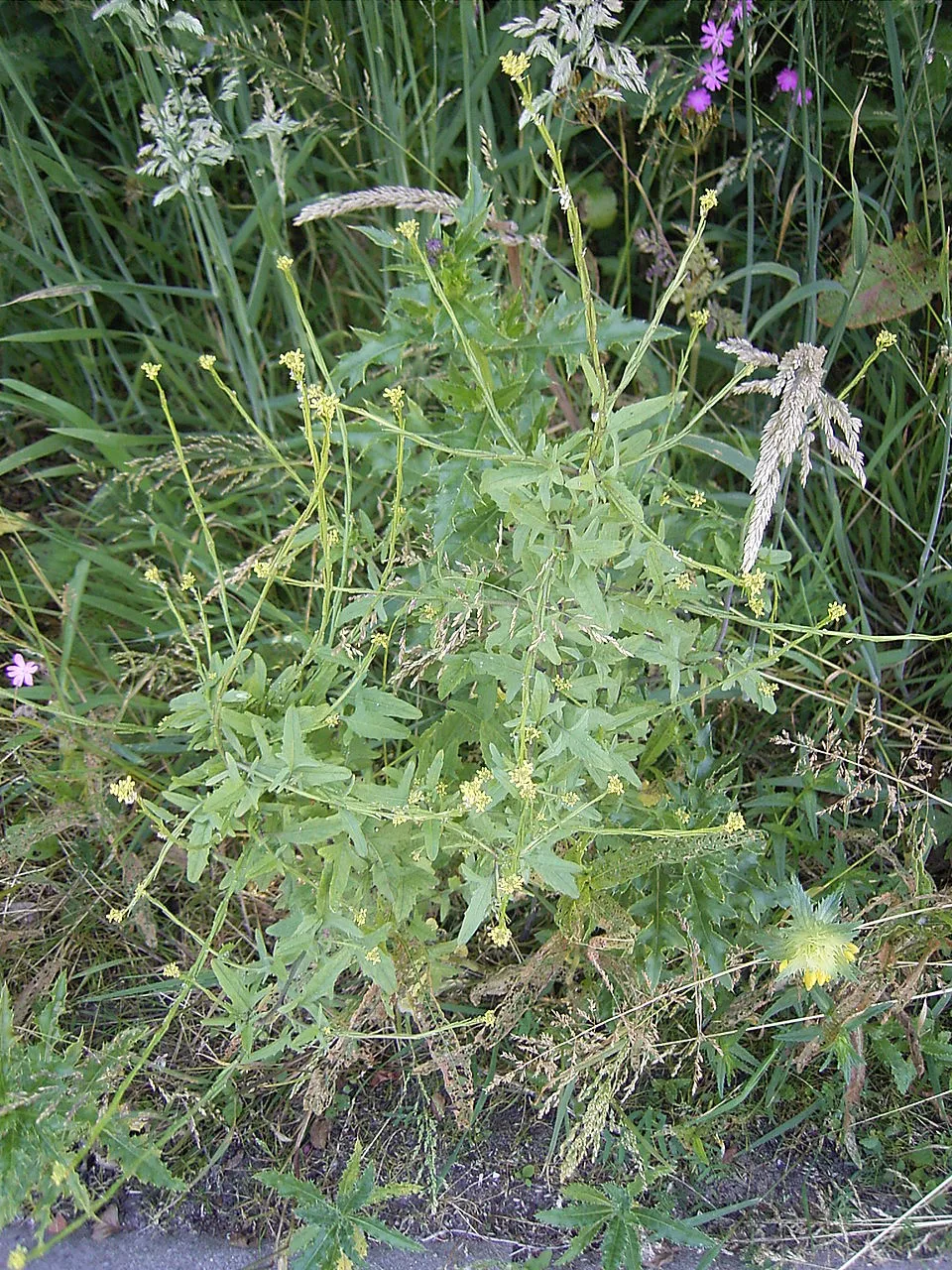
Hedge Mustard, scientifically known as Sisymbrium officinale, is a ubiquitous herbaceous annual or biennial plant belonging to the diverse Brassicaceae family, which also includes common vegetables like broccoli and cabbage. This resilient species is characterized by its slender, erect stems, often growing up to 80 cm tall, which are typically branched, hairy, and can display a reddish tinge. Its leaves are deeply lobed and pinnatisect, resembling those of a dandelion, with the basal leaves forming a rosette and becoming progressively smaller and less divided higher up the stem.
The plant produces small, pale yellow, four-petaled flowers arranged in elongated racemes, characteristic of the mustard family. These flowers mature into slender, upward-pointing siliques (seed pods) that contain numerous tiny, brown, oval seeds.
Native to Europe, Sisymbrium officinale has naturalized across temperate regions worldwide, including parts of Asia, Africa, and North America, thriving in disturbed soils. It is commonly found colonizing roadsides, waste grounds, cultivated fields, and gardens, indicating its adaptable and somewhat invasive nature.
Its broad geographic distribution and historical presence in human settlements underscore its long-standing interaction with various cultures.
Taxonomically, Sisymbrium officinale was first described by Carl Linnaeus and later reclassified by Giovanni Antonio Scopoli. Its common name, 'Hedge Mustard,' refers to its preferred habitat along hedges and field margins, while 'officinale' denotes its historical use in medicine. The plant has a rich ethnobotanical history, having been valued in traditional European herbalism for centuries, particularly for respiratory ailments.
Furthermore, its therapeutic properties have been recognized in other ancient medical systems, including parts of Ayurveda and Traditional Chinese Medicine (TCM), where it was employed for similar indications, such as soothing coughs and hoarseness. This widespread traditional recognition highlights its perceived efficacy and cultural significance as a medicinal herb, even as modern research continues to explore its complex phytochemistry and pharmacological actions.
Trusted Scientific References
1. Authoritative external sources for Sisymbrium officinale
1.1 Wikipedia — Sisymbrium officinale
1.2 Kew POWO (Plants of the World Online)
1.3 PubMed — peer-reviewed research
1.4 NCBI Taxonomy Browser
1.5 GBIF — Global Biodiversity
1.1.Hedge Mustard — Standout Qualities
- ✓Botanical Name — Sisymbrium officinale
- ✓Family — Brassicaceae (Mustard family)
- ✓Common Names — Hedge Mustard, English Watercress, Erysimum, Herb of Sin
- ✓Traditional Uses — Respiratory ailments, vocal cord support, digestive aid
- ✓Bioactive Compounds — Glucosinolates, flavonoids, triterpenes, cardiac glycosides
- ✓Key Properties — Anti-inflammatory, antioxidant, antimicrobial (preliminary research)
- ✓Habitat — Roadsides, waste grounds, disturbed areas
- ✓Geographic Origin — Native to Europe, naturalized globally
- ✓Growth Habit — Annual or biennial herb, erect stems, lobed leaves
- ✓Flowers — Small, yellow, four-petaled, in racemes
- ✓Seeds — Slender siliques containing tiny brown seeds
- ✓Critical Safety Note — Contains potentially toxic cardiac glycosides
- ✓Contraindications — Pregnancy, heart disease, low potassium, specific drug interactions
- ✓Culinary Use — Young leaves sometimes eaten, but mature parts are risky
- ✓SEO Focus — Hedge Mustard benefits, side effects, traditional uses, safety
1.2.Hedge Mustard — Concise Overview
- ✓Hedge Mustard (Sisymbrium officinale) is a Brassicaceae plant with a long history in traditional medicine.
- ✓Traditionally used for respiratory issues, especially coughs, hoarseness, and sore throats.
- ✓Contains beneficial compounds like glucosinolates, flavonoids, and triterpenes with antioxidant and anti-inflammatory properties.
- ✓CRITICAL SAFETY WARNING — Contains cardiac glycosides that are POSSIBLY UNSAFE when taken orally, potentially causing severe heart issues.
- ✓Contraindicated for pregnant/breastfeeding individuals, those with heart disease, or low potassium levels.
- ✓Interacts dangerously with multiple medications, including heart drugs and diuretics.
- ✓Internal use is generally NOT RECOMMENDED without strict medical supervision due to toxicity.
2.Hedge Mustard — Taxonomic Classification
3.Hedge Mustard — Reference Facts
4.Hedge Mustard — Plant Morphology
5.Hedge Mustard — Habitat & Distribution
6.Hedge Mustard — Cultural & Traditional Roles
7.Hedge Mustard — Secondary Metabolites
- ✓Glucosinolates — These sulfur-containing glycosides, such as sinigrin and gluconasturtiin, are precursors to isothiocyanates (e.g., allyl isothiocyanate) upon hydrolysis by the enzyme myrosinase. They are known for their pungent flavor and have been studied for potential anticancer, antimicrobial, and anti-inflammatory activities.
- ✓Flavonoids — Key compounds include quercetin, kaempferol, and their glycosides. These powerful antioxidants are responsible for much of the plant's free-radical scavenging capacity and exhibit anti-inflammatory, antiviral, and cardioprotective effects.
- ✓Triterpenes — Notable triterpenoids like oleanolic acid and ursolic acid are present. These compounds are recognized for their hepatoprotective, anti-inflammatory, and anticarcinogenic properties, contributing to the plant's therapeutic profile.
- ✓Cardiac Glycosides — Sisymbrium officinale contains cardiac glycosides, which are potent compounds that can affect heart function. These include compounds like erysimoside and erysimin. While some cardiac glycosides are used in conventional medicine (e.g., digoxin), their presence in Hedge Mustard makes its internal use potentially hazardous due to dose-dependent toxicity.
- ✓Essential Oils — The plant contains volatile oils, with mustard oil (allyl isothiocyanate) being a significant component. These oils contribute to the plant's characteristic aroma and have demonstrated antibacterial, antifungal, and expectorant actions.
- ✓Phenolic Acids — Compounds such as caffeic acid, ferulic acid, and p-coumaric acid are present. These phenolics contribute to the plant's antioxidant and anti-inflammatory properties, often working synergistically with flavonoids.
- ✓Vitamins — Particularly rich in vitamin C (ascorbic acid), a crucial antioxidant and immune booster, and vitamin A precursors (carotenoids), important for vision and immune function.
- ✓Minerals — Contains various essential minerals, including potassium, calcium, and iron, which are vital for numerous physiological processes.
- ✓Mucilage — Polysaccharide compounds that form a soothing gel when hydrated. This mucilage is responsible for the plant's traditional use in soothing irritated mucous membranes, particularly in the throat and digestive tract.
- ✓Sterols — Phytosterols like beta-sitosterol are found, which are known for their potential cholesterol-lowowering and anti-inflammatory effects.
- ✓Saponins — These soap-like compounds may contribute to expectorant and anti-inflammatory activities, though their specific role in Hedge Mustard's pharmacology requires further investigation.
8.Hedge Mustard — Research Insights
- ✓Respiratory Support — Traditionally, Hedge Mustard has been a primary remedy for ailments affecting the vocal cords and throat, such as hoarseness, laryngitis, and pharyngitis. Its mucilaginous compounds are believed to soothe irritated mucous membranes, providing a protective layer.
- ✓Expectorant Properties — In traditional Western herbalism, Sisymbrium officinale was used to help clear congested airways by promoting the expulsion of mucus. This action is attributed to certain volatile compounds that stimulate the respiratory tract.
- ✓Anti-inflammatory Action — Preliminary pharmacological research suggests that extracts of Hedge Mustard possess anti-inflammatory compounds, such as flavonoids and triterpenes, which may help reduce inflammation in various tissues, including the respiratory system.
- ✓Antioxidant Activity — The plant is rich in antioxidants like flavonoids and vitamin C, which combat oxidative stress by neutralizing free radicals. This protective effect can contribute to cellular health and overall wellness.
- ✓Antimicrobial Effects — Studies indicate that Hedge Mustard contains compounds, particularly glucosinolates and their hydrolysis products like isothiocyanates, that exhibit antibacterial and antifungal properties, potentially aiding in fighting certain infections.
- ✓Digestive Health — Historically, some cultures have used Hedge Mustard as a mild digestive aid, believed to stimulate appetite and support healthy gastrointestinal function, although specific mechanisms are less well-documented.
- ✓Diuretic Properties — Traditional uses also point to its mild diuretic effects, potentially assisting the body in expelling excess fluids and supporting kidney function, though this should be approached with caution due to other constituents.
- ✓Wound Healing (Topical) — Applied externally, poultices of Hedge Mustard were traditionally used to aid in the healing of minor skin irritations, cuts, and sores, potentially due to its antimicrobial and anti-inflammatory compounds.
- ✓Immune System Modulation — The presence of vitamins, particularly vitamin C, and other bioactive compounds may contribute to supporting a healthy immune response, enhancing the body's natural defenses.
- ✓Liver Support — Some traditional texts mention a role for Sisymbrium officinale in supporting liver health, possibly linked to its antioxidant and anti-inflammatory properties, though modern evidence is limited.
- ✓Traditional Ayurvedic Use — In some Ayurvedic practices, Hedge Mustard is valued for balancing Kapha and Vata doshas, particularly in conditions involving respiratory congestion and throat discomfort, utilizing its warming and pungent properties.
- ✓Traditional Chinese Medicine (TCM) Application — Within TCM, this herb is sometimes employed to clear heat and detoxify, especially in conditions manifesting as sore throats or respiratory infections, aligning with its purported antimicrobial effects.
8.1.Hedge Mustard — Therapeutic Indications
9.Hedge Mustard — Adverse Effects
9.1.Hedge Mustard — Side Effects & Warnings
- ✓Cardiac Toxicity — The most significant risk; Hedge Mustard contains cardiac glycosides that can cause serious heart rhythm disorders, especially in sensitive individuals or at higher doses.
- ✓Gastrointestinal Distress — Ingestion can lead to severe nausea, vomiting, and diarrhea due to the irritating nature of some compounds and the effects of cardiac glycosides.
- ✓Electrolyte Imbalance — The emetic and purgative effects, combined with potential diuretic action, can lead to significant loss of potassium (hypokalemia), exacerbating cardiac risks.
- ✓Skin Irritation — Topical application may cause skin irritation, redness, or allergic reactions in sensitive individuals, necessitating a patch test.
- ✓Allergic Reactions — As with many plants, individuals may experience allergic reactions, including skin rashes, itching, or respiratory symptoms, upon contact or ingestion.
- ✓Drowsiness or Sedation — While not extensively documented, some individuals may experience central nervous system effects such as drowsiness.
- ✓Liver and Kidney Strain — Prolonged or high-dose internal use might potentially strain the liver and kidneys, although specific evidence is limited.
9.2.Hedge Mustard — Safety Overview
- ✓Pregnancy and Breastfeeding — Hedge Mustard is POSSIBLY UNSAFE during pregnancy and breastfeeding due to its cardiac glycoside content, which can harm the fetus or infant and potentially induce uterine contractions. Avoid use completely.
- ✓Heart Conditions — Individuals with pre-existing heart disease, including arrhythmias or congestive heart failure, should AVOID Hedge Mustard. Its cardiac glycosides can worsen heart conditions or interfere with prescribed medications like digoxin.
- ✓Low Potassium Levels (Hypokalemia) — People with low potassium should strictly AVOID Hedge Mustard. Cardiac glycosides are more toxic in the presence of hypokalemia, significantly increasing the risk of severe side effects.
- ✓Drug Interactions — Hedge Mustard can interact dangerously with several medications, including digoxin, stimulant laxatives, diuretic drugs, quinine, and certain antibiotics (tetracyclines, macrolides), intensifying side effects or altering drug efficacy.
- ✓Surgical Procedures — Due to its potential effects on the heart and electrolytes, it is advisable to discontinue Hedge Mustard at least two weeks prior to any scheduled surgery.
- ✓Children and Infants — Due to the significant toxicity concerns, Hedge Mustard should NEVER be administered to children or infants.
- ✓Dosage Uncertainty — There is insufficient reliable scientific information to determine an appropriate and safe dose of Hedge Mustard for internal use, emphasizing the high risk of self-medication.
- ✓Professional Consultation — Always consult a qualified healthcare professional or medical herbalist before considering any use of Hedge Mustard, especially internally, given its potent and potentially dangerous constituents.
- ✓External Use Caution — Even for external applications, caution is advised. Conduct a patch test on a small area of skin to check for adverse reactions before widespread use.
10.Hedge Mustard — Application Forms
- ✓Herbal Infusion (Tea) — Traditionally, dried leaves and flowering tops are steeped in hot water to create an infusion, used for soothing sore throats and coughs. Use approximately 1-2 teaspoons of dried herb per cup of boiling water, steeped for 5-10 minutes. Due to cardiac glycosides, this method requires extreme caution and is generally not recommended for internal use without expert guidance.
- ✓Tincture Preparation — A tincture can be made by macerating fresh or dried plant material in alcohol. This concentrates the compounds, but also the potentially toxic cardiac glycosides, making internal use highly risky and generally contraindicated.
- ✓Gargle Solution — An infusion or diluted tincture (prepared with extreme caution) can be used as a gargle for throat irritation, offering localized relief without internal ingestion, though absorption through mucous membranes is still a consideration.
- ✓Poultice (External Use) — Fresh, crushed leaves can be applied as a poultice to minor skin irritations, cuts, or bruises. This traditional external application is considered safer than internal use but still requires patch testing.
- ✓Topical Oil Infusion — Infusing dried Hedge Mustard in a carrier oil (like olive or almond oil) can create a topical application for muscle aches or skin conditions, again, with caution for skin sensitivity.
- ✓Culinary Use (Young Leaves) — Young, tender leaves can be eaten raw in salads or cooked like other greens, offering a pungent, mustard-like flavor. However, mature plants and flowering parts should be avoided due to increased concentration of potentially toxic compounds.
- ✓Syrups for Coughs — Historically, the plant was incorporated into herbal syrups for coughs and hoarseness. These preparations aimed to mask the bitter taste and provide a soothing effect, though the safety concerns remain.
- ✓Decoction — For tougher plant parts, a decoction involves simmering the herb in water for a longer period. This method is less common for Hedge Mustard, as its active compounds are often water-soluble and can be extracted via infusion.
- ✓Vinegar Extract — Some traditional herbalists prepared vinegar extracts, which could be used topically or diluted for gargles. The acidity of vinegar might extract different compounds compared to alcohol or water.
- ✓Homeopathic Preparations — In homeopathy, highly diluted preparations of Sisymbrium officinale are sometimes used, based on the principle of 'like cures like,' with the extreme dilution theoretically mitigating toxicity.
11.Hedge Mustard — Growing Guide
- ✓Soil Preference — Hedge Mustard thrives in well-drained, moderately fertile to poor soils, tolerating a wide range of soil types from sandy to clayey. It prefers a neutral to slightly alkaline pH.
- ✓Sunlight Requirements — It requires full sun exposure for optimal growth, needing at least 6-8 hours of direct sunlight daily.
- ✓Water Needs — While somewhat drought-tolerant once established, consistent moisture is beneficial, especially during germination and early growth. Avoid waterlogging.
- ✓Propagation — Primarily propagated by seeds, which can be sown directly into the soil in early spring or autumn. Seeds typically germinate quickly.
- ✓Planting Depth and Spacing — Sow seeds thinly at a depth of about 0.5 cm (0.2 inches). Once seedlings emerge, thin them to provide adequate spacing, typically 15-20 cm (6-8 inches) apart.
- ✓Climate Adaptability — This plant is highly adaptable and can grow in various temperate climates, showing good cold tolerance.
- ✓Fertilization — Generally, Hedge Mustard does not require heavy fertilization. In very poor soils, a light application of balanced organic fertilizer might be beneficial.
- ✓Pest and Disease Resistance — It is relatively resistant to most common pests and diseases, though it can occasionally be affected by aphids or fungal spots, especially in humid conditions.
- ✓Harvesting — Leaves and flowering tops are typically harvested before or during the early flowering stage for medicinal use, as this is when the concentration of active compounds is often highest.
- ✓Weed Control — As a prolific self-seeder, managing its spread and preventing it from becoming a weed in cultivated areas is important. Regular weeding around desired plants is recommended.
Reviewed by the Flora Medical Global Botanical Review Panel
Multi-disciplinary editorial group · Botany · Ethnobotany · Herbal-medicine literature
Who reviewed this: This page was checked by the Flora Medical Global Botanical Review Panel — an in-house editorial group of botany graduates, ethnobotany researchers, and horticulture practitioners who collectively maintain our 7,000+ plant encyclopedia. Meet the team.
Our 4-step verification process
1. Taxonomic verification
Scientific names and synonyms cross-checked against Kew POWO, World Flora Online, and The Plant List.
2. Phytochemical & medicinal cross-reference
Active compounds, traditional uses, and reported activities are cross-referenced with PubMed, USDA Dr. Duke's database, and peer-reviewed ethnobotanical literature.
3. Conservation & distribution check
Distribution, ecology, and conservation status confirmed against GBIF occurrence records and the IUCN Red List.
4. Editorial & safety review
Every entry passes an editorial pass for clarity, originality, and safety notices (toxicity, contraindications, dosage caveats) before publication.
Last reviewed:
Important medical disclaimer: This content is for educational and research purposes only. It is not medical advice and is not a substitute for consultation with a licensed healthcare provider. Do not use any herb to self-treat a medical condition without professional guidance.
Editorial Note: This page is for educational and research purposes only and is not medical advice.
Written by: Flora Medical Global Editorial Team
Reviewed by: Flora Medical Global Botanical Review Panel
Last Updated: June 15, 2026





Hedge Mustard — Comments & Community Reviews
Rate this plant