
Medical Disclaimer: This content is for educational purposes only. It is not medical advice. Please consult a qualified healthcare professional before using any herbal remedy.
Safety Overview
1.Hedychium Garden — Essential Profile
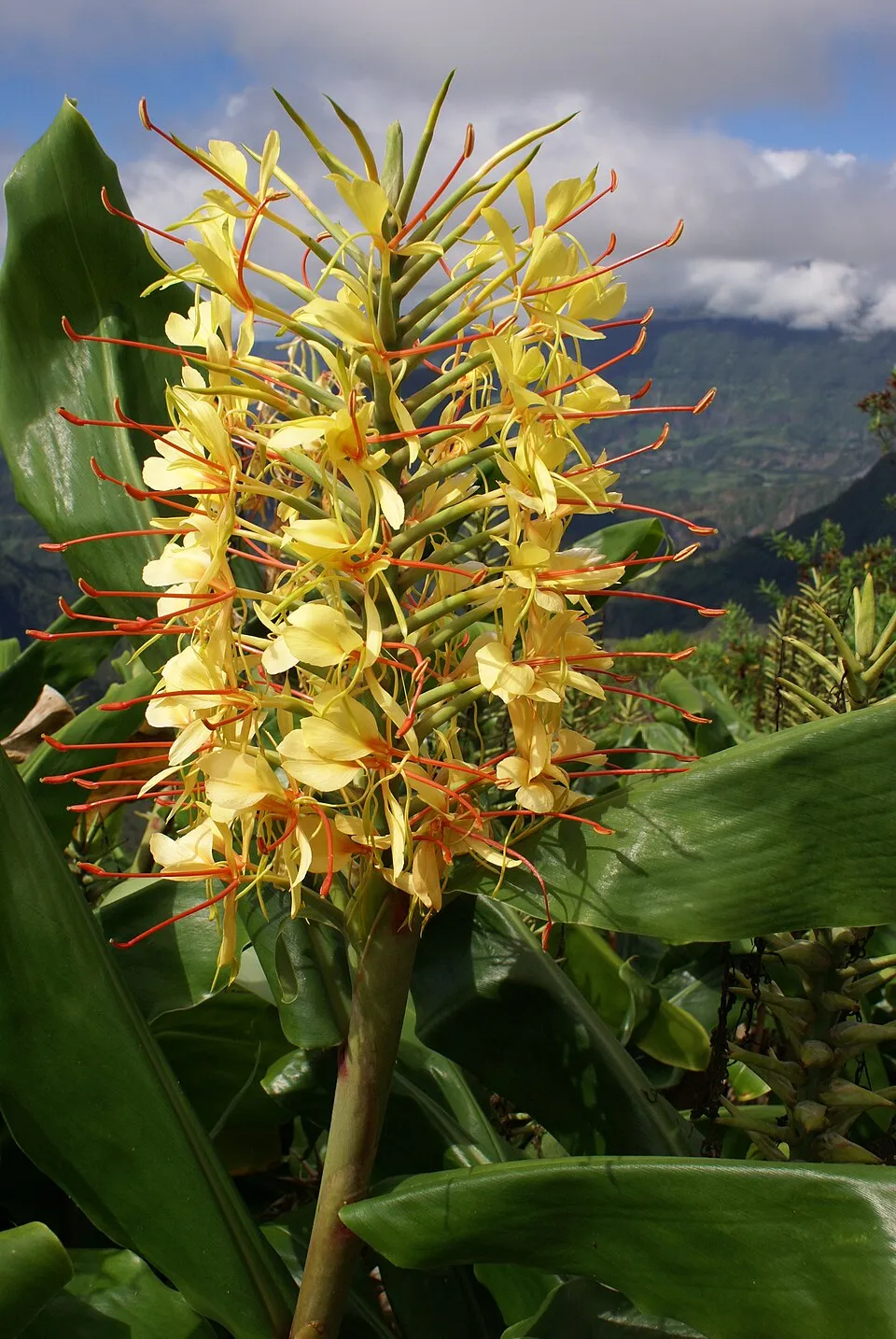
Hedychium gardnerianum, commonly known as Kahili ginger or Ginger Lily, is a striking herbaceous perennial belonging to the Zingiberaceae family, native to the moist tropical forests of the eastern Himalayas, encompassing regions of northern India, Nepal, and Bhutan. This species forms robust clumps of upright, leafy pseudostems that can reach impressive heights of 1.5 to 2.5 meters (5 to 8 feet) in optimal conditions. Its lanceolate to oblong leaves are glossy green on the upper surface, often with a powdery-white underside, and are arranged spirally along the stem, growing up to 60 cm (2 feet) long and 15 cm (6 inches) wide.
The plant is celebrated for its spectacular terminal inflorescences, which emerge in late summer to autumn. These erect, dense spikes, typically 45-60 cm (1.5-2 feet) tall, are densely packed with bright orange-red bracts. From these bracts, numerous pure white to pale yellow flowers unfurl, each featuring a prominent, long, bright orange-red stamen and a distinctive two-lobed, spoon-shaped labellum often tinged orange.
The flowers emit a strong, sweet, and spicy fragrance, reminiscent of jasmine or gardenia, making it a highly valued ornamental plant in tropical and subtropical gardens globally. After successful pollination, it produces thin-walled, three-valved orange capsules that split open to reveal small, sticky, shiny bright red seeds, which are dispersed by birds and mammals, contributing to its naturalization in areas like the Caribbean and Hawaii, where it can sometimes become an invasive species.
Trusted Scientific References
1. Authoritative external sources for Hedychium gardnerianum
1.1 Wikipedia — Hedychium gardnerianum
1.2 Kew POWO (Plants of the World Online)
1.3 PubMed — peer-reviewed research
1.4 NCBI Taxonomy Browser
1.5 GBIF — Global Biodiversity
1.6Hedychium Garden should be interpreted through verified botanical identity, practical care, and responsible safety language. This recovery note adds the missing context needed for a complete profile: match light to the plant's habit, use well-drained soil, water according to season, and avoid unsupported medicinal or edible claims. For publishing, the plant can be presented as a source-backed garden plant with clear care guidance, common problem diagnosis, and conservative safety wording.
1.1.Hedychium Garden — Highlights
- ✓Botanical Family — Member of the Zingiberaceae (ginger) family.
- ✓Native Range — Indigenous to the eastern Himalayas (India, Nepal, Bhutan).
- ✓Distinctive Flowers — Features showy, fragrant yellow flowers with prominent orange-red stamens and a unique labellum.
- ✓Rhizomatous Perennial — Grows from thick, underground rhizomes, forming dense clumps.
- ✓Aromatic Qualities — Emits a strong, sweet, and spicy fragrance, highly prized in gardens.
- ✓Medicinal Uses — Traditionally employed for anti-inflammatory, analgesic, and digestive support.
- ✓Ornamental Value — Widely cultivated globally for its dramatic foliage and spectacular floral display.
- ✓Invasive Potential — Recognized as an invasive species in some tropical and subtropical regions due to vigorous growth and seed dispersal.
- ✓Pseudostems — Produces tall, upright pseudostems formed by clasping leaf bases.
- ✓Adaptable Growth — Can be grown in containers in cooler climates and overwintered indoors.
1.2.Hedychium Garden — In Brief
- ✓Hedychium gardnerianum is a fragrant, ornamental perennial from the Himalayas, known for its showy yellow and red flowers.
- ✓Its rhizomes are traditionally valued for anti-inflammatory, analgesic, and digestive properties.
- ✓Key active compounds include diarylheptanoids, essential oils, and sesquiterpenes.
- ✓Cultivated for its dramatic appearance, it requires warm, humid conditions and can be grown in containers.
- ✓Caution is advised for pregnant individuals, those on blood thinners, and against its invasive potential in certain ecosystems.
2.Hedychium Garden — Scientific Identity
3.Hedychium Garden — Key Data
4.Hedychium Garden — Physical Description
5.Hedychium Garden — Ecological Habitat
6.Hedychium Garden — Folk Medicine Applications
7.Hedychium Garden — Phytochemistry
- ✓Diarylheptanoids — A characteristic class of phenolic compounds, including hedychilactones and hedychins, known for their potent anti-inflammatory and antioxidant activities.
- ✓Essential Oils — Comprising a complex mixture of monoterpenes (e.g., β-pinene, α-pinene, limonene) and sesquiterpenes (e.g., zingiberene, β-caryophyllene, humulene), responsible for the plant's characteristic fragrance and various biological activities like antimicrobial and analgesic effects.
- ✓Flavonoids — A diverse group of polyphenolic compounds such present in the leaves and rhizomes, contributing to antioxidant and anti-inflammatory properties.
- ✓Phenolic Acids — Such as caffeic acid and ferulic acid derivatives, which are known for their antioxidant and free-radical scavenging capabilities.
- ✓Steroids — Plant sterols and triterpenoids are found in the rhizomes, potentially contributing to adaptogenic and anti-inflammatory actions.
- ✓Carbohydrates — Primarily starch, which is abundantly stored in the rhizomes, serving as an energy reserve for the plant.
- ✓Resins and Oleoresins — Complex mixtures containing various active compounds, contributing to the pungent taste and therapeutic effects of the rhizome.
- ✓Fatty Acids — Present in trace amounts, contributing to the overall nutritional profile and cellular structure.
8.Hedychium Garden — Evidence-Based Benefits
- ✓Anti-inflammatory Action — The rhizomes of Kahili ginger contain a rich profile of diarylheptanoids and specific essential oils that have demonstrated significant anti-inflammatory properties by actively inhibiting the production of pro-inflammatory mediators and pathways within the body.
- ✓Analgesic Effects — Compounds within Hedychium gardnerianum, particularly certain sesquiterpenes, are believed to contribute to pain relief by modulating neural pathways involved in pain perception, offering a natural approach to managing discomfort.
- ✓Digestive Aid — Similar to its renowned relative, true ginger, components found in Hedychium gardnerianum can stimulate the secretion of digestive enzymes and help reduce gastrointestinal spasms, thereby assisting in the relief of indigestion, bloating, and flatulence.
- ✓Anti-emetic Properties — Traditionally, the rhizomes of Kahili ginger have been employed to combat symptoms of nausea and vomiting, suggesting a potential role in calming the digestive system and modulating emetic responses.
- ✓Antioxidant Support — The plant's extracts, particularly from the rhizome, possess antioxidant capacities attributed to phenolic compounds, which help neutralize free radicals and protect cellular integrity against oxidative stress.
- ✓Antimicrobial Activity — Certain essential oil constituents and phytochemicals from Hedychium gardnerianum have shown in vitro antimicrobial effects against various pathogens, indicating potential for combating bacterial and fungal infections.
- ✓Respiratory Support — In some traditional systems, preparations from Kahili ginger are used to alleviate symptoms of respiratory congestion and coughs, likely due to its warming and expectorant properties.
- ✓Circulatory Enhancement — Similar to other gingers, components may mildly stimulate peripheral circulation, potentially aiding in warming the body and improving blood flow to extremities.
8.1.Hedychium Garden — Therapeutic Indications
9.Hedychium Garden — Cautions & Contraindications
9.1.Hedychium Garden — Reported Side Effects
- ✓Gastrointestinal Upset — May cause mild stomach upset, heartburn, or diarrhea in sensitive individuals, especially with high doses.
- ✓Allergic Reactions — Skin rashes, itching, or respiratory symptoms are possible in individuals sensitive to plants in the Zingiberaceae family.
- ✓Skin Irritation — Topical application of fresh rhizome or concentrated essential oil may cause skin irritation or contact dermatitis in some users.
- ✓Blood Thinning Effect — Like true ginger, it may possess mild anti-platelet activity, potentially increasing the risk of bleeding when used with anticoagulant medications.
- ✓Invasive Potential — Environmentally, its vigorous growth and seed dispersal can lead to Hedychium gardnerianum becoming an invasive species in tropical and subtropical regions, outcompeting native flora.
- ✓Hypotension — Very high doses might theoretically lead to a mild drop in blood pressure, though this is not commonly reported with typical use.
9.2.Hedychium Garden — Clinical Safety Notes
- ✓Professional Consultation — Always consult a qualified healthcare practitioner before using Hedychium gardnerianum, especially for medicinal purposes or if you have underlying health conditions.
- ✓Pregnancy & Lactation — Due to insufficient safety data, pregnant and breastfeeding individuals should avoid medicinal use of Kahili ginger.
- ✓Drug Interactions — Exercise caution if taking anticoagulant or anti-platelet medications, as Kahili ginger may enhance their effects and increase bleeding risk.
- ✓Pre-existing Conditions — Individuals with gallstones, bleeding disorders, or before surgery should avoid use or consult a physician.
- ✓Patch Test — For topical applications, perform a patch test on a small skin area to check for allergic reactions or irritation before widespread use.
- ✓Dosage Adherence — Stick to recommended dosages; excessive consumption may increase the likelihood of adverse effects.
- ✓Proper Identification — Ensure correct plant identification; misidentification can lead to consumption of toxic or ineffective species.
10.Hedychium Garden — Usage Guide
- ✓Decoction — Prepare a decoction from dried or fresh rhizomes by simmering in water; commonly used for internal complaints like indigestion, inflammation, and pain.
- ✓Tincture — Create an alcohol-based tincture from the fresh or dried rhizomes for concentrated internal dosing, often used for digestive issues or general anti-inflammatory support.
- ✓Poultice/Compress — Grate fresh rhizome or mix dried powder with a little water to form a paste; apply topically as a poultice or compress for localized pain, swelling, or muscle aches.
- ✓Essential Oil — Extract essential oil via steam distillation from the rhizomes; used aromatically or diluted in a carrier oil for topical application to soothe muscles or for its pleasant fragrance.
- ✓Infusion — While rhizomes are best decocted, leaves or flowers can be infused in hot water for a milder tea, primarily for aromatic or mild calming effects.
- ✓Powdered Form — Dried rhizomes can be ground into a fine powder and encapsulated for convenient internal consumption or incorporated into culinary preparations (though less common than true ginger).
- ✓Traditional Culinary Use — In some regions, the young shoots or rhizomes might be used sparingly as a spice or flavoring agent, similar to other gingers.
11.Hedychium Garden — Garden Cultivation
- ✓Climate — Thrives in warm, humid tropical and subtropical climates (USDA Zones 8-11), requiring protection from frost in colder regions.
- ✓Light — Prefers partial shade to full sun; full sun is often beneficial in cooler climates for optimal blooming, while partial shade is better in intense tropical sun.
- ✓Soil — Requires rich, consistently moist, well-drained soil with a slightly acidic to neutral pH, enriched with organic matter.
- ✓Watering — Needs plentiful and regular watering throughout the growing season, but avoid waterlogging; tolerates short periods of drought.
- ✓Fertilization — Fertilize regularly during the active growing season (spring to late summer) with a balanced, slow-release granular fertilizer or liquid feed.
- ✓Container Culture — In non-tropical zones, grow in large, sturdy containers to accommodate its vigorous rhizomatous growth, bringing indoors before the first frost.
- ✓Propagation — Easily propagated by division of rhizomes in spring, ensuring each section has one or more growing tips; can also be grown from seed, though flowering takes several years.
- ✓Overwintering — In cold climates, cut back foliage after frost, lift rhizomes, and store dormant in a cool, frost-free place, or overwinter potted plants indoors in a bright location.
Reviewed by the Flora Medical Global Botanical Review Panel
Multi-disciplinary editorial group · Botany · Ethnobotany · Herbal-medicine literature
Who reviewed this: This page was checked by the Flora Medical Global Botanical Review Panel — an in-house editorial group of botany graduates, ethnobotany researchers, and horticulture practitioners who collectively maintain our 7,000+ plant encyclopedia. Meet the team.
Our 4-step verification process
1. Taxonomic verification
Scientific names and synonyms cross-checked against Kew POWO, World Flora Online, and The Plant List.
2. Phytochemical & medicinal cross-reference
Active compounds, traditional uses, and reported activities are cross-referenced with PubMed, USDA Dr. Duke's database, and peer-reviewed ethnobotanical literature.
3. Conservation & distribution check
Distribution, ecology, and conservation status confirmed against GBIF occurrence records and the IUCN Red List.
4. Editorial & safety review
Every entry passes an editorial pass for clarity, originality, and safety notices (toxicity, contraindications, dosage caveats) before publication.
Last reviewed:
Important medical disclaimer: This content is for educational and research purposes only. It is not medical advice and is not a substitute for consultation with a licensed healthcare provider. Do not use any herb to self-treat a medical condition without professional guidance.
Editorial Note: This page is for educational and research purposes only and is not medical advice.
Written by: Flora Medical Global Editorial Team
Reviewed by: Flora Medical Global Botanical Review Panel
Last Updated: June 15, 2026





Hedychium Garden — Comments & Community Reviews
Rate this plant