

Medical Disclaimer: This content is for educational purposes only. It is not medical advice. Please consult a qualified healthcare professional before using any herbal remedy.
Safety Overview
1.Hedychium Coronarium Garden — Introduction & Highlights
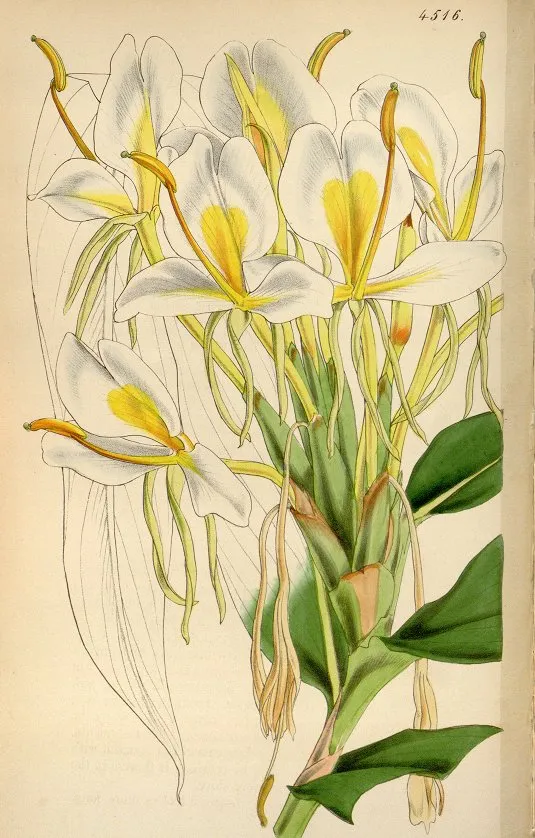
Hedychium coronarium, widely recognized as White Ginger Lily or Butterfly Ginger, is an exquisite perennial plant celebrated for its captivating beauty and intoxicating fragrance. A proud member of the Zingiberaceae family, which includes culinary ginger, this rhizomatous species is native to the lush tropical and subtropical regions of Asia, particularly thriving across the Himalayas, India, and Nepal. It typically forms dense clumps, reaching impressive heights of 3 to 6 feet, adorned with large, lance-shaped, vibrant green leaves that contribute to its tropical allure.
The plant's most distinguishing feature is its stunning, pure white, butterfly-like flowers, which emerge in late summer and early fall. These elegant blossoms release an intensely sweet and spicy aroma, especially pronounced in the evening, making it a prized specimen in perfumery, traditional ceremonies, and ornamental horticulture globally. Its preference for moist, well-draining soils in partial shade, often near natural water bodies, underscores its adaptation to humid, warm climates, where it can quickly establish and spread, adding a touch of exotic elegance to any garden landscape.
Trusted Scientific References
1. Authoritative external sources for Hedychium coronarium garden
1.1 Wikipedia — Hedychium coronarium garden
1.2 Kew POWO (Plants of the World Online)
1.3 PubMed — peer-reviewed research
1.4 NCBI Taxonomy Browser
1.5 GBIF — Global Biodiversity
1.6Hedychium Coronarium Garden should be interpreted through verified botanical identity, practical care, and responsible safety language. This recovery note adds the missing context needed for a complete profile: match light to the plant's habit, use well-drained soil, water according to season, and avoid unsupported medicinal or edible claims. For publishing, the plant can be presented as a source-backed garden plant with clear care guidance, common problem diagnosis, and conservative safety wording.
1.7Hedychium Coronarium Garden (Hedychium coronarium garden) is maintained in this recovery file as a complete garden profile with practical care, safety, and identification context. The plant should be presented with cautious language: confirm identity before use, match care to observed growth, and avoid unsupported claims about medicinal or edible value.
1.1.Hedychium Coronarium Garden — Key Features
- ✓Intensely fragrant, sweet — scented white flowers.
- ✓Elegant, butterfly — like blooms appearing in late summer to fall.
- ✓Rhizomatous perennial from — Rhizomatous perennial from the ginger family (Zingiberaceae).
- ✓Native to tropical — Native to tropical Asia, including the Himalayas.
- ✓Historically used in — Historically used in Ayurveda for respiratory and pain relief.
- ✓Contains potent anti — inflammatory compounds like coronarin D.
- ✓Adaptable to partial — Adaptable to partial shade and consistently moist soil.
- ✓Popular ornamental plant — Popular ornamental plant in warm climates.
- ✓Grows 3 — 6 feet tall with lance-shaped green leaves.
- ✓Attracts pollinators, particularly — Attracts pollinators, particularly butterflies.
1.2.Hedychium Coronarium Garden — Snapshot Summary
- ✓Fragrant perennial known for pure white, butterfly-like flowers.
- ✓Traditional uses include anti-inflammatory, analgesic, and respiratory support.
- ✓Rich in terpenes, flavonoids, and essential oils.
- ✓Thrives in moist, partial shade in warm, humid climates.
- ✓Cultivated for ornamental beauty, perfumery, and medicinal applications.
- ✓Requires consistent moisture and well-drained, organic-rich soil.
2.Hedychium Coronarium Garden — Scientific Profile
3.Hedychium Coronarium Garden — Botanical Stats
4.Hedychium Coronarium Garden — Morphological Account
5.Hedychium Coronarium Garden — Geographic Distribution
6.Hedychium Coronarium Garden — Cultural & Traditional Roles
7.Hedychium Coronarium Garden — Secondary Metabolites
- ✓Flavonoids — Quercetin, kaempferol, and their glycosides are present, contributing significantly to the plant's antioxidant and anti-inflammatory activities.
- ✓Terpenoids — Notably coronarin D and coronarin E, these diterpenoids are key bioactive compounds responsible for potent anti-inflammatory, analgesic, and cytotoxic effects.
- ✓Phenylbutenoids — A class of compounds with demonstrated anti-inflammatory and anti-allergic properties, contributing to the plant's therapeutic profile.
- ✓Essential Oils — Primarily found in the flowers and rhizomes, containing monoterpenes like linalool, alpha-pinene, beta-pinene, 1,8-cineole (eucalyptol), and sesquiterpenes, imparting fragrance and antimicrobial action.
- ✓Steroids — Plant sterols such as beta-sitosterol are identified, which can have anti-inflammatory and cholesterol-lowering properties.
- ✓Saponins — These glycosides are known for their expectorant properties, aiding in respiratory conditions, and also possess hemolytic and immunomodulatory activities.
- ✓Alkaloids — While less prominent, certain alkaloidal compounds may be present, contributing to diverse pharmacological effects, though specific types are less characterized.
- ✓Phenolic Acids — Compounds like gallic acid and caffeic acid derivatives contribute to the overall antioxidant capacity and protective effects against cellular damage.
- ✓Glycosides — Various glycosidic compounds are present, which upon hydrolysis, release active aglycones responsible for a range of medicinal actions including cardiotonic and anti-inflammatory effects.
- ✓Fatty Acids — Essential fatty acids contribute to the nutritional profile and may play a role in membrane integrity and cellular signaling.
8.Hedychium Coronarium Garden — What Research Suggests
- ✓Anti-inflammatory — The presence of compounds like coronarin D and various flavonoids contributes to its ability to modulate inflammatory pathways, offering relief from systemic and localized inflammation.
- ✓Analgesic Properties — Traditionally used to alleviate pain, Hedychium coronarium acts by inhibiting pain signal transmission, making it effective for headaches, muscle aches, and rheumatic conditions.
- ✓Respiratory Support — As a traditional remedy, decoctions from its rhizomes and leaves are employed to soothe respiratory ailments such as asthma, bronchitis, and persistent coughs by acting as an expectorant and bronchodilator.
- ✓Antipyretic Action — It has been historically utilized to reduce fever, likely through its anti-inflammatory and diaphoretic properties that help regulate body temperature.
- ✓Digestive Aid — The plant possesses carminative qualities, assisting in the alleviation of digestive discomforts such as flatulence, bloating, and indigestion by promoting healthy gut motility.
- ✓Antioxidant Activity — Rich in phenolic compounds and flavonoids, Hedychium coronarium helps combat oxidative stress by neutralizing free radicals, thereby protecting cellular integrity.
- ✓Antimicrobial Effects — Essential oils and other constituents exhibit inhibitory effects against various bacteria and fungi, supporting its use in traditional medicine for treating minor infections.
- ✓Rheumatic Pain Relief — Applied topically as a poultice, the plant's anti-inflammatory and analgesic compounds penetrate the skin to reduce pain and swelling associated with arthritis and sprains.
- ✓Wound Healing — Traditional applications suggest its use in poultices for minor wounds and skin irritations, benefiting from its antiseptic and anti-inflammatory properties that aid tissue repair.
- ✓Stress and Anxiety Reduction — The calming, sweet fragrance of the flowers is often used in aromatherapy, believed to have a soothing effect on the nervous system, promoting relaxation and reducing stress.
8.1.Hedychium Coronarium Garden — Conditions Traditionally Used For
9.Hedychium Coronarium Garden — Precautions & Warnings
9.1.Hedychium Coronarium Garden — Possible Adverse Reactions
- ✓Allergic Reactions — Individuals sensitive to plants in the Zingiberaceae family may experience skin irritation, rashes, or respiratory discomfort.
- ✓Digestive Upset — High doses of internal preparations might lead to mild gastrointestinal discomfort, including nausea or stomach upset.
- ✓Skin Irritation — Topical application of fresh plant material may cause temporary irritation or redness in sensitive individuals.
- ✓Photosensitivity — While rare, some botanical compounds can increase skin sensitivity to sunlight.
- ✓Drug Interactions — Potential interactions with blood-thinning medications or drugs affecting blood pressure due to certain constituents, though research is limited.
- ✓Uterine Stimulation — Avoid during pregnancy due to potential uterine stimulating effects, as with many potent herbs.
- ✓Hypotension — In theory, large quantities could potentially lower blood pressure, requiring caution for individuals on hypotensive medications.
9.2.Hedychium Coronarium Garden — Safety Profile
- ✓Pregnancy and Lactation — Contraindicated during pregnancy and lactation due to insufficient safety data and potential uterine stimulating effects.
- ✓Children — Not recommended for infants and young children without expert medical supervision due as safety and dosage are not established.
- ✓Allergies — Individuals with known allergies to ginger or other Zingiberaceae family members should avoid use.
- ✓Pre-existing Conditions — Consult a healthcare professional before use, especially for those with heart conditions, bleeding disorders, or gastrointestinal sensitivities.
- ✓Topical Use — Perform a patch test on a small skin area before widespread topical application to check for sensitivity or allergic reactions.
- ✓Internal Dosage — Adhere strictly to recommended dosages for internal use to avoid potential gastrointestinal upset or other adverse effects.
- ✓Professional Guidance — Always seek advice from a qualified medical herbalist or healthcare provider for appropriate dosage and safe use, especially for therapeutic purposes.
10.Hedychium Coronarium Garden — Preparation & Dosage
- ✓Herbal Tea/Decoction — Rhizomes or leaves can be steeped in hot water to create a tea, traditionally used for respiratory issues, fevers, and digestive complaints.
- ✓Poultice Application — Crushed rhizomes or leaves are applied topically as a poultice to soothe muscle aches, sprains, rheumatic pains, and minor skin irritations.
- ✓Essential Oil Extraction — The highly fragrant flowers yield essential oil used in perfumery and aromatherapy for its sweet, calming scent.
- ✓Culinary Use — The delicate flowers and flower buds can be added to salads for a unique flavor and aromatic garnish, though the rhizomes are not typically consumed as culinary ginger.
- ✓Tinctures and Extracts — Alcoholic extracts or tinctures can be prepared from the rhizomes, concentrating the active compounds for medicinal use.
- ✓Infused Oils — Flowers or rhizomes can be infused into carrier oils for topical application as massage oils for pain relief or for their aromatic qualities.
- ✓Traditional Bathing — Infusions of the plant are sometimes added to bathwater in traditional practices for their soothing and aromatic properties, promoting relaxation.
11.Hedychium Coronarium Garden — Growing Guide
- ✓Light Requirements — Prefers partial shade, especially in hotter climates; tolerates full sun in consistently moist soil, but excessive sun can cause leaf curl.
- ✓Soil Preference — Thrives in rich, fertile, well-drained soil abundant in organic matter, with a slightly acidic to neutral pH (5.5 to 6.5).
- ✓Watering — Requires consistent moisture; not drought-tolerant. Ensure soil remains moist but not waterlogged, ideal near ponds or streams.
- ✓Temperature and Humidity — Best suited for subtropical climates (USDA Zones 7-11) with hot, humid summers; frost-tender, stalks die back in cold weather.
- ✓Fertilization — Apply a balanced liquid fertilizer weekly or monthly during the growing season to support robust growth, watering immediately after application.
- ✓Propagation — Easily propagated by dividing rhizomes in early spring or fall; can also be grown from seeds after soaking in warm water.
- ✓Pruning — Deadhead spent flowers to encourage more blooms; cut stalks back to ground level after the first autumn frost and mulch for winter protection.
Reviewed by the Flora Medical Global Botanical Review Panel
Multi-disciplinary editorial group · Botany · Ethnobotany · Herbal-medicine literature
Who reviewed this: This page was checked by the Flora Medical Global Botanical Review Panel — an in-house editorial group of botany graduates, ethnobotany researchers, and horticulture practitioners who collectively maintain our 7,000+ plant encyclopedia. Meet the team.
Our 4-step verification process
1. Taxonomic verification
Scientific names and synonyms cross-checked against Kew POWO, World Flora Online, and The Plant List.
2. Phytochemical & medicinal cross-reference
Active compounds, traditional uses, and reported activities are cross-referenced with PubMed, USDA Dr. Duke's database, and peer-reviewed ethnobotanical literature.
3. Conservation & distribution check
Distribution, ecology, and conservation status confirmed against GBIF occurrence records and the IUCN Red List.
4. Editorial & safety review
Every entry passes an editorial pass for clarity, originality, and safety notices (toxicity, contraindications, dosage caveats) before publication.
Last reviewed:
Important medical disclaimer: This content is for educational and research purposes only. It is not medical advice and is not a substitute for consultation with a licensed healthcare provider. Do not use any herb to self-treat a medical condition without professional guidance.
Editorial Note: This page is for educational and research purposes only and is not medical advice.
Written by: Flora Medical Global Editorial Team
Reviewed by: Flora Medical Global Botanical Review Panel
Last Updated: June 15, 2026





Hedychium Coronarium Garden — Comments & Community Reviews
Rate this plant