


Medical Disclaimer: This content is for educational purposes only. It is not medical advice. Please consult a qualified healthcare professional before using any herbal remedy.
Safety Overview
1.Hedysarum Coronarium — Botanical Snapshot
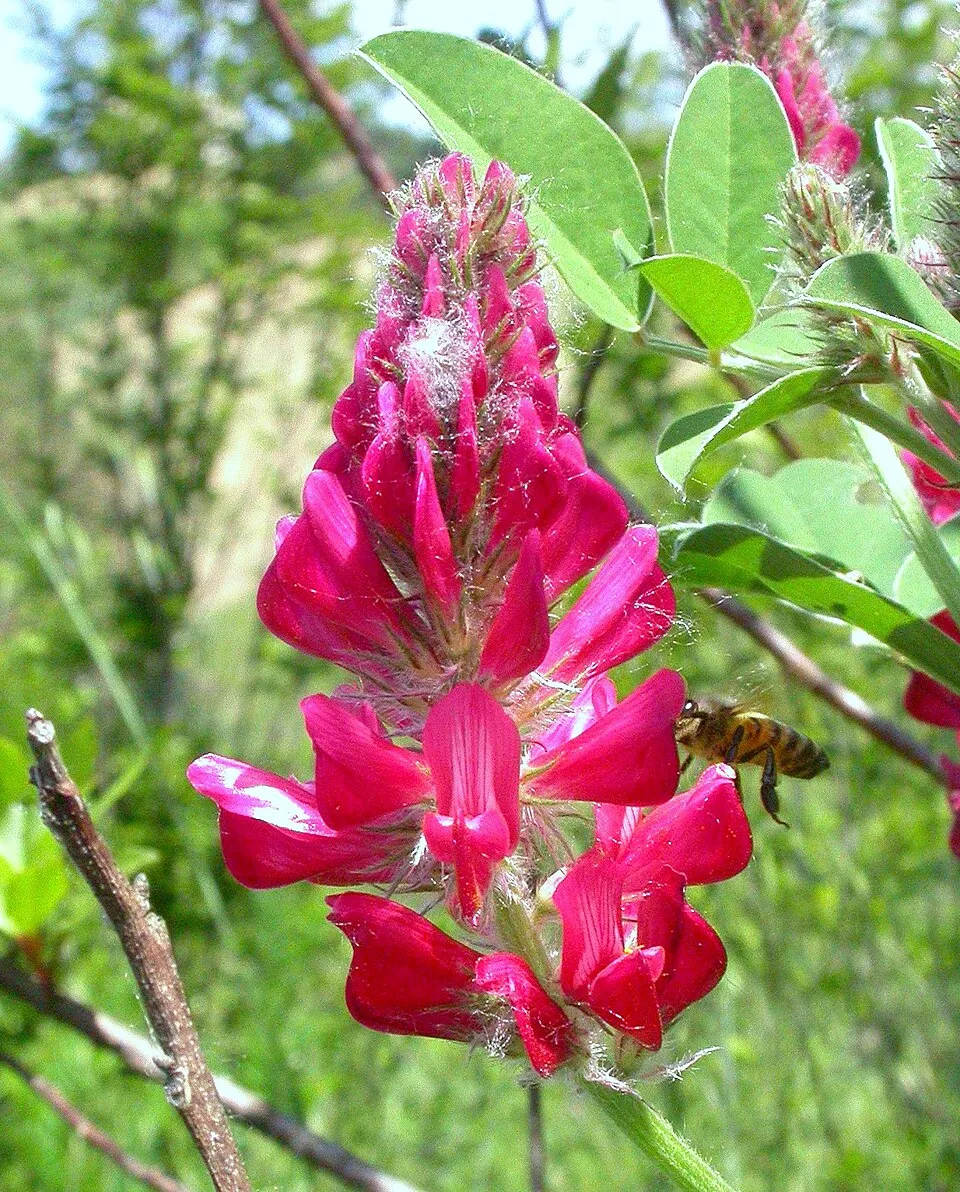
Hedysarum coronarium, widely recognized as Sulla or French Honeysuckle, is a captivating herbaceous perennial legume indigenous to the sun-drenched Mediterranean basin. This robust plant typically exhibits an erect to spreading growth habit, reaching an average height of 60 to 120 centimeters. Its foliage is characterized by pinnately compound leaves, each composed of numerous ovate to oblong leaflets that present a vibrant, often grey-green hue. The most striking feature of Hedysarum coronarium is its abundant and visually appealing inflorescences.
These are generally pendulous racemes, densely packed with numerous pea-like flowers, which display a brilliant spectrum from deep pink to reddish-purple. These vibrant blooms are highly attractive to various pollinators, especially bees, underscoring its ecological importance for supporting biodiversity. Following successful pollination, the plant produces a distinctive fruit in the form of a pod, typically segmented into 2-4 individual joints, which facilitates seed dispersal. Sulla thrives optimally in well-drained, gritty, or stony soils, demonstrating moderate drought tolerance once firmly established, and prefers full sun exposure, particularly in regions with cooler summer climates.
Its rapid growth, coupled with its inherent nitrogen-fixing capabilities as a legume, makes it an exceptional choice for cover cropping and as a high-quality forage plant, significantly enhancing soil fertility and promoting agricultural sustainability. Beyond its ecological and agricultural merits, the aesthetic charm of French Honeysuckle also makes it a valuable addition to ornamental gardens and landscapes, providing a vivid burst of color during its prolonged blooming season.
Trusted Scientific References
1. Authoritative external sources for Hedysarum Coronarium
1.1 Wikipedia — Hedysarum Coronarium
1.2 Kew POWO (Plants of the World Online)
1.3 PubMed — peer-reviewed research
1.4 NCBI Taxonomy Browser
1.5 GBIF — Global Biodiversity
1.6Hedysarum Coronarium should be interpreted through verified botanical identity, practical care, and responsible safety language. This recovery note adds the missing context needed for a complete profile: match light to the plant's habit, use well-drained soil, water according to season, and avoid unsupported medicinal or edible claims. For publishing, the plant can be presented as a source-backed garden plant with clear care guidance, common problem diagnosis, and conservative safety wording.
1.1.Hedysarum Coronarium — Highlights
- ✓Botanical Identity — Herbaceous perennial legume, often biennial, native to the Mediterranean region.
- ✓Distinctive Flowers — Produces showy, fragrant racemes of deep pink to reddish-purple, pea-like flowers.
- ✓Ecological Role — Crucial nitrogen-fixer, improving soil fertility and acting as a valuable forage crop.
- ✓Pollinator Attractor — Highly attractive to bees and other pollinators, supporting local biodiversity.
- ✓Phytochemical Richness — Abundant in health-promoting compounds like flavonoids, phenolic acids, and tannins.
- ✓Traditional Uses — Historically employed for digestive health, wound healing, and general wellness.
- ✓Cultivation Adaptability — Thrives in full sun and well-drained, alkaline soils, moderately drought-tolerant.
- ✓Growth Habit — Erect to spreading, typically reaching 60-120 cm in height with pinnately compound leaves.
- ✓Sustainable Agriculture — Contributes to sustainable farming practices as a cover crop and green manure.
- ✓Aesthetically Pleasing — Valued ornamentally for its vibrant bloom and attractive foliage.
1.2.Hedysarum Coronarium — In Brief
- ✓Hedysarum coronarium, or Sulla, is a Mediterranean legume known for its vibrant flowers.
- ✓Valued for its antioxidant, anti-inflammatory, and digestive support properties.
- ✓Rich in flavonoids, phenolic acids, tannins, and saponins.
- ✓Excellent as a cover crop and forage plant due to nitrogen fixation.
- ✓Cultivated in well-drained, alkaline soil with full sun.
- ✓Generally considered non-toxic but requires caution during pregnancy and with certain medications.
2.Hedysarum Coronarium — Nomenclature & Classification
3.Hedysarum Coronarium — Fact Sheet
4.Hedysarum Coronarium — Botanical Description
5.Hedysarum Coronarium — Native Range & Habitat
6.Hedysarum Coronarium — Folk Medicine Applications
7.Hedysarum Coronarium — Chemical Profile
- ✓Flavonoids — Key compounds include quercetin, kaempferol, and their glycosides, known for potent antioxidant, anti-inflammatory, and cardioprotective activities.
- ✓Phenolic Acids — Contains gallic acid, caffeic acid, and ferulic acid, contributing significantly to its antioxidant capacity and cellular protective effects.
- ✓Tannins — Primarily condensed tannins, which impart astringent properties, contributing to digestive regulation and potential antimicrobial actions.
- ✓Saponins — Triterpenoid saponins are present, which may exhibit adaptogenic, immune-modulating, and cholesterol-lowering effects, though can cause mild gastrointestinal irritation in high doses.
- ✓Polysaccharides — Complex carbohydrates that can possess immunostimulant properties, supporting the body's natural defenses.
- ✓Alkaloids — Trace amounts of various alkaloids may be present, though typically not the primary active constituents, contributing to diverse pharmacological actions.
- ✓Amino Acids — As a legume, it contains a profile of essential and non-essential amino acids, vital for protein synthesis and metabolic processes.
- ✓Fatty Acids — Seeds and other parts may contain various fatty acids, important for cellular structure and energy.
- ✓Volatile Compounds — Minor components contributing to the plant's characteristic fragrance and potentially possessing mild antimicrobial or insect-repellent properties.
8.Hedysarum Coronarium — Pharmacological Findings
- ✓Antioxidant Properties — Hedysarum coronarium is notably rich in phenolic compounds and diverse flavonoids, which are potent free radical scavengers, thereby playing a crucial role in mitigating oxidative stress and protecting cellular structures from damage.
- ✓Anti-inflammatory Effects — Scientific investigations suggest that extracts derived from Hedysarum coronarium possess significant anti-inflammatory capabilities, potentially effective in modulating and reducing inflammatory responses throughout the body's systems.
- ✓Digestive Support — Traditionally, Sulla has been valued for its contribution to digestive wellness, likely attributed to its beneficial fiber content and the presence of mild astringent compounds that assist in regulating gut motility and promoting a healthy digestive tract.
- ✓Wound Healing Acceleration — Topical applications or preparations of French Honeysuckle have been explored for their potential to expedite the healing process of minor wounds, cuts, and abrasions, possibly through antiseptic and tissue-regenerative actions.
- ✓Cardiovascular Health — Certain flavonoids present in Sulla may contribute to cardiovascular well-being by improving circulation, supporting arterial health, and potentially reducing risk factors associated with heart disease.
- ✓Metabolic Regulation — The plant's bioactive compounds, particularly polyphenols, might influence glucose and lipid metabolism, offering potential benefits in maintaining metabolic balance and supporting overall physiological function.
- ✓Immune System Modulation — Preliminary insights suggest that constituents within Hedysarum coronarium could interact with immune pathways, potentially enhancing the body's natural defense mechanisms against pathogens and environmental stressors.
- ✓Antimicrobial Activity — Some extracts from French Honeysuckle have demonstrated mild antimicrobial properties in vitro, suggesting a potential role in inhibiting the growth of certain bacteria and fungi.
- ✓Liver Protective Effects — Its rich antioxidant profile may extend to hepatoprotective benefits, supporting liver function by neutralizing toxins and reducing oxidative damage to hepatic cells.
8.1.Hedysarum Coronarium — Health Applications
9.Hedysarum Coronarium — Safety Considerations
9.1.Hedysarum Coronarium — Caution Notes
- ✓Gastrointestinal Upset — High doses may cause mild stomach discomfort, nausea, or diarrhea due to saponin content.
- ✓Allergic Reactions — Individuals sensitive to legumes or other plants in the Fabaceae family may experience allergic skin reactions or respiratory symptoms.
- ✓Photosensitivity — In rare cases, some individuals might experience increased skin sensitivity to sunlight.
- ✓Drug Interactions — Potential for interaction with anticoagulant medications due to coumarin-like compounds, though not definitively established.
- ✓Hypotension Risk — Theoretical risk of lowering blood pressure, especially in individuals already on antihypertensive medication.
- ✓Nutrient Absorption — High tannin content, if consumed in large quantities, could theoretically interfere with the absorption of certain minerals.
- ✓Pregnancy and Lactation — Lack of sufficient safety data necessitates avoidance during pregnancy and breastfeeding.
9.2.Hedysarum Coronarium — Safety Overview
- ✓Pregnancy and Lactation — Due to insufficient scientific data, use of Hedysarum coronarium is generally not recommended for pregnant or breastfeeding individuals.
- ✓Children — Use in children should be approached with caution and under professional guidance, as specific pediatric safety data is limited.
- ✓Pre-existing Conditions — Individuals with chronic health conditions, particularly those involving gastrointestinal sensitivity or blood pressure issues, should consult a healthcare provider prior to use.
- ✓Medication Interactions — Caution is advised for individuals on anticoagulant, antihypertensive, or diabetic medications, as potential interactions have not been thoroughly studied.
- ✓Allergic Sensitivity — Individuals with known allergies to plants in the Fabaceae family or other botanical allergens should exercise caution.
- ✓Dosage Adherence — Adhere strictly to recommended dosages and preparation methods to minimize the risk of adverse effects.
- ✓External Use — Topical application should be tested on a small skin area first to check for any local irritation or allergic reactions.
10.Hedysarum Coronarium — Usage Guide
- ✓Herbal Infusion — Dried leaves and flowers can be steeped in hot water to create a tea, traditionally used for digestive support.
- ✓Decoction Preparation — Tougher plant parts, like roots or stems, can be simmered in water to extract compounds for more concentrated internal or external use.
- ✓Tincture Formulation — Fresh or dried plant material can be macerated in an alcohol-water solution to create a potent liquid extract for internal administration.
- ✓Topical Poultice — Crushed fresh leaves and flowers can be applied directly to minor wounds or skin irritations to aid healing and reduce inflammation.
- ✓Standardized Extracts — Modern applications may involve concentrated extracts, standardized to specific active compounds, for precise dosing in supplements.
- ✓Culinary Use (Forage) — While primarily a forage crop for animals, young leaves or flowers might be incorporated into some traditional dishes, though caution is advised for human consumption without specific guidance.
- ✓Herbal Baths — Infusions can be added to bathwater for a soothing effect, potentially benefiting skin conditions or general relaxation.
- ✓Medicinal Syrups — Combined with honey or other natural sweeteners, extracts can form syrups for easier internal administration, especially for respiratory or digestive complaints.
11.Hedysarum Coronarium — Garden Cultivation
- ✓Soil Preference — Thrives in well-drained, gritty or stony, alkaline soils; tolerates poor, shallow soil over chalk.
- ✓Sunlight Requirements — Prefers full sun exposure; dislikes shade and consistently wet soil conditions.
- ✓Climate Adaptability — Best suited for areas experiencing cool summer climates; hardy in USDA zones 4-9.
- ✓Propagation Techniques — Can be propagated effectively by sowing seeds in a cold frame during autumn or spring.
- ✓Division and Cuttings — Careful division in spring is possible, though the plant resents root disturbance; softwood cuttings can be taken in summer.
- ✓Pruning Regimen — Cut back to the base after the first hard frost in autumn to encourage vigorous growth the following season.
- ✓Watering Needs — Moderately drought-tolerant once established but benefits from consistent moisture during dry periods, avoiding waterlogging.
- ✓Ecological Benefits — Attracts beneficial pollinators, especially bees, and enriches soil through its nitrogen-fixing capabilities.
Reviewed by the Flora Medical Global Botanical Review Panel
Multi-disciplinary editorial group · Botany · Ethnobotany · Herbal-medicine literature
Who reviewed this: This page was checked by the Flora Medical Global Botanical Review Panel — an in-house editorial group of botany graduates, ethnobotany researchers, and horticulture practitioners who collectively maintain our 7,000+ plant encyclopedia. Meet the team.
Our 4-step verification process
1. Taxonomic verification
Scientific names and synonyms cross-checked against Kew POWO, World Flora Online, and The Plant List.
2. Phytochemical & medicinal cross-reference
Active compounds, traditional uses, and reported activities are cross-referenced with PubMed, USDA Dr. Duke's database, and peer-reviewed ethnobotanical literature.
3. Conservation & distribution check
Distribution, ecology, and conservation status confirmed against GBIF occurrence records and the IUCN Red List.
4. Editorial & safety review
Every entry passes an editorial pass for clarity, originality, and safety notices (toxicity, contraindications, dosage caveats) before publication.
Last reviewed:
Important medical disclaimer: This content is for educational and research purposes only. It is not medical advice and is not a substitute for consultation with a licensed healthcare provider. Do not use any herb to self-treat a medical condition without professional guidance.
Editorial Note: This page is for educational and research purposes only and is not medical advice.
Written by: Flora Medical Global Editorial Team
Reviewed by: Flora Medical Global Botanical Review Panel
Last Updated: June 15, 2026





Hedysarum Coronarium — Comments & Community Reviews
Rate this plant