
Medical Disclaimer: This content is for educational purposes only. It is not medical advice. Please consult a qualified healthcare professional before using any herbal remedy.
Safety Overview
1.Helenium Autumnale — Essential Profile
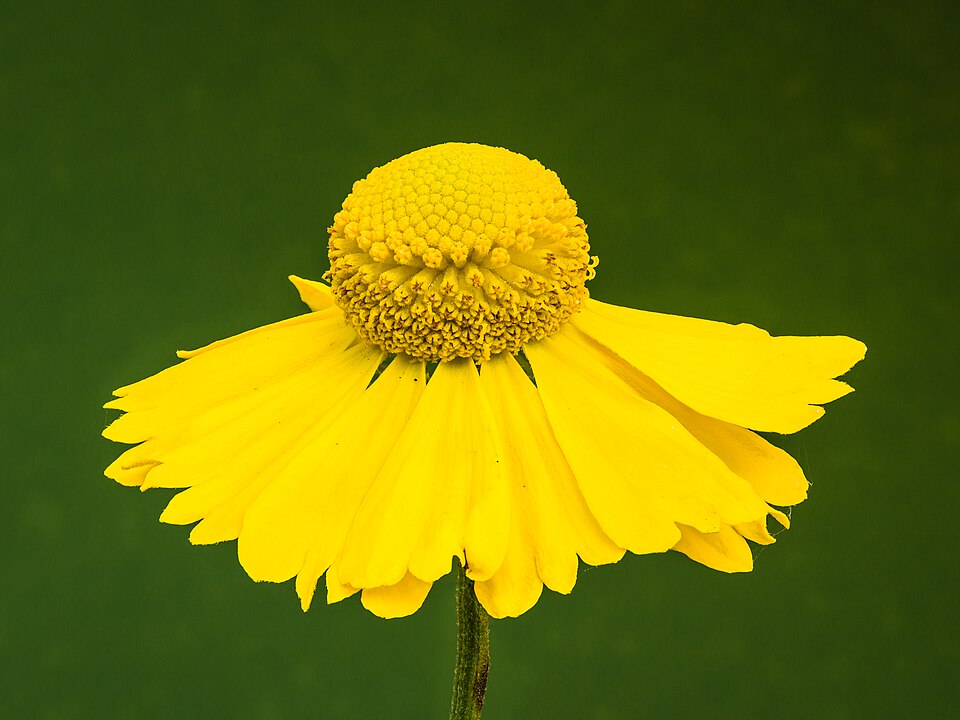
Helenium autumnale, commonly known as Common Sneezeweed or Autumn Sneezeweed, is a robust perennial herbaceous plant indigenous to a wide range of North America, from southern Canada down to northern Mexico. It thrives in moist, open habitats such as wet meadows, stream banks, floodplains, and damp woodlands, often forming impressive clumps. As a distinguished member of the vast Asteraceae family, it shares kinship with numerous other economically and medicinally important species.
This striking plant typically reaches heights of 3 to 6 feet (1 to 2 meters), characterized by its sturdy, often branched stems that can exhibit a reddish tint, particularly when exposed to ample sunlight. Its lance-shaped leaves are arranged alternately along the stem, tapering to a sharp point at both ends, and feature serrated or toothed margins. The lower leaves are notably larger and sessile, directly attaching to the stem, while the upper leaves are smaller and may possess a short petiole.
The most captivating feature of Helenium autumnale is its vibrant inflorescence, which bursts forth in late summer and autumn, offering a crucial nectar source for pollinators like butterflies and bees when many other plants are fading. The flower heads, typically 1 to 1.5 inches (2.5 to 4 cm) in diameter, are borne in corymbs or panicles. Each head is composed of distinctive, downward-reflexed ray florets, usually a brilliant yellow or golden-orange, though cultivated varieties may display hues of red, bronze, or brown.
At the center lies a prominent, dome-shaped receptacle densely packed with numerous tiny disk florets, which are initially yellowish-green and gradually mature to a brownish color. These disk florets develop into small achene fruits, each equipped with a pappus of scales or bristles, facilitating wind dispersal. Helenium autumnale's adaptability and late-season bloom make it a valuable native plant for ecological restoration and ornamental gardening.
Trusted Scientific References
1. Authoritative external sources for Helenium Autumnale
1.1 Wikipedia — Helenium Autumnale
1.2 Kew POWO (Plants of the World Online)
1.3 PubMed — peer-reviewed research
1.4 NCBI Taxonomy Browser
1.5 GBIF — Global Biodiversity
1.1.Helenium Autumnale — Highlights
- ✓Striking Autumn Flowers — Known for its brilliant yellow to golden-orange, daisy-like flowers that bloom late in the season.
- ✓Distinctive Flower Shape — Ray florets droop downwards, giving the flower a unique, somewhat umbrella-like appearance.
- ✓Pollinator Magnet — Attracts butterflies, bees, and other beneficial insects, providing crucial late-season nectar.
- ✓Native to North America — An important component of native ecosystems in moist meadows and woodlands.
- ✓Robust Perennial Herb — Grows 3-6 feet tall with sturdy, often reddish, branched stems.
- ✓Member of Asteraceae — Part of the large daisy family, characterized by composite flower heads.
- ✓Contains Helenalin — A potent sesquiterpene lactone with cytotoxic and anti-inflammatory properties (in research settings).
- ✓Historical Medicinal Use — Traditionally used as a sternutatory (sneezeweed) but cautioned against internal use today.
- ✓Adaptable and Hardy — Thrives in a range of moist, sunny conditions and is cold hardy in USDA zones 3-8.
- ✓Lance — shaped Leaves — Alternate, serrated leaves tapering to a point, providing a lush green backdrop.
1.2.Helenium Autumnale — In Brief
- ✓North American Native — Indigenous to a wide range of North America, thriving in moist habitats.
- ✓Late Summer Bloomer — Provides vibrant yellow-orange flowers in late summer and autumn.
- ✓Asteraceae Family — Member of the daisy family, known for its distinctive flower structure.
- ✓Toxic Compounds — Contains potent sesquiterpene lactones, notably helenalin, which are cytotoxic.
- ✓Historical Sternutatory — Traditionally used as a snuff to induce sneezing for congestion relief.
- ✓Not for Internal Use — Modern herbalism strongly advises against internal consumption due to toxicity.
2.Helenium Autumnale — Nomenclature & Classification
3.Helenium Autumnale — Key Data
4.Helenium Autumnale — Physical Description
5.Helenium Autumnale — Native Range & Habitat
6.Helenium Autumnale — Folk Medicine Applications
7.Helenium Autumnale — Chemical Profile
- ✓Sesquiterpene Lactones — Predominantly helenalin and its derivatives, pseudoguaianolides, known for their potent cytotoxic, anti-inflammatory, and antiprotozoal activities, often acting via alpha-methylene-gamma-lactone moieties.
- ✓Flavonoids — Compounds like quercetin, kaempferol, and their glycosides, contributing to antioxidant and anti-inflammatory properties, often found in the flowers and leaves.
- ✓Triterpenes — Including oleanolic acid and ursolic acid, which may contribute to anti-inflammatory and hepatoprotective effects, typically found in waxes or resins.
- ✓Phenolic Acids — Such as caffeic acid and chlorogenic acid, recognized for their antioxidant and free-radical scavenging capabilities, present in various plant parts.
- ✓Essential Oils — Volatile compounds, though not in high concentrations, contributing to the plant's characteristic aroma and potentially possessing mild antimicrobial properties.
- ✓Tannins — Astringent compounds that can bind to proteins, historically used for their antimicrobial and wound-healing effects, present in the foliage.
- ✓Saponins — Glycosides that can form a soapy lather, sometimes associated with hemolytic activity and immune-modulating effects, but also contributing to toxicity.
- ✓Alkaloids — While not a primary class, trace amounts of nitrogen-containing compounds may be present, influencing various physiological responses, though their specific roles in Helenium are less studied.
- ✓Coumarins — Compounds like scopoletin, which can have anti-inflammatory, antioxidant, and anticoagulant properties, found in some Asteraceae species.
8.Helenium Autumnale — Pharmacological Findings
- ✓Historical Sternutatory — Traditionally, the dried and powdered leaves and flower heads of Helenium autumnale were used as a snuff to induce sneezing, primarily to clear nasal passages and alleviate head congestion, a practice that gave the plant its common name, 'Sneezeweed.'
- ✓Anti-inflammatory Potential — Research on its primary constituent, helenalin, has shown significant anti-inflammatory activity in preclinical studies, suggesting potential benefits in modulating inflammatory pathways, though direct internal use of the plant is not recommended due to toxicity.
- ✓Cytotoxic Properties — Helenalin and other sesquiterpene lactones present in Helenium autumnale have demonstrated cytotoxic effects against various cancer cell lines in laboratory settings, highlighting an area of pharmaceutical interest for isolated compounds, not the crude plant.
- ✓Anthelmintic Use (Traditional) — Historically, some indigenous groups used preparations from Helenium autumnale for their purported anthelmintic properties, aiming to expel intestinal parasites, a practice requiring extreme caution due to the plant's toxicity.
- ✓Antimicrobial Activity (Preclinical) — Certain extracts or isolated compounds from the plant have exhibited mild antimicrobial activity against specific bacteria and fungi in in vitro studies, indicating a potential for further investigation into its chemical defense mechanisms.
- ✓Topical Analgesic (Historical External) — In some traditional applications, diluted external preparations were used on the skin for localized pain relief, though this practice carried risks of skin irritation and allergic reactions.
- ✓Fever Reduction (Traditional) — There are anecdotal historical accounts of Helenium autumnale being used in very small, carefully administered doses to help reduce fevers, a use that is not supported by modern safety standards.
- ✓Digestive Aid (Historical, Caution) — Extremely rare and highly cautioned traditional uses might have involved minute quantities to stimulate digestion, a practice now considered unsafe due to the plant's potent compounds.
- ✓Insect Repellent (Folk Use) — The plant's pungent compounds were sometimes employed in folk remedies as an insect repellent, either by crushing leaves or using extracts, though efficacy and safety are not well-documented.
- ✓Detoxification (Traditional, Highly Risky) — Some historical texts suggest its use for 'purging' or 'detoxification' due to its emetic properties when ingested, a highly dangerous and discouraged practice given its toxicity and potential for severe gastrointestinal distress.
8.1.Helenium Autumnale — Reported Uses
9.Helenium Autumnale — Safety Considerations
9.1.Helenium Autumnale — Possible Adverse Reactions
- ✓Contact Dermatitis — Direct skin contact with the plant sap or foliage can cause allergic reactions, characterized by redness, itching, and rashes, particularly in sensitive individuals.
- ✓Gastrointestinal Distress — Ingestion of any part of the plant can lead to severe gastrointestinal symptoms, including nausea, vomiting, abdominal pain, and diarrhea, due to its toxic compounds.
- ✓Nasal Irritation — While historically used as a snuff, excessive or prolonged inhalation of the powdered plant material can cause significant irritation to nasal passages and mucous membranes.
- ✓Liver Toxicity — High doses of helenalin, a primary constituent, have demonstrated hepatotoxic effects in animal studies, posing a risk of liver damage upon ingestion.
- ✓Allergic Reactions — Individuals sensitive to plants in the Asteraceae family (e.g., ragweed, chamomile) may experience cross-reactivity and allergic responses to Helenium autumnale.
- ✓Nervous System Effects — In cases of significant ingestion, potential for central nervous system depression or other neurological symptoms, though less common than GI distress.
- ✓Oral and Throat Irritation — Chewing or ingesting the plant can cause burning sensations and irritation in the mouth and throat.
9.2.Helenium Autumnale — Risk Assessment
- ✓Pregnancy and Lactation — Absolutely contraindicated for pregnant or breastfeeding individuals due to potential toxicity and unknown effects on fetal or infant development.
- ✓Children — Keep Helenium autumnale strictly out of reach of children and pets, as ingestion can cause severe poisoning; it is not safe for pediatric use.
- ✓Allergic Individuals — People with known allergies to plants in the Asteraceae (Daisy) family should avoid contact due to high risk of allergic reactions and contact dermatitis.
- ✓Internal Use — Internal consumption of any part of Helenium autumnale is strongly discouraged and considered unsafe due to the presence of highly toxic sesquiterpene lactones, particularly helenalin.
- ✓Professional Guidance — Any consideration of traditional or modern medicinal use should only be undertaken under the strict supervision and guidance of a qualified medical herbalist or healthcare professional.
- ✓Topical Application — Exercise extreme caution with topical application; always perform a patch test first, and discontinue use immediately if irritation occurs.
- ✓Drug Interactions — Potential for interaction with medications, especially those affecting liver function or immune response, given the plant's potent compounds; consult a doctor.
10.Helenium Autumnale — Usage Guide
- ✓Historical Snuff Preparation — Traditionally, dried and finely powdered leaves and flower heads were prepared as a sternutatory snuff to induce sneezing for clearing nasal passages.
- ✓External Poultices (Cautioned) — Historically, some cultures applied crude plant material as external poultices for localized pain or skin conditions, though this practice carries a significant risk of contact dermatitis due to helenalin.
- ✓Infusions for Topical Use (Diluted) — Extremely diluted infusions were occasionally used topically for skin ailments, always with caution due to potential irritation and allergic reactions.
- ✓Tinctures (Limited & Expert-Guided) — Modern herbalists generally avoid internal tinctures due to toxicity; if used, it is under strict professional guidance and often in micro-doses for specific research purposes, not self-medication.
- ✓Decoctions (Not Recommended Internally) — Decoctions of root or aerial parts are not recommended for internal consumption due to the high concentration of toxic sesquiterpene lactones.
- ✓Incense/Fumigation (Folk Use) — In some folk traditions, the dried plant was burned as incense or for fumigation, possibly for its aromatic qualities or as an insect deterrent, though safety of inhaling smoke is not established.
- ✓Modern Research Extracts — Scientific research primarily focuses on isolated compounds like helenalin, extracted and purified for in vitro or in vivo studies, not the use of the whole plant.
- ✓Avoid Self-Medication — Due to the significant toxicity of Helenium autumnale, especially its helenalin content, direct self-medication or internal use of any part of the plant is strongly discouraged and potentially dangerous.
11.Helenium Autumnale — How to Grow
- ✓Site Selection — Plant Helenium autumnale in a location receiving full sun (at least 6 hours daily) to prevent leggy growth and encourage abundant blooms.
- ✓Soil Requirements — Prefers moist, well-drained soil with an acidic to neutral pH range (5.5-7.0); tolerates clay but benefits from organic matter.
- ✓Watering Regimen — Requires moderate to heavy moisture; it is not drought-tolerant and needs consistent watering, especially during dry spells.
- ✓Spacing and Airflow — Space plants 3 to 4 feet apart to ensure good air circulation, which helps prevent fungal diseases like powdery mildew and rust.
- ✓Pinching and Deadheading — Pinch plants in spring to promote branching and a bushier habit; deadhead spent flowers to encourage continuous blooming throughout the season.
- ✓Fertilization — Not a heavy feeder; a single application of balanced flower fertilizer in spring is usually sufficient in fertile soils, avoiding excessive nitrogen which can lead to lanky growth.
- ✓Overwintering — Hardy in USDA zones 3-8; apply a 6-inch layer of organic mulch or hay over the plant bed in fall to protect roots during harsh winters.
- ✓Propagation — Easily propagated from seed (sow in fall, light required for germination) or by stem cuttings taken in spring and rooted with hormone.
Reviewed by the Flora Medical Global Botanical Review Panel
Multi-disciplinary editorial group · Botany · Ethnobotany · Herbal-medicine literature
Who reviewed this: This page was checked by the Flora Medical Global Botanical Review Panel — an in-house editorial group of botany graduates, ethnobotany researchers, and horticulture practitioners who collectively maintain our 7,000+ plant encyclopedia. Meet the team.
Our 4-step verification process
1. Taxonomic verification
Scientific names and synonyms cross-checked against Kew POWO, World Flora Online, and The Plant List.
2. Phytochemical & medicinal cross-reference
Active compounds, traditional uses, and reported activities are cross-referenced with PubMed, USDA Dr. Duke's database, and peer-reviewed ethnobotanical literature.
3. Conservation & distribution check
Distribution, ecology, and conservation status confirmed against GBIF occurrence records and the IUCN Red List.
4. Editorial & safety review
Every entry passes an editorial pass for clarity, originality, and safety notices (toxicity, contraindications, dosage caveats) before publication.
Last reviewed:
Important medical disclaimer: This content is for educational and research purposes only. It is not medical advice and is not a substitute for consultation with a licensed healthcare provider. Do not use any herb to self-treat a medical condition without professional guidance.
Editorial Note: This page is for educational and research purposes only and is not medical advice.
Written by: Flora Medical Global Editorial Team
Reviewed by: Flora Medical Global Botanical Review Panel
Last Updated: June 15, 2026





Helenium Autumnale — Comments & Community Reviews
Rate this plant