
Medical Disclaimer: This content is for educational purposes only. It is not medical advice. Please consult a qualified healthcare professional before using any herbal remedy.
Safety Overview
1.Helianthus Salicifolius — Essential Profile
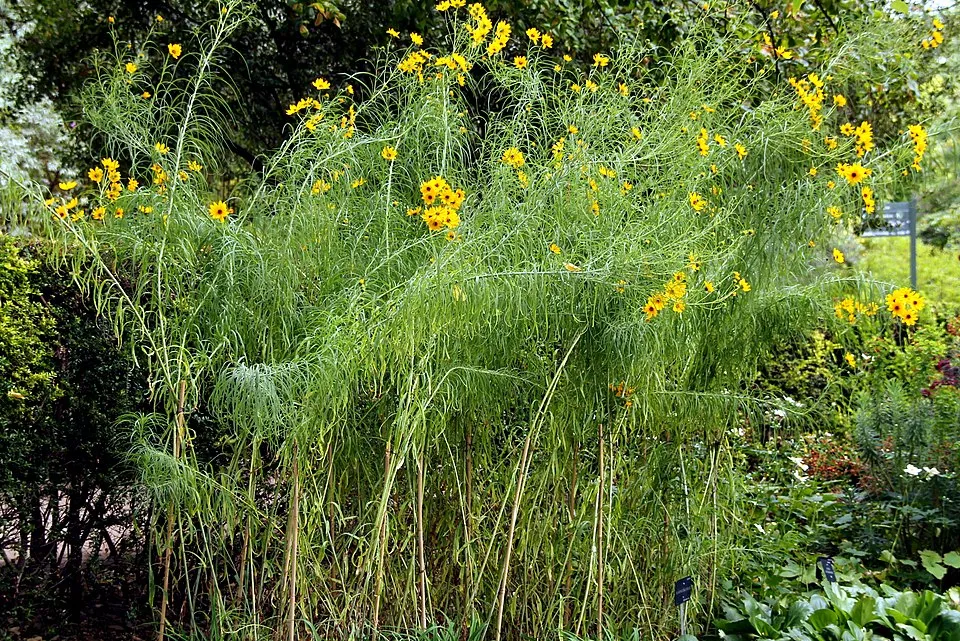
Helianthus salicifolius, commonly known as the Willow-leaved Sunflower, is a truly distinctive and elegant herbaceous perennial belonging to the Asteraceae family. Native to the central United States, primarily thriving in the Great Plains and Ozark Plateau, it is often found in prairies and meadows, particularly over limestone soils. This species distinguishes itself from its more robust sunflower relatives by its tall, slender, and typically unbranched stems, which can impressively reach heights of 7 to 10 feet, creating a striking vertical accent in any landscape.
Its most characteristic feature is its unique foliage: long, narrow, dark green leaves that gracefully droop and remarkably resemble those of a willow tree, giving the plant its apt common name. These leaves are arranged alternately along the sturdy, whitish-green stems, forming an airy curtain of wispy texture throughout the growing season. In late summer to early autumn, Helianthus salicifolius bursts into a profusion of numerous small, bright yellow, daisy-like flowers, each typically 2-3 inches in diameter, centered with a dark brown or purplish disk.
Over time, it forms dense colonies through creeping rhizomes, adding significant architectural interest and a vibrant splash of color to native plant gardens and perennial borders when many other plants begin to fade. It is important to note that Helianthus salicifolius is sometimes confused with Helianthus angustifolius in the nursery trade due to similar common names, but their botanical distinctions are clear.
Trusted Scientific References
1. Authoritative external sources for Helianthus Salicifolius
1.1 Wikipedia — Helianthus Salicifolius
1.2 Kew POWO (Plants of the World Online)
1.3 PubMed — peer-reviewed research
1.4 NCBI Taxonomy Browser
1.5 GBIF — Global Biodiversity
1.6Helianthus Salicifolius should be interpreted through verified botanical identity, practical care, and responsible safety language. This recovery note adds the missing context needed for a complete profile: match light to the plant's habit, use well-drained soil, water according to season, and avoid unsupported medicinal or edible claims. For publishing, the plant can be presented as a source-backed garden plant with clear care guidance, common problem diagnosis, and conservative safety wording.
1.1.Helianthus Salicifolius — Highlights
- ✓Distinctive willow — like foliage and graceful, airy texture.
- ✓Tall, slender, unbranched — Tall, slender, unbranched stems creating a striking vertical garden accent.
- ✓Profusion of numerous small, bright yellow, daisy — like flowers with dark centers.
- ✓Native to the — Native to the prairies and meadows of the central United States.
- ✓Attracts a variety — Attracts a variety of pollinators, including bees and butterflies, and provides food for birds.
- ✓Highly drought — tolerant once established in suitable conditions.
- ✓Exhibits natural resistance — Exhibits natural resistance to both deer and rabbit browsing.
- ✓Excellent choice for — Excellent choice for fresh cut flower arrangements due to its elegant blooms.
- ✓Forms dense, sturdy — Forms dense, sturdy clumps and colonies over time, adding garden structure.
- ✓Blooms reliably from — Blooms reliably from late summer into early autumn, extending seasonal interest.
1.2.Helianthus Salicifolius — Quick Summary
- ✓Elegant perennial, native to central US, known for its distinctive willow-like foliage.
- ✓Grows tall (7-10 ft) with slender stems, topped by bright yellow daisy-like flowers.
- ✓Contains potential antioxidants, anti-inflammatory compounds, and may have diuretic effects.
- ✓Primarily valued as an ornamental, but related species have traditional medicinal uses.
- ✓Requires full sun and well-drained soil; largely low-maintenance and drought-tolerant.
- ✓Specific medicinal research on H. salicifolius is limited; use with caution and expert guidance.
2.Helianthus Salicifolius — Nomenclature & Classification
3.Helianthus Salicifolius — Key Data
4.Helianthus Salicifolius — Physical Description
5.Helianthus Salicifolius — Native Range & Habitat
6.Helianthus Salicifolius — Heritage Uses
7.Helianthus Salicifolius — Chemical Profile
- ✓Flavonoids — Compounds like quercetin and kaempferol are present, acting as potent antioxidants and exhibiting anti-inflammatory activities that protect cellular structures.
- ✓Phenolic Acids — Includes chlorogenic acid and caffeic acid, which contribute significantly to the plant's antioxidant capacity and may possess anti-inflammatory and antidiabetic properties.
- ✓Sesquiterpene Lactones — These bitter compounds are known for their diverse biological activities, including anti-inflammatory, antimicrobial, and potential cytotoxic effects.
- ✓Triterpenes — A varied group of compounds that may confer anti-inflammatory, hepatoprotective, and adaptogenic qualities to the plant.
- ✓Saponins — Plant glycosides that can contribute to expectorant actions, immune modulation, and anti-inflammatory responses within the body.
- ✓Polysaccharides — Complex carbohydrates that can enhance immune system function and provide prebiotic benefits, supporting gut health.
- ✓Phytosterols — Plant sterols such as beta-sitosterol, structurally similar to cholesterol, potentially contributing to cardiovascular health by modulating lipid absorption.
- ✓Coumarins — Natural compounds found in many plants, which can exhibit anticoagulant, anti-inflammatory, and antimicrobial properties.
- ✓Carotenoids — Pigments like lutein and beta-carotene are present, acting as antioxidants and playing roles in eye health and as precursors to Vitamin A.
- ✓Alkaloids — While less prominent, some Helianthus species may contain trace amounts of alkaloids, which can have various pharmacological effects.
8.Helianthus Salicifolius — Evidence-Based Benefits
- ✓Antioxidant Support — Helianthus salicifolius, like other sunflowers, is rich in flavonoids and phenolic acids that help neutralize harmful free radicals, protecting cells from oxidative stress and supporting overall cellular health.
- ✓Anti-inflammatory Potential — Compounds such as sesquiterpene lactones and certain phenolic acids found within the Helianthus genus may modulate inflammatory pathways, offering potential relief from mild inflammatory conditions.
- ✓Respiratory Health Aid — Traditionally, some sunflower species have been employed in folk medicine for their purported expectorant properties, which could assist in alleviating mild respiratory complaints and promoting clearer airways.
- ✓Diuretic Effects — Extracts from related Helianthus species suggest potential diuretic actions, which may aid in promoting fluid balance and supporting kidney function by increasing urine output.
- ✓Skin Soothing Properties — Topical applications, particularly of infused oils or poultices from related sunflowers, have been used to soothe minor skin irritations, redness, and promote the healing of small abrasions.
- ✓Immune System Modulator — The presence of various phytochemicals, especially antioxidants, contributes to the plant's capacity to support and modulate immune system responses, enhancing the body's natural defenses.
- ✓Digestive Support — Traditional uses of some sunflower plants point to their role in aiding digestion, possibly due to bitter compounds that stimulate digestive enzymes and bile flow, promoting gastrointestinal comfort.
- ✓Cardiovascular Wellness — Antioxidant compounds contribute to protecting vascular integrity and reducing oxidative damage to blood vessels, indirectly supporting long-term cardiovascular health.
- ✓General Wellness Enhancement — A broad spectrum of phytonutrients within Helianthus salicifolius can contribute to overall vitality, energy levels, and the maintenance of systemic well-being.
- ✓Metabolic Balance Support — While not specifically studied for H. salicifolius, certain compounds in related Helianthus species have shown preliminary promise in supporting healthy metabolic function and glucose regulation.
- ✓Antimicrobial Activity — Some plant extracts from the Helianthus genus exhibit mild antimicrobial properties, which could offer a natural defense against certain microbial challenges.
- ✓Neuroprotective Potential — Through its antioxidant and anti-inflammatory mechanisms, the plant's compounds may indirectly contribute to protecting neural tissues from oxidative damage, supporting cognitive health.
8.1.Helianthus Salicifolius — Health Applications
9.Helianthus Salicifolius — Cautions & Contraindications
9.1.Helianthus Salicifolius — Reported Side Effects
- ✓Allergic Reactions — Individuals sensitive to plants in the Asteraceae family (e.g., ragweed, daisies) may experience contact dermatitis, skin rashes, or respiratory allergies.
- ✓Gastrointestinal Upset — High doses or consumption by sensitive individuals might lead to mild digestive discomfort, nausea, or stomach upset.
- ✓Photosensitivity — Theoretical risk of increasing skin sensitivity to sunlight for certain individuals due to specific plant constituents, though not commonly reported for this species.
- ✓Hypotension Risk — Compounds with potential diuretic effects could theoretically lower blood pressure, which might be a concern for individuals on hypotensive medications.
- ✓Electrolyte Imbalance — Excessive or prolonged use, if acting as a diuretic, could potentially lead to an imbalance of electrolytes in the body.
- ✓Drug Interactions — Possible interactions with medications, especially those affecting blood pressure, blood clotting, or immune function, due to its bioactive compounds.
- ✓Pregnancy and Lactation — Lack of specific safety data mandates caution and avoidance during pregnancy and breastfeeding periods.
9.2.Helianthus Salicifolius — Safety Profile
- ✓Consult Healthcare Professional — Always seek advice from a qualified healthcare practitioner or medical herbalist before using Helianthus salicifolius for medicinal purposes, especially if you have pre-existing conditions.
- ✓Patch Test for Topical Use — Before widespread topical application, perform a small patch test on the skin to check for any allergic reactions or sensitivities.
- ✓Avoid during Pregnancy/Lactation — Due to insufficient specific safety data, pregnant and breastfeeding individuals should avoid using this plant medicinally.
- ✓Asteraceae Allergy — Individuals with known allergies to plants within the Asteraceae family should exercise extreme caution or avoid use altogether.
- ✓Monitor for Diuretic Effects — If utilizing for its potential diuretic properties, ensure adequate hydration and monitor for any signs of electrolyte imbalance.
- ✓Start with Low Doses — When consuming internally, begin with the lowest effective dose to assess individual tolerance and observe for any adverse reactions.
- ✓Autoimmune Conditions — Caution is advised for individuals with autoimmune disorders, as some plant compounds may modulate immune responses.
10.Helianthus Salicifolius — Preparation Methods
- ✓Herbal Infusion — Dried leaves or flowers can be steeped in hot water for 5-10 minutes to create a mild tea, traditionally used for general wellness or mild respiratory support.
- ✓Tincture Preparation — Macerate fresh or dried plant material in an alcohol-based solvent to extract concentrated compounds, taken in drops for systemic effects.
- ✓Poultice Application — Crush fresh leaves or flowers and apply directly to the skin as a poultice to soothe minor irritations, insect bites, or small abrasions.
- ✓Decoction — Simmer tougher plant parts, such as roots or stems, in water for a longer period to extract deeper compounds, suitable for more potent internal or external washes.
- ✓Infused Oil — Gently heat dried flowers or leaves in a carrier oil (e.g., olive or almond oil) to create a soothing botanical oil for topical massages or skin care.
- ✓Dried Herb Powder — Grind dried plant material into a fine powder for encapsulation, or to incorporate into herbal blends and culinary applications where appropriate.
- ✓Floral Water (Hydrosol) — Employ steam distillation of fresh flowers to produce a gentle hydrosol, suitable for use as a facial toner, skin mist, or mild aromatic water.
- ✓Companion Planting — Utilize its architectural form and pollinator-attracting flowers in an ecologically beneficial garden, supporting local biodiversity.
11.Helianthus Salicifolius — Garden Cultivation
- ✓Sunlight — Thrives best in full sun exposure, requiring at least 6-8 hours of direct sunlight daily for optimal growth and abundant flowering.
- ✓Soil Requirements — Prefers well-drained soils; tolerant of a range from dry to moderate moisture levels but will not tolerate consistently wet or overly rich conditions.
- ✓Watering — Once established, Helianthus salicifolius is notably drought-tolerant, though it benefits from occasional watering during prolonged dry periods.
- ✓Spacing — Plant individuals 24 to 36 inches apart to allow for its mature spread and clump-forming habit.
- ✓Maintenance — Pinch back plants once or twice in late spring to early summer to control height and encourage a bushier, more robust growth habit.
- ✓Fertilization — Generally, no fertilization is needed; rich soils or excessive nutrients can lead to leggy, gangly growth and reduced flower production.
- ✓Propagation — Readily spreads by creeping rhizomes and seeds; clumps can be divided every 2-4 years in early spring to maintain vigor and expand plantings.
- ✓Pest and Disease — Highly resistant to most common garden pests and diseases, and notably resistant to both deer and rabbits, making it a low-maintenance choice.
Reviewed by the Flora Medical Global Botanical Review Panel
Multi-disciplinary editorial group · Botany · Ethnobotany · Herbal-medicine literature
Who reviewed this: This page was checked by the Flora Medical Global Botanical Review Panel — an in-house editorial group of botany graduates, ethnobotany researchers, and horticulture practitioners who collectively maintain our 7,000+ plant encyclopedia. Meet the team.
Our 4-step verification process
1. Taxonomic verification
Scientific names and synonyms cross-checked against Kew POWO, World Flora Online, and The Plant List.
2. Phytochemical & medicinal cross-reference
Active compounds, traditional uses, and reported activities are cross-referenced with PubMed, USDA Dr. Duke's database, and peer-reviewed ethnobotanical literature.
3. Conservation & distribution check
Distribution, ecology, and conservation status confirmed against GBIF occurrence records and the IUCN Red List.
4. Editorial & safety review
Every entry passes an editorial pass for clarity, originality, and safety notices (toxicity, contraindications, dosage caveats) before publication.
Last reviewed:
Important medical disclaimer: This content is for educational and research purposes only. It is not medical advice and is not a substitute for consultation with a licensed healthcare provider. Do not use any herb to self-treat a medical condition without professional guidance.
Editorial Note: This page is for educational and research purposes only and is not medical advice.
Written by: Flora Medical Global Editorial Team
Reviewed by: Flora Medical Global Botanical Review Panel
Last Updated: June 15, 2026





Helianthus Salicifolius — Comments & Community Reviews
Rate this plant