

Medical Disclaimer: This content is for educational purposes only. It is not medical advice. Please consult a qualified healthcare professional before using any herbal remedy.
Safety Overview
1.Helleborus Foetidus — Overview
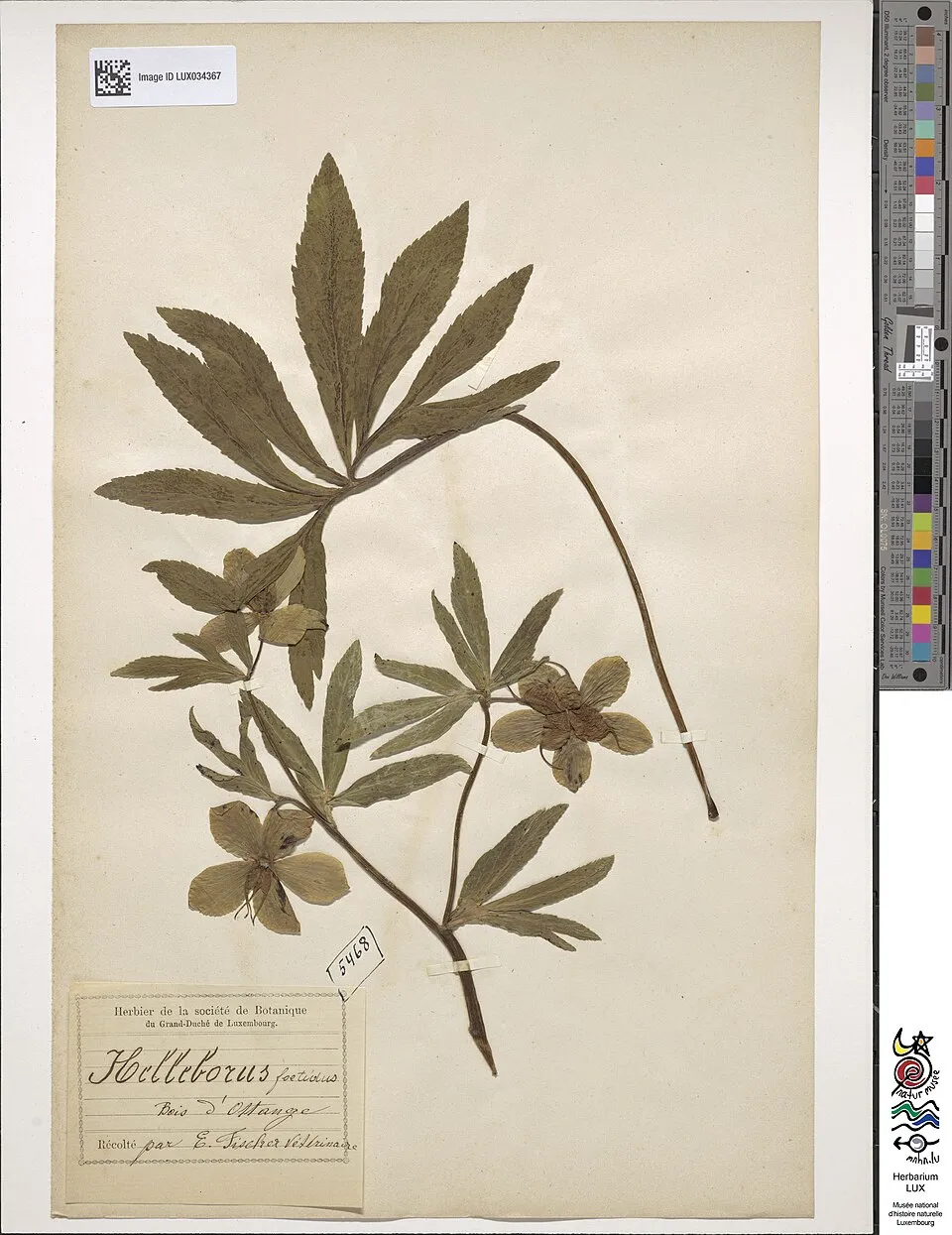
Helleborus foetidus, commonly known as Stinking Hellebore or Bear's-foot, is a resilient evergreen perennial belonging to the Ranunculaceae family, indigenous to the woodlands and scrublands of Western and Southern Europe, stretching from the Iberian Peninsula across France to the Balkans. Its specific epithet 'foetidus' refers to the mildly pungent, somewhat unpleasant odor emitted by its crushed leaves and stems, a defense mechanism against herbivory, rather than a truly offensive smell. This architectural plant typically achieves a height of 30-90 cm (1-3 feet), forming a robust clump of leathery, deep green, palmately divided leaves. Each leaf is usually composed of 5-7 lance-shaped, serrated leaflets, providing year-round visual interest even through harsh winter conditions.
The flowering period spans from late winter to early spring, typically between January and April, offering crucial early season color. The inflorescence is a terminal cyme bearing a cluster of nodding, bell-shaped flowers, each measuring approximately 2-3 cm in diameter. The most prominent part of the flower is its unique greenish-white to pale green or yellowish-green calyx, which functions as the petals, enclosing a ring of smaller, tubular, petal-like nectaries, often tinged with a darker purplish-green or maroon. These calyx lobes are pointed and may display darker margins, contributing to the flower's subtle, archaic beauty.
Following the blooms, leathery, inflated seed pods develop, maturing in late spring or early summer. Helleborus foetidus is highly valued in horticulture for its early blooming, evergreen foliage, and adaptability to shade and poor soils, thriving in well-drained, humus-rich soil.
Trusted Scientific References
1. Authoritative external sources for Helleborus Foetidus
1.1 Wikipedia — Helleborus Foetidus
1.2 Kew POWO (Plants of the World Online)
1.3 PubMed — peer-reviewed research
1.4 NCBI Taxonomy Browser
1.5 GBIF — Global Biodiversity
1.6Helleborus Foetidus should be interpreted through verified botanical identity, practical care, and responsible safety language. This recovery note adds the missing context needed for a complete profile: match light to the plant's habit, use well-drained soil, water according to season, and avoid unsupported medicinal or edible claims. For publishing, the plant can be presented as a source-backed garden plant with clear care guidance, common problem diagnosis, and conservative safety wording.
1.1.Helleborus Foetidus — Standout Qualities
- ✓Scientific Name — Helleborus foetidus
- ✓Common Names — Stinking Hellebore, Bear's-foot
- ✓Family — Ranunculaceae
- ✓Native Range — Western and Southern Europe
- ✓Bloom Time — Late winter to early spring (January-April)
- ✓Flower Color — Greenish-white to pale green, often with purplish-green nectaries
- ✓Foliage — Evergreen, deep green, palmately divided, leathery
- ✓Height — Typically 30-90 cm (1-3 feet)
- ✓Toxicity — Highly poisonous, all parts are toxic if ingested
- ✓Horticultural Value — Early bloomer, shade tolerant, deer and rabbit resistant
1.2.Helleborus Foetidus — In Brief
- ✓Helleborus foetidus is an evergreen perennial native to Europe, prized for its unique late-winter green blooms.
- ✓All plant parts are highly toxic, primarily due to potent cardiac glycosides and irritant compounds.
- ✓Historically used as a drastic purgative, emetic, and anthelmintic, but these applications are critically unsafe.
- ✓Valued in horticulture for its shade tolerance, early flowering, and deer/rabbit resistance.
- ✓Requires careful handling due to sap that can cause skin irritation.
- ✓Not recommended for any internal medicinal use in modern herbalism.
2.Helleborus Foetidus — Scientific Profile
3.Helleborus Foetidus — Quick Facts
4.Helleborus Foetidus — Morphological Account
5.Helleborus Foetidus — Where It Grows
6.Helleborus Foetidus — Cultural & Traditional Roles
7.Helleborus Foetidus — Active Compounds
- ✓Cardiac Glycosides — Primarily hellebrin, helleborein, and other bufadienolides, which are potent cardiotonic compounds responsible for the plant's severe toxicity, affecting heart rhythm and causing emesis and purgation.
- ✓Saponins — These compounds contribute to the plant's irritant properties, capable of causing gastrointestinal distress and hemolytic effects upon ingestion.
- ✓Protoanemonin — Present in the fresh plant, this unstable lactone is a vesicant and irritant, responsible for skin blistering and mucosal irritation, converting to less toxic anemonin upon drying.
- ✓Anemonin — A dimerized form of protoanemonin, found in dried plant material, it retains some irritant properties but is significantly less toxic than its precursor.
- ✓Steroidal Saponins — Specific types of saponins that may contribute to the plant's general toxicity and membrane-disrupting activities.
- ✓Flavonoids — General plant phenolic compounds known for antioxidant properties, though not the primary active constituents for Helleborus' medicinal effects.
- ✓Phenolic Acids — Common plant secondary metabolites that typically possess antioxidant and anti-inflammatory potential, present in various plant tissues.
- ✓Fatty Acids — Essential structural components of plant cells, generally non-toxic and ubiquitous in plant matter.
8.Helleborus Foetidus — Modern Studies
- ✓Historical Anthelmintic — Historically, the dried root powder of Helleborus foetidus was used to expel intestinal parasites, though its extreme toxicity made this practice highly dangerous.
- ✓Drastic Purgative — Traditionally employed as a potent laxative and emetic to induce severe bowel evacuation or vomiting, a use now deemed unsafe due to its narrow therapeutic index.
- ✓Cardiotonic (Historical Caution) — Extracts were historically explored for their influence on heart rhythm, attributed to cardiac glycosides, but the risk of fatal arrhythmia far outweighs any potential benefit.
- ✓Diuretic Properties (Traditional) — Folk medicine occasionally utilized Hellebore for its perceived ability to increase urine output, aiding in conditions of fluid retention.
- ✓Emmenagogue (Historical Caution) — Historically, it was used to stimulate menstruation, but its potent abortifacient and toxic properties rendered it extremely hazardous.
- ✓Topical Irritant (Historical) — Applied externally as a poultice or wash for skin conditions like scabies or ulcers, though it could cause severe dermatitis and blistering.
- ✓Nervine (Historical, Highly Dangerous) — In some traditional practices, it was dangerously used for certain mental afflictions, but with severe neurological side effects.
8.1.Helleborus Foetidus — Reported Uses
9.Helleborus Foetidus — Precautions & Warnings
9.1.Helleborus Foetidus — Possible Adverse Reactions
- ✓Severe Gastrointestinal Distress — Ingestion causes intense nausea, persistent vomiting, severe abdominal pain, and profuse, often bloody, diarrhea.
- ✓Cardiac Arrhythmias — Due to cardiac glycosides, it can lead to dangerous irregularities in heart rhythm, including bradycardia, tachycardia, and potentially fatal cardiac arrest.
- ✓Neurological Symptoms — May induce dizziness, headache, confusion, delirium, convulsions, and in severe cases, paralysis.
- ✓Dermatitis and Blistering — Direct skin contact with the sap can cause severe irritation, redness, itching, and blistering.
- ✓Renal and Hepatic Damage — High doses or prolonged exposure can lead to kidney and liver toxicity.
- ✓Respiratory Depression — In extreme poisoning, breathing difficulties and respiratory failure can occur.
- ✓Fatal Poisoning — Ingestion of even small quantities can be lethal, particularly in children and pets, necessitating immediate medical intervention.
9.2.Helleborus Foetidus — Toxicity Assessment
- ✓Highly Toxic Plant — All parts of Helleborus foetidus are poisonous if ingested, posing a significant risk to humans and animals.
- ✓Keep Away from Children and Pets — Ensure the plant is inaccessible to prevent accidental ingestion, which can be fatal.
- ✓Wear Protective Gloves — Always handle the plant with gloves, especially when pruning or transplanting, to avoid skin irritation and dermatitis from its sap.
- ✓Avoid Ingestion at All Costs — Never consume any part of the plant; it is not safe for internal medicinal use in any form.
- ✓Contraindicated for Pregnancy and Lactation — Due to its abortifacient and highly toxic properties, it is strictly contraindicated for pregnant or nursing individuals.
- ✓Individuals with Heart Conditions — Extremely dangerous for those with pre-existing cardiac issues due to its potent cardiac glycosides.
- ✓Seek Immediate Medical Attention — In case of accidental ingestion or severe skin contact, contact poison control or emergency services without delay.
10.Helleborus Foetidus — Application Forms
- ✓Ornamental Cultivation — Primarily cultivated as an attractive, evergreen ornamental perennial for shade gardens, valued for its unique late-winter to early-spring blooms.
- ✓Historical Purgative Use (Highly Dangerous) — Historically, dried root preparations were ingested as a drastic purgative or emetic, a practice now considered lethal due to extreme toxicity.
- ✓Historical Anthelmintic Use (Unsafe) — Traditional European folk medicine used Hellebore to expel parasitic worms, but this internal application is critically unsafe and not recommended.
- ✓Historical Topical Applications (Caution) — Past uses included external poultices or washes for skin conditions like scabies, but direct contact can cause severe irritation and blistering.
- ✓Homeopathic Preparations — Extremely diluted forms may be used in homeopathic remedies for various conditions, following strict practitioner guidance, where the original toxic substance is virtually absent.
- ✓Avoid All Internal Consumption — Emphasize that no part of Helleborus foetidus should ever be ingested due to its severe cardiotoxic, neurotoxic, and gastrointestinal effects, which can be fatal.
- ✓Handle with Gloves — Always wear protective gloves when handling the plant, especially when pruning, to prevent skin irritation from its sap.
11.Helleborus Foetidus — Growth Requirements
- ✓Site Selection — Plant in partial to full shade, ideally beneath deciduous trees to provide winter sun and summer shade.
- ✓Soil Requirements — Thrives in rich, moist, well-draining soil with a neutral to slightly alkaline pH (6.5-7.5).
- ✓Planting Technique — Plant in early spring or fall; dig a hole twice as wide as the root ball, ensuring the crown sits just below the soil surface to encourage flowering. Space plants 18-24 inches apart.
- ✓Watering Regimen — Water regularly during the first year for establishment; mature plants are drought-tolerant but benefit from occasional deep watering during dry spells.
- ✓Fertilization Schedule — Apply compost or well-rotted manure annually in fall; a balanced slow-release fertilizer can be used in early spring.
- ✓Pruning and Maintenance — Shear back old or damaged foliage in late winter or early spring as new growth emerges. Deadhead spent flowers to prevent excessive self-seeding.
- ✓Pest and Disease Management — Generally resistant to pests and diseases; however, watch for aphids, slugs, or black spot in humid conditions, ensuring good air circulation.
Reviewed by the Flora Medical Global Botanical Review Panel
Multi-disciplinary editorial group · Botany · Ethnobotany · Herbal-medicine literature
Who reviewed this: This page was checked by the Flora Medical Global Botanical Review Panel — an in-house editorial group of botany graduates, ethnobotany researchers, and horticulture practitioners who collectively maintain our 7,000+ plant encyclopedia. Meet the team.
Our 4-step verification process
1. Taxonomic verification
Scientific names and synonyms cross-checked against Kew POWO, World Flora Online, and The Plant List.
2. Phytochemical & medicinal cross-reference
Active compounds, traditional uses, and reported activities are cross-referenced with PubMed, USDA Dr. Duke's database, and peer-reviewed ethnobotanical literature.
3. Conservation & distribution check
Distribution, ecology, and conservation status confirmed against GBIF occurrence records and the IUCN Red List.
4. Editorial & safety review
Every entry passes an editorial pass for clarity, originality, and safety notices (toxicity, contraindications, dosage caveats) before publication.
Last reviewed:
Important medical disclaimer: This content is for educational and research purposes only. It is not medical advice and is not a substitute for consultation with a licensed healthcare provider. Do not use any herb to self-treat a medical condition without professional guidance.
Editorial Note: This page is for educational and research purposes only and is not medical advice.
Written by: Flora Medical Global Editorial Team
Reviewed by: Flora Medical Global Botanical Review Panel
Last Updated: June 15, 2026





Helleborus Foetidus — Comments & Community Reviews
Rate this plant