
Medical Disclaimer: This content is for educational purposes only. It is not medical advice. Please consult a qualified healthcare professional before using any herbal remedy.
Safety Overview
1.Helleborus Lividus — At a Glance
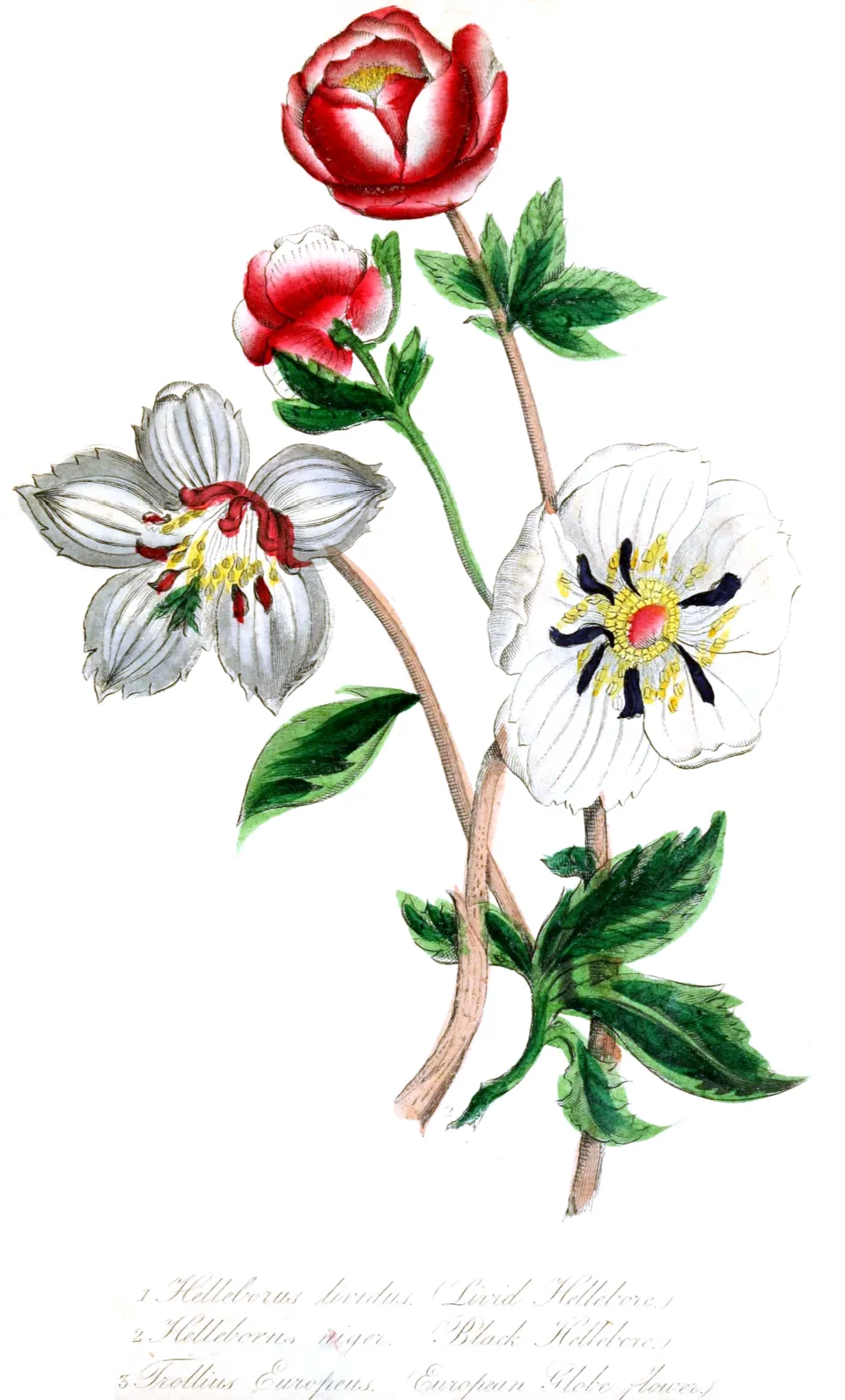
Helleborus lividus, commonly known as the Majorcan hellebore, is a captivating evergreen perennial native exclusively to the Balearic Islands, particularly Majorca. This resilient species typically reaches a height of 30-45 cm (1-1.5 feet) and forms attractive clumps.
Its distinctive foliage consists of three-lobed, leathery leaves that are a glossy dark green, often imbued with a striking purplish tint, especially on the undersides and margins, providing year-round visual interest. The leaves are palmately compound, creating a lush, umbrella-like appearance.
Blooming from late winter to early spring, Helleborus lividus produces charming, outward-facing, saucer-shaped flowers. These delicate blossoms typically range in color from greenish-pink to purplish-pink, adding a subtle splash of color to the late winter garden when little else is in bloom. The plant thrives in its natural Mediterranean habitat, preferring well-drained, humus-rich soil with a neutral to alkaline pH and partial shade, where it is protected from the harshest afternoon sun.
Its taxonomy places it within the Ranunculaceae family, a group known for both ornamental beauty and, in many cases, significant toxicity. Despite its ornamental appeal, it is crucial to recognize the inherent toxicity of all parts of this plant.
Trusted Scientific References
1. Authoritative external sources for Helleborus Lividus
1.1 Wikipedia — Helleborus Lividus
1.2 Kew POWO (Plants of the World Online)
1.3 PubMed — peer-reviewed research
1.4 NCBI Taxonomy Browser
1.5 GBIF — Global Biodiversity
1.6Helleborus Lividus should be interpreted through verified botanical identity, practical care, and responsible safety language. This recovery note adds the missing context needed for a complete profile: match light to the plant's habit, use well-drained soil, water according to season, and avoid unsupported medicinal or edible claims. For publishing, the plant can be presented as a source-backed garden plant with clear care guidance, common problem diagnosis, and conservative safety wording.
1.1.Helleborus Lividus — Highlights
- ✓Botanical Name — Helleborus lividus
- ✓Common Name — Majorcan Hellebore
- ✓Family — Ranunculaceae
- ✓Native Region — Balearic Islands (Majorca)
- ✓Growth Habit — Evergreen perennial, 1-1.5 feet tall
- ✓Foliage — Three-lobed, glossy dark green with purplish tint
- ✓Flowers — Outward-facing, saucer-shaped, greenish-pink to purplish-pink
- ✓Bloom Time — Late winter to early spring
- ✓Toxicity — Highly toxic; contains cardiac glycosides
- ✓Medicinal Use — NONE (only ornamental)
1.2.Helleborus Lividus — At-a-Glance Summary
- ✓Helleborus lividus is a highly toxic ornamental perennial native to the Balearic Islands.
- ✓All parts contain potent cardiac glycosides and steroidal saponins, making it lethal if ingested.
- ✓Valued solely for its ornamental beauty, featuring glossy, purplish-tinted leaves and greenish-pink flowers.
- ✓Thrives in partial shade and well-drained, alkaline soil in Mediterranean climates.
- ✓Absolutely no safe medicinal uses; historical applications were extremely dangerous and often fatal.
- ✓Strict handling precautions are necessary to avoid skin irritation and accidental poisoning.
2.Helleborus Lividus — Scientific Identity
3.Helleborus Lividus — Vital Statistics
4.Helleborus Lividus — Botanical Features
5.Helleborus Lividus — Native Range & Habitat
6.Helleborus Lividus — Folk Medicine Applications
7.Helleborus Lividus — Phytochemistry
- ✓Cardiac Glycosides — Primarily bufadienolides and cardenolides, such as helleborin and helleborigenin, which exert potent inhibitory effects on the Na+/K+-ATPase pump, leading to severe cardiotoxicity and arrhythmias.
- ✓Steroidal Saponins — Compounds like hellebrin, known for their cytotoxic and hemolytic properties, causing red blood cell lysis and cellular damage, contributing to the plant's overall toxicity.
- ✓Anthocyanins — Pigments responsible for the purplish coloration in the leaves and flowers of Helleborus lividus, offering antioxidant potential but overshadowed by the plant's extreme toxicity.
- ✓Flavonoids — A diverse group of polyphenolic compounds, including quercetin and kaempferol derivatives, generally known for antioxidant and anti-inflammatory properties, but present in a toxic matrix in Helleborus lividus.
- ✓Trace Alkaloids — Minor nitrogen-containing compounds, whose specific structures and biological activities in Helleborus lividus are less characterized but may contribute to the plant's complex pharmacology.
- ✓Fatty Acids — Essential components of plant cell membranes and energy storage, present in the seeds, though not primary contributors to the plant's medicinal or toxic profile.
- ✓Phenolic Acids — Simple phenolic compounds such as caffeic acid and ferulic acid, which possess antioxidant properties, but their presence does not negate the plant's potent toxicity.
- ✓Sugars and Polysaccharides — Basic carbohydrates found throughout the plant, involved in energy storage and structural support, but without specific medicinal relevance for this toxic species.
8.Helleborus Lividus — Scientific Evidence
- ✓Historical Purgative Use — Historically, some Hellebore species were dangerously employed as potent purgatives to induce severe bowel evacuation, a practice now recognized as highly toxic and life-threatening due to the presence of cardiac glycosides.
- ✓Traditional Emetic Application — In ancient medicine, certain hellebores were used as emetics to provoke vomiting, a perilous approach given their extreme toxicity and potential to cause severe cardiac distress and collapse.
- ✓Alleged Anthelmintic Properties — Folk medicine sometimes attributed anthelmintic effects to hellebores, attempting to expel parasitic worms, but this application carried an unacceptable risk of severe poisoning and fatal outcomes.
- ✓Controversial Diuretic Action — There are historical mentions of hellebores being used for their purported diuretic effects to increase urine output, however, the narrow therapeutic window and profound toxicity make this an extremely dangerous and unadvisable practice.
- ✓Ancient Treatment for Mental Illness — Black Hellebore (Helleborus niger) was historically associated with treating melancholy and other mental disorders, but these uses were based on humoral theories and were extremely hazardous, often leading to patient death.
- ✓External Application for Skin Conditions (Historical) — Some historical texts suggest external use for skin conditions, but even topical application can lead to irritation and systemic absorption of toxins, making it unsafe.
- ✓Veterinary Use (Historical, Dangerous) — Historically, hellebores were sometimes used in veterinary medicine, particularly for livestock, but this was fraught with high mortality rates due to their potent toxicity.
- ✓Folk Remedy for Gout and Arthritis (Unsafe) — Unsubstantiated folk remedies suggested hellebores for inflammatory conditions like gout and arthritis, yet internal consumption is lethal, and external use carries significant risk.
- ✓Warning Against Self-Medication — Due to the extreme toxicity of Helleborus lividus and the entire Hellebore genus, there are absolutely no safe or medically recognized benefits for human consumption or application in modern herbalism.
- ✓Critical Importance of Professional Advice — Any historical or folk claims regarding Hellebore species are superseded by current scientific understanding of their potent cardiotoxic effects, necessitating a strict warning against any use.
- ✓NO Safe Therapeutic Index — Helleborus lividus lacks any safe therapeutic index, meaning the dose required for any potential effect is dangerously close to, or overlaps with, the lethal dose, rendering it unsuitable for medicinal purposes.
8.1.Helleborus Lividus — Indications & Uses
9.Helleborus Lividus — Cautions & Contraindications
9.1.Helleborus Lividus — Side Effects & Warnings
- ✓Cardiac Arrhythmias — Severe and potentially fatal heart rhythm disturbances, including bradycardia and tachycardia, due to the action of cardiac glycosides.
- ✓Gastrointestinal Distress — Nausea, severe vomiting, abdominal pain, and profuse diarrhea, leading to dehydration and electrolyte imbalance.
- ✓Neurological Symptoms — Dizziness, confusion, convulsions, and respiratory depression can occur in severe poisoning cases.
- ✓Dermatitis — Skin irritation, redness, and blistering upon direct contact with the plant sap.
- ✓Visual Disturbances — Blurred vision or other ocular effects reported in some cases of severe poisoning.
- ✓Hypotension and Collapse — Profound drop in blood pressure, leading to circulatory collapse and shock.
- ✓Fatal Outcomes — Ingestion of any part of Helleborus lividus can be lethal, even in small quantities, due to its potent cardiotoxicity.
9.2.Helleborus Lividus — Clinical Safety Notes
- ✓EXTREMELY TOXIC — Helleborus lividus is highly poisonous; all parts of the plant contain potent cardiac glycosides and other toxic compounds.
- ✓NOT FOR INTERNAL USE — Under no circumstances should Helleborus lividus be ingested by humans or animals.
- ✓AVOID SKIN CONTACT — Wear gloves when handling the plant to prevent dermatitis and irritation from sap.
- ✓KEEP AWAY FROM CHILDREN AND PETS — Plant in locations inaccessible to prevent accidental poisoning.
- ✓NO MEDICINAL APPLICATION — There are no safe or recognized medicinal uses for Helleborus lividus in modern herbalism.
- ✓SEEK IMMEDIATE MEDICAL ATTENTION — In case of suspected ingestion or severe contact, immediately contact poison control or emergency services.
- ✓CONTRAINDICATED IN ALL CONDITIONS — Due to its extreme toxicity, Helleborus lividus is contraindicated for use in any medical condition or for any purpose.
10.Helleborus Lividus — Preparation Methods
- ✓Ornamental Cultivation — Helleborus lividus is exclusively cultivated as an ornamental garden plant for its attractive foliage and early winter blooms, prized for its aesthetic value in shade gardens.
- ✓NO Internal Consumption — Due to its extreme toxicity, Helleborus lividus should never be consumed internally in any form, as even small amounts can cause severe cardiac arrest and death.
- ✓NO Topical Application — Direct skin contact with sap can cause irritation or dermatitis, and systemic absorption of toxins is a risk, thus topical application for any purpose is strictly contraindicated.
- ✓Historical Purgative (DANGEROUS) — Historically, various Hellebore species were used as violent purgatives, but this practice was lethal and is unequivocally condemned in modern herbalism.
- ✓Historical Emetic (DANGEROUS) — Ancient uses included inducing vomiting, a critically dangerous method given the potent cardiotoxicity of the plant.
- ✓Strict Handling Precautions — When handling the plant, especially during pruning or transplanting, it is advisable to wear gloves to prevent skin irritation from the sap.
- ✓Keep Away from Children and Pets — Ensure Helleborus lividus is planted in areas inaccessible to curious children and pets, as accidental ingestion poses a severe poisoning risk.
- ✓Educational Resource Only — Information on historical uses is provided purely for academic and historical context, serving as a stark warning against any attempts at self-medication.
11.Helleborus Lividus — Garden Cultivation
- ✓Climate Preference — Thrives in Mediterranean climates, requiring mild winters and protection from severe frosts, ideally suited for USDA hardiness zones 7-9.
- ✓Light Requirements — Prefers partial to full shade, especially during the hottest parts of the day; direct sun exposure can scorch its distinctive foliage.
- ✓Soil Conditions — Requires well-drained, humus-rich soil with a neutral to alkaline pH (7.0-8.0), accurately mimicking its natural limestone-rich habitats.
- ✓Watering — Needs consistent moisture, particularly during dry periods, but it is crucial to avoid waterlogging which can lead to detrimental root rot; established plants demonstrate moderate drought tolerance.
- ✓Propagation — Primarily propagated by fresh seed, which typically requires a period of cold stratification for successful germination, or by careful division of established clumps in early spring or autumn.
- ✓Fertilization — Benefits from an annual application of a balanced slow-release fertilizer or well-rotted compost in early spring to support vigorous growth and flowering.
- ✓Pruning — Generally low-maintenance, requiring only the removal of old, damaged, or unsightly leaves and spent flower stalks to maintain its attractive appearance and prevent disease.
- ✓Pest and Disease Management — Relatively resistant to most pests and diseases, though occasional issues like aphids, leaf spot, or leaf miner may occur, which can be managed with appropriate organic or chemical treatments.
Reviewed by the Flora Medical Global Botanical Review Panel
Multi-disciplinary editorial group · Botany · Ethnobotany · Herbal-medicine literature
Who reviewed this: This page was checked by the Flora Medical Global Botanical Review Panel — an in-house editorial group of botany graduates, ethnobotany researchers, and horticulture practitioners who collectively maintain our 7,000+ plant encyclopedia. Meet the team.
Our 4-step verification process
1. Taxonomic verification
Scientific names and synonyms cross-checked against Kew POWO, World Flora Online, and The Plant List.
2. Phytochemical & medicinal cross-reference
Active compounds, traditional uses, and reported activities are cross-referenced with PubMed, USDA Dr. Duke's database, and peer-reviewed ethnobotanical literature.
3. Conservation & distribution check
Distribution, ecology, and conservation status confirmed against GBIF occurrence records and the IUCN Red List.
4. Editorial & safety review
Every entry passes an editorial pass for clarity, originality, and safety notices (toxicity, contraindications, dosage caveats) before publication.
Last reviewed:
Important medical disclaimer: This content is for educational and research purposes only. It is not medical advice and is not a substitute for consultation with a licensed healthcare provider. Do not use any herb to self-treat a medical condition without professional guidance.
Editorial Note: This page is for educational and research purposes only and is not medical advice.
Written by: Flora Medical Global Editorial Team
Reviewed by: Flora Medical Global Botanical Review Panel
Last Updated: June 15, 2026





Helleborus Lividus — Comments & Community Reviews
Rate this plant