
Medical Disclaimer: This content is for educational purposes only. It is not medical advice. Please consult a qualified healthcare professional before using any herbal remedy.
Safety Overview
1.Helleborus Viridis — Essential Profile
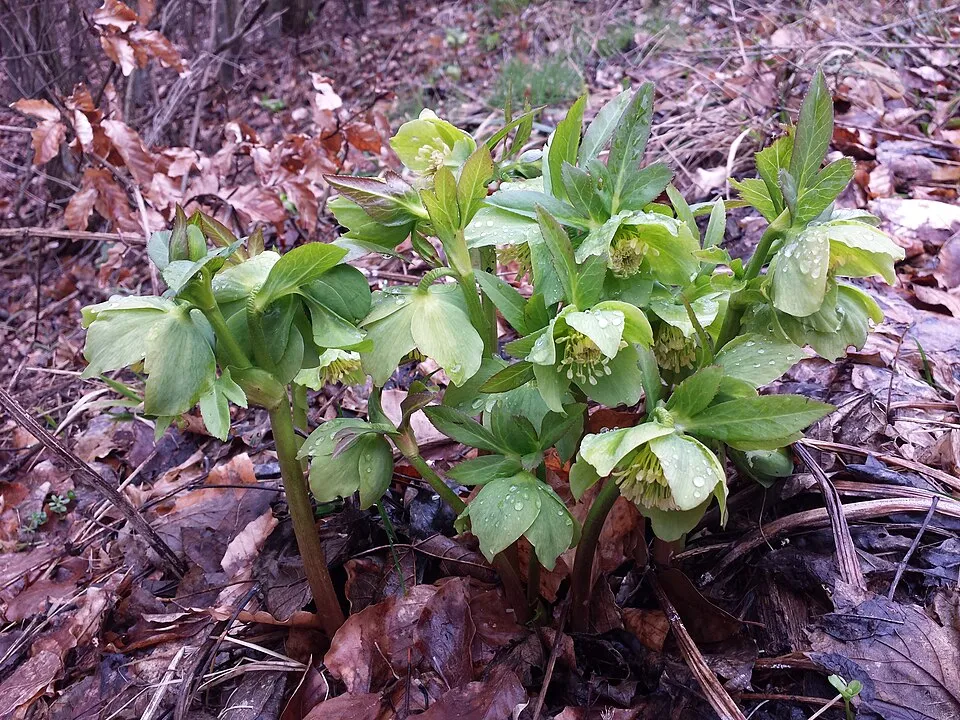
Helleborus viridis, commonly recognized as Green Hellebore, is an alluring herbaceous perennial native to the woodlands and shaded areas of Western and Central Europe, extending into southern England. This member of the Ranunculaceae family is cherished for its understated yet captivating beauty, particularly its distinctive greenish-yellow to pure green, cup-shaped flowers that emerge in late winter and early spring, offering a vital source of nectar for early pollinators. Unlike some of its Hellebore relatives, Helleborus viridis typically displays deeply divided, often prominently veined leaves with serrated margins, which provide a lush, attractive backdrop even outside of its blooming period.
The plant develops an upright growth habit, forming compact clumps that generally reach a height of 30 to 60 centimeters (12-24 inches). Its foliage remains evergreen in milder climates, providing year-round interest, but may recede in harsher winters to re-emerge vigorously with the onset of spring. This species is taxonomically classified within the Kingdom Plantae, Clade Angiosperms, Order Ranunculales, Family Ranunculaceae, Genus Helleborus, and Species Helleborus viridis.
Its robust nature and ability to thrive in shaded, naturalized settings make it a prized ornamental, albeit one requiring respectful handling due to its inherent toxicity.
Trusted Scientific References
1. Authoritative external sources for Helleborus Viridis
1.1 Wikipedia — Helleborus Viridis
1.2 Kew POWO (Plants of the World Online)
1.3 PubMed — peer-reviewed research
1.4 NCBI Taxonomy Browser
1.5 GBIF — Global Biodiversity
1.6Helleborus Viridis should be interpreted through verified botanical identity, practical care, and responsible safety language. This recovery note adds the missing context needed for a complete profile: match light to the plant's habit, use well-drained soil, water according to season, and avoid unsupported medicinal or edible claims. For publishing, the plant can be presented as a source-backed garden plant with clear care guidance, common problem diagnosis, and conservative safety wording.
1.1.Helleborus Viridis — Distinguishing Points
- ✓Common Name — Green Hellebore, Bear's Foot, Green Christmas Rose.
- ✓Scientific Name — Helleborus viridis.
- ✓Botanical Family — Ranunculaceae (Buttercup Family).
- ✓Extreme Toxicity — All plant parts are highly poisonous, especially when ingested, due to cardiac glycosides.
- ✓Unique Green Blooms — Distinctive greenish-yellow to pure green, cup-shaped flowers that appear in late winter.
- ✓Early Spring Interest — Flowers provide crucial early season color and nectar, often blooming through snow.
- ✓Perennial Growth — Hardy herbaceous perennial, returning year after year from a persistent rootstock.
- ✓Native Habitat — Indigenous to Western and Central Europe, including parts of Southern England.
- ✓Key Phytochemicals — Contains potent cardiac glycosides (helleborin, hellebrin) and saponins.
- ✓Shade Loving — Thrives in partial to full shade with well-draining, humus-rich soil, ideal for woodland gardens.
1.2.Helleborus Viridis — At-a-Glance Summary
- ✓Helleborus viridis, or Green Hellebore, is a beautiful but highly toxic perennial ornamental.
- ✓All parts of the plant are poisonous, containing potent cardiac glycosides like helleborin.
- ✓Historically used as a purgative and emetic, but strictly contraindicated for any modern internal use due to severe toxicity.
- ✓Cultivated for its early green blooms and attractive foliage in shaded garden settings.
- ✓Requires careful handling with gloves to prevent skin irritation and must be kept away from children and pets.
- ✓Ingestion can lead to severe gastrointestinal distress, cardiac arrhythmias, neurological symptoms, and can be fatal.
2.Helleborus Viridis — Botanical Identity
3.Helleborus Viridis — Vital Statistics
4.Helleborus Viridis — Botanical Features
5.Helleborus Viridis — Native Range & Habitat
6.Helleborus Viridis — Traditional Uses
7.Helleborus Viridis — Chemical Profile
- ✓Cardiac Glycosides — Primarily contains helleborin, hellebrin, and helleborigenin, which are potent steroidal glycosides structurally similar to digitalis. These compounds are responsible for the plant's profound cardiotoxic effects by influencing sodium-potassium ATPase activity in cardiac muscle, leading to arrhythmias and heart failure.
- ✓Saponins — Various triterpenoid saponins are present throughout the plant, contributing to its irritant properties and potentially enhancing the absorption of other toxic compounds across mucous membranes.
- ✓Protoanemonin — A volatile, irritating lactone formed from the enzymatic breakdown of ranunculin in fresh plant material. It is responsible for acute local irritation, burning sensations, and blistering upon contact with skin or mucous membranes.
- ✓Steroidal Glycosides — Beyond the primary cardiac glycosides, other steroidal structures may exist, contributing to the plant's complex pharmacological profile and overall toxicity.
- ✓Flavonoids — General plant pigments with antioxidant potential, though their contribution to Helleborus viridis's medicinal or toxic profile is less significant compared to the more potent cardiac glycosides and saponins.
- ✓Alkaloids — While not dominant constituents, some species within the Ranunculaceae family can contain trace amounts of various alkaloids, which might contribute to systemic effects.
- ✓Fatty Acids — Essential components of plant cell membranes and energy storage, present in varying concentrations within the plant tissues.
- ✓Organic Acids — Diverse compounds participating in plant metabolism, growth regulation, and defense mechanisms.
8.Helleborus Viridis — Pharmacological Findings
- ✓Historical Purgative Action — Traditionally employed in European folk medicine to induce strong bowel movements, often for severe constipation, though this use was fraught with significant risk due to its potent and unpredictable effects.
- ✓Traditional Emetic Use — Historically administered to provoke vomiting, a practice aimed at expelling ingested substances, but notoriously difficult to dose safely and associated with severe side effects.
- ✓Ancient Cardiac Applications — In very minute, carefully controlled historical preparations, it was explored for its influence on heart function, a highly dangerous application given its potent cardiac glycoside content and narrow therapeutic window.
- ✓Folk Remedy for Parasites — Some historical accounts suggest its use as an anthelmintic to target internal parasites, a hazardous application due to the plant's systemic toxicity.
- ✓External Applications (Historical) — Rarely, external poultices or washes were prepared in traditional folk medicine for skin conditions or joint pain, though absorption risk remains a significant concern and can cause severe local irritation.
- ✓Veterinary Use (Historical) — In traditional veterinary practice, hellebore was occasionally used for livestock, particularly as a purgative, with known risks of poisoning to animals.
- ✓Modern Research Interest — Contemporary pharmacological studies might investigate isolated compounds like helleborin for novel drug discovery, strictly in controlled laboratory settings, not for direct plant use in humans.
- ✓Botanical Garden Specimen — Its primary 'benefit' today is as an ornamental plant for its early flowering and unique aesthetics in gardens, where its beauty can be appreciated safely, enhancing biodiversity.
- ✓Ecological Role — Provides valuable early nectar for pollinators in late winter and early spring, contributing to local ecosystem health and supporting insect populations when other food sources are scarce.
8.1.Helleborus Viridis — Indications & Uses
9.Helleborus Viridis — Safety & Side Effects
9.1.Helleborus Viridis — Caution Notes
- ✓Severe Gastrointestinal Distress — Ingestion leads to intense nausea, violent vomiting, severe abdominal pain, and profuse diarrhea due to direct irritation and systemic toxicity from cardiac glycosides.
- ✓Cardiac Arrhythmias — The cardiac glycosides can cause dangerous irregularities in heart rhythm, including bradycardia (slow heart rate), tachycardia, and other potentially fatal arrhythmias and heart block.
- ✓Neurological Symptoms — May induce dizziness, confusion, tremors, convulsions, and in severe poisoning cases, paralysis and central nervous system depression.
- ✓Local Irritation — Direct skin contact with the plant sap can cause acute dermatitis, characterized by redness, intense itching, burning sensations, and blistering.
- ✓Systemic Toxicity — Can lead to kidney damage, liver dysfunction, respiratory depression, and ultimately multi-organ failure in severe cases of poisoning.
- ✓Fatal Outcomes — Due to its extreme potency and unpredictable effects, ingestion of Helleborus viridis can be lethal, even in relatively small quantities, particularly in vulnerable populations.
9.2.Helleborus Viridis — Risk Assessment
- ✓Extreme Toxicity — Helleborus viridis is highly poisonous; all parts of the plant, especially the roots and seeds, contain potent toxins and must never be ingested.
- ✓External Contact Caution — Direct handling of the plant, particularly broken stems or roots, should always be done with protective gloves to prevent skin irritation, dermatitis, and potential absorption.
- ✓Keep Away from Children and Pets — Ensure the plant is inaccessible to young children and domestic animals, as accidental ingestion can lead to severe poisoning, illness, or death.
- ✓No Internal Medicinal Use — Modern medical and herbalist communities unequivocally advise against any internal use due to its narrow therapeutic window, profound toxicity, and lack of safe dosage.
- ✓Pregnancy and Lactation — Absolutely contraindicated for pregnant or breastfeeding individuals due to the severe risk of harm to both mother and developing child.
- ✓Pre-existing Conditions — Individuals with cardiac conditions, gastrointestinal disorders, kidney disease, or liver impairment are at exceptionally high risk from any exposure and should strictly avoid this plant.
- ✓Emergency Protocol — In case of suspected ingestion or severe exposure, immediate medical attention is critical; contact poison control or emergency services without any delay.
10.Helleborus Viridis — Usage Guide
- ✓Ornamental Cultivation — Primarily cultivated as an attractive ornamental plant for shaded gardens, woodland settings, and borders, valued for its unique early spring blooms and attractive foliage.
- ✓Historical Topical Preparations — Historically, external applications like poultices were used for skin ailments or joint pain in folk medicine, though this practice is extremely risky due to percutaneous absorption of toxins and severe skin irritation.
- ✓Educational Display — Often featured in botanical gardens and educational institutions as a specimen plant to highlight its unique morphology, ecological role, and historical significance, always with appropriate warnings.
- ✓Research Material — Plant material is utilized in controlled laboratory settings for phytochemical analysis and investigation into the properties of its isolated compounds, not for direct human application.
- ✓Seed Collection — Seeds can be collected from mature plants for propagation, ensuring proper handling with protective gloves due to the plant's toxicity.
- ✓Division for Propagation — Mature clumps can be carefully divided in autumn or early spring to create new plants, always with the use of protective gear to avoid skin contact with the sap.
11.Helleborus Viridis — Garden Cultivation
- ✓Soil Requirements — Thrives in fertile, well-draining soil rich in organic matter, ideally a good garden loam amended with compost to improve structure and moisture retention.
- ✓Light Conditions — Prefers partial to full shade, especially in warmer climates, to protect foliage from scorching, though it can tolerate more sun in cooler, consistently moist conditions.
- ✓Watering Regimen — Requires consistent moisture throughout the growing season, keeping the soil moist but never waterlogged to prevent root rot, particularly important during dry spells.
- ✓Propagation Methods — Can be propagated effectively from fresh seeds, which typically require a period of stratification for successful germination, or by carefully dividing mature clumps in early spring or autumn.
- ✓Fertilization — Benefits from a light application of a balanced granular fertilizer or a top-dressing of well-rotted compost in early spring as new growth emerges.
- ✓Mulching — An annual layer of organic mulch, such as leaf mold or bark chips, helps conserve soil moisture, regulate soil temperature, and suppress weed growth around the plant's base.
- ✓Winter Care — In colder climates (USDA Zones 4-8), foliage may die back to the ground, but the plant will re-emerge vigorously in spring from its persistent rootstock; protect from harsh winter winds.
Reviewed by the Flora Medical Global Botanical Review Panel
Multi-disciplinary editorial group · Botany · Ethnobotany · Herbal-medicine literature
Who reviewed this: This page was checked by the Flora Medical Global Botanical Review Panel — an in-house editorial group of botany graduates, ethnobotany researchers, and horticulture practitioners who collectively maintain our 7,000+ plant encyclopedia. Meet the team.
Our 4-step verification process
1. Taxonomic verification
Scientific names and synonyms cross-checked against Kew POWO, World Flora Online, and The Plant List.
2. Phytochemical & medicinal cross-reference
Active compounds, traditional uses, and reported activities are cross-referenced with PubMed, USDA Dr. Duke's database, and peer-reviewed ethnobotanical literature.
3. Conservation & distribution check
Distribution, ecology, and conservation status confirmed against GBIF occurrence records and the IUCN Red List.
4. Editorial & safety review
Every entry passes an editorial pass for clarity, originality, and safety notices (toxicity, contraindications, dosage caveats) before publication.
Last reviewed:
Important medical disclaimer: This content is for educational and research purposes only. It is not medical advice and is not a substitute for consultation with a licensed healthcare provider. Do not use any herb to self-treat a medical condition without professional guidance.
Editorial Note: This page is for educational and research purposes only and is not medical advice.
Written by: Flora Medical Global Editorial Team
Reviewed by: Flora Medical Global Botanical Review Panel
Last Updated: June 15, 2026





Helleborus Viridis — Comments & Community Reviews
Rate this plant