
Medical Disclaimer: This content is for educational purposes only. It is not medical advice. Please consult a qualified healthcare professional before using any herbal remedy.
Safety Overview
1.Henbane — Overview
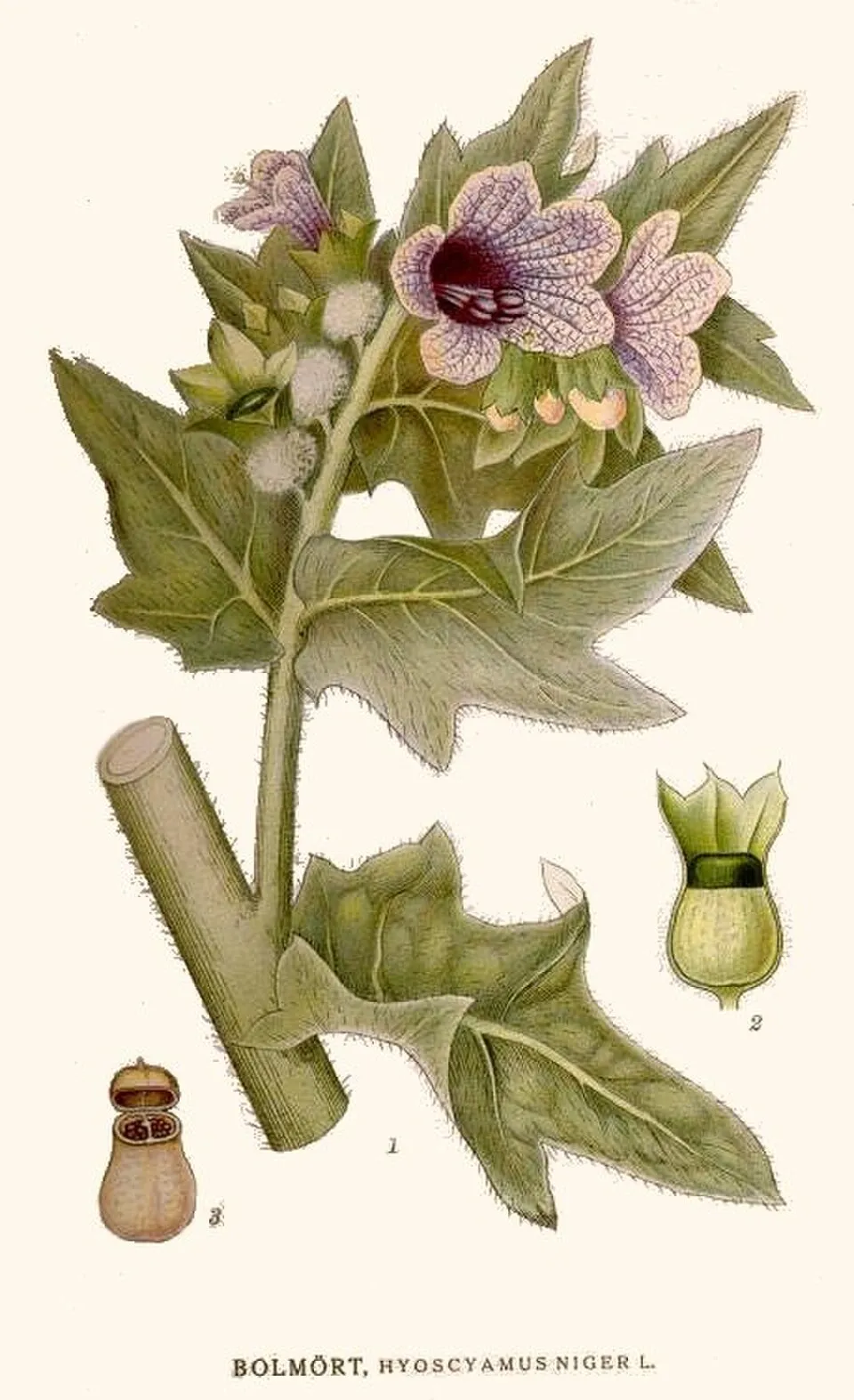
Henbane, scientifically known as Hyoscyamus niger L., is a captivating and historically significant plant species firmly rooted within the Solanaceae family, a diverse group that also encompasses well-known genera such as Atropa, Datura, and Mandragora, alongside common food crops like tomatoes and potatoes. The plant’s evocative English name, 'henbane,' is thought to originate from the Old English 'hennebelle,' which translates to 'killer of hens,' a stark testament to its inherent toxic properties, particularly observed in poultry. Conversely, its Greek scientific name, 'Hyoscyamus,' meaning 'hog's-bean' (hyos = pig, kyamos = bean), suggests historical observations of pigs consuming it without apparent harm, highlighting a complex relationship with animal toxicity. This enigmatic plant has woven itself into the fabric of human history for millennia, finding applications in diverse traditional medicine systems, esoteric magical practices, and even as a potent narcotic. Ecologically, Henbane typically manifests as a biennial, though sometimes an annual, preferring disturbed ground, waste places, roadsides, and abandoned fields.
Its natural geographic distribution spans across much of Europe, extends into North Africa, and reaches Western Asia. It has also become naturalized in parts of North America and other temperate regions globally. The plant exhibits a preference for well-drained, sandy, or limy soils, demonstrating a remarkable tolerance for a range of climatic conditions, though it truly flourishes in temperate zones. Morphologically, Hyoscyamus niger is readily identifiable by its dull green, densely hairy, and somewhat sticky leaves. When bruised or crushed, these leaves emit a distinctive, rather unpleasant narcotic odor.
The flowers are a striking feature, campanulate or bell-shaped, displaying a unique coloration of yellowish-brown or dull purple, intricately veined with a darker purplish network—a key characteristic for identification. These blossoms mature into a peculiar, urn-shaped capsule known as a pyxis, which contains numerous small, kidney-shaped seeds. All parts of the Henbane plant, but most notably the leaves and seeds, are pharmacologically significant due to their high concentration of potent tropane alkaloids. The primary active compounds include hyoscyamine, scopolamine (also known as hyoscine), and atropine, which is a racemic mixture of hyoscyamine. These alkaloids are the chemical architects behind Henbane’s profound pharmaco ...[CURRENT TEXT EXISTS: 3288 chars]
1.1.Henbane — Key Features
- ✓Scientific Name — Hyoscyamus niger L.
- ✓Common Name — Henbane, Black Henbane, Stinking Nightshade, Devil's Eye.
- ✓Family — Solanaceae (Nightshade family).
- ✓Active Compounds — Tropane alkaloids (hyoscyamine, scopolamine, atropine).
- ✓Primary Actions — Anticholinergic, antispasmodic, sedative, analgesic, mydriatic.
- ✓Toxicity Level — High; all plant parts are poisonous.
- ✓Plant Type — Biennial (sometimes annual).
- ✓Flower Color — Yellowish-brown to dull purple with prominent darker purple veins.
- ✓Fruit Type — Urn-shaped capsule (pyxis) containing numerous small seeds.
- ✓Historical Use — Pain relief, insomnia, nervous disorders, ritualistic hallucinogen.
- ✓Habitat — Prefers waste places, disturbed ground, roadsides in temperate regions.
- ✓Odor — Emits a characteristic narcotic and fetid odor when crushed.
- ✓Safety Warning — Extremely poisonous; never use without strict medical guidance.
- ✓Medical Use — Isolated alkaloids are used in controlled pharmaceutical preparations.
- ✓Etymology — 'Henbane' implies toxicity to poultry; 'Hyoscyamus' means 'hog's-bean'.
1.2.Henbane — Concise Overview
- ✓Henbane (Hyoscyamus niger) is a highly toxic plant in the Solanaceae family.
- ✓Contains potent tropane alkaloids — hyoscyamine, scopolamine, and atropine.
- ✓Historically used as an analgesic, sedative, antispasmodic, and in magical practices.
- ✓Exerts strong anticholinergic effects, leading to smooth muscle relaxation and reduced secretions.
- ✓All parts are poisonous; even small doses can cause severe anticholinergic poisoning symptoms.
- ✓Strictly for medical prescription and supervision; never for self-medication due to narrow therapeutic window.
- ✓Characterized by hairy leaves, distinctive bell-shaped flowers with dark veins, and urn-shaped fruit.
2.Henbane — Scientific Profile
3.Henbane — Botanical Stats
4.Henbane — Structural Profile
5.Henbane — Habitat & Distribution
6.Henbane — Ethnobotanical Uses
7.Henbane — Active Compounds
- ✓Tropane Alkaloids — The most significant active compounds, including Hyoscyamine (L-hyoscyamine), Scopolamine (Hyoscine), and Atropine (racemic DL-hyoscyamine). These are potent anticholinergic agents, blocking muscarinic acetylcholine receptors, leading to antispasmodic, sedative, mydriatic, and antisecretory effects. Their concentrations vary between plant parts and growth stages, with leaves and seeds being particularly rich.
- ✓Flavonoids — Compounds such as Rutin and various quercetin glycosides are present. These contribute minor antioxidant and potentially anti-inflammatory properties, though their pharmacological significance is overshadowed by the alkaloids.
- ✓Coumarins — Derivatives like Scopoletin have been identified. Coumarins often possess anti-inflammatory, antimicrobial, and sometimes anticoagulant activities, contributing to the plant's overall traditional efficacy.
- ✓Steroidal Glycosides — Minor constituents that may have some hormonal or anti-inflammatory effects, though their specific roles in Henbane's pharmacology are less characterized.
- ✓Lignans — Present in trace amounts, lignans are known for their antioxidant, anti-inflammatory, and anticarcinogenic potential.
- ✓Volatile Oils — Contribute to the plant's characteristic narcotic odor. While not primary therapeutic agents, they may have minor antimicrobial or carminative effects.
- ✓Saponins — These compounds produce foam when shaken in water and can have expectorant, anti-inflammatory, and cholesterol-lowering properties, though their contribution to Henbane's medicinal profile is secondary.
- ✓Tannins — Provide astringent properties, which could contribute to traditional uses for wound healing or reducing inflammation.
- ✓Fatty Acids — Found predominantly in the seeds, these include various saturated and unsaturated fatty acids, important for seed development and nutritional value, but not directly responsible for the plant's potent medicinal actions.
- ✓Amino Acids — Essential building blocks for proteins, present in all plant tissues, supporting basic metabolic functions.
- ✓Sugars — Simple and complex carbohydrates are present, providing energy for plant metabolism and growth.
- ✓Withanolides — A group of naturally occurring C28 steroidal lactones, structurally similar to steroids, known for diverse biological activities including anti-inflammatory and immunomodulatory effects in other Solanaceae species.
8.Henbane — Research Insights
- ✓Antispasmodic — Henbane's primary tropane alkaloids, particularly hyoscyamine, exert a potent anticholinergic effect, relaxing smooth muscles throughout the body, including those of the gastrointestinal tract and urinary bladder. This action makes it highly effective in alleviating cramps, colics, and spasms.
- ✓Analgesic — Traditionally, Henbane has been utilized for its pain-relieving properties, especially for neuralgic pain, toothaches, and rheumatic conditions. Its alkaloids are believed to modulate pain perception, likely through both central and peripheral nervous system mechanisms.
- ✓Sedative/Hypnotic — At controlled, low doses, Henbane can induce a calming effect on the central nervous system, promoting relaxation and aiding in the induction of sleep. This sedative action has historically been employed to treat insomnia and nervous agitation.
- ✓Bronchodilator — The anticholinergic effects of Henbane's alkaloids cause relaxation of the bronchial smooth muscles, leading to dilation of the airways. This property has made it a traditional remedy for respiratory conditions like asthma and bronchitis, where constricted airways are a primary concern.
- ✓Antisecretory — Henbane significantly reduces glandular secretions, including saliva, sweat, gastric acid, and bronchial mucus. This effect is beneficial in conditions where excessive secretions are problematic, such as peptic ulcers or to dry up secretions before surgery.
- ✓Mydriatic — Scopolamine and atropine, present in Henbane, are well-known for their ability to dilate pupils (mydriasis) by blocking the action of acetylcholine on the iris sphincter muscle. This effect, while therapeutically useful in ophthalmology, is a common symptom of overdose.
- ✓Anti-diarrheal — By reducing the motility of the gastrointestinal tract and decreasing intestinal secretions, Henbane can be effective in managing diarrhea. This action is directly linked to its anticholinergic suppression of smooth muscle contractions.
- ✓Urinary Bladder Relaxant — The plant's alkaloids relax the detrusor muscle of the urinary bladder, which can be beneficial in treating conditions like bladder spasms, overactive bladder, and nocturnal enuresis (bedwetting). This helps to increase bladder capacity and reduce urgency.
- ✓Muscle Relaxant — Beyond smooth muscles, Henbane has been traditionally applied topically or used internally (with extreme caution) to relax skeletal muscles, easing muscle tension, stiffness, and localized spasms, particularly in conditions like sciatica or lumbago.
- ✓Anti-inflammatory — While not its primary action, traditional uses suggest some anti-inflammatory properties, particularly when applied externally as poultices or ointments for inflamed joints or skin conditions. This effect is likely secondary to its other actions or due to minor constituents.
- ✓Antiemetic — Scopolamine, a key alkaloid in Henbane, is highly effective in preventing and treating motion sickness and nausea. It primarily acts on the central nervous system to reduce the sensitivity of the vestibular system, which is responsible for balance and spatial orientation.
- ✓Psychotropic/Deliriant — At higher, toxic doses, Henbane's anticholinergic effects can lead to significant central nervous system excitation, resulting in hallucinations, delirium, confusion, and altered states of consciousness. This dangerous property was historically exploited in ritualistic contexts.
- ✓Anesthetic Adjuvant — Due to its sedative and antisecretory properties, isolated alkaloids from Henbane have been used in modern medicine as pre-anesthetic medication to calm patients and reduce salivary and bronchial secretions during surgery, improving patient safety and comfort.
8.1.Henbane — Conditions Traditionally Used For
9.Henbane — Precautions & Warnings
9.1.Henbane — Warnings
- ✓Dry Mouth (Xerostomia) — A common anticholinergic effect, resulting from reduced salivary gland secretions.
- ✓Blurred Vision/Mydriasis — Pupil dilation and loss of accommodation, making it difficult to focus, a classic sign of tropane alkaloid exposure.
- ✓Tachycardia — An abnormally rapid heart rate due to the blocking of vagal nerve impulses.
- ✓Urinary Retention — Relaxation of the bladder muscle and constriction of the sphincter, leading to difficulty urinating.
- ✓Constipation — Decreased gastrointestinal motility and secretions can cause severe constipation.
- ✓Dizziness/Drowsiness — Central nervous system depression can manifest as lightheadedness, confusion, or excessive sleepiness.
- ✓Agitation/Delirium/Hallucinations — Paradoxical CNS stimulation at higher doses, leading to restlessness, disorientation, and vivid sensory disturbances.
- ✓Fever (Pyrexia) — Impaired sweating mechanisms can lead to an increase in body temperature.
- ✓Slurred Speech/Dysphagia — Difficulty articulating words and swallowing, caused by dry mucous membranes and muscle incoordination.
- ✓Convulsions/Coma — In severe poisoning, central nervous system overstimulation or depression can lead to seizures and loss of consciousness, potentially fatal.
9.2.Henbane — Toxicity Assessment
- ✓Highly Toxic — All parts of Henbane contain potent tropane alkaloids and are considered highly poisonous. Ingestion of even small amounts can be lethal.
- ✓Prescription Only — Use of Henbane or its preparations should be strictly limited to a prescription from a qualified medical practitioner and under constant supervision.
- ✓Not for Self-Medication — Self-administering Henbane is extremely dangerous and can lead to severe poisoning or death. It is never suitable for home remedies.
- ✓Pregnancy/Lactation — Absolutely contraindicated in pregnant and breastfeeding women due to its teratogenic potential and the risk of transferring toxic compounds to the fetus or infant.
- ✓Children — Children are particularly vulnerable to Henbane poisoning, with even small doses potentially causing severe and fatal reactions. Keep entirely out of reach of children.
- ✓Elderly — Older adults are more susceptible to the anticholinergic side effects, such as confusion, urinary retention, and increased heart rate, and should use it with extreme caution.
- ✓Medical Conditions — Contraindicated in individuals with glaucoma (especially narrow-angle), prostatic hypertrophy, cardiac arrhythmias, paralytic ileus, myasthenia gravis, or ulcerative colitis.
- ✓Drug Interactions — Potentiates the effects of other anticholinergic drugs, antihistamines, tricyclic antidepressants, and phenothiazines. Avoid concurrent use.
- ✓Dosage Critical — The therapeutic window for Henbane is extremely narrow. Even slight deviations from a precisely calculated dose can shift effects from therapeutic to toxic.
- ✓External Use Caution — Although primarily used internally, topical application can still lead to systemic absorption of alkaloids, necessitating careful monitoring and avoidance on broken skin.
10.Henbane — Preparation & Dosage
- ✓Tincture — A highly concentrated alcohol extract, strictly prepared and prescribed by qualified medical professionals. Dosage must be meticulously controlled due to extreme toxicity.
- ✓Decoction — Historically used, particularly for external applications like poultices or compresses. Internal decoctions are exceedingly rare and dangerous, only under direct medical supervision and extreme dilution.
- ✓Infusion — Seldom recommended for internal use due to the plant's high toxicity. If ever employed, it would be in minute, precisely measured doses within controlled clinical settings.
- ✓Ointment/Salve — Topical preparations made by infusing Henbane into a fatty base (e.g., lard, beeswax). Used externally for localized pain, muscle spasms, or rheumatic conditions, with caution against prolonged skin contact.
- ✓Plaster — Medicated plasters containing Henbane extract were historically applied to the skin for prolonged relief of nerve pain or muscle aches. Absorption through the skin still necessitates careful use.
- ✓Suppository — Pharmaceutical preparations containing Henbane alkaloids have been formulated into suppositories for internal antispasmodic effects, particularly for bladder or rectal spasms, under strict medical guidance.
- ✓Smoking — Historically, dried Henbane leaves were sometimes smoked, particularly for asthma relief. This method is exceptionally dangerous due to uncontrolled dosage and rapid absorption, leading to severe poisoning.
- ✓Pharmaceutical Preparations — Modern medicine utilizes isolated tropane alkaloids (hyoscyamine, scopolamine) in standardized, precisely dosed pharmaceutical forms like tablets, injections, or transdermal patches.
- ✓External Compress — Leaves or a diluted decoction can be used as a compress for inflammation or nerve pain, but always with caution to avoid systemic absorption and skin irritation.
- ✓Homeopathic Dilutions — In homeopathy, highly diluted preparations of Hyoscyamus niger are used based on the principle of 'like cures like,' a distinct therapeutic approach from conventional herbal medicine.
- ✓Oil Maceration — Plant material steeped in carrier oil (e.g., olive oil) for external application, creating an infused oil for massage into painful areas. Care must be taken to avoid ingestion.
- ✓Herbal Poultice — Fresh or dried leaves, crushed and applied directly to the skin for localized pain or inflammation, often covered with a cloth. This method requires strict monitoring for adverse reactions.
11.Henbane — Propagation & Care
- ✓Climate — Prefers temperate climates, tolerating both moderate heat and mild frosts, often growing as a biennial in cooler zones and an annual in warmer regions. Requires a distinct cold period for biennial growth.
- ✓Soil — Thrives in well-drained, fertile, sandy-loam or limy soils. A neutral to slightly alkaline pH (6.0-7.5) is optimal. Avoid heavy, waterlogged clays.
- ✓Sowing — Seeds can be sown directly outdoors in autumn for biennial growth or early spring after the last frost for annual growth. Indoors, sow 6-8 weeks before the last frost.
- ✓Propagation — Primarily propagated by seed. Seeds require light for germination, so sow shallowly and press lightly into the soil surface.
- ✓Spacing — Allow 30-45 cm (12-18 inches) between plants and 60-90 cm (24-36 inches) between rows to ensure adequate air circulation and root development.
- ✓Watering — Requires moderate and consistent moisture, especially during dry periods. Avoid overwatering, which can lead to root rot. Established plants are somewhat drought-tolerant.
- ✓Fertilization — Benefits from low to moderate fertilization. Incorporate well-rotted compost or a balanced organic fertilizer into the soil before planting. Excessive nitrogen can reduce alkaloid content.
- ✓Pest Management — Generally resistant to many pests due to its toxicity. Monitor for aphids, spider mites, and slugs. Use organic pest control methods if necessary.
- ✓Harvesting — Leaves are typically harvested before or during flowering when alkaloid content is highest. Seeds are collected when the urn-shaped capsules (pyxides) are ripe and dry.
- ✓Drying — Harvested plant material should be air-dried quickly in a well-ventilated, shaded area to prevent mold growth and preserve alkaloid integrity. Avoid direct sunlight.
- ✓Storage — Store dried Henbane leaves and seeds in airtight, opaque containers in a cool, dark, and dry place to protect from light, moisture, and pests, which can degrade active compounds.
- ✓Toxicity — Handle all parts of the plant with gloves during cultivation and harvesting due to its inherent toxicity and the potential for skin absorption of alkaloids.
Reviewed by the Flora Medical Global Botanical Review Panel
Multi-disciplinary editorial group · Botany · Ethnobotany · Herbal-medicine literature
Who reviewed this: This page was checked by the Flora Medical Global Botanical Review Panel — an in-house editorial group of botany graduates, ethnobotany researchers, and horticulture practitioners who collectively maintain our 7,000+ plant encyclopedia. Meet the team.
Our 4-step verification process
1. Taxonomic verification
Scientific names and synonyms cross-checked against Kew POWO, World Flora Online, and The Plant List.
2. Phytochemical & medicinal cross-reference
Active compounds, traditional uses, and reported activities are cross-referenced with PubMed, USDA Dr. Duke's database, and peer-reviewed ethnobotanical literature.
3. Conservation & distribution check
Distribution, ecology, and conservation status confirmed against GBIF occurrence records and the IUCN Red List.
4. Editorial & safety review
Every entry passes an editorial pass for clarity, originality, and safety notices (toxicity, contraindications, dosage caveats) before publication.
Last reviewed:
Important medical disclaimer: This content is for educational and research purposes only. It is not medical advice and is not a substitute for consultation with a licensed healthcare provider. Do not use any herb to self-treat a medical condition without professional guidance.
Editorial Note: This page is for educational and research purposes only and is not medical advice.
Written by: Flora Medical Global Editorial Team
Reviewed by: Flora Medical Global Botanical Review Panel
Last Updated: June 15, 2026





Henbane — Comments & Community Reviews
Rate this plant