

Medical Disclaimer: This content is for educational purposes only. It is not medical advice. Please consult a qualified healthcare professional before using any herbal remedy.
Safety Overview
1.Hesperaloe Parviflora — Essential Profile
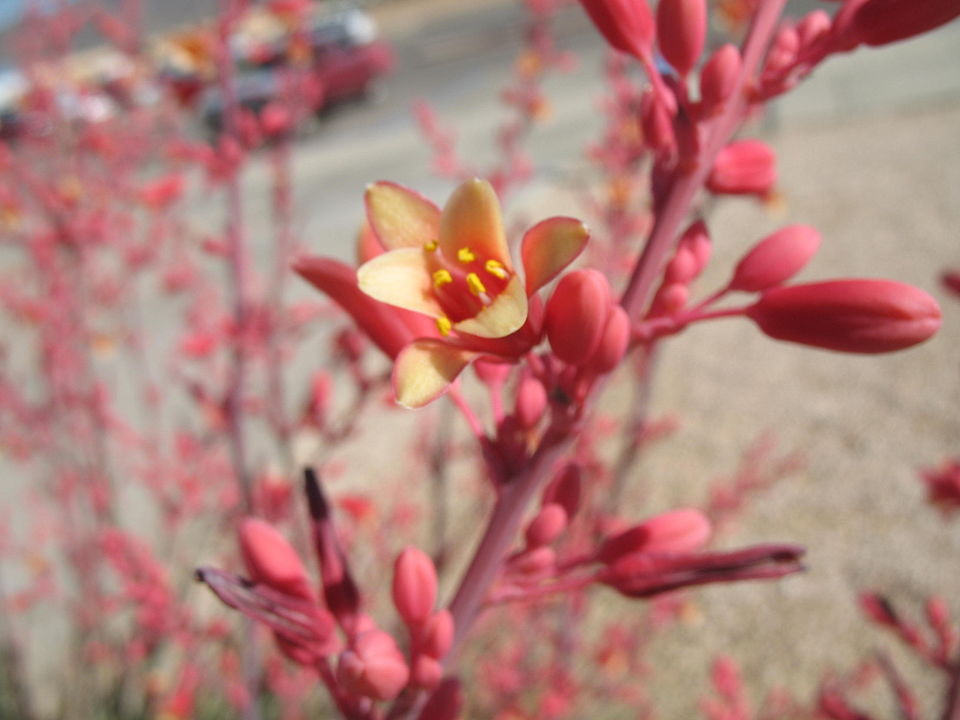
Hesperaloe parviflora, commonly recognized as Red Yucca or Hummingbird Yucca, is a distinctive succulent originating from the Chihuahuan Desert, spanning northern Mexico and the southwestern United States. Despite its common appellation, it is not a true Yucca but belongs to the genus Hesperaloe within the Asparagaceae family, a classification that highlights its unique botanical identity.
This remarkably resilient plant is celebrated for its exceptional drought tolerance, striking ornamental appeal, and the prolonged, vibrant floral display it produces, making it a staple in arid and xeriscape landscapes.
Morphologically, Hesperaloe parviflora forms an elegant rosette of long, narrow, strap-like, blue-green leaves, which typically reach a height of 3 to 4 feet and spread to a similar width. The foliage often acquires a reddish or purplish tint, particularly under cold temperatures or drought conditions, adding to its visual interest.
Unlike many true yuccas, its leaf margins are smooth or only finely serrated, lacking the sharp, terminal spines, thus presenting a safer option for gardens frequented by children or pets. The overall growth habit is fountain-like, contributing an architectural grace to its surroundings.
The plant's most captivating feature is its impressive, towering flower spikes, which ascend from the center of the rosette to heights of 5 to 8 feet. These inflorescences are adorned with numerous tubular, pendulous flowers, typically showcasing shades of coral-red or orange-red, though cultivated varieties may exhibit pink, yellow, or white blooms.
The flowering period is notably extended, often commencing in late spring and persisting through fall, providing a continuous, rich source of nectar that is highly attractive to hummingbirds, bees, and various other pollinators, hence its "Hummingbird Yucca" moniker. These densely clustered flowers create a dramatic visual spectacle against the backdrop of its evergreen foliage.
Trusted Scientific References
1. Authoritative external sources for Hesperaloe Parviflora
1.1 Wikipedia — Hesperaloe Parviflora
1.2 Kew POWO (Plants of the World Online)
1.3 PubMed — peer-reviewed research
1.4 NCBI Taxonomy Browser
1.5 GBIF — Global Biodiversity
1.1.Hesperaloe Parviflora — Notable Characteristics
- ✓Drought — Tolerant — Exceptional ability to withstand prolonged dry periods, ideal for arid landscapes.
- ✓Low — Maintenance — Requires minimal care once established, including infrequent watering and light pruning.
- ✓Hummingbird Attractor — Its vibrant, tubular flowers are a continuous and favored nectar source for hummingbirds.
- ✓Architectural Foliage — Forms an elegant rosette of strap-like, blue-green leaves, providing year-round structure.
- ✓Long Blooming Season — Produces flower spikes from late spring through fall, offering extended visual appeal.
- ✓Deer — Resistant — Naturally unpalatable to deer, making it suitable for gardens in areas with deer activity.
- ✓Heat and Cold Tolerant — Resilient across USDA zones 5-10, enduring extreme temperatures.
- ✓Non — Spiky Leaves — Lacks the sharp, spiky tips of true Yuccas, making it safer for families and pets.
- ✓Xeriscape Essential — A cornerstone plant for water-wise and sustainable garden designs.
- ✓Evergreen Perennial — Provides consistent green interest throughout the year.
1.2.Hesperaloe Parviflora — In Brief
- ✓Hesperaloe parviflora, or Red Yucca, is a striking, drought-tolerant succulent native to the Chihuahuan Desert.
- ✓Known for its architectural, fountain-like form and long-lasting coral-red flower spikes that attract hummingbirds.
- ✓Not a true Yucca, it belongs to the Asparagaceae family and is highly valued for xeriscaping and low-maintenance gardens.
- ✓Requires full sun and well-drained soil, thriving in arid conditions with minimal watering once established.
- ✓Primarily an ornamental and ecological plant; no significant documented traditional or modern medicinal uses.
- ✓Generally considered safe for humans and pets, with low toxicity and deer resistance.
2.Hesperaloe Parviflora — Botanical Identity
3.Hesperaloe Parviflora — Vital Statistics
4.Hesperaloe Parviflora — Physical Description
5.Hesperaloe Parviflora — Native Range & Habitat
6.Hesperaloe Parviflora — Folk Medicine Applications
7.Hesperaloe Parviflora — Key Phytochemicals
- ✓Specific detailed phytochemical analyses for Hesperaloe parviflora are not extensively documented in the scientific literature, particularly in a medicinal context. However, based on its classification within the Asparagaceae family and its adaptation to arid environments, it is reasonable to hypothesize the presence of certain broad classes of secondary metabolites commonly found in related succulents and desert flora.
- ✓Saponins — These triterpenoid or steroidal glycosides are characteristic of many Asparagaceae members (e.g., Yucca, Agave) and could be present, potentially contributing to foam-forming properties or mild bioactivities.
- ✓Flavonoids — A diverse group of polyphenolic compounds, flavonoids are widespread in plants, offering antioxidant and potentially anti-inflammatory properties, and are likely present in Red Yucca.
- ✓Phenolic Acids — Simple phenolic compounds such as caffeic acid or ferulic acid derivatives are common plant constituents, contributing to antioxidant defense and plant structure.
- ✓Polysaccharides — Complex carbohydrates like mucilage and gums are often found in succulents, aiding in water retention and potentially offering demulcent properties if ingested (though not a primary medicinal use here).
- ✓Phytosterols — Plant sterols, such as beta-sitosterol, are common lipid components in plant cell membranes and are often associated with various health benefits in other species.
- ✓Terpenoids — A vast class of organic compounds, including monoterpenes, sesquiterpenes, and diterpenes, which can contribute to plant defense, aroma, and potentially some bioactivity.
- ✓Anthraquinones (Trace) — While less prominent than in some other families, trace amounts of anthraquinone derivatives might be present, known for their laxative properties in higher concentrations.
- ✓Alkaloids (Minor) — Generally not a dominant class in Asparagaceae, but minor or trace amounts of alkaloid-like compounds cannot be entirely ruled out without specific analysis.
- ✓Waxes and Cuticular Lipids — Essential for xerophytic plants like Hesperaloe parviflora, these compounds form a protective layer on leaves to minimize water loss.
8.Hesperaloe Parviflora — Scientific Evidence
- ✓As a botanical researcher and medical herbalism expert, it is crucial to state that Hesperaloe parviflora, commonly known as Red Yucca, is primarily valued for its ornamental, ecological, and xeriscaping attributes. Traditional medicinal uses are not widely documented across major herbal systems like Ayurveda, TCM, or Unani for this specific species, nor are there significant modern clinical studies supporting its internal medicinal application. Therefore, the following potential benefits are largely speculative, based on general phytochemical profiles common in related plant families (Asparagaceae) or broad plant bioactivities, and should not be considered established medicinal claims for Hesperaloe parviflora without specific research.
- ✓Antioxidant Potential — Like many plants, Hesperaloe parviflora may contain phenolic compounds and flavonoids, which could offer antioxidant properties, helping to neutralize free radicals and reduce oxidative stress.
- ✓Anti-inflammatory Speculation — Certain plant compounds, if present, might exhibit mild anti-inflammatory effects, potentially beneficial for localized swelling or irritation, though this is unproven for this plant.
- ✓Skin Soothing Possibility — While not a true aloe, some Asparagaceae members have mucilaginous compounds; if present, these might offer soothing properties for minor skin irritations when applied topically, similar to other succulents.
- ✓Digestive Support Hypothesis — Saponins, often found in Asparagaceae, are sometimes associated with digestive health, though their presence and specific effects in Hesperaloe parviflora for this purpose are not documented.
- ✓Immune System Modulator (Theoretical) — Polysaccharides, common in many plants, can sometimes modulate immune responses; however, specific research on Hesperaloe parviflora is lacking to confirm any such effect.
- ✓Wound Healing Properties (Unverified) — Some plant extracts are known to support wound healing; any such property in Red Yucca would require extensive scientific investigation and is currently speculative.
- ✓Antimicrobial Activity (Potential) — Secondary metabolites in plants can sometimes possess antimicrobial properties, but there is no specific evidence for Hesperaloe parviflora acting as an antimicrobial agent.
- ✓Cardiovascular Health (Hypothetical) — Certain phytosterols or saponins from related species have shown cardiovascular benefits; however, this is a broad generalization and not specific to Red Yucca.
- ✓Detoxification Support (Unconfirmed) — While plants generally contribute to health, direct detoxification benefits from Hesperaloe parviflora as a medicinal herb are not established.
- ✓Blood Sugar Regulation (No Evidence) — Despite some desert plants being studied for metabolic effects, there is no scientific basis to suggest Red Yucca has properties for blood sugar regulation.
8.1.Hesperaloe Parviflora — Health Applications
9.Hesperaloe Parviflora — Cautions & Contraindications
9.1.Hesperaloe Parviflora — Reported Side Effects
- ✓As Hesperaloe parviflora is not typically used medicinally, direct side effects from ingestion are not documented. However, general considerations for handling and interaction with the plant include:
- ✓Skin Irritation — While less spiky than true Yuccas, prolonged contact with the fibrous leaf margins could potentially cause minor skin irritation in sensitive individuals.
- ✓Allergic Reactions — As with any flowering plant, exposure to pollen during its long blooming season might trigger allergic reactions in susceptible individuals.
- ✓Physical Injury — Though not sharp, the stiff, strap-like leaves could pose a minor physical hazard if stumbled upon, especially for young children or pets.
- ✓Gastrointestinal Upset (if ingested) — Although considered non-toxic and deer-resistant, ingestion of large quantities of any plant material by pets or humans can potentially lead to mild gastrointestinal upset.
- ✓Environmental Impact — Overwatering in inappropriate climates can lead to root rot, which is an adverse effect on the plant's health rather than a human side effect.
9.2.Hesperaloe Parviflora — Risk Assessment
- ✓Hesperaloe parviflora is generally considered a very safe plant, particularly in a horticultural context, with few known hazards.
- ✓Low Toxicity — The plant is widely regarded as having low toxicity to humans and pets, making it a safe addition to most gardens.
- ✓Pet-Friendly — Often listed as a pet-safe plant, its lack of sharp spines (unlike true Yuccas) further reduces physical hazard to animals.
- ✓Non-Invasive Growth — Red Yucca spreads slowly by offsets ("pups") but is not considered an invasive species, maintaining ecological balance.
- ✓Deer Resistance — Its natural resistance to deer browsing minimizes the need for chemical deterrents, contributing to a safer garden environment.
- ✓Minimal Allergen Risk — While pollen can cause allergies in some, Hesperaloe parviflora is not typically categorized as a highly allergenic plant.
- ✓Drought Adaptation — Its inherent drought tolerance means it requires less human intervention with watering, reducing resource consumption and associated risks.
10.Hesperaloe Parviflora — Usage Guide
- ✓Hesperaloe parviflora is primarily utilized for its outstanding ornamental qualities and ecological benefits in various landscape designs, reflecting its adaptability and aesthetic appeal.
- ✓Xeriscape Gardens — An ideal choice for water-wise landscaping, Red Yucca forms a striking focal point or mass planting in xeriscape designs due to its drought tolerance.
- ✓Modern Desert Gardens — Its architectural form and vibrant blooms make it a popular addition to contemporary desert-themed landscapes, providing texture and color.
- ✓Mixed Borders and Beds — Integrates well into mixed perennial borders, offering year-round evergreen structure and contrasting beautifully with softer flowering plants.
- ✓Container Gardening — Suitable for large containers with adequate drainage and a well-draining cactus or succulent mix, allowing its unique form to be showcased on patios or balconies.
- ✓Pollinator Gardens — Its long-lasting coral-red flowers are a significant nectar source, attracting hummingbirds, bees, and other beneficial pollinators, enhancing garden biodiversity.
- ✓Erosion Control — Can be used on slopes or in dry riverbeds to help stabilize soil due to its fibrous root system and adaptability to challenging conditions.
- ✓Landscape Accents — Planted along driveways, pathways, or poolside, it creates a sleek, architectural look, adding vertical interest with its tall flower spikes.
- ✓Deer-Resistant Plantings — An excellent choice for gardens in areas prone to deer browsing, as it is known to be highly deer-resistant.
11.Hesperaloe Parviflora — How to Grow
- ✓Hesperaloe parviflora, or Red Yucca, is exceptionally low-maintenance and thrives in conditions mimicking its native Chihuahuan Desert habitat.
- ✓Site Selection — Choose a location receiving at least 6 hours of direct sunlight daily; full sun ensures robust growth and prolific flowering.
- ✓Soil Requirements — Prefers well-drained soil; highly adaptable to rocky, sandy, or lean soils, but proper drainage is critical to prevent root rot.
- ✓Planting Procedure — Dig a hole twice as wide as the root ball and just as deep; position the plant so the top of the root ball is level with the surrounding soil.
- ✓Spacing — For mass plantings or borders, space plants approximately 3 feet apart to accommodate their mature width of 3 to 4 feet, allowing for offset development.
- ✓Watering Regimen — Water thoroughly after planting for establishment; once established, it is highly drought-tolerant, requiring infrequent deep watering (every 2-3 weeks in dry climates, less in temperate areas). Avoid overwatering.
- ✓Fertilization — Minimal feeding is needed; a light application of a balanced, slow-release fertilizer in early spring can encourage healthy growth and blooming.
- ✓Pruning — Pruning is generally minimal, focusing on removing spent flower stalks at their base and trimming away any dead or damaged leaves to maintain a tidy appearance.
- ✓Hardiness Zones — Resilient in USDA zones 5-10, capable of tolerating both extreme heat and significant cold.
Reviewed by the Flora Medical Global Botanical Review Panel
Multi-disciplinary editorial group · Botany · Ethnobotany · Herbal-medicine literature
Who reviewed this: This page was checked by the Flora Medical Global Botanical Review Panel — an in-house editorial group of botany graduates, ethnobotany researchers, and horticulture practitioners who collectively maintain our 7,000+ plant encyclopedia. Meet the team.
Our 4-step verification process
1. Taxonomic verification
Scientific names and synonyms cross-checked against Kew POWO, World Flora Online, and The Plant List.
2. Phytochemical & medicinal cross-reference
Active compounds, traditional uses, and reported activities are cross-referenced with PubMed, USDA Dr. Duke's database, and peer-reviewed ethnobotanical literature.
3. Conservation & distribution check
Distribution, ecology, and conservation status confirmed against GBIF occurrence records and the IUCN Red List.
4. Editorial & safety review
Every entry passes an editorial pass for clarity, originality, and safety notices (toxicity, contraindications, dosage caveats) before publication.
Last reviewed:
Important medical disclaimer: This content is for educational and research purposes only. It is not medical advice and is not a substitute for consultation with a licensed healthcare provider. Do not use any herb to self-treat a medical condition without professional guidance.
Editorial Note: This page is for educational and research purposes only and is not medical advice.
Written by: Flora Medical Global Editorial Team
Reviewed by: Flora Medical Global Botanical Review Panel
Last Updated: June 15, 2026





Hesperaloe Parviflora — Comments & Community Reviews
Rate this plant