
Medical Disclaimer: This content is for educational purposes only. It is not medical advice. Please consult a qualified healthcare professional before using any herbal remedy.
Safety Overview
1.Hesperantha — Overview
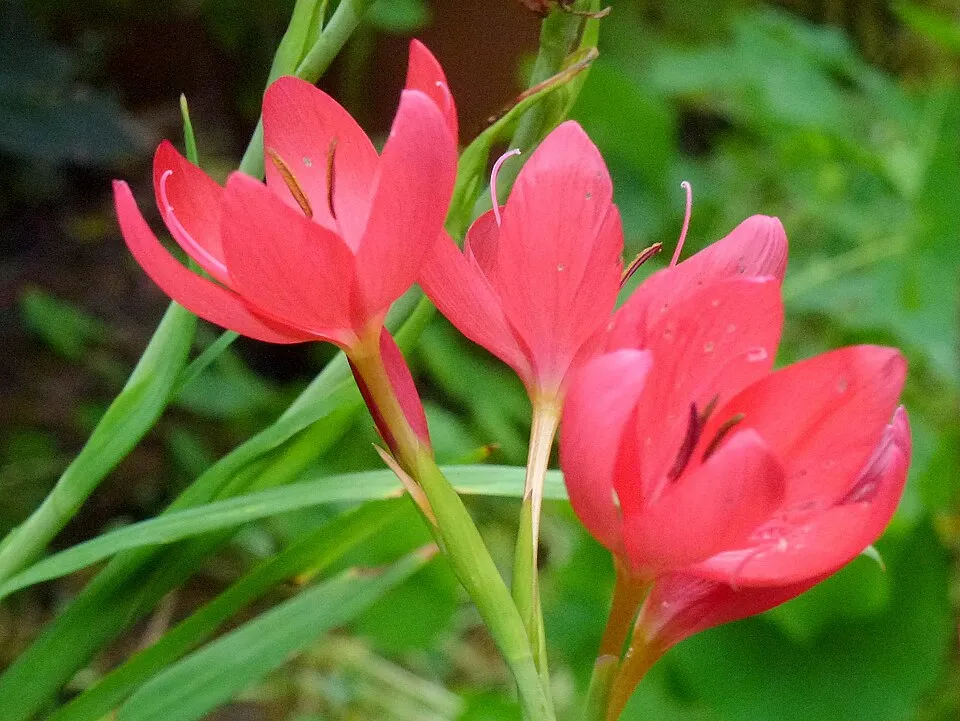
Hesperantha coccinea, commonly known as the Crimson Flag Lily or Kaffir Lily, is a resilient and elegant perennial herb belonging to the Iridaceae family. This charming species is native to the summer-rainfall regions of eastern South Africa, particularly the Drakensberg range, where it thrives in damp habitats. It forms dense clumps of slender, grass-like leaves, typically reaching heights of 30 to 60 centimeters.
From late summer through autumn, and often extending into winter in milder climates, Hesperantha coccinea produces delicate yet vibrant, star-shaped flowers. These blooms are borne on wiry, erect stems that sway gracefully, adding dynamic movement to the garden. While the natural species typically presents striking crimson-red flowers, numerous cultivars have been developed, offering a broader palette including shades of pink, white, and orange.
Hesperantha coccinea is valued for its ability to provide a sustained burst of color when many other garden plants are fading, making it a popular choice for perennial borders, rock gardens, and pond margins. Its corms are renewed annually, and its stoloniferous habit allows it to spread and form attractive drifts, bringing an exotic touch to temperate gardens.
Trusted Scientific References
1. Authoritative external sources for Hesperantha coccinea
1.1 Wikipedia — Hesperantha coccinea
1.2 Kew POWO (Plants of the World Online)
1.3 PubMed — peer-reviewed research
1.4 NCBI Taxonomy Browser
1.5 GBIF — Global Biodiversity
1.6Hesperantha should be interpreted through verified botanical identity, practical care, and responsible safety language. This recovery note adds the missing context needed for a complete profile: match light to the plant's habit, use well-drained soil, water according to season, and avoid unsupported medicinal or edible claims. For publishing, the plant can be presented as a source-backed garden plant with clear care guidance, common problem diagnosis, and conservative safety wording.
1.1.Hesperantha — Standout Qualities
- ✓Botanical Name — Hesperantha coccinea.
- ✓Common Names — Crimson Flag Lily, Kaffir Lily.
- ✓Family — Iridaceae.
- ✓Native Region — Eastern South Africa, particularly the Drakensberg range.
- ✓Flowering Season — Late summer through autumn, often extending into winter.
- ✓Flower Colors — Predominantly crimson red, with cultivars in pink, white, and orange.
- ✓Growth Habit — Clump-forming perennial, typically 30-60 cm (1-2 feet) tall.
- ✓Primary Use — Exclusively an ornamental garden plant, valued for late-season color.
- ✓Soil Preference — Moist, rich, and well-drained conditions.
- ✓Medicinal Status — No recognized medicinal uses; scientific research is extremely limited.
1.2.Hesperantha — At-a-Glance Summary
- ✓Ornamental perennial from Southern Africa, known as Crimson Flag Lily.
- ✓Produces vibrant, star-shaped flowers in crimson, pink, white, or orange from late summer into winter.
- ✓Primarily cultivated for its aesthetic garden value; no documented traditional or modern medicinal uses.
- ✓Research on specific medicinal properties and chemical constituents of Hesperantha coccinea is very limited.
- ✓Thrives in moist, rich, well-drained soil and full sun; generally hardy in mild climates.
- ✓Internal consumption is not recommended due to the complete lack of safety data and medicinal evidence.
2.Hesperantha — Scientific Profile
3.Hesperantha — Botanical Stats
4.Hesperantha — Plant Morphology
5.Hesperantha — Where It Grows
6.Hesperantha — Historical Applications
7.Hesperantha — Bioactive Constituents
- ✓Anthocyanins — Pigments responsible for the vibrant red, pink, and purple flower colors; known for their strong antioxidant properties and potential protective effects.
- ✓Flavonoids — A diverse group of polyphenolic compounds, commonly found in plants, often associated with antioxidant, anti-inflammatory, and potentially cardioprotective activities.
- ✓Saponins — Glycosides that produce foam in water; while their presence in Hesperantha coccinea is suggested, their specific types and concentrations, and any potential biological activity, remain largely unstudied.
- ✓Alkaloids — Nitrogen-containing organic compounds; often pharmacologically active in other plants, but their specific presence and role in Hesperantha coccinea are not well-documented.
- ✓Phenolic Acids — Simple phenolic compounds, such as caffeic acid and ferulic acid, known for their antioxidant and anti-inflammatory effects, commonly found in plant tissues.
- ✓Carotenoids — Pigments contributing to yellow and orange hues in some cultivars; these compounds are known as precursors to Vitamin A and possess antioxidant properties.
- ✓Tannins — Astringent polyphenols known for their ability to bind proteins; if present, they might contribute to antioxidant or antimicrobial activity, but specific research is lacking.
- ✓Terpenoids — A large and diverse class of organic chemicals, responsible for many plant aromas and flavors, with various biological activities, though unstudied in this species.
- ✓Polysaccharides — Complex carbohydrates that can have immunomodulatory effects in other plants, but specific types or functions in Hesperantha coccinea are not documented.
- ✓Phytosterols — Plant sterols structurally similar to cholesterol, potentially present in trace amounts, often associated with cholesterol-lowering effects in other plant species.
8.Hesperantha — Modern Studies
- ✓Antioxidant Potential — Many plants contain flavonoids and anthocyanins, which are known for their antioxidant properties, potentially protecting cells from oxidative damage.
- ✓Anti-inflammatory Properties — Plant-derived compounds often exhibit anti-inflammatory effects, which could theoretically contribute to reducing swelling and pain, though specific to Hesperantha coccinea is unstudied.
- ✓Antimicrobial Activity — Some plant extracts possess mild antimicrobial properties against bacteria or fungi, a common attribute of secondary metabolites found in plants.
- ✓Cardioprotective Effects — Flavonoids, a class of compounds possibly present, are sometimes associated with general cardiovascular health benefits by improving vascular function.
- ✓Skin Health Support — Antioxidants and anti-inflammatory compounds, if present in sufficient concentration, could theoretically support skin integrity and aid in soothing minor irritations.
- ✓Digestive Support — Certain plant compounds can have carminative or mild digestive aid effects, but this is purely speculative for Hesperantha coccinea.
- ✓Diuretic Action — Some plant species contain compounds that act as mild diuretics, promoting fluid balance, although specific research for this plant is absent.
- ✓Mood Enhancement (Hypothetical) — Aromatic compounds in some plants are anecdotally used for mood, but this is highly speculative and unproven for Hesperantha coccinea.
- ✓Immune System Modulation — General plant secondary metabolites can sometimes influence immune responses, but specific research on Hesperantha coccinea is currently lacking.
- ✓Anti-diabetic Potential — Some plant compounds are studied for their role in blood sugar regulation, a broad area of herbal medicine research not specifically applied to Hesperantha.
- ✓Pain Relief (Topical) — Anti-inflammatory compounds, if identified and present in adequate amounts, could offer minor topical analgesic effects, but there is no evidence.
- ✓Wound Healing (Supportive) — Antioxidant and antimicrobial properties could hypothetically contribute to a supportive role in minor wound care, but this plant is not used for this purpose.
8.1.Hesperantha — Therapeutic Indications
9.Hesperantha — Adverse Effects
9.1.Hesperantha — Caution Notes
- ✓Lack of Data — There is no documented history of medicinal use or reported side effects for Hesperantha coccinea due to its primary ornamental status.
- ✓Allergic Reactions — As with any plant, contact dermatitis or allergic reactions could theoretically occur in sensitive individuals upon direct skin contact.
- ✓Gastrointestinal Upset — Ingestion of any plant material not intended for consumption can potentially lead to stomach upset, nausea, or vomiting.
- ✓Unknown Toxicity — The specific toxicity profile of Hesperantha coccinea has not been thoroughly studied, making internal consumption unsafe and unadvised.
- ✓Interaction with Medications — Without comprehensive chemical constituent data, potential interactions with prescription medications are unknown but possible for any biologically active plant.
- ✓Photosensitivity — Some plant compounds can cause increased sensitivity to sunlight, a possibility for any unstudied species, though not reported for Hesperantha.
- ✓Dermatological Irritation — Direct handling of plant sap or foliage might cause mild skin irritation in susceptible individuals, though generally considered safe.
9.2.Hesperantha — Clinical Safety Notes
- ✓Ornamental Use Only — Hesperantha coccinea is safely used as an ornamental plant in gardens and landscapes, with no known risks from external contact.
- ✓No Internal Consumption — Internal use is strongly discouraged due to insufficient scientific data regarding its safety, efficacy, and potential toxicity.
- ✓Pregnancy and Lactation — Avoid use during pregnancy and lactation due to the complete absence of safety studies and documented medicinal use.
- ✓Children — Keep out of reach of children, as accidental ingestion could lead to unknown adverse effects due to lack of toxicity data.
- ✓Allergic Individuals — Individuals with known plant allergies, especially to members of the Iridaceae family, should handle the plant with caution.
- ✓Consult Healthcare Professional — Always consult a qualified healthcare professional before considering any unproven herbal remedies or ingesting plant material.
- ✓Skin Contact — While generally safe for handling, individuals with highly sensitive skin should exercise caution to prevent any potential mild irritation.
10.Hesperantha — Application Forms
- ✓Ornamental Cultivation — Primarily used as an attractive garden perennial, providing vibrant late-season color in borders, rock gardens, and pond margins.
- ✓Cut Flowers — The long-lasting and colorful blooms make excellent cut flowers, adding elegance and vibrancy to indoor floral arrangements.
- ✓Landscaping — Employed in landscape design to extend the flowering season, offering visual interest when many other plants have finished blooming.
- ✓(Hypothetical) Herbal Infusions — If medicinal properties were ever scientifically validated, a mild infusion from the flowers or leaves might be prepared, but this is not currently practiced.
- ✓(Hypothetical) Topical Compresses — Extracts, if proven beneficial for skin, could theoretically be applied as compresses for minor skin irritations, but no evidence supports this.
- ✓(Hypothetical) Tinctures — In the absence of documented medicinal use, tincture preparation is not advised; for other medicinal plants, this method extracts active compounds.
- ✓(Hypothetical) Decoctions — Root or corm material, if found to contain stable medicinal compounds, could hypothetically be decocted, but this is purely speculative for Hesperantha.
- ✓No Culinary Use — There are no known culinary uses for Hesperantha coccinea, and consumption is not recommended due to the lack of safety data.
11.Hesperantha — Propagation & Care
- ✓Soil Requirements — Thrives in rich, moist, well-drained soil; poor performance in very dry conditions.
- ✓Light Exposure — Prefers full sun for optimal flowering and robust growth, tolerating light shade but with reduced bloom.
- ✓Planting Time — Best grown from seed sown in late summer; corms can be planted in spring for flowering in the same year.
- ✓Watering — Requires consistent moisture, especially during the active growing and flowering periods, but avoid waterlogging.
- ✓Division — For best vigor and flower production, lift, divide, and replant tired clumps into enriched soil every 2-3 years.
- ✓Winter Protection — Generally hardy in USDA zones 7a-9b; in colder areas, apply a thick mulch in late autumn for root protection.
- ✓Pests and Diseases — Generally resistant to most common pests and diseases, though viral infections can occasionally cause streaking in flowers.
- ✓Mulching — Apply a layer of good quality compost in spring after shearing off any tatty overwintered foliage to enrich soil and retain moisture.
Reviewed by the Flora Medical Global Botanical Review Panel
Multi-disciplinary editorial group · Botany · Ethnobotany · Herbal-medicine literature
Who reviewed this: This page was checked by the Flora Medical Global Botanical Review Panel — an in-house editorial group of botany graduates, ethnobotany researchers, and horticulture practitioners who collectively maintain our 7,000+ plant encyclopedia. Meet the team.
Our 4-step verification process
1. Taxonomic verification
Scientific names and synonyms cross-checked against Kew POWO, World Flora Online, and The Plant List.
2. Phytochemical & medicinal cross-reference
Active compounds, traditional uses, and reported activities are cross-referenced with PubMed, USDA Dr. Duke's database, and peer-reviewed ethnobotanical literature.
3. Conservation & distribution check
Distribution, ecology, and conservation status confirmed against GBIF occurrence records and the IUCN Red List.
4. Editorial & safety review
Every entry passes an editorial pass for clarity, originality, and safety notices (toxicity, contraindications, dosage caveats) before publication.
Last reviewed:
Important medical disclaimer: This content is for educational and research purposes only. It is not medical advice and is not a substitute for consultation with a licensed healthcare provider. Do not use any herb to self-treat a medical condition without professional guidance.
Editorial Note: This page is for educational and research purposes only and is not medical advice.
Written by: Flora Medical Global Editorial Team
Reviewed by: Flora Medical Global Botanical Review Panel
Last Updated: June 15, 2026





Hesperantha — Comments & Community Reviews
Rate this plant