


Medical Disclaimer: This content is for educational purposes only. It is not medical advice. Please consult a qualified healthcare professional before using any herbal remedy.
Safety Overview
1.Heuchera Americana — Plant Snapshot
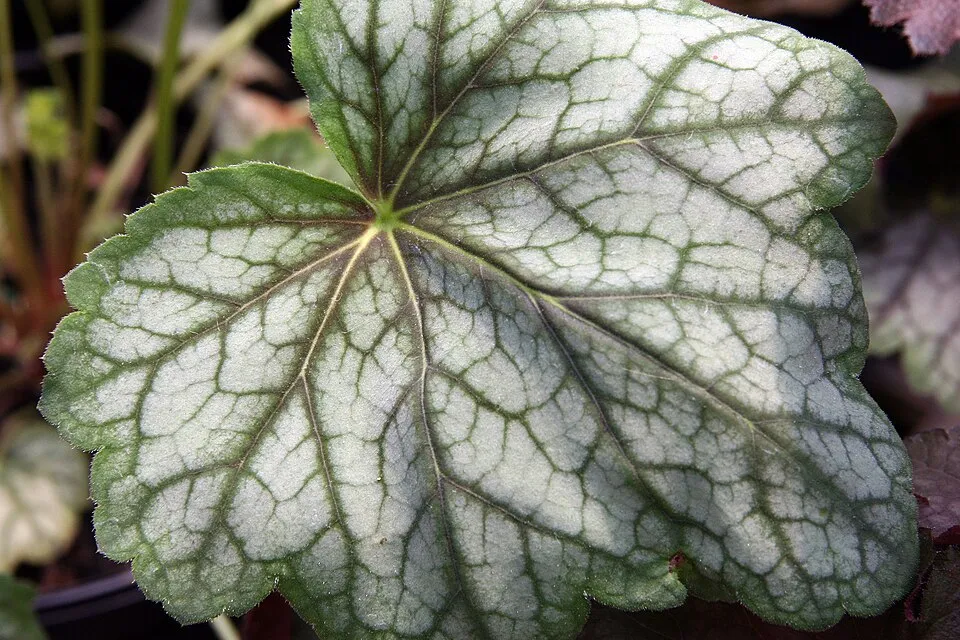
Heuchera Americana, widely recognized as American Alumroot or Coral Bells, is an elegant herbaceous perennial belonging to the Saxifragaceae family. This native of eastern North America thrives in the understory of woodlands, rocky outcrops, and along stream banks, favoring acidic soils and partial shade. It forms a robust basal rosette, giving rise to its distinctive broad, shallowly lobed, often evergreen leaves.
The foliage is a key ornamental feature, displaying a remarkable spectrum of colors, from vibrant greens with contrasting venation to deep purples, bronzes, and variegated patterns, frequently adorned with silver mottling, especially in its numerous cultivated varieties. In late spring to early summer, delicate, airy spires, typically reaching 1 to 3 feet in height, emerge gracefully above the foliage. These panicles bear numerous small, bell-shaped flowers, predominantly in shades of white, cream, or greenish-pink, which are a subtle yet attractive draw for hummingbirds and various native pollinators.
The plant’s fibrous root system anchors it firmly, contributing to its hardiness and drought tolerance once established. Botanists recognize three distinct varieties within Heuchera Americana, though they are often difficult to differentiate without expert analysis. Its adaptability, year-round visual interest, and low maintenance requirements make it a prized specimen in garden design, suitable for borders, groundcover, rock gardens, and container plantings, while also playing an ecological role in its native habitats.
Trusted Scientific References
1. Authoritative external sources for Heuchera Americana
1.1 Wikipedia — Heuchera Americana
1.2 Kew POWO (Plants of the World Online)
1.3 PubMed — peer-reviewed research
1.4 NCBI Taxonomy Browser
1.5 GBIF — Global Biodiversity
1.6Heuchera Americana should be interpreted through verified botanical identity, practical care, and responsible safety language. This recovery note adds the missing context needed for a complete profile: match light to the plant's habit, use well-drained soil, water according to season, and avoid unsupported medicinal or edible claims. For publishing, the plant can be presented as a source-backed garden plant with clear care guidance, common problem diagnosis, and conservative safety wording.
1.1.Heuchera Americana — Defining Traits
- ✓Native North American Perennial — Indigenous to woodlands and rocky areas of eastern North America.
- ✓Ornamental Foliage — Features attractive, often variegated or colorful, lobed leaves in a basal rosette.
- ✓High Tannin Content — Roots are rich in tannins, conferring strong astringent properties.
- ✓Traditional Medicinal Use — Historically used by Native Americans for wound healing, bleeding, and inflammation.
- ✓Shade Tolerant — Thrives in partial to full shade, making it ideal for woodland gardens.
- ✓Deer Resistant — High tannin content makes the foliage unpalatable to deer.
- ✓Low Maintenance — Relatively easy to grow and care for once established.
- ✓Pollinator Attractor — Delicate flowers attract hummingbirds and native bees.
- ✓Drought Tolerant (Established) — Shows good resilience to dry periods once its root system is developed.
- ✓Anti — inflammatory Properties — Helps reduce swelling and irritation, especially when applied topically.
1.2.Heuchera Americana — Snapshot Summary
- ✓American Alumroot (Heuchera Americana) is a North American native known for its ornamental foliage and potent medicinal roots.
- ✓Rich in tannins, it is traditionally valued for its strong astringent, anti-inflammatory, and wound-healing properties.
- ✓Historically used by Native Americans as a topical remedy for bleeding, wounds, and skin irritations.
- ✓Primarily recommended for external applications due to its intense astringency and potential for internal digestive upset.
- ✓Cultivated for its shade tolerance and decorative foliage, making it a versatile garden plant.
- ✓Requires caution with internal use; consult a professional.
2.Heuchera Americana — Scientific Profile
3.Heuchera Americana — Reference Facts
4.Heuchera Americana — Morphological Account
5.Heuchera Americana — Habitat & Distribution
6.Heuchera Americana — Cultural & Traditional Roles
7.Heuchera Americana — Bioactive Constituents
- ✓Tannins — Primarily gallotannins and condensed tannins (proanthocyanidins), responsible for the potent astringent, anti-inflammatory, and hemostatic properties of American Alumroot, which bind to proteins and complex with heavy metals.
- ✓Flavonoids — Including quercetin, kaempferol, and their glycosides, contributing to antioxidant, anti-inflammatory, and potentially antimicrobial activities, protecting cells from oxidative stress.
- ✓Saponins — Present in varying amounts, these compounds can have expectorant, anti-inflammatory, and sometimes hemolytic properties, though their role in Heuchera Americana's medicinal profile is less defined.
- ✓Phenolic Acids — Such as gallic acid, ellagic acid, and chlorogenic acid, which are known for their antioxidant, anti-inflammatory, and antimicrobial effects, often working synergistically with tannins.
- ✓Triterpenes — Compounds like ursolic acid and oleanolic acid, which are recognized for their anti-inflammatory, hepatoprotective, and potential anticancer activities, contributing to overall plant defense.
- ✓Coumarins — A class of organic compounds that may exhibit anti-inflammatory, anticoagulant, and antimicrobial properties, though typically in lower concentrations in this species.
- ✓Volatile Oils (Trace) — While not a primary constituent, trace amounts of volatile compounds may contribute to the plant's aroma and possess mild antimicrobial or insect-repellent qualities.
- ✓Polysaccharides — Complex carbohydrates that can possess immunomodulatory effects, supporting the body's natural defense mechanisms and promoting gut health.
8.Heuchera Americana — Research Insights
- ✓Astringent Action — The high concentration of tannins in American Alumroot causes tissues to contract, making it highly effective for tightening skin and mucous membranes.
- ✓Wound Healing — Applied topically, Heuchera Americana aids in the rapid closure and healing of minor cuts, abrasions, and sores by forming a protective barrier and reducing exudation.
- ✓Anti-inflammatory Support — Its compounds help to reduce localized swelling and redness, offering relief from various inflammatory skin conditions and minor irritations.
- ✓Hemostatic Properties — The astringent effect assists in stopping superficial bleeding from small wounds and cuts by constricting blood vessels and promoting clot formation.
- ✓Oral Health Aid — Used as a gargle, the decoction can soothe sore throats, reduce gum inflammation, and help manage minor mouth ulcers, leveraging its antimicrobial and astringent actions.
- ✓Digestive Comfort — Historically, diluted internal use aimed to reduce mild diarrhea and gastrointestinal irritation, though this application requires significant caution due to strong astringency.
- ✓Skin Irritation Relief — As a poultice or wash, it can alleviate discomfort from insect bites, rashes, and mild burns by calming irritated skin and reducing inflammation.
- ✓Hemorrhoid Management — The topical application of a prepared extract can help reduce the swelling, pain, and bleeding associated with hemorrhoids due to its vasoconstrictive and anti-inflammatory effects.
- ✓Mucous Membrane Tonic — Its astringency can tone and tighten inflamed mucous membranes in areas like the nasal passages or vaginal tissues when used as a diluted wash.
- ✓Antiseptic Qualities — The presence of tannins provides a mild antiseptic effect, helping to prevent infection in minor wounds and skin lesions.
- ✓Tissue Regeneration — By promoting a healthy environment and reducing inflammation, it may support the natural regeneration of damaged skin cells.
- ✓Diuretic Effect (Traditional) — Some traditional uses suggest a mild diuretic action, though this is less prominent and requires further scientific validation.
8.1.Heuchera Americana — Health Applications
9.Heuchera Americana — Adverse Effects
9.1.Heuchera Americana — Side Effects & Warnings
- ✓Gastrointestinal Upset — Internal consumption, especially of concentrated preparations, may cause stomach irritation, nausea, or indigestion due to high tannin content.
- ✓Constipation — The potent astringency of American Alumroot can lead to constipation, particularly with prolonged or excessive internal use.
- ✓Allergic Reactions — Individuals sensitive to plants in the Saxifragaceae family may experience skin rashes, itching, or other allergic responses upon topical contact.
- ✓Skin Irritation — Highly concentrated topical applications may cause temporary dryness or irritation in sensitive individuals.
- ✓Liver/Kidney Stress — Long-term, high-dose internal use has theoretical risks of stressing liver and kidney function due to the systemic processing of tannins, though not well-documented for this plant.
- ✓Medication Interactions — Tannins can bind to certain medications, potentially reducing their absorption or efficacy, necessitating caution with concurrent drug use.
- ✓Tannin Sensitivity — Individuals with known sensitivity to tannins (e.g., from tea or wine) may experience adverse reactions.
9.2.Heuchera Americana — Safety Profile
- ✓Pregnancy and Lactation — Avoid internal use during pregnancy and breastfeeding due to insufficient safety data and the potential for uterine stimulation or effects on infant digestion.
- ✓Gastrointestinal Conditions — Individuals with pre-existing gastrointestinal ulcers, severe constipation, or irritable bowel syndrome should avoid internal use due to its potent astringency.
- ✓Internal Use Caution — Internal use should be approached with extreme caution, preferably under the guidance of a qualified medical herbalist, and generally limited to highly diluted preparations for short durations.
- ✓Topical Use — Generally considered safe for external application, but a patch test on a small skin area is recommended to check for sensitivity before widespread use.
- ✓Children — Internal use in children is not recommended; topical application should be diluted and monitored carefully.
- ✓Dosage — Adhere strictly to recommended dosages, particularly for any internal applications, to minimize the risk of adverse effects.
- ✓Professional Guidance — Always consult with a healthcare professional or experienced herbalist before using Heuchera Americana, especially if you have underlying health conditions or are taking medications.
10.Heuchera Americana — How to Use
- ✓Decoction (External) — Simmer 1-2 teaspoons of dried, finely chopped Heuchera Americana root in 1 cup of water for 15-20 minutes; strain and cool. Use as a wash for wounds or skin irritations.
- ✓Poultice (Topical) — Grind fresh or rehydrated dried root into a paste with a small amount of water. Apply directly to minor cuts, bruises, or insect bites, securing with a bandage.
- ✓Gargle/Mouthwash — Dilute a cooled decoction with equal parts water. Use to gargle for sore throats or as a mouthwash for gum inflammation; do not swallow.
- ✓Infused Oil — Macerate dried Heuchera Americana root in a carrier oil (e.g., olive, almond) for several weeks. Strain and use as a base for salves or balms for skin issues.
- ✓Tincture (External) — Prepare a tincture by soaking dried root in high-proof alcohol for several weeks. Dilute before topical application for its astringent and anti-inflammatory effects.
- ✓Cream/Salve — Incorporate a strong decoction or infused oil into a beeswax-based cream or salve for targeted application on hemorrhoids, skin ulcers, or rashes.
- ✓Powdered Root (External) — Finely grind dried root into a powder. Dust onto minor wounds or areas of excessive perspiration to leverage its drying and astringent properties.
- ✓Herbal Compress — Soak a clean cloth in a warm decoction and apply to affected areas for sustained relief from inflammation or pain.
11.Heuchera Americana — Growing Guide
- ✓Site Selection — Plant in a location with partial to full shade, especially protecting from intense afternoon sun, which can scorch the leaves.
- ✓Soil Requirements — Prefers moist, well-drained, organically rich soils with a slightly acidic to neutral pH (6.0-7.0).
- ✓Watering — Keep soil consistently moist, especially during dry periods; established plants show some drought tolerance but perform best with regular moisture.
- ✓Propagation — Can be propagated by division of clumps every 3-4 years in spring or fall, or by seed, though cultivars may not come true from seed.
- ✓Fertilization — Generally low-maintenance; a light application of balanced, slow-release fertilizer in spring is sufficient for optimal growth.
- ✓Pest and Disease Management — Relatively pest-free; watch for root rot in overly wet conditions and occasional foliar diseases, though deer typically avoid it due to high tannin content.
- ✓Winter Care — In colder zones, a layer of mulch around the crown can provide winter protection, though many cultivars are quite cold hardy.
- ✓Landscape Use — Excellent for mass plantings, woodland gardens, borders, containers, and as groundcover, providing year-round foliage interest.
Reviewed by the Flora Medical Global Botanical Review Panel
Multi-disciplinary editorial group · Botany · Ethnobotany · Herbal-medicine literature
Who reviewed this: This page was checked by the Flora Medical Global Botanical Review Panel — an in-house editorial group of botany graduates, ethnobotany researchers, and horticulture practitioners who collectively maintain our 7,000+ plant encyclopedia. Meet the team.
Our 4-step verification process
1. Taxonomic verification
Scientific names and synonyms cross-checked against Kew POWO, World Flora Online, and The Plant List.
2. Phytochemical & medicinal cross-reference
Active compounds, traditional uses, and reported activities are cross-referenced with PubMed, USDA Dr. Duke's database, and peer-reviewed ethnobotanical literature.
3. Conservation & distribution check
Distribution, ecology, and conservation status confirmed against GBIF occurrence records and the IUCN Red List.
4. Editorial & safety review
Every entry passes an editorial pass for clarity, originality, and safety notices (toxicity, contraindications, dosage caveats) before publication.
Last reviewed:
Important medical disclaimer: This content is for educational and research purposes only. It is not medical advice and is not a substitute for consultation with a licensed healthcare provider. Do not use any herb to self-treat a medical condition without professional guidance.
Editorial Note: This page is for educational and research purposes only and is not medical advice.
Written by: Flora Medical Global Editorial Team
Reviewed by: Flora Medical Global Botanical Review Panel
Last Updated: June 15, 2026





Heuchera Americana — Comments & Community Reviews
Rate this plant