

Medical Disclaimer: This content is for educational purposes only. It is not medical advice. Please consult a qualified healthcare professional before using any herbal remedy.
Safety Overview
1.Heuchera Micrantha — Overview
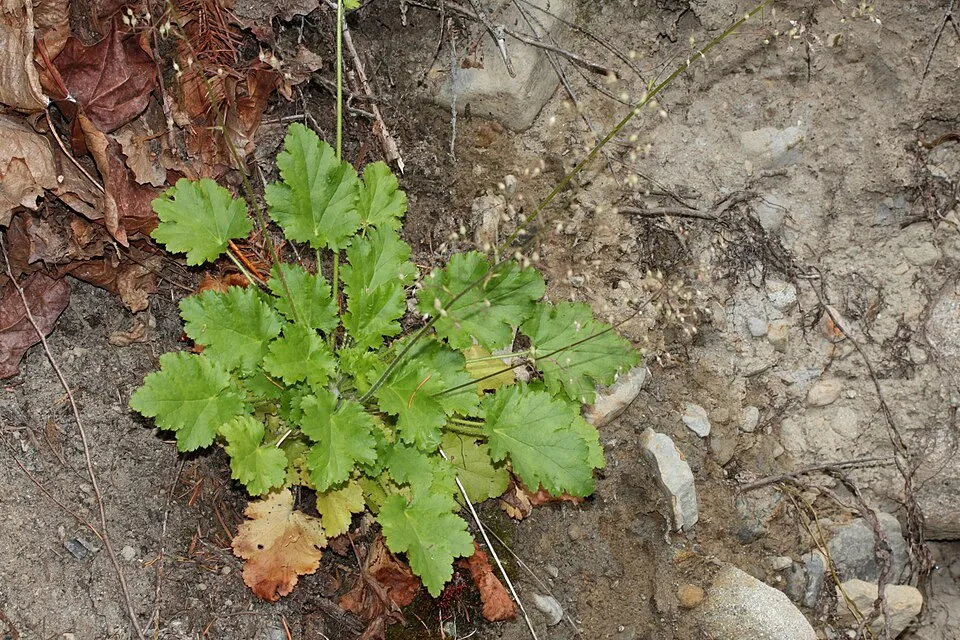
Heuchera micrantha, commonly known as Fringed Alumroot or Crevice Alumroot, is a captivating perennial herb native to the diverse landscapes of western North America, spanning from British Columbia southwards to California. A proud member of the Saxifragaceae family, this species is highly regarded in horticulture for its remarkable basal foliage and delicate, airy inflorescences. The leaves are typically lobed, often exhibiting a distinct heart-shaped base, and present an extensive palette of colors ranging from vibrant green to deep bronze, burgundy, or rich purple. Many varieties showcase intricate veining or mottling, adding to their visual appeal.
Its small, bell-shaped flowers, predominantly creamy-white or pinkish, are borne on tall, slender, often dark red stems that can reach up to 60 cm (24 inches) in height. These elegant flower spikes emerge from late spring through mid-summer, creating a graceful, cloud-like spectacle above the dense rosettes of foliage. H. micrantha naturally thrives in moist, rocky crevices, woodlands, and along stream banks, indicating its preference for dappled shade and well-drained, humus-rich soils.
It is an exceptional choice for enhancing shade gardens, rock gardens, and woodland settings, serving as an effective groundcover, edger, or container plant. Celebrated for its adaptability, resilience, and minimal maintenance requirements, Fringed Alumroot offers continuous visual interest with its evergreen or semi-evergreen leaves and elegant floral display, making it a popular and rewarding addition to diverse garden designs.
Trusted Scientific References
1. Authoritative external sources for Heuchera micrantha
1.1 Wikipedia — Heuchera micrantha
1.2 Kew POWO (Plants of the World Online)
1.3 PubMed — peer-reviewed research
1.4 NCBI Taxonomy Browser
1.5 GBIF — Global Biodiversity
1.6Heuchera Micrantha should be interpreted through verified botanical identity, practical care, and responsible safety language. This recovery note adds the missing context needed for a complete profile: match light to the plant's habit, use well-drained soil, water according to season, and avoid unsupported medicinal or edible claims. For publishing, the plant can be presented as a source-backed garden plant with clear care guidance, common problem diagnosis, and conservative safety wording.
1.1.Heuchera Micrantha — Key Features
- ✓Botanical Name — Heuchera micrantha
- ✓Common Names — Fringed Alumroot, Crevice Alumroot, Common Alumroot
- ✓Family — Saxifragaceae
- ✓Native Range — Western North America (British Columbia to California)
- ✓Key Active Compounds — Tannins (gallotannins, condensed tannins)
- ✓Primary Traditional Use — Topical astringent and styptic for minor wounds
- ✓Ornamental Value — Striking evergreen/semi-evergreen foliage and delicate flower spikes
- ✓Preferred Growing Conditions — Part shade to full shade, well-drained, humus-rich soil
- ✓Wildlife Attractor — Attracts butterflies and hummingbirds
- ✓Deer Resistance — Generally ignored by deer, making it a good garden choice
1.2.Heuchera Micrantha — At-a-Glance Summary
- ✓Native to Western North America, Heuchera micrantha is prized for its ornamental foliage.
- ✓Traditionally utilized by indigenous peoples for its pronounced astringent properties.
- ✓Rich in tannins, offering significant styptic, wound-healing, and anti-inflammatory benefits.
- ✓Primarily recommended for external, topical application to minor cuts, wounds, and skin irritations.
- ✓Internal use is strongly cautioned against and requires professional guidance due to high tannin content.
- ✓A low-maintenance, deer-resistant plant ideal for shaded garden environments.
2.Heuchera Micrantha — Systematic Position
3.Heuchera Micrantha — Reference Facts
4.Heuchera Micrantha — Morphological Account
5.Heuchera Micrantha — Where It Grows
6.Heuchera Micrantha — Cultural & Traditional Roles
7.Heuchera Micrantha — Bioactive Constituents
- ✓Tannins — Predominantly hydrolysable tannins (gallotannins) and condensed tannins (proanthocyanidins), which are responsible for the potent astringent, styptic, anti-inflammatory, and antioxidant effects.
- ✓Flavonoids — Including compounds like quercetin and kaempferol, these provide significant antioxidant activity and contribute to the plant's anti-inflammatory potential.
- ✓Phenolic Acids — Such as gallic acid and ellagic acid, which are powerful antioxidants and contribute to the plant's overall protective properties.
- ✓Saponins — Present in smaller amounts, these compounds may contribute to some foaming properties and potentially have minor immune-modulating effects.
- ✓Terpenoids — Various volatile organic compounds that can contribute to the plant's aroma and may possess anti-inflammatory or antimicrobial activities.
- ✓Plant Sterols — Phytosterols are compounds that can have anti-inflammatory properties and support cellular membrane integrity.
- ✓Glycosides — A diverse group of compounds where a sugar molecule is bonded to a non-sugar component, contributing to various biological activities.
- ✓Minerals — Contains essential trace elements like calcium, magnesium, and potassium, vital for plant health and potentially contributing to nutritional value.
- ✓Resins — Complex mixtures that can offer protective qualities and have mild antimicrobial effects when present.
- ✓Mucilage — Polysaccharide compounds that provide a soothing, demulcent effect, which can help mitigate the harshness of high tannin levels.
8.Heuchera Micrantha — Research Insights
- ✓Astringent Action — The high tannin content in Heuchera micrantha causes tissues to contract and tighten, effectively reducing swelling and inflammation.
- ✓Wound Healing — Applied topically, its astringent properties aid in closing minor cuts and abrasions, promoting faster tissue regeneration and repair.
- ✓Styptic Effect — Fringed Alumroot helps to constrict capillaries, thereby reducing superficial bleeding from minor skin injuries.
- ✓Anti-inflammatory Support — Tannins and other phenolic compounds contribute to soothing irritated skin and mucous membranes.
- ✓Antiseptic Properties — The plant's constituents may help inhibit the growth of certain microorganisms, preventing infection in minor wounds.
- ✓Oral Health — Traditionally used as a gargle, Heuchera micrantha can help alleviate symptoms of mouth sores, gum inflammation, and sore throat.
- ✓Skin Irritation Relief — Topical applications can calm various skin irritations, insect bites, and minor rashes due to its soothing and protective qualities.
- ✓Mucosal Tissue Toning — Its astringency helps to tone and strengthen delicate mucosal linings, such as those in the mouth and throat.
- ✓Antioxidant Activity — Flavonoids and phenolic acids present in the plant offer antioxidant protection against cellular damage from free radicals.
- ✓Digestive Aid (Traditional, External Caution) — Historically, a highly diluted internal decoction was used for mild digestive upsets, though modern internal use is strongly discouraged without expert guidance.
- ✓Hemostatic Agent — Beyond simple styptic action, it can help staunch minor internal capillary bleeding when used traditionally, though this is not a recommended modern practice.
- ✓Diarrhea Management (Traditional, External Caution) — Due to its astringent nature, traditional uses included managing mild diarrhea, but current safety concerns limit this application to external use only.
8.1.Heuchera Micrantha — Indications & Uses
9.Heuchera Micrantha — Adverse Effects
9.1.Heuchera Micrantha — Side Effects & Warnings
- ✓Gastrointestinal Upset — Internal consumption, particularly in large doses, may lead to nausea, vomiting, stomach upset, or constipation due to high tannin levels.
- ✓Liver Toxicity — Prolonged or excessive internal use of high-tannin plants can potentially exert strain on the liver, possibly leading to hepatotoxicity.
- ✓Nutrient Absorption Interference — Tannins can bind to dietary proteins and minerals, potentially reducing their absorption if consumed internally.
- ✓Allergic Reactions — While rare, topical application may cause localized skin irritation, redness, or allergic contact dermatitis in sensitive individuals.
- ✓Kidney Strain — High doses of astringent compounds, if consumed internally, could potentially place undue burden on kidney function over time.
- ✓Drug Interactions — Tannins may interfere with the absorption or efficacy of certain medications, including those for digestion or nutrient supplements.
9.2.Heuchera Micrantha — Safety Profile
- ✓Expert Consultation — Always consult a qualified healthcare professional, medical herbalist, or physician before using Heuchera micrantha for any medicinal purpose, especially internally.
- ✓Pregnancy and Lactation — Internal use is strictly contraindicated during pregnancy and breastfeeding due to insufficient safety data and the potential effects of high tannin content.
- ✓Children — Internal administration to children is not recommended under any circumstances without explicit medical supervision.
- ✓Pre-existing Conditions — Individuals with liver disease, kidney impairment, chronic gastrointestinal issues, or anemia should avoid internal use.
- ✓Topical Use Only — For general safety, Heuchera micrantha is primarily recommended for external, topical application as an astringent and styptic for minor skin conditions.
- ✓Dosage Adherence — Strictly adhere to recommended guidelines for external applications; internal dosage for safety and efficacy is not established or advised.
- ✓Tannin Sensitivity — Individuals with known sensitivity or allergies to tannins should exercise extreme caution with any form of Heuchera micrantha preparation.
10.Heuchera Micrantha — How to Use
- ✓Topical Poultice — Freshly crushed or finely powdered dried root can be mixed with a small amount of water to form a paste, then applied directly to minor cuts, wounds, or skin irritations.
- ✓Decoction for External Wash — Prepare a strong decoction by simmering chopped root in water for 15-20 minutes; strain and allow to cool before using as an astringent wash for skin conditions.
- ✓Mouthwash/Gargle — A diluted, cooled root decoction can be used as a gargle or mouthwash for oral sores, inflamed gums, or sore throats, ensuring it is not swallowed.
- ✓Tincture (External) — A root tincture, prepared by extracting the root in alcohol, can be diluted and applied topically as an antiseptic and astringent for skin ailments.
- ✓Salve or Ointment — Infuse dried and powdered root in a carrier oil (e.g., olive oil), then combine with beeswax to create a healing salve for minor skin abrasions and irritations.
- ✓Powdered Application — Dried and finely powdered root can be dusted directly onto superficial wounds or areas of minor bleeding as a styptic agent.
- ✓Compress — Soak a clean cloth in a cooled root decoction and apply as a compress to reduce swelling and inflammation from bruises or sprains.
11.Heuchera Micrantha — Growth Requirements
- ✓Site Selection — Heuchera micrantha thrives best in partial to full shade, especially in regions with hot summers; morning sun is generally tolerated.
- ✓Soil Requirements — Prefers rich, humusy, consistently moist, but well-drained soils with a neutral pH.
- ✓Watering — Requires average moisture; ensure soil remains consistently moist, especially if exposed to more sun. Established plants can tolerate dry shade.
- ✓Propagation — Easily propagated from seed without special treatment, or by division of the basal rosettes in early spring or fall.
- ✓Maintenance — Low maintenance; remove spent flower stalks to encourage further blooming and apply a layer of winter mulch after the ground freezes to prevent root heaving.
- ✓Pests and Diseases — Generally robust and resistant to most common garden pests and diseases, making it a reliable choice.
- ✓Spacing — For optimal growth and a lush display, space individual plants about 30-60 cm (12-24 inches) apart.
- ✓Hardiness Zones — This species is hardy and well-suited for USDA Plant Hardiness Zones 4 through 9.
Reviewed by the Flora Medical Global Botanical Review Panel
Multi-disciplinary editorial group · Botany · Ethnobotany · Herbal-medicine literature
Who reviewed this: This page was checked by the Flora Medical Global Botanical Review Panel — an in-house editorial group of botany graduates, ethnobotany researchers, and horticulture practitioners who collectively maintain our 7,000+ plant encyclopedia. Meet the team.
Our 4-step verification process
1. Taxonomic verification
Scientific names and synonyms cross-checked against Kew POWO, World Flora Online, and The Plant List.
2. Phytochemical & medicinal cross-reference
Active compounds, traditional uses, and reported activities are cross-referenced with PubMed, USDA Dr. Duke's database, and peer-reviewed ethnobotanical literature.
3. Conservation & distribution check
Distribution, ecology, and conservation status confirmed against GBIF occurrence records and the IUCN Red List.
4. Editorial & safety review
Every entry passes an editorial pass for clarity, originality, and safety notices (toxicity, contraindications, dosage caveats) before publication.
Last reviewed:
Important medical disclaimer: This content is for educational and research purposes only. It is not medical advice and is not a substitute for consultation with a licensed healthcare provider. Do not use any herb to self-treat a medical condition without professional guidance.
Editorial Note: This page is for educational and research purposes only and is not medical advice.
Written by: Flora Medical Global Editorial Team
Reviewed by: Flora Medical Global Botanical Review Panel
Last Updated: June 15, 2026





Heuchera Micrantha — Comments & Community Reviews
Rate this plant