
Medical Disclaimer: This content is for educational purposes only. It is not medical advice. Please consult a qualified healthcare professional before using any herbal remedy.
Safety Overview
1.Homeria Collina — At a Glance
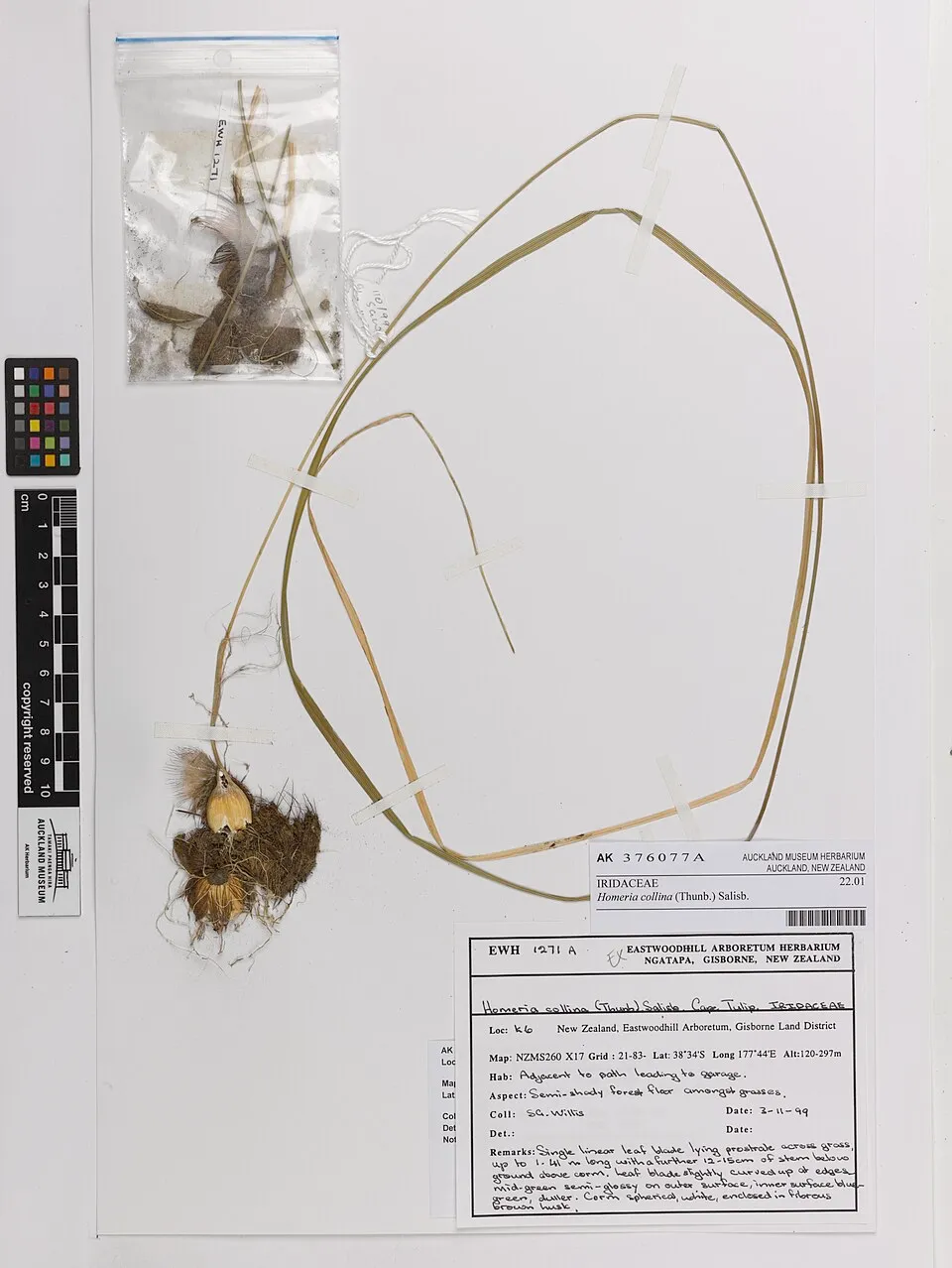
Homeria collina, commonly known as Cape Tulip, is a strikingly beautiful yet highly toxic perennial cormous plant native to the Western Cape and Northern Cape provinces of South Africa. It belongs to the Iridaceae family, a diverse group known for its ornamental flowering plants. This species is characterized by its vibrant, cup-shaped flowers, typically displaying shades of orange, salmon, or pink, often adorned with a contrasting yellow or dark central marking, blooming atop slender, erect stems that can reach up to 60 cm in height.
The basal leaves are sword-shaped or linear, emerging directly from the corm, forming attractive, often dense clumps. Homeria collina thrives in temperate climates, particularly those with Mediterranean characteristics – mild, wet winters and warm, dry summers. Its natural habitat includes grasslands, fynbos, and disturbed areas.
Beyond its native range, Homeria collina has become a notorious invasive weed in several countries, including Australia, New Zealand, and parts of the United States, where its aggressive growth and prolific reproduction pose significant ecological and agricultural threats. Its ability to rapidly colonize new areas and outcompete native vegetation, coupled with its extreme toxicity to livestock, underscores its problematic status globally. The plant reproduces vigorously both vegetatively through its numerous corms and sexually via abundant seed production, making eradication a considerable challenge in invaded regions.
Trusted Scientific References
1. Authoritative external sources for Homeria Collina
1.1 Wikipedia — Homeria Collina
1.2 Kew POWO (Plants of the World Online)
1.3 PubMed — peer-reviewed research
1.4 NCBI Taxonomy Browser
1.5 GBIF — Global Biodiversity
1.6Homeria Collina should be interpreted through verified botanical identity, practical care, and responsible safety language. This recovery note adds the missing context needed for a complete profile: match light to the plant's habit, use well-drained soil, water according to season, and avoid unsupported medicinal or edible claims. For publishing, the plant can be presented as a source-backed garden plant with clear care guidance, common problem diagnosis, and conservative safety wording.
1.1.Homeria Collina — Notable Characteristics
- ✓Striking Orange Flowers — Produces vibrant, cup-shaped flowers, typically orange, salmon, or pink, with a contrasting yellow center.
- ✓Sword — Shaped Leaves — Features linear or sword-shaped basal leaves emerging from the corm.
- ✓Cormous Perennial — Grows from an underground corm, allowing it to persist and spread effectively.
- ✓Native to South Africa — Indigenous to the Western and Northern Cape provinces.
- ✓Highly Toxic — Contains potent cardiac glycosides, making all parts of the plant poisonous.
- ✓Invasive Species — Recognized as an aggressive weed in many parts of the world, outcompeting native flora.
- ✓Cardiac Glycoside Content — Rich in cardenolides like Homericine, homeriine, homericine-A, and homericine-B.
- ✓Livestock Poison — A significant cause of animal poisoning, particularly in grazing livestock.
- ✓Prolific Reproduction — Spreads rapidly via both corms and abundant seed production.
- ✓No Safe Use — Completely unsuitable for any form of medicinal or culinary use.
1.2.Homeria Collina — Snapshot Summary
- ✓Highly Toxic Plant — Homeria collina is extremely poisonous due to potent cardiac glycosides.
- ✓No Medicinal Value — Absolutely no known safe medicinal benefits for humans or animals.
- ✓Invasive Weed — Aggressively colonizes disturbed areas, posing an ecological and agricultural threat.
- ✓Cardiotoxic Compounds — Contains Homericine and other cardiac glycosides, causing severe heart and gastrointestinal issues.
- ✓South African Native — Originates from the Western and Northern Cape of South Africa.
- ✓Fatal if Ingested — Consumption can lead to severe illness, heart failure, and death.
2.Homeria Collina — Nomenclature & Classification
3.Homeria Collina — Fact Sheet
4.Homeria Collina — Physical Description
5.Homeria Collina — Ecological Habitat
6.Homeria Collina — Traditional Uses
7.Homeria Collina — Phytochemistry
- ✓Cardiac Glycosides (Cardenolides) — The most critical class of compounds, responsible for the plant's extreme toxicity. Key examples include Homericine, homeriine, homericine-A, and homericine-B. These compounds exert their effects by inhibiting the Na+/K+-ATPase pump in cell membranes, particularly in cardiac muscle cells, leading to disruptions in electrolyte balance and heart rhythm.
- ✓Homericine — A specific cardenolide identified as a major toxic principle, known for its potent cardiotoxic effects on the heart, causing arrhythmias and eventual heart failure.
- ✓Homeniine — Another significant cardiac glycoside found in Homeria collina, contributing to the overall cardiotoxic profile and systemic poisoning observed upon ingestion.
- ✓Homericine-A and Homericine-B — These are additional specific cardiac glycoside derivatives present, further amplifying the plant's toxicity and contributing to its rapid and severe impact on biological systems.
- ✓Flavonoids — General plant pigments and antioxidants, present in many plants. While typically benign or beneficial, their presence in Homeria collina does not mitigate the extreme toxicity of the cardiac glycosides.
- ✓Saponins — Amphiphilic glycosides that can cause foaming in aqueous solutions and may contribute to general plant defense. Their specific role in Homeria collina's toxicity is minor compared to cardenolides.
- ✓Alkaloids — While not the primary toxic agents, some plants in the Iridaceae family may contain trace amounts of various alkaloids, which could contribute to the overall phytochemical complexity.
- ✓Terpenoids — A broad class of natural products, sometimes involved in plant defense. Their specific contribution to Homeria collina's toxicity or biological activity is generally considered secondary to the cardenolides.
8.Homeria Collina — Evidence-Based Benefits
- ✓Lack of Therapeutic Value — Homeria collina is not recognized in any traditional or modern pharmacopoeias for medicinal use due to its potent cardiotoxicity and other harmful effects.
- ✓Extreme Toxicity — Ingestion of any part of Homeria collina, particularly the corms, leaves, and flowers, is extremely dangerous and can be fatal to humans and animals.
- ✓Cardiotoxic Action — The primary effect of Homeria collina is severe cardiac toxicity, caused by its potent cardiac glycosides, which interfere with normal heart function.
- ✓Gastrointestinal Distress — Consumption leads to rapid onset of severe gastrointestinal symptoms, including intense vomiting, profuse diarrhea, and abdominal pain.
- ✓Neurological Impairment — Poisoning can also manifest with neurological symptoms such as weakness, incoordination, tremors, and collapse in affected individuals.
- ✓Risk of Heart Failure — The cardiac glycosides disrupt the sodium-potassium pump, leading to electrolyte imbalances and potentially irreversible heart failure.
- ✓No Traditional Medicinal Use — There are no documented traditional medicinal systems (Ayurveda, TCM, Unani, Siddha, etc.) that utilize Homeria collina for therapeutic purposes.
- ✓Veterinary Poisoning — Homeria collina is primarily known as a significant cause of livestock poisoning in regions where it has become invasive, leading to economic losses.
- ✓Environmental Hazard — Its prevalence as a weed poses an environmental hazard, contaminating pastures and posing a constant threat to grazing animals.
- ✓Contraindication for All Uses — Due to its severe toxicity, Homeria collina is contraindicated for all forms of human or animal consumption or external application.
- ✓Absence of Detoxification Protocols — There are no specific antidotes or detoxification protocols for Homeria collina poisoning, making supportive care the only option.
- ✓Research Focus on Toxicity — Scientific research on Homeria collina is focused exclusively on identifying its toxic compounds and understanding its poisonous mechanisms, not on medicinal applications.
8.1.Homeria Collina — Indications & Uses
9.Homeria Collina — Safety & Side Effects
9.1.Homeria Collina — Reported Side Effects
- ✓Severe Gastrointestinal Distress — Symptoms include intense vomiting, profuse diarrhea, abdominal pain, and dehydration, typically appearing rapidly after ingestion.
- ✓Cardiac Arrhythmias — The cardiac glycosides directly affect heart function, leading to irregular heartbeats, bradycardia, or tachycardia, and potentially complete heart block.
- ✓Heart Failure — Progressive cardiotoxicity can result in acute heart failure, characterized by weakness, lethargy, and collapse, often leading to death.
- ✓Neurological Symptoms — Affected individuals may exhibit muscular weakness, tremors, ataxia (incoordination), and general malaise.
- ✓Respiratory Distress — In severe cases, respiratory depression can occur, exacerbating the overall systemic compromise.
- ✓Electrolyte Imbalance — Inhibition of the Na+/K+-ATPase pump causes critical disturbances in potassium and other electrolyte levels, which further destabilizes cardiac function.
- ✓Death — Ingesting even small amounts, particularly of the corms, can be lethal to both humans and animals, especially young or sensitive individuals.
9.2.Homeria Collina — Clinical Safety Notes
- ✓Extreme Toxicity — Homeria collina is classified as a highly toxic plant, with all parts, especially the corms, containing potent cardiac glycosides.
- ✓Ingestion is Fatal — Ingestion by humans or animals can lead to severe poisoning, cardiac arrest, and death. There is no known safe dose.
- ✓Handling Precautions — Always wear protective gloves and clothing when handling Homeria collina to prevent potential skin irritation or accidental ingestion.
- ✓Keep Away from Children and Pets — Ensure the plant is inaccessible to children, pets, and livestock due to its attractive appearance and high toxicity.
- ✓Environmental Hazard — Poses a significant risk to grazing animals in areas where it has become invasive, leading to economic losses in agriculture.
- ✓No Antidote — There is no specific antidote for Homeria collina poisoning; treatment is supportive and often unsuccessful in severe cases.
- ✓Public Awareness — Education on identification and the dangers of Homeria collina is crucial to prevent accidental exposure and poisoning.
10.Homeria Collina — Preparation Methods
- ✓No Internal Consumption — Ingestion of any part of Homeria collina is strictly contraindicated and can be fatal due to its potent cardiotoxic compounds. This plant has no safe internal use.
- ✓No External Application — Direct skin contact should be minimized, and external application is not recommended, as some individuals may experience dermatitis or other sensitivities.
- ✓Not for Animal Feed — Homeria collina should never be fed to livestock or pets, as it is a well-known cause of severe animal poisoning and death in grazing areas.
- ✓Avoid Contact with Mucous Membranes — Care should be taken to prevent contact with eyes, nose, or mouth when handling the plant, as this may lead to irritation or systemic absorption.
- ✓Handling Precautions — When managing or removing Homeria collina, wear protective gloves and clothing to avoid direct skin exposure, especially if hypersensitive.
- ✓No Traditional Medicinal Preparations — There are no safe or recognized traditional medicinal preparations or remedies derived from Homeria collina due to its extreme toxicity.
- ✓Eradication Focus — The only 'method of use' for Homeria collina, from a human perspective, is its careful and complete eradication from gardens, pastures, and agricultural land.
- ✓Educational Awareness — Promote public awareness regarding the plant's toxicity and identification to prevent accidental poisoning, rather than any method of utilization.
11.Homeria Collina — Garden Cultivation
- ✓Climate Preference — Thrives in temperate climates with mild, wet winters and warm, dry summers, mimicking its native Mediterranean-type South African habitat.
- ✓Soil Requirements — Highly adaptable to a wide range of well-drained soil types, including sandy, loamy, and clay soils, often favoring disturbed ground for rapid colonization.
- ✓Light Exposure — Prefers full sun exposure for optimal growth and flowering but can tolerate partial shade, demonstrating robust growth in open pastures and roadsides.
- ✓Propagation — Primarily propagates vegetatively via its prolific corms (underground stems) and sexually through abundant seed production, making it highly invasive and difficult to control.
- ✓Growth Habit — A perennial plant that forms dense clumps, rapidly colonizing new areas and outcompeting native vegetation, especially during its active growing season.
- ✓Dormancy Period — Requires a summer dormant period where it should be kept relatively dry to mimic its natural growing conditions and ensure corm survival.
- ✓Invasive Management — Control is challenging, requiring integrated strategies like herbicide application, manual removal (with extreme caution due to toxicity), and biological control due to its persistent corms and seed bank.
- ✓Ecological Impact — Its invasive success severely impacts agricultural productivity by poisoning livestock and reduces biodiversity by displacing native plant species.
Reviewed by the Flora Medical Global Botanical Review Panel
Multi-disciplinary editorial group · Botany · Ethnobotany · Herbal-medicine literature
Who reviewed this: This page was checked by the Flora Medical Global Botanical Review Panel — an in-house editorial group of botany graduates, ethnobotany researchers, and horticulture practitioners who collectively maintain our 7,000+ plant encyclopedia. Meet the team.
Our 4-step verification process
1. Taxonomic verification
Scientific names and synonyms cross-checked against Kew POWO, World Flora Online, and The Plant List.
2. Phytochemical & medicinal cross-reference
Active compounds, traditional uses, and reported activities are cross-referenced with PubMed, USDA Dr. Duke's database, and peer-reviewed ethnobotanical literature.
3. Conservation & distribution check
Distribution, ecology, and conservation status confirmed against GBIF occurrence records and the IUCN Red List.
4. Editorial & safety review
Every entry passes an editorial pass for clarity, originality, and safety notices (toxicity, contraindications, dosage caveats) before publication.
Last reviewed:
Important medical disclaimer: This content is for educational and research purposes only. It is not medical advice and is not a substitute for consultation with a licensed healthcare provider. Do not use any herb to self-treat a medical condition without professional guidance.
Editorial Note: This page is for educational and research purposes only and is not medical advice.
Written by: Flora Medical Global Editorial Team
Reviewed by: Flora Medical Global Botanical Review Panel
Last Updated: June 15, 2026





Homeria Collina — Comments & Community Reviews
Rate this plant