

Medical Disclaimer: This content is for educational purposes only. It is not medical advice. Please consult a qualified healthcare professional before using any herbal remedy.
Safety Overview
1.Hosta — Botanical Snapshot
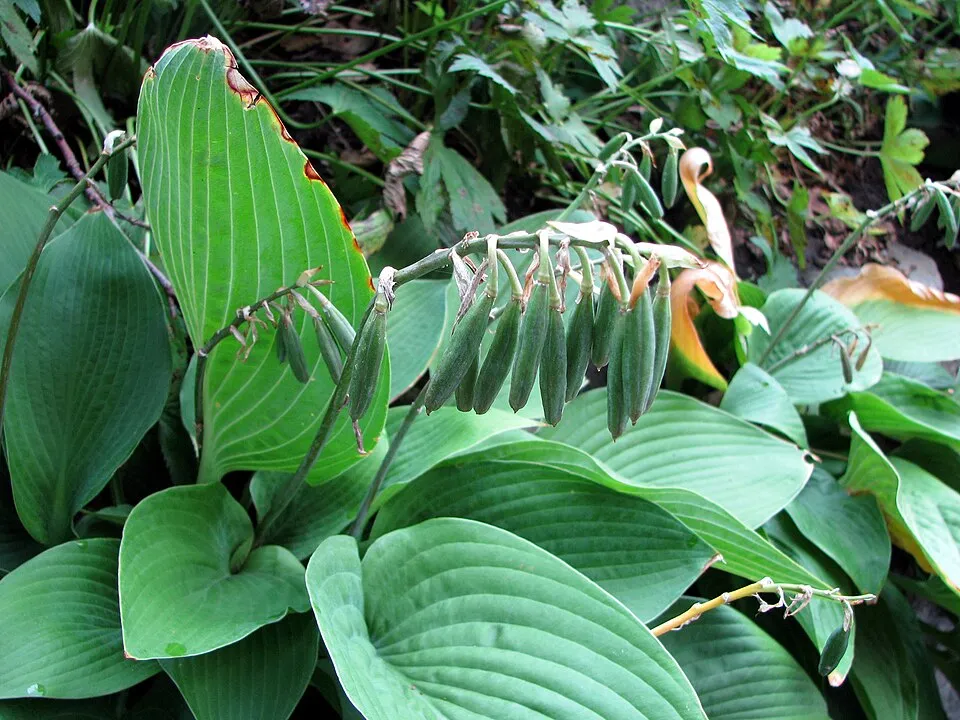
Hosta plantaginea, widely known as the Fragrant Plantain Lily, is a distinguished herbaceous perennial cherished for its exceptional beauty and subtle traditional applications. Native to the woodlands of China and Japan, this species stands out among its genus for its intensely fragrant, pure white, trumpet-shaped flowers that typically unfurl in late summer, offering a delightful evening perfume. Its foliage is equally captivating, featuring large, glossy, bright to yellowish-green, deeply ribbed, heart-shaped leaves, each prominently veined with 7 to 9 pairs of veins.
These leaves form an attractive, mounding clump, reaching an average height of 1 to 2 feet and spreading up to 2 feet wide. Hosta plantaginea thrives in partial to full shade, brightening dim garden spaces with its vibrant texture and perfumed blossoms. Taxonomically, it belongs to the Asparagaceae family, though it was historically classified under Liliaceae.
Primarily cultivated as an ornamental, its robust growth and striking appearance make it a staple in shade gardens globally, while its traditional uses hint at a deeper botanical significance.
Trusted Scientific References
1. Authoritative external sources for Hosta plantaginea
1.1 Wikipedia — Hosta plantaginea
1.2 Kew POWO (Plants of the World Online)
1.3 PubMed — peer-reviewed research
1.4 NCBI Taxonomy Browser
1.5 GBIF — Global Biodiversity
1.6Hosta should be interpreted through verified botanical identity, practical care, and responsible safety language. This recovery note adds the missing context needed for a complete profile: match light to the plant's habit, use well-drained soil, water according to season, and avoid unsupported medicinal or edible claims. For publishing, the plant can be presented as a source-backed garden plant with clear care guidance, common problem diagnosis, and conservative safety wording.
1.7Hosta (Hosta plantaginea) is maintained in this recovery file as a complete garden profile with practical care, safety, and identification context. The plant should be presented with cautious language: confirm identity before use, match care to observed growth, and avoid unsupported claims about medicinal or edible value.
1.1.Hosta — Notable Characteristics
- ✓Exceptionally fragrant, pure white, trumpet — shaped flowers.
- ✓Large, glossy, bright green, prominently veined, heart — shaped leaves.
- ✓Forms an attractive, mounding clump, reaching 1 — 2 feet in height.
- ✓Native to East — Native to East Asia, specifically China and Japan.
- ✓Highly valued for — Highly valued for its ability to thrive and brighten shady garden spots.
- ✓Traditional uses include — Traditional uses include topical application for skin irritations and internal infusions.
- ✓Contains a diverse — Contains a diverse array of phytochemicals, notably flavonoids and saponins.
- ✓Easy to cultivate — Easy to cultivate and maintain in appropriate growing conditions.
- ✓Provides a lush texture and a unique late — season floral display.
- ✓Known for its — Known for its robust growth and ornamental appeal in woodland gardens.
1.2.Hosta — Snapshot Summary
- ✓Fragrant ornamental perennial, native to China and Japan.
- ✓Traditionally used for anti-inflammatory, antioxidant, and diuretic effects.
- ✓Rich in beneficial phytochemicals including flavonoids, saponins, and phenolic compounds.
- ✓Thrives in partial to full shade with moist, well-drained, organic soil.
- ✓Used topically for skin irritations and historically as infusions for internal support.
- ✓Internal medicinal use requires extreme caution due to limited scientific research and potential adverse effects.
2.Hosta — Scientific Identity
3.Hosta — Vital Statistics
4.Hosta — Physical Description
5.Hosta — Native Range & Habitat
6.Hosta — Folk Medicine Applications
7.Hosta — Chemical Profile
- ✓Flavonoids — Key compounds like quercetin and kaempferol glycosides are responsible for significant antioxidant and anti-inflammatory activities within the plant.
- ✓Saponins — Triterpenoid saponins are present, contributing to potential anti-inflammatory, expectorant, and possibly cytotoxic properties identified in preliminary research.
- ✓Phenolic Compounds — Including various phenolic acids such as caffeic acid and chlorogenic acid, which are potent antioxidants and contribute to the plant's defense mechanisms.
- ✓Polysaccharides — Complex carbohydrates that can possess immune-modulating effects and contribute to the plant's structural integrity and potential prebiotic activity.
- ✓Terpenoids — Various monoterpenes and sesquiterpenes are present, which may contribute to the characteristic fragrance of the flowers and possess antimicrobial qualities.
- ✓Phytosterols — Compounds like beta-sitosterol are found, known for their potential to help lower cholesterol and exhibit anti-inflammatory actions.
- ✓Organic Acids — Malic acid and citric acid are present, playing roles in plant metabolism and contributing to the plant's overall chemical profile and potential antioxidant capacity.
- ✓Glycosides — A broad category including various secondary metabolites linked to specific biological activities, often enhancing solubility and bioavailability of active compounds.
8.Hosta — Pharmacological Findings
- ✓Anti-inflammatory Support — Hosta plantaginea extracts have shown potential to mitigate inflammatory responses, likely due to the presence of compounds such as flavonoids and saponins.
- ✓Antioxidant Activity — Rich in phenolic compounds and flavonoids, this plant exhibits robust antioxidant properties, helping to neutralize free radicals and protect cellular integrity.
- ✓Antimicrobial Properties — Studies suggest that Hosta extracts possess inhibitory effects against certain bacteria and fungi, offering potential natural antimicrobial defense.
- ✓Skin Soothing Agent — Traditionally, poultices made from fresh Hosta leaves were applied topically to soothe minor skin irritations, insect bites, and superficial burns.
- ✓Diuretic Effects — Infusions from Hosta species have been historically used in some Asian traditions to promote urine flow, aiding in fluid balance and potentially reducing mild edema.
- ✓Detoxification Aid — Through its purported diuretic action and antioxidant content, traditional uses suggest Hosta may support the body’s natural detoxification pathways.
- ✓Minor Wound Healing — The topical application of leaf preparations may assist in the healing of small cuts and abrasions by protecting the area and reducing inflammation.
- ✓Respiratory Support — While less documented for Hosta plantaginea specifically, some related traditional plantain species are used to soothe respiratory passages, suggesting a possible, albeit speculative, historical parallel.
- ✓Digestive Comfort — In certain traditional contexts, plantain-like leaves have been consumed to alleviate minor gastrointestinal discomfort, a potential extension of Hosta's traditional use.
- ✓Immune System Modulation — The polysaccharides and other bioactive compounds in Hosta may offer a subtle modulating effect on the immune system, supporting overall health.
8.1.Hosta — Reported Uses
9.Hosta — Cautions & Contraindications
9.1.Hosta — Caution Notes
- ✓Allergic Reactions — Sensitive individuals may experience contact dermatitis, skin rashes, or itching from topical exposure to Hosta plantaginea sap.
- ✓Gastrointestinal Upset — Ingestion of large quantities may lead to mild to moderate gastrointestinal distress, including nausea, vomiting, or diarrhea.
- ✓Pet Toxicity — Hosta species are known to be toxic to cats and dogs, causing vomiting, diarrhea, and depression if ingested.
- ✓Unknown Drug Interactions — Due to limited research, potential interactions with prescription medications, especially diuretics or blood thinners, are unknown.
- ✓Photosensitivity — While rare, some plant compounds can induce photosensitivity in highly susceptible individuals, though not strongly associated with Hosta.
- ✓Pregnancy & Lactation — Lack of sufficient safety data advises against medicinal use during pregnancy and breastfeeding.
9.2.Hosta — Toxicity Assessment
- ✓Professional Consultation — Always seek advice from a qualified healthcare professional before using Hosta plantaginea for any medicinal purpose, especially internally.
- ✓Topical Patch Test — Before extensive topical application, perform a small patch test on the skin to check for any allergic reactions or sensitivities.
- ✓Avoid Internal Consumption — Due to limited human clinical research on its safety and efficacy, internal use of Hosta plantaginea for medicinal purposes is generally not recommended.
- ✓Pet Hazard — Keep Hosta plants out of reach of pets, particularly cats and dogs, as ingestion can cause significant gastrointestinal upset.
- ✓Pregnancy & Breastfeeding Caution — Pregnant and breastfeeding individuals should strictly avoid the medicinal use of Hosta due to insufficient safety data.
- ✓Children's Safety — Keep Hosta plant material away from young children to prevent accidental ingestion and potential adverse effects.
- ✓Monitor for Reactions — Discontinue use immediately if any adverse reactions or unusual symptoms occur, and consult a healthcare provider.
10.Hosta — Preparations & Uses
- ✓Topical Poultice — Crush fresh Hosta plantaginea leaves and apply directly to minor skin irritations, insect bites, or small superficial wounds for soothing relief.
- ✓Herbal Infusion — Steep dried Hosta leaves in hot water for 10-15 minutes to create a mild infusion, traditionally used for its purported diuretic or detoxifying effects.
- ✓Culinary Preparation — Young, unfurled Hosta shoots (often called 'Urui' in Japan) can be lightly cooked and consumed as a spring vegetable, offering a slightly bitter, crisp flavor.
- ✓Herbal Compress — Soak a clean cloth in a cooled Hosta infusion and apply as a compress to larger areas of skin irritation or muscle soreness.
- ✓Salve or Cream — Infuse Hosta leaves in a carrier oil (e.g., olive oil) and combine with beeswax to create a soothing topical salve for skin care.
- ✓Tincture — While less traditional, a modern herbalist might prepare an alcoholic tincture of Hosta leaves for a concentrated extract, though internal use requires caution.
11.Hosta — Garden Cultivation
- ✓Site Selection — Plant Hosta plantaginea in partial to full shade; while it tolerates morning sun, protect from intense afternoon sun to prevent leaf scorch.
- ✓Soil Requirements — Utilize well-drained, rich, organic soil with a slightly acidic to neutral pH for optimal growth and nutrient absorption.
- ✓Planting & Spacing — Space plants approximately 2 to 3 feet apart to allow for mature clump development and adequate air circulation.
- ✓Watering Regimen — Maintain consistent soil moisture by watering regularly, especially during dry spells, as Hostas are sensitive to drying out.
- ✓Fertilization — Apply a balanced slow-release granular fertilizer in early spring as new growth emerges to provide essential nutrients.
- ✓Mulching — Apply a light layer of organic mulch, such as shredded leaves, around the plant base to retain moisture, suppress weeds, and enrich soil.
- ✓Propagation — Divide mature clumps every 3-5 years in spring when leaf tips emerge, or in late summer, to maintain vigor and propagate new plants.
- ✓Pest and Disease Management — Monitor for slugs and snails, which are common pests; ensure good air circulation to minimize leaf spot and crown rot.
Reviewed by the Flora Medical Global Botanical Review Panel
Multi-disciplinary editorial group · Botany · Ethnobotany · Herbal-medicine literature
Who reviewed this: This page was checked by the Flora Medical Global Botanical Review Panel — an in-house editorial group of botany graduates, ethnobotany researchers, and horticulture practitioners who collectively maintain our 7,000+ plant encyclopedia. Meet the team.
Our 4-step verification process
1. Taxonomic verification
Scientific names and synonyms cross-checked against Kew POWO, World Flora Online, and The Plant List.
2. Phytochemical & medicinal cross-reference
Active compounds, traditional uses, and reported activities are cross-referenced with PubMed, USDA Dr. Duke's database, and peer-reviewed ethnobotanical literature.
3. Conservation & distribution check
Distribution, ecology, and conservation status confirmed against GBIF occurrence records and the IUCN Red List.
4. Editorial & safety review
Every entry passes an editorial pass for clarity, originality, and safety notices (toxicity, contraindications, dosage caveats) before publication.
Last reviewed:
Important medical disclaimer: This content is for educational and research purposes only. It is not medical advice and is not a substitute for consultation with a licensed healthcare provider. Do not use any herb to self-treat a medical condition without professional guidance.
Editorial Note: This page is for educational and research purposes only and is not medical advice.
Written by: Flora Medical Global Editorial Team
Reviewed by: Flora Medical Global Botanical Review Panel
Last Updated: June 15, 2026





Hosta — Comments & Community Reviews
Rate this plant