


Medical Disclaimer: This content is for educational purposes only. It is not medical advice. Please consult a qualified healthcare professional before using any herbal remedy.
Safety Overview
1.Hosta Sieboldiana — Botanical Snapshot
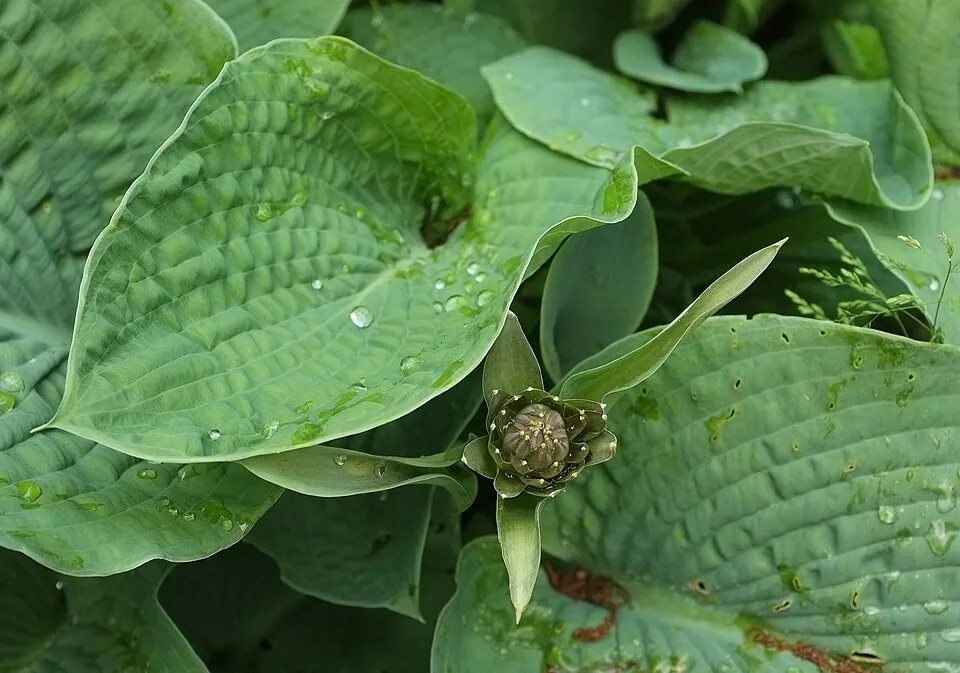
Hosta sieboldiana, commonly known as Siebold's Hosta or Giant Hosta, is a truly magnificent and robust herbaceous perennial belonging to the Asparagaceae family. Native to the shaded woodlands of Japan, this species is highly prized globally for its commanding presence and distinctive foliage, making it an indispensable element in shade garden designs. The plant is characterized by its exceptionally large, broadly ovate to heart-shaped leaves, which can measure an impressive 12 to 18 inches in length and 8 to 12 inches in width. These substantial leaves feature a deeply textured surface with prominent, parallel veins that extend from the base to the apex, contributing to their architectural appeal.
Many cultivars of Hosta sieboldiana exhibit a unique blue-green coloration, a hue attributed to a protective waxy bloom on the leaf surface that can be gently rubbed off, sometimes softening to a grayish-green as the season progresses. This Hosta forms dense, impressive mounds, typically reaching heights of 2 to 3 feet and spreading 2 to 4 feet wide, though some cultivars can grow larger. During mid to late summer, elegant flower scapes emerge, arching gracefully above the foliage and bearing clusters of trumpet-shaped, fragrant flowers that range from pale lavender to pure white, attracting various pollinators. Hosta sieboldiana is remarkably hardy and adaptable, thriving in environments ranging from partial to full shade where it is shielded from intense afternoon sun, which can scorch its delicate leaves.
Its well-developed root system provides a degree of drought tolerance once established, although consistent moisture is crucial for optimal growth and the development of its lush, characteristic foliage. As a long-lived perennial, Siebold's Hosta often becomes a central feature in landscapes, valued for its enduring beauty, structural contribution, and ability to create a verdant, dramatic contrast in shady garden nooks and borders.
Trusted Scientific References
1. Authoritative external sources for Hosta sieboldiana
1.1 Wikipedia — Hosta sieboldiana
1.2 Kew POWO (Plants of the World Online)
1.3 PubMed — peer-reviewed research
1.4 NCBI Taxonomy Browser
1.5 GBIF — Global Biodiversity
1.1.Hosta Sieboldiana — Distinguishing Points
- ✓Large, broadly ovate to heart — shaped blue-green leaves with a distinctive waxy bloom.
- ✓Deeply textured foliage — Deeply textured foliage with prominent, parallel veins, contributing to its robust appearance.
- ✓Forms dense, substantial mounds, typically reaching 2 — 3 feet in height and 2-4 feet in spread.
- ✓Produces elegant, arching — Produces elegant, arching flower scapes bearing clusters of pale lavender to white trumpet-shaped flowers in mid-summer.
- ✓Exceptionally hardy, thriving in USDA Zones 3 — 9, making it suitable for a wide range of climates.
- ✓Prefers shaded to — Prefers shaded to partially shaded environments, protected from intense afternoon sun.
- ✓Drought tolerant once — Drought tolerant once established, but performs best with consistent moisture for lush growth.
- ✓An excellent choice — An excellent choice for groundcover, borders, and focal points in shade gardens.
- ✓Attracts pollinators such — Attracts pollinators such as bees and butterflies to the garden.
- ✓Low maintenance and long — lived, providing enduring beauty and structure to the landscape.
1.2.Hosta Sieboldiana — Snapshot Summary
- ✓Majestic shade garden perennial, Hosta sieboldiana, celebrated for its large, blue-green, textured leaves.
- ✓Primarily an ornamental plant, providing significant aesthetic value and architectural presence in landscapes.
- ✓Contains flavonoids and saponins, suggesting theoretical but unproven medicinal potential for specific conditions.
- ✓Thrives in moist, well-drained shade and is exceptionally hardy in USDA Zones 3-9.
- ✓Known to be toxic to pets if ingested and not recommended for human internal consumption.
- ✓Propagated by division, it is considered an easy-care, low-maintenance plant under optimal growing conditions.
2.Hosta Sieboldiana — Botanical Identity
3.Hosta Sieboldiana — Key Data
4.Hosta Sieboldiana — Botanical Description
5.Hosta Sieboldiana — Native Range & Habitat
6.Hosta Sieboldiana — Heritage Uses
7.Hosta Sieboldiana — Phytochemistry
- ✓Flavonoids — Includes compounds such as quercetin, kaempferol, and their various glycosides, known for their potent antioxidant, anti-inflammatory, and potentially protective cellular activities.
- ✓Phenolic Acids — Contains compounds like caffeic acid and ferulic acid, which are significant contributors to the plant's antioxidant defense system and may exhibit mild anti-inflammatory effects.
- ✓Saponins — Primarily steroidal saponins, which have been investigated in other plant contexts for their potential immunomodulatory, hypocholesterolemic (cholesterol-lowering), and mild antimicrobial properties.
- ✓Polysaccharides — Complex carbohydrates that can contribute to dietary fiber when consumed (in edible species) and may play a role in immune system support.
- ✓Triterpenoids — A diverse group of secondary metabolites often associated with anti-inflammatory, hepatoprotective, and adaptogenic properties in a wide range of medicinal plants.
- ✓Anthocyanins — Although less prominent in the blue-green foliage of H. sieboldiana, these pigments are powerful antioxidants found in other plant parts or cultivars, contributing to color.
- ✓Carotenoids — Including lutein and beta-carotene, these are present in the green foliage, acting as antioxidants and important precursors for vitamin A in the diet.
- ✓Phytosterols — Plant sterols such as beta-sitosterol are found in plant cell membranes and are known for their potential to help manage cholesterol levels in humans when consumed.
- ✓Volatile Organic Compounds (VOCs) — Contribute to the subtle fragrance of the flowers and foliage, though their specific medicinal or biological actions in Hosta sieboldiana are not extensively documented.
8.Hosta Sieboldiana — Scientific Evidence
- ✓Antioxidant Support — Due to the presence of various phenolic compounds, Hosta species, including H. sieboldiana, may offer antioxidant activity, potentially aiding in the neutralization of free radicals and reducing oxidative stress.
- ✓Anti-inflammatory Potential — Certain phytochemicals like flavonoids and saponins, commonly found in many plants including Hosta, are hypothesized to possess anti-inflammatory properties that could help alleviate minor discomfort.
- ✓Digestive Aid (Traditional/Folk) — In some East Asian folk traditions, the young shoots of certain Hosta species are consumed as a vegetable, suggesting a historical, albeit unverified, role in promoting digestive regularity and providing dietary fiber.
- ✓Nutritional Value (Edible Species) — While H. sieboldiana is primarily ornamental, related Hosta species are harvested as 'urui' (a leafy green vegetable) in Japan, contributing essential vitamins, minerals, and dietary fiber.
- ✓Immunomodulatory Effects (Hypothetical) — Saponins, a class of compounds identified in some Hosta species, have been studied for their potential to modulate immune responses, though specific research on H. sieboldiana is limited.
- ✓Cardiovascular Health (Theoretical) — Flavonoids and other phenolic compounds are broadly associated with supporting cardiovascular function through their antioxidant and endothelial-protective mechanisms.
- ✓Antimicrobial Properties (Exploratory) — Preliminary studies on extracts from various Hosta species suggest potential broad-spectrum antimicrobial activity, warranting further investigation into H. sieboldiana.
- ✓Cellular Protection (Phytochemical Influence) — The array of phytochemicals present may contribute to overall cellular health and protection, similar to benefits observed in other plant-based foods.
- ✓Stress Reduction (Indirect) — As an aesthetic garden plant, its cultivation and presence can indirectly contribute to mental well-being and stress reduction through horticultural therapy and enjoyment of nature.
8.1.Hosta Sieboldiana — Reported Uses
9.Hosta Sieboldiana — Safety Considerations
9.1.Hosta Sieboldiana — Reported Side Effects
- ✓Gastrointestinal Upset (Ingestion) — Ingesting Hosta sieboldiana plant material can cause symptoms such as nausea, vomiting, diarrhea, and abdominal discomfort in humans and pets.
- ✓Pet Toxicity — Hosta species are known to be toxic to dogs, cats, and horses, leading to gastrointestinal distress, lethargy, and other adverse reactions if consumed.
- ✓Skin Irritation (Contact) — Direct contact with the plant sap or leaves may cause mild skin irritation or dermatitis in sensitive individuals.
- ✓Allergic Reactions — Individuals with sensitivities to plants may experience allergic responses, including skin rashes, itching, or respiratory symptoms from pollen or direct contact.
- ✓Photosensitivity (Hypothetical) — While not specifically documented for H. sieboldiana, some plant compounds can theoretically increase skin sensitivity to sunlight, though this is rare.
- ✓Interactions with Medications (Theoretical) — Should H. sieboldiana ever be considered for internal use, its compounds could theoretically interact with prescription medications, although no specific data exists.
9.2.Hosta Sieboldiana — Risk Assessment
- ✓Not for Internal Consumption — Hosta sieboldiana is primarily an ornamental plant and should not be consumed internally by humans due to insufficient safety data and potential toxicity.
- ✓Keep Away from Pets — Due to known toxicity to animals, ensure that dogs, cats, and horses do not ingest any part of the Hosta sieboldiana plant.
- ✓Handle with Care — Individuals with sensitive skin should wear gloves when handling the plant to avoid potential mild skin irritation or allergic contact dermatitis.
- ✓Pregnancy and Lactation — Avoid any internal use during pregnancy and lactation due to a complete lack of safety research regarding its effects on pregnant or nursing individuals.
- ✓Children's Safety — Keep all plant parts out of reach of young children to prevent accidental ingestion, which could lead to gastrointestinal upset.
- ✓Allergic Individuals — Those with known plant allergies should exercise caution and avoid direct contact or close proximity if symptoms of an allergic reaction develop.
- ✓Consult Healthcare Professional — Always consult a qualified healthcare provider or medical herbalist before considering any unconventional internal use of this plant.
10.Hosta Sieboldiana — Preparations & Uses
- ✓Ornamental Garden Specimen — Primarily cultivated as a majestic focal point or mass planting in shade gardens, providing significant aesthetic value with its large, textured foliage.
- ✓Landscape Design Element — Utilized to create lush borders, fill shady nooks, or serve as an effective groundcover, suppressing weeds and providing structure.
- ✓Container Cultivation — Ideal for large pots and planters on shaded patios or entryways, allowing for dramatic displays and flexible placement.
- ✓Cut Foliage for Arrangements — The substantial and attractive leaves can be incorporated into floral arrangements to add unique texture, volume, and a distinctive blue-green hue.
- ✓Edible Young Shoots (Related Species) — While H. sieboldiana is not widely consumed, the young, unfurled shoots of certain Hosta species are prepared as a cooked vegetable ('urui') in some traditional Japanese cuisines.
- ✓Erosion Control — Due to its dense growth habit and robust root system, it can be planted on slopes in shaded areas to help stabilize soil and prevent erosion.
- ✓Air Purification (General Plant Benefit) — Like many plants, Hosta sieboldiana contributes to local air quality by absorbing carbon dioxide and releasing oxygen, enhancing the garden environment.
- ✓Companion Planting — Often planted alongside other shade-loving perennials like ferns, astilbes, and bleeding hearts to create visually diverse and harmonious garden compositions.
11.Hosta Sieboldiana — Garden Cultivation
- ✓Sunlight Requirements — Prefers partial to full shade; morning sun is generally beneficial, but protect from harsh afternoon sun to prevent leaf scorch and maintain blue coloration.
- ✓Soil Conditions — Thrives in moist, well-drained, highly organic soils with a slightly acidic to neutral pH (5.5-7.5); sandy loam is ideal, providing good aeration for root development.
- ✓Watering Practices — Requires consistent moisture, especially during dry spells; insufficient water can lead to smaller leaves and browning, papery edges.
- ✓Hardiness Zones — Exceptionally hardy in USDA Zones 3 through 9, demonstrating robust tolerance to cold temperatures.
- ✓Propagation Methods — Best propagated by division of mature clumps (typically after 4-5 years) in early spring as new leaves emerge, or through seed, though seed-grown plants may vary from the parent.
- ✓Maintenance and Care — Generally easy to maintain; remove dead or damaged leaves to improve plant health and deter pests; an annual application of balanced fertilizer in spring supports vigorous growth.
- ✓Pest and Disease Management — Monitor for slugs and snails (especially damaging to young leaves), black vine weevils; minimize leaf spot and crown rot by ensuring good air circulation and avoiding overhead watering, especially late in the day.
- ✓Container Growing — Excellent for large containers, requiring consistent moisture and protection from direct sun, providing a striking focal point on shaded patios.
Reviewed by the Flora Medical Global Botanical Review Panel
Multi-disciplinary editorial group · Botany · Ethnobotany · Herbal-medicine literature
Who reviewed this: This page was checked by the Flora Medical Global Botanical Review Panel — an in-house editorial group of botany graduates, ethnobotany researchers, and horticulture practitioners who collectively maintain our 7,000+ plant encyclopedia. Meet the team.
Our 4-step verification process
1. Taxonomic verification
Scientific names and synonyms cross-checked against Kew POWO, World Flora Online, and The Plant List.
2. Phytochemical & medicinal cross-reference
Active compounds, traditional uses, and reported activities are cross-referenced with PubMed, USDA Dr. Duke's database, and peer-reviewed ethnobotanical literature.
3. Conservation & distribution check
Distribution, ecology, and conservation status confirmed against GBIF occurrence records and the IUCN Red List.
4. Editorial & safety review
Every entry passes an editorial pass for clarity, originality, and safety notices (toxicity, contraindications, dosage caveats) before publication.
Last reviewed:
Important medical disclaimer: This content is for educational and research purposes only. It is not medical advice and is not a substitute for consultation with a licensed healthcare provider. Do not use any herb to self-treat a medical condition without professional guidance.
Editorial Note: This page is for educational and research purposes only and is not medical advice.
Written by: Flora Medical Global Editorial Team
Reviewed by: Flora Medical Global Botanical Review Panel
Last Updated: June 15, 2026





Hosta Sieboldiana — Comments & Community Reviews
Rate this plant