
Medical Disclaimer: This content is for educational purposes only. It is not medical advice. Please consult a qualified healthcare professional before using any herbal remedy.
Safety Overview
1.Hoya Carnosa Tricolor — Overview
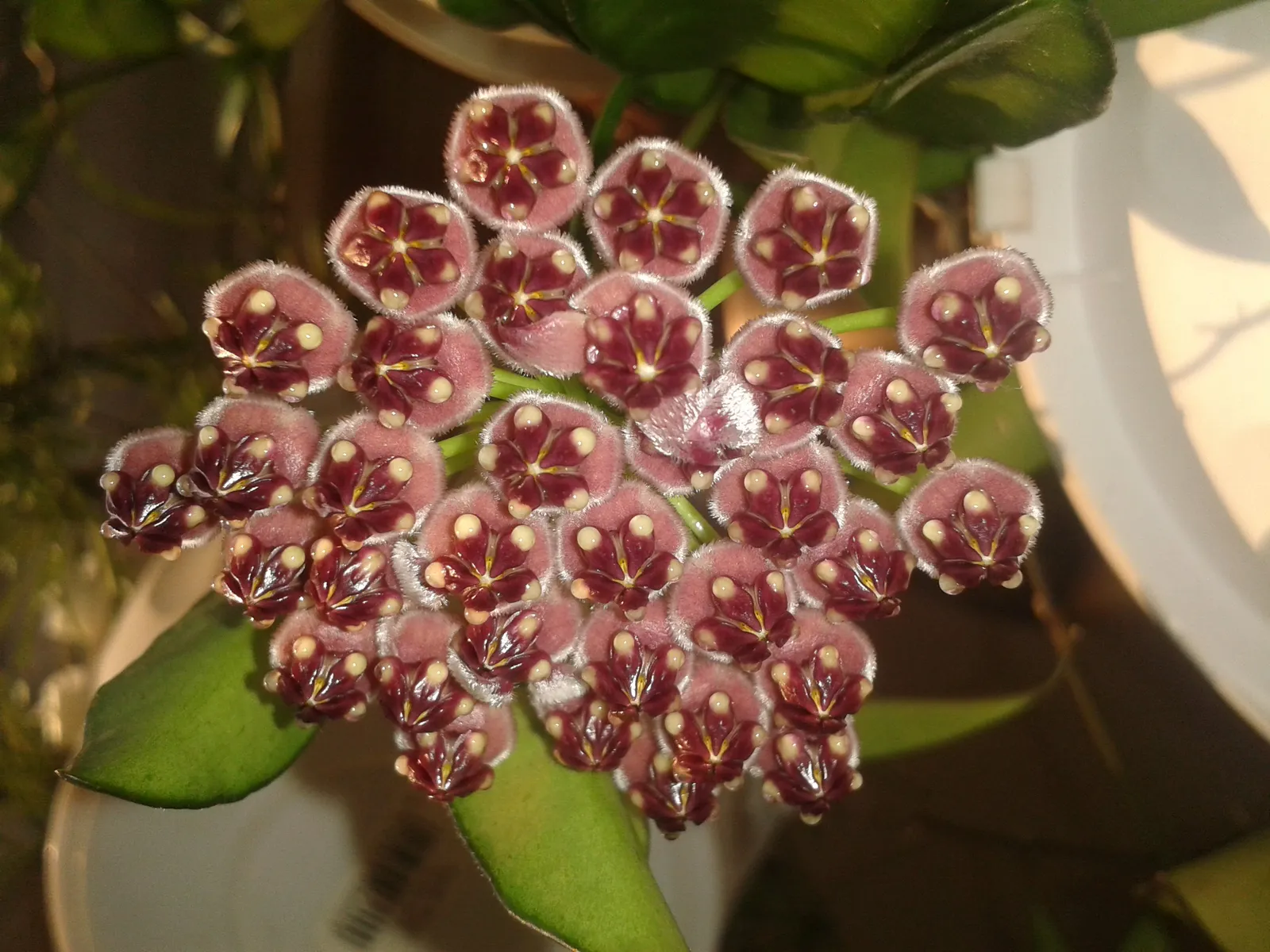
Hoya carnosa 'Tricolor', commonly known as the Tricolor Wax Plant or Porcelain Flower, is a highly esteemed ornamental cultivar of Hoya carnosa, belonging to the Apocynaceae family. This delightful evergreen perennial is a semi-succulent, epiphytic climbing vine, native to the tropical and subtropical regions of Southeast Asia, including India, China, and Indonesia, where it typically thrives in the understory of humid forests, often clinging to trees or rocks. The plant is characterized by its thick, waxy, ovate leaves, which exhibit a striking variegation of deep green, creamy white, and soft pink hues, giving it its 'Tricolor' designation.
Each leaf measures approximately 5 to 10 cm (2 to 4 inches) in length and possesses a distinct fleshy texture. Mature vines can extend up to 3 meters (10 feet) or more with adequate support. During its blooming season, primarily in summer, Hoya carnosa 'Tricolor' produces pendulous clusters of small, star-shaped flowers.
These exquisite blooms are typically pale pink to white with a contrasting darker pink or red center, and are renowned for exuding a sweet, honey-like fragrance, often accompanied by nectar droplets. The stems are initially smooth and flexible, becoming more woody and rigid as the plant ages. Its classification within the Apocynaceae family places it alongside other well-known genera such as dogbane and periwinkle, sharing common botanical traits like milky sap (latex) and specific flower structures, although the 'Tricolor' cultivar is predominantly valued for its exceptional foliage and aromatic flowers in horticulture.
Trusted Scientific References
1. Authoritative external sources for Hoya carnosa Tricolor
1.1 Wikipedia — Hoya carnosa Tricolor
1.2 Kew POWO (Plants of the World Online)
1.3 PubMed — peer-reviewed research
1.4 NCBI Taxonomy Browser
1.5 GBIF — Global Biodiversity
1.6Hoya Carnosa Tricolor should be interpreted through verified botanical identity, practical care, and responsible safety language. This recovery note adds the missing context needed for a complete profile: match light to the plant's habit, use well-drained soil, water according to season, and avoid unsupported medicinal or edible claims. For publishing, the plant can be presented as a source-backed indoor plant with clear care guidance, common problem diagnosis, and conservative safety wording.
1.1.Hoya Carnosa Tricolor — Defining Traits
- ✓Variegated Foliage — Displays striking green, creamy white, and soft pink leaves.
- ✓Waxy Leaves — Thick, fleshy, and succulent-like leaves with a glossy, waxy texture.
- ✓Fragrant Flowers — Produces clusters of star-shaped, pale pink to white flowers with a sweet, honey-like scent.
- ✓Vining Growth Habit — A climbing or trailing vine, suitable for hanging baskets or trellises.
- ✓Low Maintenance — Relatively easy to care for, making it popular for indoor cultivation.
- ✓Epiphytic Nature — Naturally grows on other plants or structures in its native habitat.
- ✓Apocynaceae Family — Member of the Dogbane family, sharing botanical characteristics.
- ✓Tropical Origin — Native to humid regions of Southeast Asia, thriving in warm, moist conditions.
- ✓Ornamental Value — Highly valued for its aesthetic contribution to indoor spaces.
- ✓Nectar Production — Flowers often exude small droplets of sweet nectar.
1.2.Hoya Carnosa Tricolor — Snapshot Summary
- ✓Hoya carnosa 'Tricolor' is an ornamental, variegated wax plant.
- ✓Known for its striking green, white, and pink leaves and fragrant, star-shaped flowers.
- ✓Primarily grown as an indoor climbing vine for aesthetic appeal and air quality.
- ✓Belongs to the Apocynaceae family, native to Southeast Asia.
- ✓Lacks specific documented medicinal uses for this cultivar; general Hoya species may have folk uses.
- ✓Requires bright, indirect light, well-draining soil, and moderate watering.
2.Hoya Carnosa Tricolor — Taxonomic Classification
3.Hoya Carnosa Tricolor — Quick Facts
4.Hoya Carnosa Tricolor — Structural Profile
5.Hoya Carnosa Tricolor — Where It Grows
6.Hoya Carnosa Tricolor — Historical Applications
7.Hoya Carnosa Tricolor — Active Compounds
- ✓While specific detailed chemical profiles for the 'Tricolor' cultivar of Hoya carnosa are not extensively documented, Hoya species generally contain a range of secondary metabolites characteristic of the Apocynaceae family.
- ✓Flavonoids — These polyphenolic compounds, such as quercetin and kaempferol derivatives, are common in Hoya leaves and are known for their antioxidant, anti-inflammatory, and free radical scavenging properties.
- ✓Phenolic Acids — Compounds like caffeic acid and ferulic acid are present, contributing to the plant's overall antioxidant capacity and protective mechanisms against environmental stressors.
- ✓Terpenoids — Various triterpenoids and sterols, including beta-sitosterol, have been isolated from Hoya species, often associated with anti-inflammatory or cytotoxic activities in other plants.
- ✓Saponins — Glycosides that produce a frothing lather in water, saponins are found in some Hoya species and may possess adaptogenic or immune-modulating properties, though can be toxic in high doses.
- ✓Cardiac Glycosides — As members of the Apocynaceae family, some Hoya species may contain cardiac glycosides, which are potent compounds affecting heart function; however, their presence and concentration in Hoya carnosa 'Tricolor' are not well-studied.
- ✓Alkaloids — Nitrogen-containing compounds, typically found in small amounts in the genus, which can exhibit a wide range of pharmacological activities, though specific Hoya alkaloids are less characterized.
- ✓Waxy Esters and Lipids — The prominent waxy cuticle of Hoya leaves is composed of various fatty acids and esters, which play a role in water retention and protection against pathogens, influencing the overall chemical composition.
- ✓Volatile Organic Compounds (VOCs) — The fragrant flowers produce a complex mixture of VOCs, including terpenes and esters, responsible for their sweet, honey-like scent, which can have aromatherapy-like effects.
8.Hoya Carnosa Tricolor — Research Insights
- ✓While Hoya carnosa 'Tricolor' is primarily cultivated for its aesthetic appeal and does not possess widely documented specific medicinal applications, the Hoya genus, and indoor plants in general, offer certain recognized benefits to human well-being.
- ✓Air Purification — Like many indoor plants, Hoya carnosa 'Tricolor' may contribute to improving indoor air quality by absorbing certain volatile organic compounds (VOCs) and converting carbon dioxide into oxygen, albeit specific studies on this cultivar are limited and its contribution is generally modest.
- ✓Psychological Well-being — The presence of living plants such as Hoya carnosa 'Tricolor' in indoor environments has been consistently linked to reduced stress levels, improved mood, and enhanced cognitive function, thereby contributing to overall mental health and a sense of calm.
- ✓Aesthetic Enhancement — Its vibrant, variegated foliage and fragrant, delicate blooms provide significant decorative value, creating a soothing and visually appealing atmosphere that can positively influence occupants' emotional state.
- ✓Humidity Regulation — Through the natural process of transpiration, Hoya carnosa 'Tricolor' releases moisture vapor into the air, which can slightly increase ambient humidity, a beneficial effect in dry indoor environments, particularly for respiratory comfort.
- ✓Stress Reduction — Interacting with or simply observing plants like the Tricolor Wax Plant can act as a natural stress reliever, promoting relaxation and a connection to nature, which is particularly valuable in urban settings.
- ✓Focus and Concentration — Studies suggest that green spaces, including indoor plants, can enhance an individual's ability to focus and concentrate, potentially improving productivity in work or study environments.
- ✓Traditional Use (General Hoya Species) — It is important to note that some other Hoya species (not specifically 'Tricolor') have been historically used in various folk medicine systems for purposes such as treating skin ailments, inflammation, or respiratory issues, though these applications are not attributed to Hoya carnosa 'Tricolor' itself.
- ✓Biophilic Design Element — Incorporating Hoya carnosa 'Tricolor' into interior design supports biophilia, the innate human tendency to connect with nature, fostering a healthier and more productive living or working space.
8.1.Hoya Carnosa Tricolor — Conditions Traditionally Used For
9.Hoya Carnosa Tricolor — Precautions & Warnings
9.1.Hoya Carnosa Tricolor — Side Effects & Warnings
- ✓While generally considered safe for handling, certain aspects of Hoya carnosa 'Tricolor' may cause mild adverse reactions in sensitive individuals.
- ✓Skin Irritation — The milky sap (latex) contained within the stems and leaves may cause mild skin irritation or allergic reactions in sensitive individuals upon contact.
- ✓Gastrointestinal Upset — Ingestion of plant parts by pets or small children may lead to mild gastrointestinal upset, including vomiting or diarrhea, due to the presence of sap or other compounds.
- ✓Allergic Reactions — Airborne pollen or fragrance from the flowers could potentially trigger mild allergic reactions or respiratory sensitivities in susceptible individuals.
- ✓Toxicity Concerns (General Hoya) — While 'Tricolor' is not considered highly toxic, other species within the Apocynaceae family are known to contain cardiac glycosides, warranting caution with ingestion.
- ✓Pet Toxicity (Mild) — Classified as mildly toxic to pets (cats and dogs) by some sources; ingestion can lead to irritation of the mouth and stomach.
9.2.Hoya Carnosa Tricolor — Clinical Safety Notes
- ✓Hoya carnosa 'Tricolor' is generally regarded as a low-risk ornamental plant, but certain precautions are advisable to ensure safety.
- ✓Handling Sap — Avoid direct contact with the milky sap; wear gloves if you have sensitive skin or are prone to contact dermatitis.
- ✓Keep Out of Reach of Children and Pets — Position plants where small children and pets cannot easily access or ingest the foliage to prevent mild gastrointestinal upset.
- ✓Ventilation — Ensure adequate ventilation in rooms with flowering plants to disperse fragrance, especially for individuals with respiratory sensitivities.
- ✓Not for Internal Use — This cultivar is strictly for ornamental purposes and should not be ingested or used in any medicinal preparations.
- ✓Allergy Awareness — Individuals with known plant allergies should exercise caution around flowering Hoyas due to potential pollen or fragrance sensitivities.
- ✓Wash Hands — Always wash hands thoroughly after handling the plant, especially before eating or touching the face.
10.Hoya Carnosa Tricolor — How to Use
- ✓Hoya carnosa 'Tricolor' is primarily utilized for its exceptional ornamental value in indoor and outdoor settings (in suitable climates), with usage methods focusing on its horticultural and aesthetic benefits rather than direct medicinal applications.
- ✓Decorative Houseplant — Cultivated extensively as an indoor houseplant, enhancing interior aesthetics with its vibrant, variegated foliage and fragrant flowers.
- ✓Hanging Basket Display — Its vining growth habit makes it an excellent choice for hanging baskets, allowing its long stems and leaves to cascade beautifully.
- ✓Trellis or Moss Pole Training — Can be trained to climb on a trellis or moss pole, creating an upright and structured botanical display.
- ✓Air Quality Enhancement (Indirect) — As a living plant, it contributes to general indoor air quality through photosynthesis and minor VOC absorption, promoting a healthier living environment.
- ✓Gifting — Often given as a gift due to its beauty, relatively easy care, and symbolic association with enduring beauty and friendship.
- ✓Biophilic Design — Integrated into spaces to connect people with nature, improving well-being, productivity, and reducing stress in homes, offices, and commercial settings.
- ✓Aromatic Appeal — The sweet fragrance of its flowers contributes a pleasant natural aroma to indoor spaces, acting as a natural air freshener.
- ✓Educational Specimen — Used in botanical collections and educational settings to illustrate plant morphology, variegation, and the diversity of the Apocynaceae family.
11.Hoya Carnosa Tricolor — Propagation & Care
- ✓Light — Hoya carnosa 'Tricolor' thrives in bright, indirect light; direct harsh sunlight can scorch its variegated leaves, while insufficient light will hinder flowering and variegation.
- ✓Watering — Allow the top few inches of soil to dry out completely between waterings; overwatering is the most common cause of root rot in Hoya carnosa 'Tricolor'.
- ✓Humidity — Prefers high humidity, mimicking its native tropical environment; consider misting regularly or placing near a humidifier, especially in dry climates.
- ✓Soil — Requires a well-draining, airy potting mix, typically an orchid mix combined with perlite and peat or coco coir, to prevent waterlogging.
- ✓Temperature — Ideal temperatures range between 18-29°C (65-85°F); avoid cold drafts and temperatures below 10°C (50°F).
- ✓Fertilization — Feed sparingly during the growing season (spring and summer) with a balanced liquid fertilizer diluted to half strength, reducing or stopping in fall and winter.
- ✓Support — As a climbing vine, Hoya carnosa 'Tricolor' benefits from a trellis, moss pole, or hanging basket to allow its stems to trail or climb naturally.
- ✓Propagation — Easily propagated from stem cuttings, which can be rooted in water or a moist, well-draining substrate.
Reviewed by the Flora Medical Global Botanical Review Panel
Multi-disciplinary editorial group · Botany · Ethnobotany · Herbal-medicine literature
Who reviewed this: This page was checked by the Flora Medical Global Botanical Review Panel — an in-house editorial group of botany graduates, ethnobotany researchers, and horticulture practitioners who collectively maintain our 7,000+ plant encyclopedia. Meet the team.
Our 4-step verification process
1. Taxonomic verification
Scientific names and synonyms cross-checked against Kew POWO, World Flora Online, and The Plant List.
2. Phytochemical & medicinal cross-reference
Active compounds, traditional uses, and reported activities are cross-referenced with PubMed, USDA Dr. Duke's database, and peer-reviewed ethnobotanical literature.
3. Conservation & distribution check
Distribution, ecology, and conservation status confirmed against GBIF occurrence records and the IUCN Red List.
4. Editorial & safety review
Every entry passes an editorial pass for clarity, originality, and safety notices (toxicity, contraindications, dosage caveats) before publication.
Last reviewed:
Important medical disclaimer: This content is for educational and research purposes only. It is not medical advice and is not a substitute for consultation with a licensed healthcare provider. Do not use any herb to self-treat a medical condition without professional guidance.
Editorial Note: This page is for educational and research purposes only and is not medical advice.
Written by: Flora Medical Global Editorial Team
Reviewed by: Flora Medical Global Botanical Review Panel
Last Updated: June 15, 2026





Hoya Carnosa Tricolor — Comments & Community Reviews
Rate this plant