
Medical Disclaimer: This content is for educational purposes only. It is not medical advice. Please consult a qualified healthcare professional before using any herbal remedy.
Safety Overview
1.Hoya Curtisii — Essential Profile
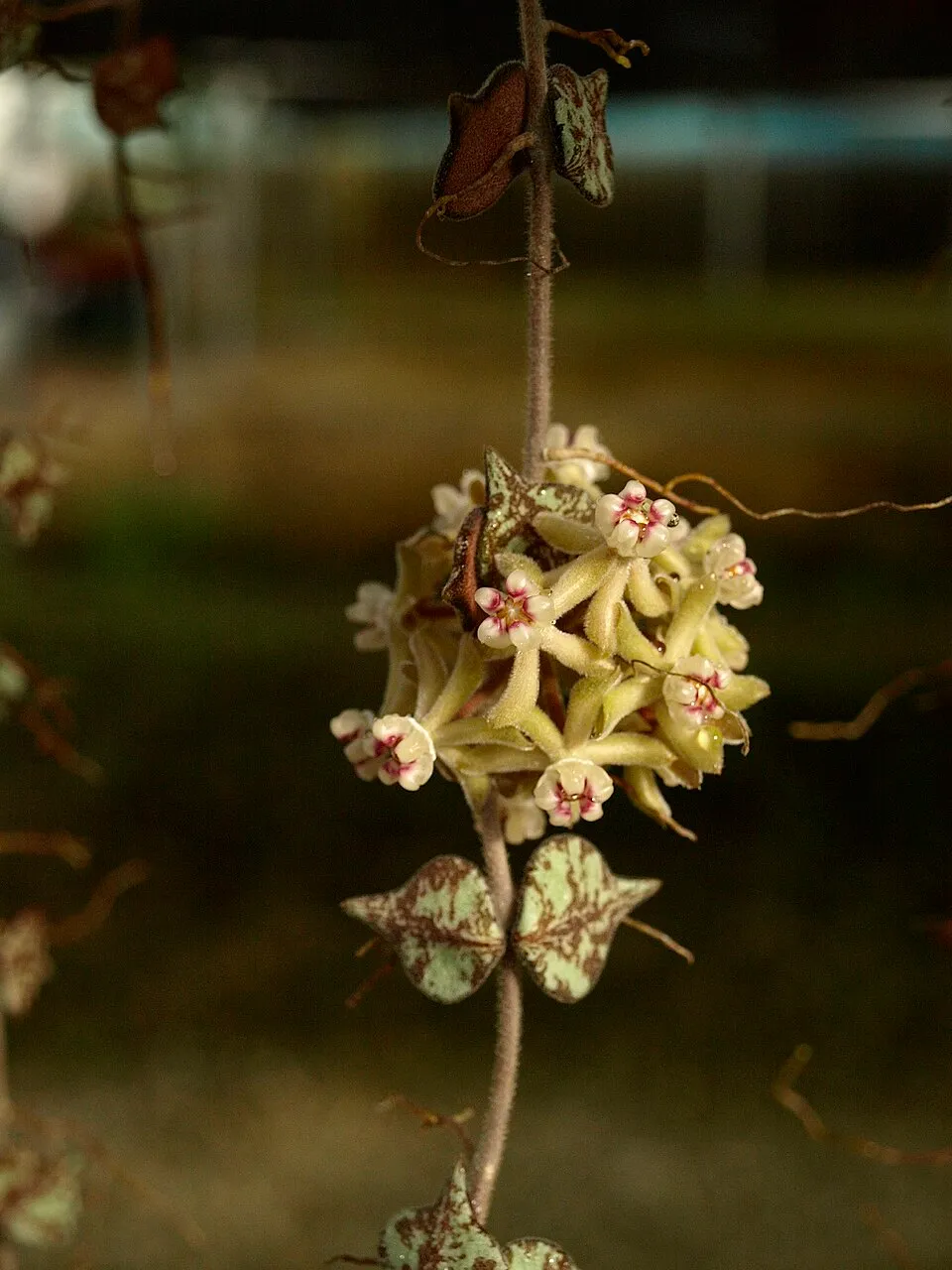
Hoya curtisii, commonly known as the Miniature Hoya, is an enchanting epiphytic succulent vine belonging to the Apocynaceae family. This charming species typically extends its trailing stems to lengths of 12 to 36 inches (30 to 90 cm), making it an ideal candidate for hanging baskets or elevated displays. Its most distinguishing feature is its diminutive, spade-shaped leaves, which are approximately 1 to 2 inches (2.5 to 5 cm) long.
These glossy green leaves are uniquely adorned with intricate silver-grey mottling, creating a striking visual contrast that enhances its ornamental appeal. The plant produces delicate clusters of star-shaped flowers, typically white or pale pink, each with a distinct reddish or maroon corona at its center. These small blossoms, measuring about 0.5 inches (1.3 cm) across, emerge in umbrella-like formations and release a subtle, sweet fragrance, particularly noticeable when in full bloom.
Hoya curtisii exhibits thick, waxy stems, characteristic of its succulent nature, which aid in water retention. Native to the humid, tropical rainforests of Southeast Asia, especially the Philippines, this species naturally thrives by climbing on trees or rocks, adapted to warm, high-humidity environments. Its resilience and adaptability allow it to flourish in various indoor settings, showcasing the rich botanical diversity within the extensive Hoya genus, which encompasses over 200 recognized species.
Trusted Scientific References
1. Authoritative external sources for Hoya curtisii
1.1 Wikipedia — Hoya curtisii
1.2 Kew POWO (Plants of the World Online)
1.3 PubMed — peer-reviewed research
1.4 NCBI Taxonomy Browser
1.5 GBIF — Global Biodiversity
1.6Hoya Curtisii should be interpreted through verified botanical identity, practical care, and responsible safety language. This recovery note adds the missing context needed for a complete profile: match light to the plant's habit, use well-drained soil, water according to season, and avoid unsupported medicinal or edible claims. For publishing, the plant can be presented as a source-backed indoor plant with clear care guidance, common problem diagnosis, and conservative safety wording.
1.1.Hoya Curtisii — Notable Characteristics
- ✓Miniature trailing succulent — Miniature trailing succulent vine
- ✓Distinctive silver — splashed, spade-shaped leaves
- ✓Produces clusters of small, fragrant, star — shaped flowers
- ✓Epiphytic growth habit, — Epiphytic growth habit, ideal for hanging baskets
- ✓Native to tropical — Native to tropical regions of Southeast Asia
- ✓Relatively easy to — Relatively easy to care for as an indoor plant
- ✓Considered non — toxic and safe for household pets
- ✓Valued primarily for — Valued primarily for its unique ornamental appeal
- ✓Waxy, succulent foliage — Waxy, succulent foliage aids in drought tolerance
- ✓Member of the — Member of the diverse Apocynaceae plant family
1.2.Hoya Curtisii — In Brief
- ✓Hoya curtisii, the Miniature Hoya, is an ornamental epiphytic vine from Southeast Asia.
- ✓Features unique spade-shaped leaves with silver mottling and fragrant, star-shaped flowers.
- ✓Thrives in bright, indirect light, well-draining soil, and warm, humid conditions.
- ✓Contains phytochemicals like flavonoids, saponins, and terpenoids, suggesting potential bioactivities.
- ✓Specific medicinal uses for Hoya curtisii are not widely documented; traditional uses for the genus are external.
- ✓Generally considered non-toxic and pet-friendly, primarily valued for its aesthetic appeal.
2.Hoya Curtisii — Nomenclature & Classification
3.Hoya Curtisii — Key Data
4.Hoya Curtisii — Physical Description
5.Hoya Curtisii — Ecological Habitat
6.Hoya Curtisii — Folk Medicine Applications
7.Hoya Curtisii — Phytochemistry
- ✓Flavonoids — This class of polyphenolic compounds, including potential derivatives of quercetin and kaempferol, are potent antioxidants and contribute to anti-inflammatory effects.
- ✓Saponins — Triterpenoid saponins are characteristic of the Hoya genus, known for their emulsifying properties and being investigated for immune-modulating and antimicrobial activities.
- ✓Terpenoids — Encompassing a diverse group of compounds like monoterpenes and diterpenes, these contribute to the plant's aromatic profile and are often associated with anti-inflammatory and antiseptic qualities.
- ✓Phenolic Acids — Compounds such as caffeic acid and gallic acid are typically found alongside flavonoids, acting as significant antioxidants that protect plant cells and potentially human cells from oxidative damage.
- ✓Plant Waxes — The thick, waxy cuticle of Hoya curtisii leaves contains various long-chain hydrocarbons and esters, which are vital for minimizing transpirational water loss and providing physical defense.
- ✓Polysaccharides — Structural carbohydrates like cellulose and hemicellulose, along with storage starches, are fundamental components of plant cell walls and energy reserves.
- ✓Amino Acids — The basic building blocks of proteins, these are present in Hoya curtisii and are essential for various metabolic pathways, enzyme synthesis, and overall physiological function.
- ✓Phytosterols — Plant sterols such as beta-sitosterol are generally present, contributing to cell membrane stability and potentially offering anti-inflammatory properties, a common feature in many botanicals. Disclaimer: While these compound categories are typically found in the Hoya genus, specific quantitative and qualitative analyses for Hoya curtisii are not extensively documented in available literature.
8.Hoya Curtisii — Scientific Evidence
- ✓Anti-inflammatory Potential — Based on the presence of flavonoids and terpenoids within the Hoya genus, Hoya curtisii may possess properties that could help mitigate inflammation, though specific studies are needed.
- ✓Antioxidant Activity — The phytochemical profile, particularly rich in flavonoids and phenolic acids, suggests a capacity to neutralize free radicals, offering cellular protection against oxidative stress.
- ✓Wound Healing Support (General Hoya Genus) — Some related Hoya species have been traditionally applied externally for their potential to aid in wound healing and tissue repair, possibly due to saponin content.
- ✓Antimicrobial Properties (Inferred) — Terpenoids and saponins, common in many plants, are known for their potential antimicrobial effects, which might contribute to protective mechanisms, but require specific investigation for Hoya curtisii.
- ✓Skin Health Enhancement — Through its potential antioxidant and anti-inflammatory actions, the plant's constituents could theoretically support overall skin health and resilience against environmental stressors.
- ✓Immune System Modulation (Hypothetical) — Saponins found in various plant species are sometimes linked to immune-modulating activities, a potential area for future research regarding Hoya curtisii.
- ✓Cardioprotective Inferences — Flavonoids in general are often associated with cardiovascular health benefits, an area that warrants exploration for Hoya curtisii, given its flavonoid content.
- ✓Detoxification Support (Broad Phytochemicals) — While not specific to Hoya curtisii, the presence of various phytochemicals in plants often supports the body's natural detoxification processes, a general health inference.
- ✓Mood Enhancement (Aromatic) — The sweet fragrance emitted by Hoya curtisii flowers, though not a direct medicinal benefit, can contribute to a pleasant atmosphere, potentially influencing mood and well-being. Disclaimer: Specific documented medicinal uses for Hoya curtisii are not widely established in major ethnobotanical records. The benefits listed are largely inferred from the general properties of its chemical constituents or traditional uses of other Hoya species. Further research is needed to confirm any therapeutic properties for Hoya curtisii.
8.1.Hoya Curtisii — Health Applications
9.Hoya Curtisii — Safety Considerations
9.1.Hoya Curtisii — Reported Side Effects
- ✓Skin Irritation — Direct contact with the milky sap from cut stems may cause mild dermal irritation or allergic reactions in sensitive individuals, typical of some Apocynaceae members.
- ✓Allergic Reactions — As with any plant, individuals with pre-existing plant allergies may experience symptoms such as itching, redness, or respiratory discomfort upon exposure to Hoya curtisii pollen or plant parts.
- ✓Gastrointestinal Upset (Ingestion) — While generally considered non-toxic to pets, ingestion of large quantities by humans or animals could potentially lead to mild gastrointestinal upset, including nausea or vomiting.
- ✓Photosensitivity — Although not specifically documented for Hoya curtisii, some plant compounds can induce photosensitivity; caution is advised for individuals with sensitive skin exposed to strong sunlight after handling.
- ✓Unknown Internal Effects — Due to the lack of established internal medicinal uses and comprehensive toxicological studies, the potential side effects from ingestion for therapeutic purposes are largely unknown and could be severe.
- ✓Drug Interactions — Without specific research on its internal constituents and metabolism, potential interactions with pharmaceutical medications remain unstudied and cannot be ruled out.
9.2.Hoya Curtisii — Risk Assessment
- ✓Ornamental Use Safety — Hoya curtisii is widely regarded as a safe ornamental houseplant, posing minimal risk when handled and grown under normal conditions in indoor environments.
- ✓Pet Safety — It is generally considered non-toxic to common household pets, including cats and dogs, making it a suitable and popular choice for homes with animals.
- ✓External Use Caution — While some Hoya species have traditional external applications, Hoya curtisii lacks specific research; thus, topical application should be approached with caution and patch testing.
- ✓Internal Use Contraindicated — Due to the absence of scientific data on its internal safety and efficacy, ingestion of Hoya curtisii for medicinal purposes is strongly discouraged and unsupported by current research.
- ✓Pregnancy and Lactation — There is no information regarding the safety of Hoya curtisii during pregnancy or lactation, and its use by these populations should be strictly avoided as a precautionary measure.
- ✓Children and Sensitive Individuals — Keep out of reach of young children to prevent accidental ingestion. Individuals with known plant sensitivities should handle the plant with protective gloves.
10.Hoya Curtisii — Preparations & Uses
- ✓Topical Poultice (Traditional Hoya Genus) — In some traditional practices, crushed leaves or stems from related Hoya species were historically applied externally as a poultice to soothe minor skin irritations or localized inflammation.
- ✓Infused Oil (Hypothetical Topical) — A maceration of Hoya curtisii plant material in a carrier oil could hypothetically be prepared for external application, though its specific efficacy for skin conditions is not scientifically validated.
- ✓Aqueous Extract Wash (External Research) — Water extracts from Hoya curtisii might be explored in research settings for use as a topical wash or compress, but direct human application lacks specific evidence.
- ✓Tincture (External Research) — An alcoholic extract of the plant could be formulated for external research into its potential anti-inflammatory or antimicrobial properties, with no established internal use.
- ✓Aromatic Enjoyment — The plant's naturally sweet-scented flowers can be enjoyed for their pleasant fragrance, contributing to a calming indoor environment, a non-pharmacological benefit.
- ✓Ornamental Display — The primary and most established use of Hoya curtisii is as an ornamental houseplant, valued for its aesthetic beauty and ability to enhance indoor spaces, indirectly supporting well-being. Disclaimer: There are no widely established traditional or modern medicinal usage methods specifically for Hoya curtisii in major ethnobotanical systems. Any potential applications are inferred from general Hoya genus properties or phytochemical content and require extensive scientific validation before human use.
11.Hoya Curtisii — Cultivation & Care
- ✓Soil Requirements — Utilize a highly aerated, well-draining potting mix, ideally a blend designed for succulents or orchids, incorporating peat, perlite, and bark to prevent root rot.
- ✓Light Conditions — Provide bright, indirect light; an east or west-facing window is optimal. Avoid prolonged direct sun exposure, which can scorch the delicate foliage.
- ✓Watering Schedule — Allow the top 1-2 inches of soil to dry out completely between waterings. Hoya curtisii is drought-tolerant and prefers less water over excessive moisture.
- ✓Humidity & Temperature — Maintain average household humidity levels (40-60%) and warm temperatures, ideally between 65-80°F (18-27°C), to mimic its native tropical habitat.
- ✓Fertilization — During the active growing seasons of spring and summer, feed monthly with a balanced, diluted liquid houseplant fertilizer to support robust growth and flowering.
- ✓Propagation — This species is readily propagated from stem cuttings, which can be rooted effectively in water or directly in a well-draining substrate, often benefiting from bottom heat.
- ✓Pruning & Support — Minimal pruning is typically needed, primarily for shaping or removing leggy growth. Provide a small trellis or allow the vines to trail gracefully from a hanging planter.
Reviewed by the Flora Medical Global Botanical Review Panel
Multi-disciplinary editorial group · Botany · Ethnobotany · Herbal-medicine literature
Who reviewed this: This page was checked by the Flora Medical Global Botanical Review Panel — an in-house editorial group of botany graduates, ethnobotany researchers, and horticulture practitioners who collectively maintain our 7,000+ plant encyclopedia. Meet the team.
Our 4-step verification process
1. Taxonomic verification
Scientific names and synonyms cross-checked against Kew POWO, World Flora Online, and The Plant List.
2. Phytochemical & medicinal cross-reference
Active compounds, traditional uses, and reported activities are cross-referenced with PubMed, USDA Dr. Duke's database, and peer-reviewed ethnobotanical literature.
3. Conservation & distribution check
Distribution, ecology, and conservation status confirmed against GBIF occurrence records and the IUCN Red List.
4. Editorial & safety review
Every entry passes an editorial pass for clarity, originality, and safety notices (toxicity, contraindications, dosage caveats) before publication.
Last reviewed:
Important medical disclaimer: This content is for educational and research purposes only. It is not medical advice and is not a substitute for consultation with a licensed healthcare provider. Do not use any herb to self-treat a medical condition without professional guidance.
Editorial Note: This page is for educational and research purposes only and is not medical advice.
Written by: Flora Medical Global Editorial Team
Reviewed by: Flora Medical Global Botanical Review Panel
Last Updated: June 15, 2026





Hoya Curtisii — Comments & Community Reviews
Rate this plant