
Medical Disclaimer: This content is for educational purposes only. It is not medical advice. Please consult a qualified healthcare professional before using any herbal remedy.
Safety Overview
1.Hoya Macrophylla — Essential Profile
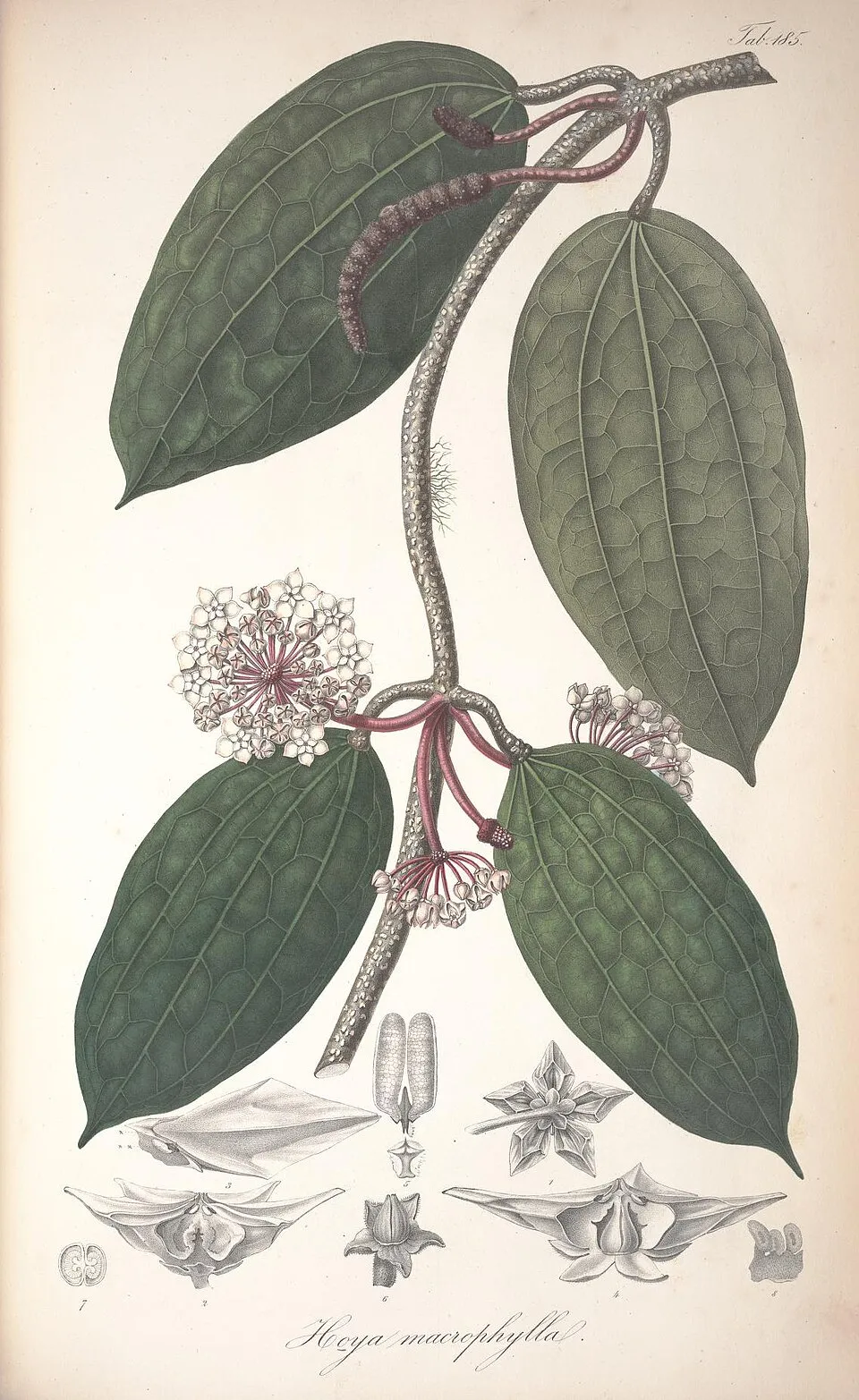
Hoya macrophylla, commonly known as the Big Leaf Hoya or Wax Plant, is an evergreen climbing species belonging to the diverse Apocynaceae family, a botanical group renowned for its ornamental and sometimes medicinally active members, including genera like Asclepias and Vinca. This captivating plant is indigenous to the lush, high-humidity tropical rainforests of Southeast Asia, with its natural distribution spanning regions such as the Philippines, Malaysia, New Guinea, and Australia. In its native habitat, Hoya macrophylla typically adopts an epiphytic or lithophytic growth strategy, robustly clinging to the trunks of trees or rock formations, absorbing nutrients and moisture from the ambient environment and accumulated organic matter. When cultivated indoors, with appropriate structural support, it can elegantly trail or climb, achieving impressive lengths of up to 4-6 feet (1.2-1.8 meters). The most distinctive morphological characteristic of Hoya macrophylla is its striking foliage.
The leaves are thick, succulent, and possess a pronounced waxy texture, contributing to the plant's common name, 'Wax Plant.' These leaves are typically elliptical to broadly ovate, often displaying intricate, raised venation patterns. They are substantial in size, capable of reaching 6-8 inches (15-20 cm) in length and 4-6 inches (10-15 cm) in width, presenting a deep, lustrous green hue with a highly glossy surface that beautifully reflects ambient light. Certain cultivated varieties exhibit attractive variegation, featuring creamy white, yellow, or pink margins, or speckled 'splash' patterns, enhancing their ornamental appeal. Young stems are fleshy and succulent, gradually developing a more lignified, rougher, and textured bark as they mature, providing sturdy support for the climbing structure. The root system is fibrous, expertly adapted for clinging and efficient nutrient uptake from the limited organic substrates typical of its epiphytic lifestyle.
Hoya macrophylla is also highly valued for its fragrant inflorescences, which emerge from persistent peduncles capable of re-flowering over multiple seasons. These pendulous clusters comprise numerous small, perfectly star-shaped flowers, typically exhibiting creamy white to pale yellow coloration, often subtly edged with delicate pink or reddish tones, and featuring a contrasting central corona. These blooms are not only visually appealing but frequently emit a subtle, sweet, and sometimes spicy fragrance, particularly n ...[CURRENT TEXT EXISTS: 2998 chars]
1.1.Hoya Macrophylla — Notable Characteristics
- ✓Large, Succulent, Waxy Leaves — Distinctive, thick foliage up to 8 inches long.
- ✓Glossy Green Appearance — Highly reflective, deep green leaves, sometimes variegated.
- ✓Fragrant Star — Shaped Flowers — Clusters of small, waxy, cream to pink blooms, often fragrant at night.
- ✓Epiphytic/Lithophytic Growth — Naturally clings to trees or rocks in tropical rainforests.
- ✓Climbing or Trailing Habit — Adaptable for hanging baskets or trellises indoors.
- ✓Low Maintenance Houseplant — Relatively easy to care for with proper conditions.
- ✓Native to Southeast Asia — Found in tropical regions like the Philippines and Malaysia.
- ✓Apocynaceae Family Member — Belongs to the Dogbane family, known for diverse species.
- ✓Toxicity Warning — Contains compounds that are toxic if ingested by humans or pets.
- ✓Long — Lived Specimen — Can thrive for many years with appropriate care.
1.2.Hoya Macrophylla — At-a-Glance Summary
- ✓Hoya macrophylla is an ornamental, epiphytic 'Wax Plant' from Southeast Asia.
- ✓Features large, waxy, glossy green leaves and fragrant, star-shaped flowers.
- ✓Primarily grown as a houseplant; thrives in bright, indirect light and high humidity.
- ✓Known to be toxic if ingested by humans or animals, requiring careful placement.
- ✓No documented traditional or modern medicinal uses; mainly valued for its aesthetic appeal.
- ✓Requires well-draining soil and careful watering to prevent root rot.
2.Hoya Macrophylla — Nomenclature & Classification
3.Hoya Macrophylla — Key Data
4.Hoya Macrophylla — Physical Description
5.Hoya Macrophylla — Origin & Spread
6.Hoya Macrophylla — Folk Medicine Applications
7.Hoya Macrophylla — Chemical Profile
- ✓While specific, detailed phytochemical analyses for Hoya macrophylla are not widely published, inferences can be drawn from the general phytochemistry of the Apocynaceae family and typical plant secondary metabolites. Potential chemical constituents that may be present include:
- ✓Triterpenoids — These diverse compounds, such as ursane and oleanane types, are common in many plants and may contribute to anti-inflammatory and adaptogenic properties. Their presence in the waxy cuticles is also plausible.
- ✓Flavonoids — Polyphenolic compounds like quercetin, kaempferol, and their glycosides often found in plant leaves and flowers, acting as antioxidants and contributing to pigmentation.
- ✓Phenolic Acids — Compounds such as caffeic acid, ferulic acid, and their derivatives are widespread antioxidants in plants, offering protective effects against oxidative stress.
- ✓Cardiac Glycosides — A significant class of compounds characteristic of many Apocynaceae species (e.g., digitoxin-like substances), known for their cardiotonic effects in small doses but high toxicity, contributing to the plant's overall toxicity profile.
- ✓Saponins — Glycosides that form a soapy lather in water, potentially having antimicrobial or anti-inflammatory activities, though their specific role in Hoya macrophylla is unconfirmed.
- ✓Sterols — Plant sterols like beta-sitosterol are common membrane components and can have anti-inflammatory or cholesterol-lowering properties.
- ✓Alkaloids — While less prominent in some Hoya species, some Apocynaceae members are rich in various alkaloid types, which can possess diverse pharmacological activities, including neuroactive or cytotoxic effects.
- ✓Waxes and Lipids — The prominent waxy coating on the leaves is composed of long-chain fatty acids, esters, and alcohols, crucial for water retention and protection against environmental stressors.
8.Hoya Macrophylla — Scientific Evidence
- ✓Hoya macrophylla is primarily cultivated as an ornamental plant, and there is limited scientific research or traditional medicinal documentation specifically validating its therapeutic uses. However, based on general plant phytochemistry and the broader Apocynaceae family, potential areas for future research and hypothetical benefits could include:
- ✓Antioxidant Potential — Like many plants, Hoya macrophylla may contain flavonoids and phenolic compounds that could exhibit antioxidant activity, helping to neutralize free radicals and reduce oxidative stress.
- ✓Anti-inflammatory Properties — Certain triterpenoids and saponins, which are commonly found in the Apocynaceae family, might possess anti-inflammatory effects that could be explored in future studies.
- ✓Antimicrobial Activity — Plant extracts often show some level of antimicrobial action against bacteria or fungi, a property that could be investigated for Hoya macrophylla's compounds.
- ✓Hypothetical Wound Healing — Some plant constituents can promote tissue regeneration; this is a speculative area for Hoya macrophylla, requiring extensive study.
- ✓Ornamental Air Purification — While not a direct medicinal benefit, many houseplants, including Hoya species, contribute to improved indoor air quality by absorbing certain volatile organic compounds (VOCs).
- ✓Stress Reduction (Aromatherapy) — The subtle, sweet fragrance of Hoya macrophylla flowers might offer mild calming or mood-enhancing effects, contributing to a sense of well-being in an indirect therapeutic capacity.
- ✓Potential for Bioactive Compound Isolation — The plant's unique epiphytic adaptations and succulent nature suggest it might produce novel secondary metabolites worthy of isolation and pharmacological screening for various bioactivities.
- ✓General Plant-Based Research — As a member of a medicinally significant family, its phytochemistry could hold undiscovered compounds with potential applications in drug discovery, though this is purely speculative for this specific species.
8.1.Hoya Macrophylla — Therapeutic Indications
9.Hoya Macrophylla — Safety Considerations
9.1.Hoya Macrophylla — Reported Side Effects
- ✓Hoya macrophylla is known to be toxic if ingested, primarily due to the presence of cardiac glycosides and other compounds common in the Apocynaceae family. Potential side effects from exposure or ingestion include:
- ✓Gastrointestinal Upset — Ingestion can lead to symptoms such as nausea, vomiting, stomach pain, and diarrhea in humans and animals.
- ✓Skin Irritation — Contact with the sap, particularly for sensitive individuals, may cause dermal irritation, redness, or a mild rash.
- ✓Cardiac Effects — Due to cardiac glycosides, large ingestions could potentially affect heart rhythm or function, though this is rare with typical accidental exposures.
- ✓Oral and Throat Irritation — Chewing or ingesting plant parts may cause irritation or burning sensations in the mouth and throat.
- ✓Lethargy and Weakness — Animals ingesting the plant may exhibit signs of lethargy, weakness, or loss of appetite.
- ✓Allergic Reactions — Sensitive individuals might experience allergic responses, including dermatitis or respiratory symptoms if exposed to plant particles.
9.2.Hoya Macrophylla — Toxicity Assessment
- ✓Due to its inherent toxicity, Hoya macrophylla requires careful handling and placement, especially in environments with children or pets.
- ✓Keep Out of Reach — Absolutely ensure the plant is placed where children and pets cannot access or ingest any part of it.
- ✓Avoid Ingestion — Emphasize that no part of Hoya macrophylla should be consumed by humans or animals.
- ✓Handle with Care — Individuals with sensitive skin should wear gloves when handling the plant, especially when pruning or propagating, to avoid sap contact.
- ✓Wash Hands Thoroughly — Always wash hands thoroughly with soap and water after handling the plant.
- ✓Monitor Pets — If pet ingestion is suspected, seek immediate veterinary attention and bring a sample of the plant for identification.
- ✓Not for Medicinal Use — Hoya macrophylla is not recommended or safe for use in traditional or modern herbal medicine due to its toxicity and lack of validated therapeutic applications.
- ✓Seek Medical Advice — In case of accidental ingestion by humans, contact a poison control center or medical professional immediately.
10.Hoya Macrophylla — Preparations & Uses
- ✓Given Hoya macrophylla's known toxicity and primary classification as an ornamental plant, its 'usage methods' are predominantly horticultural, with any medicinal or research applications being highly experimental and conducted under strict supervision:
- ✓Ornamental Cultivation — Primarily grown as a decorative houseplant or in tropical gardens for its attractive foliage and fragrant flowers. It is often displayed in hanging baskets or trained on trellises.
- ✓Botanical Specimen — Cultivated by botanical gardens and plant enthusiasts for its unique morphology and as a representative species of the Hoya genus and Apocynaceae family.
- ✓Propagation for Collection Expansion — Stem cuttings are taken for propagation to expand plant collections or share with other enthusiasts.
- ✓Air Quality Enhancement (Indirect) — As a living plant, it contributes to indoor air quality by participating in photosynthesis and potentially filtering some airborne toxins, a general benefit of houseplants.
- ✓Horticultural Research — Used in horticultural studies to understand epiphytic growth, water retention mechanisms, or the development of new cultivars.
- ✓Phytochemical Screening (Laboratory Use Only) — In a research setting, extracts of Hoya macrophylla may be prepared using solvents for laboratory analysis to identify and characterize its unique chemical constituents.
- ✓Educational Material — Utilized in educational settings to demonstrate plant morphology, epiphytic adaptations, or the diversity within the Apocynaceae family.
- ✓Bioactive Compound Isolation — Specialized laboratories may process plant material to isolate specific compounds for pharmacological testing, strictly in vitro and not for direct human or animal application.
11.Hoya Macrophylla — Garden Cultivation
- ✓Soil and Potting — Hoya macrophylla thrives in a very loose, well-aerated, and fast-draining potting mix, ideally slightly alkaline. A blend of cactus mix, perlite, and orchid bark is excellent, mimicking its epiphytic substrate.
- ✓Light Requirements — Provide bright, indirect sunlight. East-facing windows are ideal, or a few feet from west/south-facing windows with filtered light. Direct, harsh sun will scorch the leaves.
- ✓Temperature Range — Maintain warm temperatures between 60-80°F (15-27°C), consistent with its tropical origins. Avoid sudden temperature fluctuations.
- ✓Humidity Levels — Prefers high humidity (60-80%) but requires good airflow to prevent fungal issues. Use a humidifier or pebble tray, but avoid misting directly on leaves or tightly grouping plants.
- ✓Watering Schedule — Allow the soil to thoroughly dry out between waterings. Overwatering is a common cause of root rot. Check soil moisture with a finger or meter before re-watering.
- ✓Fertilization — Feed sparingly during the growing season (spring/summer) with a balanced liquid fertilizer diluted to half strength. Reduce or cease fertilization in fall and winter.
- ✓Pruning and Support — Prune to maintain shape or encourage bushiness. Provide a trellis or allow it to trail from a hanging basket. Avoid cutting peduncles as they re-flower.
- ✓Propagation — Easily propagated from stem cuttings in water or a well-draining soil mix, ideally with at least one node and a few leaves.
Reviewed by the Flora Medical Global Botanical Review Panel
Multi-disciplinary editorial group · Botany · Ethnobotany · Herbal-medicine literature
Who reviewed this: This page was checked by the Flora Medical Global Botanical Review Panel — an in-house editorial group of botany graduates, ethnobotany researchers, and horticulture practitioners who collectively maintain our 7,000+ plant encyclopedia. Meet the team.
Our 4-step verification process
1. Taxonomic verification
Scientific names and synonyms cross-checked against Kew POWO, World Flora Online, and The Plant List.
2. Phytochemical & medicinal cross-reference
Active compounds, traditional uses, and reported activities are cross-referenced with PubMed, USDA Dr. Duke's database, and peer-reviewed ethnobotanical literature.
3. Conservation & distribution check
Distribution, ecology, and conservation status confirmed against GBIF occurrence records and the IUCN Red List.
4. Editorial & safety review
Every entry passes an editorial pass for clarity, originality, and safety notices (toxicity, contraindications, dosage caveats) before publication.
Last reviewed:
Important medical disclaimer: This content is for educational and research purposes only. It is not medical advice and is not a substitute for consultation with a licensed healthcare provider. Do not use any herb to self-treat a medical condition without professional guidance.
Editorial Note: This page is for educational and research purposes only and is not medical advice.
Written by: Flora Medical Global Editorial Team
Reviewed by: Flora Medical Global Botanical Review Panel
Last Updated: June 15, 2026





Hoya Macrophylla — Comments & Community Reviews
Rate this plant