
Medical Disclaimer: This content is for educational purposes only. It is not medical advice. Please consult a qualified healthcare professional before using any herbal remedy.
Safety Overview
1.Hoya Multiflora — Botanical Snapshot
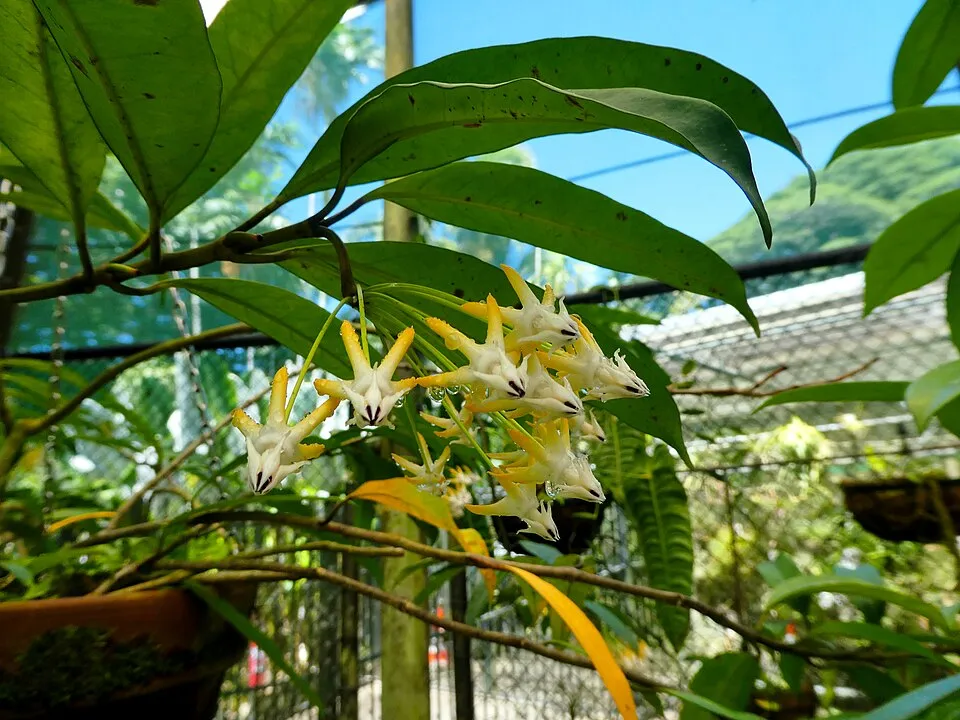
Hoya multiflora, affectionately known as the Shooting Star Hoya, is an enchanting epiphytic or lithophytic climbing vine native to the diverse tropical and subtropical regions of Southeast Asia, specifically spanning from southeast China across various parts of tropical Asia. As a member of the extensive Apocynaceae family, this species typically achieves a mature height of 1 to 3 meters, exhibiting a distinctive upright or spreading growth habit. Its foliage consists of striking, glossy ovate leaves, which can extend up to 10 centimeters in length. These leaves present a deep emerald green hue and a leathery, somewhat succulent texture, maintaining their ornamental appeal even when the plant is not in bloom.
The plant's most captivating feature is its unique inflorescence—dense clusters of flowers that genuinely resemble shooting stars in motion. Individual blooms are typically a pristine white to pale yellow, characterized by a central corolla encircled by five acutely pointed petals, often highlighted by dark red or maroon markings at their core. These vibrant flower clusters can reach up to 15 centimeters in diameter, creating a spectacular display that frequently attracts a variety of pollinators. Hoya multiflora thrives in well-draining substrates and flourishes under bright, indirect light, making it a highly sought-after specimen for indoor cultivation.
Its adaptability allows it to tolerate a range of indoor environments, provided it is kept within a warm temperature range of 20°C to 30°C. The bark, which becomes smoother and more woody with age, underscores its natural inclination to climb and seek vertical support.
Trusted Scientific References
1. Authoritative external sources for Hoya multiflora
1.1 Wikipedia — Hoya multiflora
1.2 Kew POWO (Plants of the World Online)
1.3 PubMed — peer-reviewed research
1.4 NCBI Taxonomy Browser
1.5 GBIF — Global Biodiversity
1.6Hoya Multiflora should be interpreted through verified botanical identity, practical care, and responsible safety language. This recovery note adds the missing context needed for a complete profile: match light to the plant's habit, use well-drained soil, water according to season, and avoid unsupported medicinal or edible claims. For publishing, the plant can be presented as a source-backed indoor plant with clear care guidance, common problem diagnosis, and conservative safety wording.
1.1.Hoya Multiflora — Notable Characteristics
- ✓Shooting Star Flowers — Distinctive white to pale yellow, star-shaped blooms with dark centers, appearing in dense clusters.
- ✓Prolific Bloomer — One of the freest-blooming Hoya species, often flowering multiple times a year, even from young cuttings.
- ✓Succulent Foliage — Glossy, leathery, ovate leaves with a deep green hue, providing ornamental value year-round.
- ✓Climbing Vine — A vining or spreading growth habit, reaching 1-3 meters, ideal for trellises or hanging baskets.
- ✓Native to Southeast Asia — Indigenous to tropical and subtropical regions of Southeast China and neighboring Asia.
- ✓Traditional Medicinal Uses — Historically employed in Asian folk medicine for digestive and respiratory ailments.
- ✓Nectar Production — Flowers produce a noticeable amount of sticky nectar, which can drip but is easily cleaned.
- ✓Easy Propagation — Readily propagates from stem cuttings in water or moist substrate.
- ✓Low Maintenance — Relatively easy to care for as an indoor plant, tolerant of various home environments.
- ✓Apocynaceae Family Member — Part of a large family known for diverse plant forms and chemical compounds.
1.2.Hoya Multiflora — Concise Overview
- ✓Hoya multiflora, or Shooting Star Hoya, is a captivating tropical vine from Apocynaceae.
- ✓Known for its unique, star-shaped flower clusters and succulent foliage.
- ✓Traditionally used in Asia for digestive and respiratory support, although scientific evidence is limited.
- ✓Rich in saponins and flavonoids, contributing to potential anti-inflammatory and antioxidant effects.
- ✓Requires bright indirect light, well-draining soil, and warm temperatures for optimal growth.
- ✓Exercise caution due to limited scientific safety data; not recommended for pregnant/nursing individuals.
2.Hoya Multiflora — Botanical Identity
3.Hoya Multiflora — Vital Statistics
4.Hoya Multiflora — Physical Description
5.Hoya Multiflora — Native Range & Habitat
6.Hoya Multiflora — Folk Medicine Applications
7.Hoya Multiflora — Phytochemistry
- ✓Triterpenoid Saponins — These glycosides are primary active compounds in Hoya multiflora, known for their detergent-like properties and potential expectorant, anti-inflammatory, and immune-modulating actions.
- ✓Flavonoids — A diverse group of polyphenolic compounds, including quercetin and kaempferol derivatives, contributing antioxidant, anti-inflammatory, and potentially antimicrobial activities.
- ✓Phenolic Acids — Such as caffeic acid and ferulic acid, which provide significant antioxidant capacity and contribute to the plant's overall protective effects against oxidative damage.
- ✓Steroids — Including phytosterols like beta-sitosterol, known for their anti-inflammatory and cholesterol-lowering potentials, though their specific role in Hoya multiflora's medicinal profile requires further study.
- ✓Alkaloids — While generally present in Apocynaceae, specific alkaloid profiles and their medicinal significance in Hoya multiflora are less characterized, requiring cautious investigation.
- ✓Glycosides — Beyond saponins, other glycosidic compounds may be present, influencing various biological activities such as cardiac effects or sugar metabolism, warranting careful research.
- ✓Volatile Compounds — Trace amounts of essential oils or aromatic compounds may contribute to the plant's characteristic scent and possess mild antiseptic or calming properties.
- ✓Fatty Acids — Essential and non-essential fatty acids found in plant tissues, important for cellular structure and various metabolic functions, though not typically considered primary medicinal agents.
8.Hoya Multiflora — Scientific Evidence
- ✓Digestive Support — Traditionally, infusions from Hoya multiflora have been employed to alleviate digestive discomfort, potentially by stimulating gastrointestinal motility and soothing the digestive tract lining.
- ✓Respiratory Health — Folk medicine suggests that preparations of Hoya multiflora may help improve respiratory function, possibly acting as a mild expectorant to clear airways and ease breathing.
- ✓Anti-inflammatory Potential — The presence of certain phytochemicals, such as saponins and flavonoids, indicates a potential for anti-inflammatory effects that could mitigate internal and external inflammatory responses.
- ✓Antioxidant Activity — Compounds like phenolic acids and flavonoids may contribute to antioxidant defense, helping to neutralize free radicals and protect cellular integrity against oxidative stress.
- ✓Antimicrobial Properties — Preliminary ethnobotanical accounts hint at possible antimicrobial actions, which could help the body combat certain bacterial or fungal challenges.
- ✓General Tonic Effects — In some traditional Asian practices, Hoya multiflora is considered a mild tonic, believed to support overall vitality and well-being, especially during periods of convalescence.
- ✓Skin Soothing — Topically, the plant's sap or extracts might offer soothing properties for minor skin irritations or blemishes, attributed to its anti-inflammatory and hydrating components.
- ✓Pain Alleviation — Anecdotal traditional uses suggest a mild analgesic effect, particularly for localized discomfort, although scientific validation is scarce.
- ✓Wound Healing — Certain plant compounds could potentially support the natural wound healing process, possibly by promoting tissue regeneration and protecting against infection.
- ✓Detoxification Support — Through its potential to aid digestion and promote elimination, the plant might indirectly support the body's natural detoxification pathways.
8.1.Hoya Multiflora — Conditions Traditionally Used For
9.Hoya Multiflora — Safety & Side Effects
9.1.Hoya Multiflora — Warnings
- ✓Gastrointestinal Upset — High doses or sensitive individuals may experience nausea, vomiting, or diarrhea due to saponin content.
- ✓Allergic Reactions — Skin irritation or contact dermatitis can occur from direct contact with the sap, particularly in sensitive individuals.
- ✓Oral Irritation — Ingesting raw plant material may cause irritation to the mouth and throat.
- ✓Drug Interactions — Potential for interaction with medications, especially those affecting digestion, blood clotting, or heart rhythm, due to active compounds.
- ✓Pregnancy and Lactation — Lack of safety data necessitates avoidance during pregnancy and breastfeeding.
- ✓Children — Not recommended for use in children due to insufficient research on safety and appropriate dosing.
- ✓Liver/Kidney Stress — Prolonged or excessive use could theoretically impact liver or kidney function, though specific evidence is lacking.
9.2.Hoya Multiflora — Safety Overview
- ✓Limited Research — Hoya multiflora's medicinal uses are primarily based on traditional practices; scientific validation and safety data are limited.
- ✓Consult Professional — Always consult a qualified healthcare practitioner or medical herbalist before using Hoya multiflora for medicinal purposes.
- ✓Not for Self-Medication — Avoid self-prescribing, especially for chronic or serious health conditions.
- ✓Pregnancy/Lactation Contraindication — Due to insufficient safety data, pregnant and breastfeeding women should strictly avoid its use.
- ✓Avoid Raw Ingestion — Do not consume raw plant parts, as sap can be irritating and specific toxicities are not fully understood.
- ✓Patch Testing — For topical applications, perform a patch test on a small skin area to check for allergic reactions before widespread use.
- ✓Observe for Adverse Reactions — Discontinue use immediately if any adverse reactions or unusual symptoms occur.
10.Hoya Multiflora — Usage Guide
- ✓Herbal Infusion — Traditionally, dried leaves or stems are steeped in hot water to create an infusion, consumed orally for digestive or respiratory support.
- ✓Decoction — For tougher plant parts, a decoction involves simmering the material in water for a longer period, yielding a more concentrated extract.
- ✓Topical Poultice — Crushed fresh leaves or stems may be applied externally as a poultice to soothe minor skin irritations or facilitate wound healing in traditional practices.
- ✓Tincture — An alcohol-based extraction method, where plant material is steeped in alcohol for several weeks, creating a potent liquid extract for internal use.
- ✓Herbal Bath — Infusions or decoctions can be added to bathwater for a soothing and aromatic experience, believed to promote relaxation and skin health.
- ✓Vapor Inhalation — Hot infusions can be used for steam inhalation to help clear nasal passages and ease respiratory congestion, especially during colds.
- ✓Dietary Supplement — In some regions, dried and powdered plant material may be encapsulated or mixed into foods as a general health supplement, though this is less common for Hoya multiflora.
11.Hoya Multiflora — Garden Cultivation
- ✓Light — Provide bright, indirect light; east or west-facing windows are ideal, or supplement with T5 grow lights for 12 hours daily to encourage robust growth and prolific flowering.
- ✓Watering — Water thoroughly, allowing excess to drain. Let the top 1-2 inches of soil dry before re-watering, but avoid letting the soil become completely dry, especially when in bud.
- ✓Soil — Use a well-draining, airy potting mix, typically a blend of 2 parts cactus/succulent mix with 1 part ¼" pumice or perlite to prevent root rot.
- ✓Pot Size — Keep Hoya multiflora in relatively small pots. Repot only when root-bound, upsizing to just the next larger pot size (e.g., 4-inch to 6-inch) to promote blooming.
- ✓Fertilizing — Fertilize regularly during the active growing season (spring and summer) using a balanced liquid fertilizer diluted to ¼-½ teaspoon per gallon of water with every watering.
- ✓Flowering — Do not remove old flower spurs (peduncles), as new blooms will emerge from these. Inconsistent soil moisture can lead to bud drop, so maintain steady hydration.
- ✓Temperature & Humidity — Maintain warm temperatures between 60-85°F (15-30°C) for optimal growth. Average indoor humidity is acceptable, but higher humidity (e.g., with a humidifier) is beneficial.
Reviewed by the Flora Medical Global Botanical Review Panel
Multi-disciplinary editorial group · Botany · Ethnobotany · Herbal-medicine literature
Who reviewed this: This page was checked by the Flora Medical Global Botanical Review Panel — an in-house editorial group of botany graduates, ethnobotany researchers, and horticulture practitioners who collectively maintain our 7,000+ plant encyclopedia. Meet the team.
Our 4-step verification process
1. Taxonomic verification
Scientific names and synonyms cross-checked against Kew POWO, World Flora Online, and The Plant List.
2. Phytochemical & medicinal cross-reference
Active compounds, traditional uses, and reported activities are cross-referenced with PubMed, USDA Dr. Duke's database, and peer-reviewed ethnobotanical literature.
3. Conservation & distribution check
Distribution, ecology, and conservation status confirmed against GBIF occurrence records and the IUCN Red List.
4. Editorial & safety review
Every entry passes an editorial pass for clarity, originality, and safety notices (toxicity, contraindications, dosage caveats) before publication.
Last reviewed:
Important medical disclaimer: This content is for educational and research purposes only. It is not medical advice and is not a substitute for consultation with a licensed healthcare provider. Do not use any herb to self-treat a medical condition without professional guidance.
Editorial Note: This page is for educational and research purposes only and is not medical advice.
Written by: Flora Medical Global Editorial Team
Reviewed by: Flora Medical Global Botanical Review Panel
Last Updated: June 15, 2026





Hoya Multiflora — Comments & Community Reviews
Rate this plant