
Medical Disclaimer: This content is for educational purposes only. It is not medical advice. Please consult a qualified healthcare professional before using any herbal remedy.
Safety Overview
1.Hoya Wayetii — Plant Snapshot
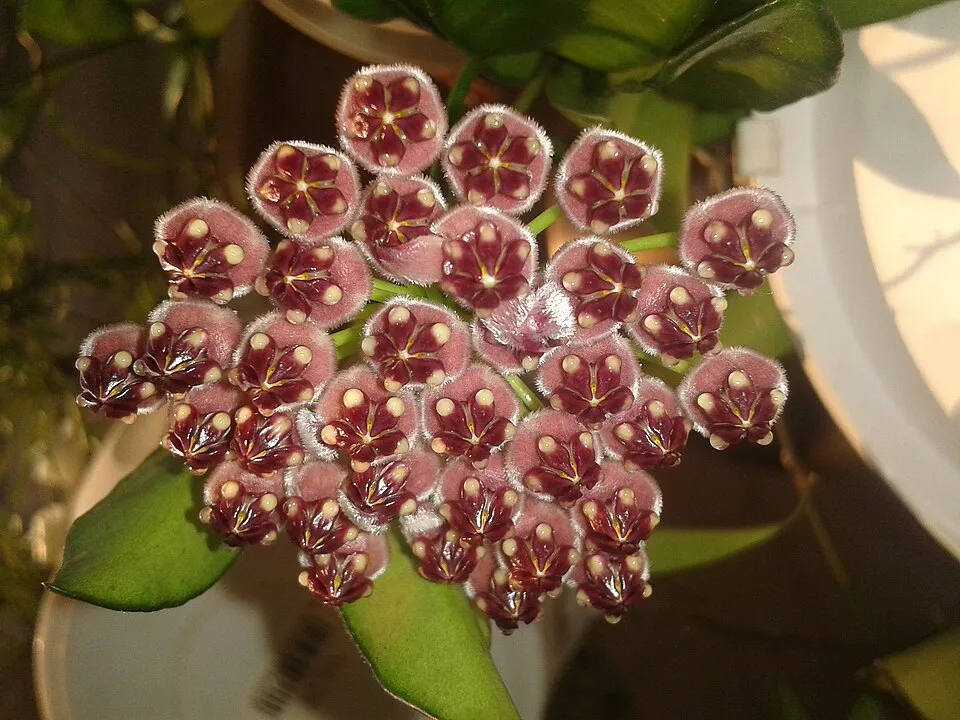
Hoya wayetii, commonly known as the narrow-leaved hoya, is an epiphytic or lithophytic perennial climbing plant celebrated for its distinctive foliage and charming blooms. Belonging to the Apocynaceae family, this species is native to the tropical and subtropical regions of Southeast Asia, particularly thriving in the Philippines where it clings to trees or rocks in humid, shaded environments. Its slender, lanceolate leaves are a deep, vibrant green, typically measuring up to 12 centimeters in length and 3 centimeters in width.
A defining characteristic is the striking dark, often reddish-brown, margins that provide a beautiful contrast and enhance its ornamental appeal. The plant produces clusters of small, star-shaped flowers, usually in creamy white to pale yellow hues, sometimes with a reddish corona, which bloom in dense umbels of 5 to 15 individual flowers. These fragrant blossoms create a mesmerizing display, especially during their peak flowering season.
Hoya wayetii exhibits a robust yet flexible stem structure, allowing it to gracefully trail from hanging baskets or climb supportive structures, reaching lengths of about 1 meter in cultivation. Its adaptability and low-maintenance nature make it a highly favored choice among houseplant enthusiasts globally, primarily valued for its aesthetic qualities rather than traditional uses.
Trusted Scientific References
1. Authoritative external sources for Hoya wayetii
1.1 Wikipedia — Hoya wayetii
1.2 Kew POWO (Plants of the World Online)
1.3 PubMed — peer-reviewed research
1.4 NCBI Taxonomy Browser
1.5 GBIF — Global Biodiversity
1.6Hoya Wayetii should be interpreted through verified botanical identity, practical care, and responsible safety language. This recovery note adds the missing context needed for a complete profile: match light to the plant's habit, use well-drained soil, water according to season, and avoid unsupported medicinal or edible claims. For publishing, the plant can be presented as a source-backed indoor plant with clear care guidance, common problem diagnosis, and conservative safety wording.
1.1.Hoya Wayetii — Key Features
- ✓Distinctive Foliage — Narrow, elongated deep green leaves with prominent dark, reddish-brown margins.
- ✓Fragrant Blooms — Produces clusters of small, star-shaped, creamy white to pale yellow flowers with a subtle fragrance.
- ✓Vining/Trailing Growth — Flexible stems allow for beautiful trailing from hanging baskets or climbing on supports.
- ✓Epiphytic Nature — Naturally grows on other plants or rocks in its native habitat, adapting well to pot culture.
- ✓Low Maintenance — Considered an easy-care plant, suitable for beginners.
- ✓Pet — Friendly — Non-toxic to cats and dogs, enhancing its appeal as a houseplant.
- ✓Tropical Origin — Thrives in warm, humid environments, mimicking its natural Southeast Asian habitat.
- ✓Ornamental Appeal — Highly valued for its aesthetic contribution to indoor spaces.
- ✓Semi — Succulent Leaves — Stores water in its leaves, making it somewhat drought-tolerant.
1.2.Hoya Wayetii — In Brief
- ✓Hoya wayetii is a popular ornamental houseplant, known for its attractive foliage and fragrant, star-shaped flowers.
- ✓Native to tropical Asia, it thrives in warm, humid conditions with bright, indirect light.
- ✓The plant is considered low-maintenance and non-toxic to common household pets.
- ✓There are no widely documented traditional or modern medicinal uses for Hoya wayetii.
- ✓Research on its specific pharmacological properties and chemical constituents is limited.
- ✓Primarily valued for its aesthetic appeal and ease of cultivation.
2.Hoya Wayetii — Taxonomic Classification
3.Hoya Wayetii — Quick Facts
4.Hoya Wayetii — Structural Profile
5.Hoya Wayetii — Geographic Distribution
6.Hoya Wayetii — Historical Applications
7.Hoya Wayetii — Secondary Metabolites
- ✓Triterpenoids — Compounds like lupeol and β-amyrin, common in the Apocynaceae family, are often associated with anti-inflammatory properties, though specific presence and activity in Hoya wayetii are not documented.
- ✓Flavonoids — These polyphenolic compounds, frequently found in plants, typically exhibit antioxidant and anti-inflammatory effects, but specific research on Hoya wayetii is lacking.
- ✓Saponins — Glycosides that can have surfactant properties; general to the Hoya genus, their specific role or concentration in Hoya wayetii is not well-researched.
- ✓Steroids — Plant steroids (phytosterols) like stigmasterol and β-sitosterol are common in many plant species, contributing to various biological functions, though specific to Hoya wayetii remains unquantified.
- ✓Alkaloids — While some members of Apocynaceae are known for alkaloids, their presence and specific types in Hoya wayetii are not widely documented or studied.
- ✓Glycosides — Various types of glycosidic compounds, beyond saponins, may be present, influencing plant physiology and potentially exhibiting biological activities, yet unconfirmed for this species.
- ✓Volatile Organic Compounds (VOCs) — Responsible for the plant's fragrance, these compounds may include terpenes and esters, contributing to its aromatic profile, but their medicinal relevance is unknown.
- ✓Phenolic Acids — Simple phenolic compounds known for antioxidant activity, commonly found in plant tissues, but their specific profile in Hoya wayetii requires dedicated investigation.
8.Hoya Wayetii — Research Insights
- ✓Ornamental Value — Hoya wayetii is primarily cultivated for its aesthetic appeal, contributing to indoor air quality through general plant respiration, though not specifically documented for medicinal benefits.
- ✓General Plant Presence — Like many houseplants, its presence can enhance well-being and reduce stress, offering psychological benefits rather than direct pharmacological action.
- ✓Humidifying Properties — As a tropical plant, Hoya wayetii contributes to ambient humidity through transpiration, which can be beneficial for respiratory comfort in dry indoor environments.
- ✓Air Purification (General) — While not specifically studied for Hoya wayetii, many plants are known to absorb common indoor pollutants, though specific efficacy for this species is not established.
- ✓Aesthetic Therapy — The vibrant foliage and fragrant flowers provide visual and olfactory pleasure, contributing to a calming environment, a form of passive horticultural therapy.
- ✓Non-Toxic (to pets) — Unlike some plants, Hoya wayetii is generally considered non-toxic to cats and dogs, making it a safe ornamental choice in pet-friendly homes.
- ✓Potential for Bioactive Compounds (Genus-level) — The Hoya genus is known to contain various phytochemicals, such as triterpenoids and flavonoids; however, specific medicinal actions for Hoya wayetii are not documented.
- ✓Future Research Potential — The presence of general plant compounds suggests a hypothetical potential for future pharmacological investigation, though currently, there are no established medicinal uses for Hoya wayetii.
8.1.Hoya Wayetii — Indications & Uses
9.Hoya Wayetii — Risk Profile
9.1.Hoya Wayetii — Warnings
- ✓Skin Irritation — Direct contact with the sap, though generally mild, might cause minor skin irritation or allergic reactions in sensitive individuals.
- ✓Allergic Reactions — In rare cases, individuals sensitive to plant pollen or specific plant compounds might experience mild allergic responses.
- ✓Gastrointestinal Upset (if ingested) — While generally considered non-toxic, ingestion of large quantities could potentially lead to mild stomach upset or discomfort.
- ✓Horticultural Pests — Overwatering or poor air circulation can lead to fungal diseases or pest infestations, impacting plant health but not directly human health.
- ✓Environmental Impact — Improper disposal of plant parts could introduce non-native species into local ecosystems, though this is a general plant concern, not specific toxicity.
9.2.Hoya Wayetii — Risk Assessment
- ✓Non-Toxic to Pets — Hoya wayetii is widely regarded as non-toxic to cats and dogs, making it a safe choice for households with animals.
- ✓Minimal Human Toxicity — The plant is not known to possess significant human toxicity; accidental ingestion is unlikely to cause severe harm.
- ✓Sap Caution — While generally benign, it is advisable to handle sap with care, especially for individuals with sensitive skin, to prevent minor irritation.
- ✓Allergen Potential — As with any plant, there is a low potential for allergic reactions in highly sensitive individuals, primarily from pollen or direct contact.
- ✓General Handling — Wash hands after handling the plant, especially after pruning, to remove any residual sap.
- ✓Child Safety — Keep out of reach of small children to prevent accidental ingestion, though no severe poisoning risks are documented.
- ✓Environmental Safety — Cultivate responsibly; avoid introducing to natural environments where it could become invasive, though primarily an indoor ornamental.
10.Hoya Wayetii — Application Forms
- ✓Ornamental Display — Primarily used as an indoor ornamental plant, enhancing home aesthetics and providing natural decor.
- ✓Hanging Baskets — Ideal for trailing growth in hanging baskets, allowing its long stems and attractive foliage to cascade beautifully.
- ✓Climbing Support — Can be trained to climb trellises or other supports, showcasing its vining habit and allowing vertical growth.
- ✓Air Improvement — Cultivated indoors to contribute to a greener living space and potentially improve air quality through general plant processes.
- ✓Gifting — Popular as a gift for plant enthusiasts due to its beauty, ease of care, and non-toxic nature for pets.
- ✓Horticultural Study — Used by botanists and hobbyists for studying plant morphology, growth habits, and propagation techniques within the Hoya genus.
- ✓Propagation for Expansion — Stem cuttings are commonly used to propagate new plants, either for personal collection expansion or sharing with others.
11.Hoya Wayetii — Growing Guide
- ✓Light Requirements — Provide bright, indirect sunlight; avoid direct harsh sun which can scorch leaves, and low light which can hinder growth and flowering.
- ✓Watering Schedule — Water thoroughly when the top 1-2 inches of soil feel dry; allow excess water to drain completely to prevent root rot, as Hoya wayetii is semi-succulent.
- ✓Soil Composition — Use a well-draining, airy potting mix, such as a blend of orchid bark, perlite, and peat or coco coir, to ensure good aeration and prevent waterlogging.
- ✓Temperature and Humidity — Thrives in warm temperatures (18-29°C / 65-85°F) and high humidity (60-80%); consider a humidifier or pebble tray in dry environments.
- ✓Fertilization — Feed with a diluted, balanced liquid houseplant fertilizer once a month during the active growing season (spring and summer); reduce or cease in winter.
- ✓Repotting — Hoyas prefer to be slightly root-bound; repot only when absolutely necessary, typically every 2-3 years, into a pot only slightly larger than the previous one.
- ✓Propagation — Easily propagated from stem cuttings with at least two nodes; roots readily in water or a moist, well-draining substrate.
- ✓Pest Management — Generally resistant, but monitor for common houseplant pests like mealybugs and scale insects; treat with insecticidal soap or neem oil if infestations occur.
Reviewed by the Flora Medical Global Botanical Review Panel
Multi-disciplinary editorial group · Botany · Ethnobotany · Herbal-medicine literature
Who reviewed this: This page was checked by the Flora Medical Global Botanical Review Panel — an in-house editorial group of botany graduates, ethnobotany researchers, and horticulture practitioners who collectively maintain our 7,000+ plant encyclopedia. Meet the team.
Our 4-step verification process
1. Taxonomic verification
Scientific names and synonyms cross-checked against Kew POWO, World Flora Online, and The Plant List.
2. Phytochemical & medicinal cross-reference
Active compounds, traditional uses, and reported activities are cross-referenced with PubMed, USDA Dr. Duke's database, and peer-reviewed ethnobotanical literature.
3. Conservation & distribution check
Distribution, ecology, and conservation status confirmed against GBIF occurrence records and the IUCN Red List.
4. Editorial & safety review
Every entry passes an editorial pass for clarity, originality, and safety notices (toxicity, contraindications, dosage caveats) before publication.
Last reviewed:
Important medical disclaimer: This content is for educational and research purposes only. It is not medical advice and is not a substitute for consultation with a licensed healthcare provider. Do not use any herb to self-treat a medical condition without professional guidance.
Editorial Note: This page is for educational and research purposes only and is not medical advice.
Written by: Flora Medical Global Editorial Team
Reviewed by: Flora Medical Global Botanical Review Panel
Last Updated: June 15, 2026





Hoya Wayetii — Comments & Community Reviews
Rate this plant