

Medical Disclaimer: This content is for educational purposes only. It is not medical advice. Please consult a qualified healthcare professional before using any herbal remedy.
Safety Overview
1.Hymenocallis Littoralis — Introduction & Highlights
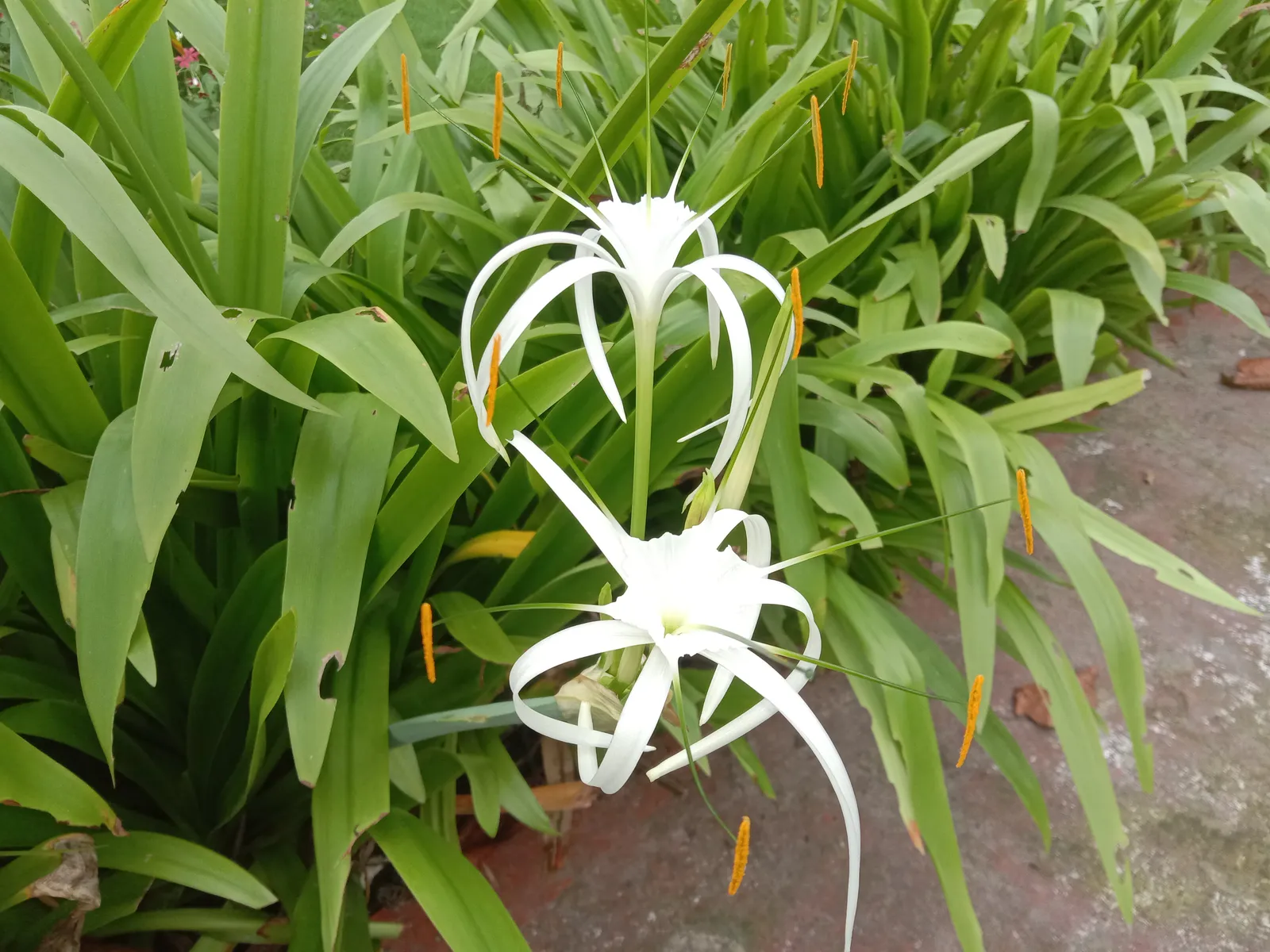
Hymenocallis littoralis, commonly known as the Spider Lily or Beach Spider Lily, is an enchanting perennial bulbous plant belonging to the Amaryllidaceae family, celebrated for its uniquely structured, pure white flowers. This captivating species typically grows to a height of 60 to 90 centimeters (24 to 36 inches) from a robust, subterranean bulb, which serves as its primary storage organ and ensures its enduring perennial nature.
The plant is distinguished by its long, strap-like, arching leaves, which can reach up to 60 centimeters (24 inches) in length. These vibrant, glossy green, lanceolate leaves form an attractive, lush clump, creating a verdant backdrop for its spectacular blooms.
The inflorescence of Hymenocallis littoralis is truly a marvel, featuring clusters of delicate, pristine white flowers borne atop tall, sturdy flower stalks. Each individual flower showcases a prominent central corona or cup, from which six long, slender perianth segments (petals and sepals) elegantly radiate outwards, creating the distinctive 'spidery' appearance that gives the plant its common names.
These intricate blooms typically grace the plant during the warmer summer months, emitting an alluringly sweet and subtle vanilla-like fragrance, particularly noticeable in the evening, which serves to attract nocturnal pollinators such as moths. The reproductive organs, comprising six prominent stamens and a single pistil, extend gracefully from the central cup, adding to its elegant structure.
Geographically, Hymenocallis littoralis is indigenous to the coastal regions of tropical America, flourishing naturally in habitats spanning from the Caribbean islands to the southern coasts of the United States, and extending throughout Central and northern South America. Its preferred natural habitats include sandy shores, marshy edges, and other well-draining, moist environments where it can establish its extensive root system.
The plant thrives in warm, humid conditions and requires ample moisture, though it is highly susceptible to rot if soil drainage is inadequate, highlighting its need for specific growing conditions.
Trusted Scientific References
1. Authoritative external sources for Hymenocallis littoralis
1.1 Wikipedia — Hymenocallis littoralis
1.2 Kew POWO (Plants of the World Online)
1.3 PubMed — peer-reviewed research
1.4 NCBI Taxonomy Browser
1.5 GBIF — Global Biodiversity
1.1.Hymenocallis Littoralis — Standout Qualities
- ✓Distinctive Spider — like Flowers — Elegant white blooms with long, slender perianth segments.
- ✓Fragrant Blooms — Emits a sweet, vanilla-like scent, especially noticeable in the evening.
- ✓Perennial Bulbous Plant — Grows from a robust underground bulb, ensuring its longevity.
- ✓Lush Green Foliage — Long, strap-like, glossy green leaves form an attractive clump.
- ✓Tropical Native — Indigenous to coastal areas of tropical America, preferring warm, humid conditions.
- ✓Attracts Nocturnal Pollinators — Fragrance aids in attracting moths for pollination.
- ✓Ornamental Value — Highly prized for its aesthetic appeal in gardens and landscapes.
- ✓Adaptable to Containers — Can be successfully grown in large pots with proper care.
- ✓Requires Full Sun and Moist Soil — Thrives with ample light and consistent moisture, but good drainage is crucial.
- ✓Known for Amaryllidaceae Alkaloids — Contains bioactive compounds characteristic of its plant family.
1.2.Hymenocallis Littoralis — Snapshot Summary
- ✓Hymenocallis littoralis is a striking perennial bulbous plant known as the Spider Lily.
- ✓Features unique white flowers with a central cup and radiating 'spidery' perianth segments.
- ✓Native to tropical American coastal regions, thriving in moist, well-drained, sunny environments.
- ✓Contains Amaryllidaceae alkaloids, flavonoids, and other phytochemicals.
- ✓Traditionally used topically for anti-inflammatory, analgesic, and wound-healing purposes.
- ✓Internal ingestion is highly toxic; primarily used as an ornamental plant.
2.Hymenocallis Littoralis — Taxonomic Classification
3.Hymenocallis Littoralis — Reference Facts
4.Hymenocallis Littoralis — Plant Morphology
5.Hymenocallis Littoralis — Geographic Distribution
6.Hymenocallis Littoralis — Historical Applications
7.Hymenocallis Littoralis — Secondary Metabolites
- ✓Amaryllidaceae Alkaloids — Key compounds like lycorine, haemanthamine, and galanthamine are characteristic of this family, known for their diverse pharmacological activities including antiviral, anti-inflammatory, and cholinesterase inhibitory effects.
- ✓Flavonoids — Compounds such as quercetin and kaempferol derivatives contribute to the plant's antioxidant and anti-inflammatory properties, protecting against cellular damage.
- ✓Phenolic Acids — Gallic acid and caffeic acid, common in plants, provide significant antioxidant capacity and may contribute to antimicrobial effects.
- ✓Saponins — These glycosides can have expectorant, anti-inflammatory, and immune-modulating properties, potentially affecting membrane permeability.
- ✓Tannins — Astringent compounds that can aid in wound healing by precipitating proteins and forming a protective layer, also exhibiting antimicrobial actions.
- ✓Polysaccharides — Complex carbohydrates that can support immune function and possess moisturizing properties.
- ✓Essential Oils — Responsible for the plant's characteristic vanilla-like fragrance, these volatile compounds may offer mild antiseptic and calming effects.
- ✓Steroidal Glycosides — These compounds can exhibit cardiotonic, anti-inflammatory, and antiproliferative activities, contributing to overall bioactivity.
- ✓Amino Acids — Basic building blocks of proteins, essential for various metabolic processes and plant growth.
- ✓Fatty Acids — Important for cell membrane structure and energy storage, some of which may have anti-inflammatory properties.
8.Hymenocallis Littoralis — Modern Studies
- ✓Anti-inflammatory Support — Traditionally, extracts may be applied topically to soothe localized inflammation, potentially due to the presence of certain alkaloids and flavonoids that modulate inflammatory pathways.
- ✓Analgesic Properties — Historically, some parts of the plant might have been used in folk medicine for minor pain relief, acting through compounds that could interact with pain receptors or reduce pain perception.
- ✓Antimicrobial Action — Certain phytochemicals, such as specific alkaloids found in the Amaryllidaceae family, may exhibit inhibitory effects against various bacteria and fungi, suggesting potential for antiseptic uses.
- ✓Antioxidant Activity — Rich in phenolic compounds and flavonoids, Hymenocallis littoralis extracts could help neutralize free radicals, thereby protecting cells from oxidative stress and supporting overall cellular health.
- ✓Wound Healing Acceleration — Topical applications, often in poultice form, were believed to support the regeneration of skin tissues and protect against infection in minor cuts and abrasions, possibly due to astringent and antimicrobial constituents.
- ✓Diuretic Effects — In some traditional practices, preparations might have been consumed to promote increased urine output, aiding in the body's natural detoxification processes and fluid balance.
- ✓Sedative Qualities — The plant's subtle fragrance and certain compounds could theoretically possess mild calming effects, used traditionally to alleviate anxiety or promote relaxation.
- ✓Immunomodulatory Potential — Emerging research on related species suggests that Amaryllidaceae alkaloids may influence immune responses, potentially enhancing the body's defense mechanisms.
- ✓Antiviral Activity — Some alkaloids from the Amaryllidaceae family have demonstrated in vitro antiviral properties against certain viruses, warranting further investigation for Hymenocallis littoralis.
- ✓Antispasmodic Relief — Extracts might traditionally have been employed to alleviate muscle spasms and cramps, possibly by relaxing smooth muscles through specific bioactive compounds.
8.1.Hymenocallis Littoralis — Indications & Uses
9.Hymenocallis Littoralis — Risk Profile
9.1.Hymenocallis Littoralis — Warnings
- ✓Skin Irritation — Direct contact with sap or bulb extracts may cause skin irritation, redness, or dermatitis in sensitive individuals.
- ✓Gastrointestinal Upset — Internal ingestion, especially of the bulb, is highly discouraged and can lead to nausea, vomiting, diarrhea, and abdominal pain due to potent alkaloids.
- ✓Allergic Reactions — Individuals sensitive to plants in the Amaryllidaceae family may experience allergic responses, including skin rashes or respiratory symptoms.
- ✓Hypotension Risk — Certain alkaloids in the family can potentially lower blood pressure, which could be problematic for individuals with pre-existing hypotensive conditions or those on blood pressure medication.
- ✓Central Nervous System Effects — High doses of ingested alkaloids may cause dizziness, confusion, or other neurological disturbances.
- ✓Pregnancy and Lactation — Due to the presence of potent alkaloids and lack of safety data, use is contraindicated during pregnancy and breastfeeding.
- ✓Drug Interactions — Potential interactions with medications, especially those affecting blood pressure, heart rate, or central nervous system, if ingested.
9.2.Hymenocallis Littoralis — Clinical Safety Notes
- ✓External Use Only — Hymenocallis littoralis is generally considered for external ornamental use; internal consumption is strongly discouraged due to potential toxicity.
- ✓Skin Patch Test — Always perform a patch test on a small area of skin before extensive topical application to check for allergic reactions or irritation.
- ✓Avoid Ingestion — The bulb and other parts contain alkaloids that can be toxic if ingested, leading to severe gastrointestinal and neurological symptoms.
- ✓Pregnant/Nursing Women — Contraindicated for use by pregnant or breastfeeding individuals due to insufficient safety data and potential harm to the fetus or infant.
- ✓Children and Pets — Keep plant parts, especially bulbs, out of reach of children and pets to prevent accidental ingestion, despite some claims of pet safety, caution is paramount.
- ✓Consult a Healthcare Professional — Individuals with pre-existing medical conditions, especially cardiac or neurological issues, or those on medication, should avoid use or consult a doctor.
- ✓Proper Handling — Wear gloves when handling bulbs or plant sap to minimize skin exposure and potential irritation.
10.Hymenocallis Littoralis — Application Forms
- ✓Topical Poultice — Fresh, crushed leaves or bulbs (with extreme caution due to potential irritation) can be applied externally as a poultice for minor skin inflammations or wounds.
- ✓Infused Oil — Flowers or leaves steeped in a carrier oil (e.g., olive, almond) can create an infused oil for massage, potentially offering soothing or analgesic properties for external use.
- ✓Tincture (External) — An alcoholic extract of the plant material may be prepared for external application, diluted and used as an antiseptic wash or liniment for muscle discomfort.
- ✓Decoction (External) — Boiling plant parts (e.g., leaves, roots) in water to create a concentrated liquid that can be used as a compress or bath additive for skin issues or general relaxation.
- ✓Aromatic Inhalation — The subtly fragrant flowers can be used for their calming aroma, by placing them in living spaces or near the bedside for relaxation.
- ✓Garden Specimen — Primarily cultivated as an ornamental plant for its stunning flowers and lush foliage, enhancing garden aesthetics and attracting pollinators.
- ✓Floral Arrangement — The elegant, long-stemmed flowers are excellent for cut flower arrangements, bringing their unique beauty and mild fragrance indoors.
11.Hymenocallis Littoralis — Growth Requirements
- ✓Watering — Keep soil consistently moist throughout the year; Hymenocallis littoralis requires regular and thorough watering, especially during active growth.
- ✓Sunlight — Provide full sun exposure for optimal growth and flowering; this plant tolerates direct sunlight well, ideally placed in a south-facing location.
- ✓Soil — Utilize a standard potting mix that offers excellent drainage to prevent rot, as waterlogged conditions are detrimental to the bulb.
- ✓Temperature — Thrives in warm tropical conditions, with an ideal range of 4°C to 32°C (40°F to 90°F); protect from frost, which is lethal.
- ✓Fertilization — Apply a balanced liquid fertilizer every two weeks during the spring and summer growing seasons to support vigorous growth and blooming.
- ✓Pruning — Remove yellowing foliage and spent flowers to encourage new blooms and maintain plant vigor and aesthetic appeal.
- ✓Propagation — Propagate primarily by offsets (bulb division) for quicker maturity, though it can also be grown from seeds, which take several years to mature.
- ✓Container — Repot into a larger container with fresh soil approximately every two years to accommodate growth and replenish nutrients, ensuring good drainage.
Reviewed by the Flora Medical Global Botanical Review Panel
Multi-disciplinary editorial group · Botany · Ethnobotany · Herbal-medicine literature
Who reviewed this: This page was checked by the Flora Medical Global Botanical Review Panel — an in-house editorial group of botany graduates, ethnobotany researchers, and horticulture practitioners who collectively maintain our 7,000+ plant encyclopedia. Meet the team.
Our 4-step verification process
1. Taxonomic verification
Scientific names and synonyms cross-checked against Kew POWO, World Flora Online, and The Plant List.
2. Phytochemical & medicinal cross-reference
Active compounds, traditional uses, and reported activities are cross-referenced with PubMed, USDA Dr. Duke's database, and peer-reviewed ethnobotanical literature.
3. Conservation & distribution check
Distribution, ecology, and conservation status confirmed against GBIF occurrence records and the IUCN Red List.
4. Editorial & safety review
Every entry passes an editorial pass for clarity, originality, and safety notices (toxicity, contraindications, dosage caveats) before publication.
Last reviewed:
Important medical disclaimer: This content is for educational and research purposes only. It is not medical advice and is not a substitute for consultation with a licensed healthcare provider. Do not use any herb to self-treat a medical condition without professional guidance.
Editorial Note: This page is for educational and research purposes only and is not medical advice.
Written by: Flora Medical Global Editorial Team
Reviewed by: Flora Medical Global Botanical Review Panel
Last Updated: June 15, 2026





Hymenocallis Littoralis — Comments & Community Reviews
Rate this plant