
Medical Disclaimer: This content is for educational purposes only. It is not medical advice. Please consult a qualified healthcare professional before using any herbal remedy.
Safety Overview
1.Hypoestes Pink Splash — Essential Profile
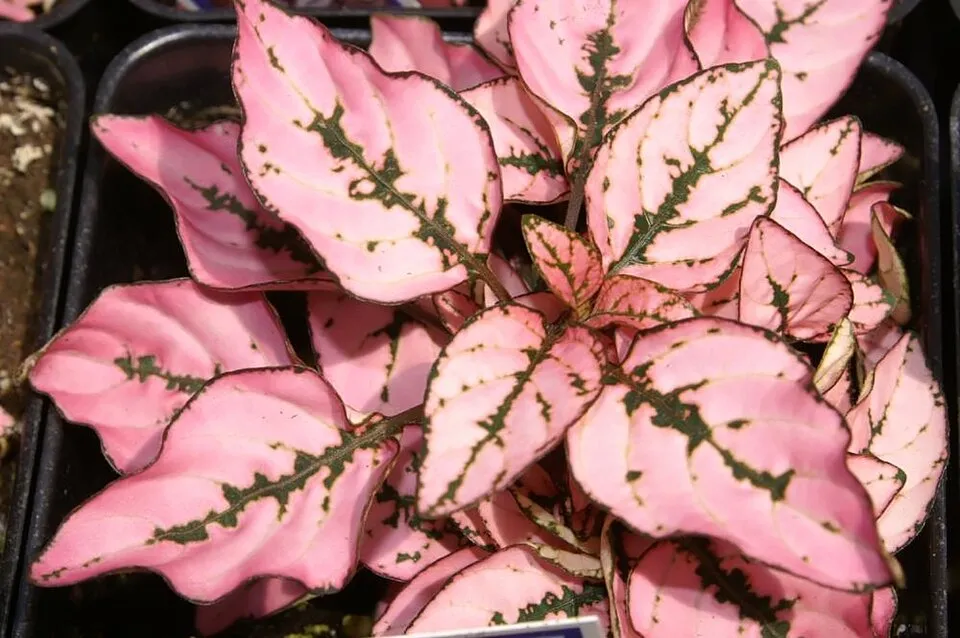
Hypoestes phyllostachya 'Pink Splash', popularly known as the polka dot plant, is a captivating herbaceous perennial belonging to the Acanthaceae family. Native to the tropical forests of Madagascar, this plant is widely cultivated as an ornamental annual or a charming indoor houseplant in temperate climates. It typically exhibits a bushy, compact growth habit, reaching a modest height of 12 to 18 inches (30 to 45 cm) with a similar spread, though it can become more leggy if light conditions are suboptimal. The most distinctive feature of Hypoestes Pink Splash is its vibrant foliage. The leaves are ovate to lanceolate, approximately 2-4 inches (5-10 cm) long, showcasing a deep green base generously speckled and splashed with vivid pink or sometimes white variegation, creating a unique, almost painted appearance.
The undersides of the leaves often present a slightly lighter green hue, occasionally with a subtle gloss, enhancing their overall appeal. The venation is typically reticulate and somewhat recessed, adding a textured dimension to the leaf surface. The stems are slender, herbaceous, and semi-erect, branching freely to form a dense canopy. While young stems may exhibit a fine, almost imperceptible pubescence, mature stems tend to be smoother. The root system is fibrous and relatively shallow, making it well-adapted to container growth and consistent moisture.
Although primarily grown for its striking foliage, Hypoestes phyllostachya 'Pink Splash' does produce small, inconspicuous tubular flowers. These are typically pale lavender to white, emerging from small bracts in the leaf axils or terminal spikes. However, indoors, the floral display is often minimal and many cultivators pinch off flower buds to direct the plant's energy towards maintaining its vibrant foliage. Taxonomically, it belongs to the genus Hypoestes, which encompasses around 100 species.
Trusted Scientific References
1. Authoritative external sources for Hypoestes phyllostachya Pink Splash
1.1 Wikipedia — Hypoestes phyllostachya Pink Splash
1.2 Kew POWO (Plants of the World Online)
1.3 PubMed — peer-reviewed research
1.4 NCBI Taxonomy Browser
1.5 GBIF — Global Biodiversity
1.1.Hypoestes Pink Splash — Notable Characteristics
- ✓Striking Variegated Foliage — Deep green leaves generously splashed with vivid pink coloration.
- ✓Compact Bushy Growth Habit — Naturally forms a dense, attractive mound, ideal for containers.
- ✓Low Maintenance — Relatively easy to care for, suitable for beginner plant enthusiasts.
- ✓High Humidity Preference — Thrives in moist air, making it perfect for humid indoor environments or terrariums.
- ✓Versatile Ornamental Use — Excellent as a houseplant, annual bedding, or in mixed containers.
- ✓Easy Propagation by Cuttings — Readily roots from stem cuttings, allowing for easy reproduction.
- ✓Generally Non — Toxic — Considered safe for households with children and pets, though not for consumption.
- ✓Tropical Origin — Native to Madagascar, preferring warm temperatures and consistent moisture.
- ✓Distinctive Leaf Texture — Ovate to lanceolate leaves with a slightly textured, reticulate venation.
- ✓Aesthetic Appeal — Provides a cheerful and unique visual element to any plant collection or garden.
1.2.Hypoestes Pink Splash — In Brief
- ✓Vibrant ornamental foliage plant, Hypoestes phyllostachya 'Pink Splash', known for pink-speckled leaves.
- ✓Ideal as an indoor houseplant or outdoor annual in partial shade conditions.
- ✓Requires bright, indirect light, high humidity, and consistent soil moisture.
- ✓Easily propagated by stem cuttings and benefits from regular pinching for bushiness.
- ✓Primarily valued for aesthetic appeal; no significant documented medicinal uses.
- ✓Generally considered non-toxic, but contact irritation or mild ingestion upset is possible.
2.Hypoestes Pink Splash — Nomenclature & Classification
3.Hypoestes Pink Splash — Fact Sheet
4.Hypoestes Pink Splash — Botanical Description
5.Hypoestes Pink Splash — Native Range & Habitat
6.Hypoestes Pink Splash — Traditional Uses
7.Hypoestes Pink Splash — Chemical Profile
- ✓Specific phytochemical research on Hypoestes phyllostachya 'Pink Splash' for medicinal applications is limited, as its primary value is ornamental. However, based on general plant chemistry and its vibrant coloration, certain classes of compounds are likely present:
- ✓Anthocyanins — These flavonoid pigments are responsible for the plant's characteristic pink or red variegation, known for their antioxidant properties in other plants.
- ✓Chlorophylls — The green base of the leaves contains chlorophyll a and b, essential for photosynthesis and general plant health.
- ✓Carotenoids — Accessory photosynthetic pigments that also contribute to color and serve as antioxidants, potentially present in the foliage.
- ✓Flavonoids — A broad class of polyphenolic compounds common in plants, potentially offering antioxidant and anti-inflammatory activities, though not specifically quantified in this species.
- ✓Phenolic Acids — Simple phenolic compounds that often contribute to plant defense mechanisms and exhibit antioxidant capacity.
- ✓Terpenoids — Volatile organic compounds that can contribute to plant aroma or defense, potentially present in trace amounts.
- ✓Alkaloids — Some plants in the Acanthaceae family contain alkaloids, which can have diverse biological activities, though their presence and role in Hypoestes phyllostachya are not well-studied.
- ✓Saponins — Glycosides that can form a foamy lather, sometimes associated with antimicrobial or anti-inflammatory effects in other plant species.
8.Hypoestes Pink Splash — Pharmacological Findings
- ✓While Hypoestes phyllostachya 'Pink Splash' is predominantly cultivated for its ornamental foliage, it is important to note that it lacks significant, well-documented traditional or modern medicinal applications.
- ✓Ornamental Value — The primary benefit of the polka dot plant is its aesthetic appeal, enhancing indoor and outdoor spaces with its vibrant, variegated leaves.
- ✓Mood Enhancement (Indirect) — As a houseplant, its cheerful appearance can contribute to a positive indoor environment and potentially improve well-being through biophilic design.
- ✓Air Quality Improvement (General) — Like many plants, it may contribute to general indoor air purification by absorbing common volatile organic compounds, though specific research on this species is limited.
- ✓Stress Reduction (Aesthetic) — Engaging with nature, even through ornamental plants, has been shown to reduce stress and promote relaxation.
- ✓Humidity Contribution — Transpiration from the plant can slightly increase ambient humidity, which can be beneficial in dry indoor environments.
- ✓Educational Value — Cultivating the Hypoestes Pink Splash can offer an engaging learning experience about plant care, propagation, and botanical diversity.
- ✓Natural Decor — Provides a sustainable and dynamic element for home decoration, offering a touch of the tropics.
- ✓General Plant Bioactives (Speculative) — While not specifically studied for this species, plants generally contain various phytochemicals that could theoretically possess antioxidant or anti-inflammatory properties, though such claims are not substantiated for Hypoestes phyllostachya.
8.1.Hypoestes Pink Splash — Therapeutic Indications
9.Hypoestes Pink Splash — Safety & Side Effects
9.1.Hypoestes Pink Splash — Side Effects & Warnings
- ✓Allergic Skin Reactions — Direct contact with the foliage may cause mild skin irritation or dermatitis in individuals with heightened sensitivity.
- ✓Gastrointestinal Upset (Mild) — Ingestion of significant quantities by pets or children might lead to mild stomach upset, vomiting, or diarrhea; generally considered non-toxic but not intended for consumption.
- ✓Foliage Scorch — Exposure to intense, direct sunlight can cause the delicate leaves to burn, resulting in faded variegation or brown, crispy spots.
- ✓Leggy Growth — Insufficient light levels can lead to etiolation, causing stems to stretch and plants to appear sparse and less vibrant.
- ✓Root Rot — Overwatering, especially in poorly draining soil, can lead to root rot, characterized by wilting, yellowing leaves, and eventual plant demise.
- ✓Pest Infestations — Susceptible to common houseplant pests such as aphids, mealybugs, and whiteflies, which can weaken the plant and diminish its appearance.
- ✓Powdery Mildew — In conditions of high humidity combined with poor air circulation, the plant can be prone to powdery mildew.
9.2.Hypoestes Pink Splash — Safety Profile
- ✓Generally Non-Toxic — Hypoestes phyllostachya 'Pink Splash' is widely considered non-toxic to humans and common household pets, making it a safe choice for most homes.
- ✓Skin Sensitivity Precaution — Individuals with sensitive skin should handle the plant gently or wear gloves to avoid potential mild irritation or contact dermatitis.
- ✓Pet Supervision — While not highly toxic, it is advisable to supervise pets to prevent excessive ingestion, which could still lead to minor digestive upset.
- ✓Not for Internal Use — The plant is strictly ornamental and not intended for consumption by humans or animals for any medicinal or dietary purpose.
- ✓Environmental Adaptation — Ensure the plant is placed in an appropriate environment with adequate light, humidity, and consistent watering to prevent stress-related issues.
- ✓Pest and Disease Management — Regular inspection for pests and diseases is crucial; prompt, gentle treatment with organic solutions is recommended to maintain plant health without introducing harmful chemicals.
- ✓Child Safety — Keep out of reach of very young children to prevent accidental ingestion, despite its low toxicity.
10.Hypoestes Pink Splash — Preparations & Uses
- ✓Ornamental Houseplant — Primarily used as a vibrant indoor houseplant, adding a splash of color to living spaces, offices, and terrariums.
- ✓Outdoor Annual Bedding — Planted as an annual in garden beds and borders in warmer climates, providing colorful foliage in partially shaded areas.
- ✓Container and Patio Plant — Excellent for mixed containers, window boxes, and patio pots, where its distinctive foliage can complement other plants like impatiens or caladiums.
- ✓Terrarium Specimen — A classic choice for terrariums due to its compact size, love for humidity, and decorative leaves, creating miniature ecosystems.
- ✓Foliage Accent — Utilized in floral arrangements or dish gardens to provide contrasting texture and color, enhancing the overall aesthetic appeal.
- ✓Gifting Option — Its cheerful and unique appearance makes it a popular choice as a decorative gift for plant enthusiasts.
- ✓Educational Tool — Can be used in educational settings to demonstrate plant propagation and the diversity of foliage plants.
11.Hypoestes Pink Splash — Cultivation & Care
- ✓Light Requirements — Thrives in bright, filtered light; partial shade enhances leaf color, while direct sun can scorch leaves and very low light causes legginess.
- ✓Soil Preference — Requires a well-draining potting mix rich in organic matter, such as peat moss or leaf mold, to ensure adequate moisture retention and aeration.
- ✓Watering Schedule — Keep soil consistently moist but not waterlogged; allow the top inch of soil to dry slightly between waterings, especially during active growth.
- ✓Humidity Needs — Prefers high humidity; misting regularly, using a pebble tray, or placing in a humid room (like a bathroom) is beneficial, particularly indoors.
- ✓Temperature Range — Best growth occurs in warm conditions, ideally above 60°F (15°C); protect from temperatures below 50°F (10°C) as it is a tender tropical plant.
- ✓Propagation — Easily propagated from stem cuttings taken in spring or summer; cuttings root quickly in water or moist sand/vermiculite.
- ✓Pruning and Maintenance — Pinch back growing tips regularly to encourage a bushier, more compact growth habit and to prevent it from becoming leggy; remove inconspicuous flower spikes to direct energy to foliage.
- ✓Fertilization — Feed with a dilute liquid fertilizer every 2-4 weeks during the active growing season (spring and summer); reduce or cease feeding in winter.
Reviewed by the Flora Medical Global Botanical Review Panel
Multi-disciplinary editorial group · Botany · Ethnobotany · Herbal-medicine literature
Who reviewed this: This page was checked by the Flora Medical Global Botanical Review Panel — an in-house editorial group of botany graduates, ethnobotany researchers, and horticulture practitioners who collectively maintain our 7,000+ plant encyclopedia. Meet the team.
Our 4-step verification process
1. Taxonomic verification
Scientific names and synonyms cross-checked against Kew POWO, World Flora Online, and The Plant List.
2. Phytochemical & medicinal cross-reference
Active compounds, traditional uses, and reported activities are cross-referenced with PubMed, USDA Dr. Duke's database, and peer-reviewed ethnobotanical literature.
3. Conservation & distribution check
Distribution, ecology, and conservation status confirmed against GBIF occurrence records and the IUCN Red List.
4. Editorial & safety review
Every entry passes an editorial pass for clarity, originality, and safety notices (toxicity, contraindications, dosage caveats) before publication.
Last reviewed:
Important medical disclaimer: This content is for educational and research purposes only. It is not medical advice and is not a substitute for consultation with a licensed healthcare provider. Do not use any herb to self-treat a medical condition without professional guidance.
Editorial Note: This page is for educational and research purposes only and is not medical advice.
Written by: Flora Medical Global Editorial Team
Reviewed by: Flora Medical Global Botanical Review Panel
Last Updated: June 15, 2026





Hypoestes Pink Splash — Comments & Community Reviews
Rate this plant