
Medical Disclaimer: This content is for educational purposes only. It is not medical advice. Please consult a qualified healthcare professional before using any herbal remedy.
Safety Overview
1.Iceland Moss — Essential Profile
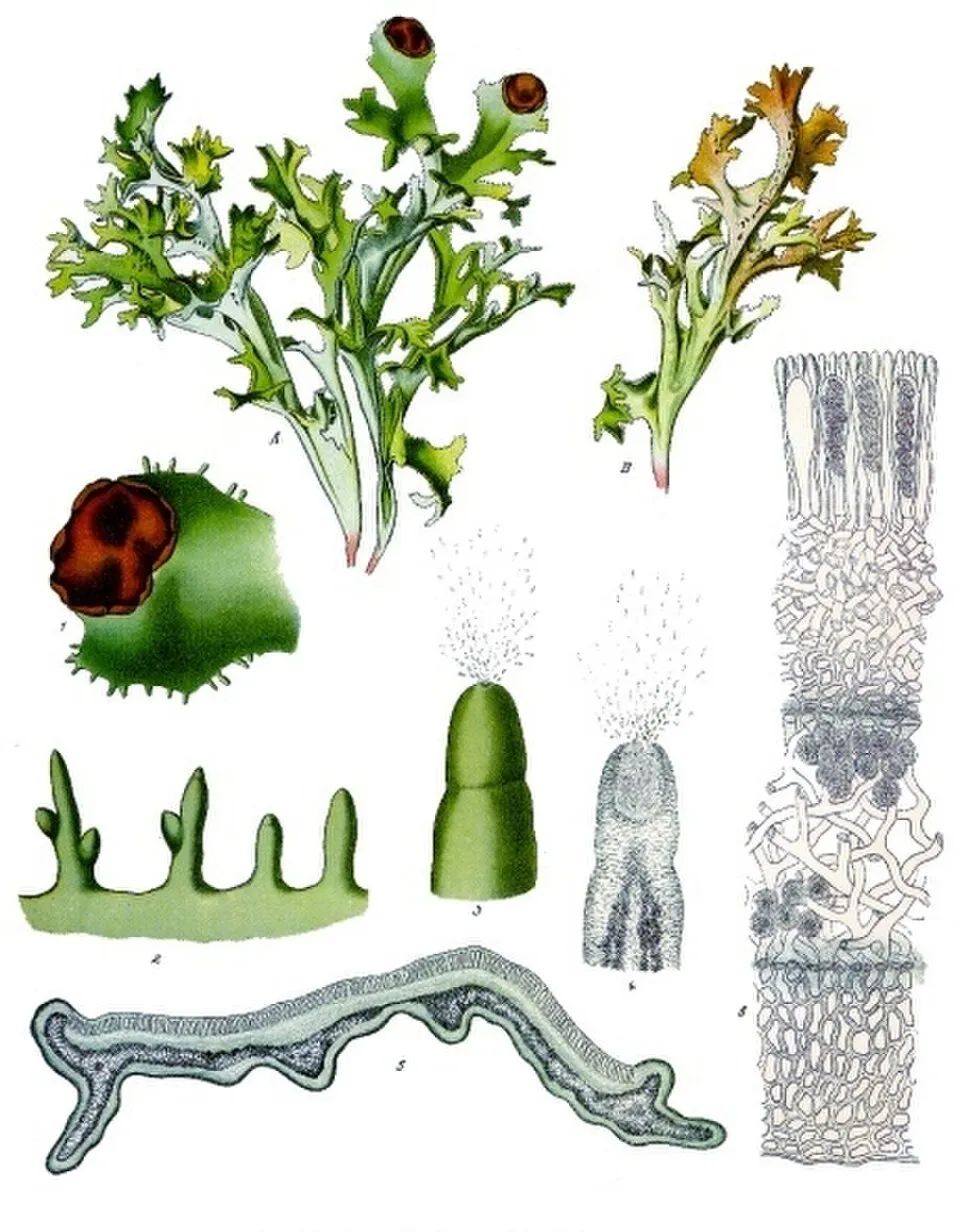
Iceland Moss, scientifically known as Cetraria islandica, is a fascinating and resilient lichen belonging to the Parmeliaceae family. Unlike true plants, lichens are symbiotic organisms, a unique partnership between a fungus (mycobiont) and an alga or cyanobacterium (phycobiont). This particular species is predominantly found thriving in the harsh, often nutrient-poor environments of Arctic and subarctic regions, where it colonizes rocky terrains, exposed substrates, and open woodlands. Its distribution spans across temperate to polar areas in Europe, North America, and Asia, making it a widespread emblem of cold-climate flora. Morphologically, Cetraria islandica typically forms a distinctive flattened, branching thallus, ranging from 5 to 20 centimeters in height. It lacks true leaves, stems, or roots, instead presenting a complex, leathery network that is both tough and flexible.
The color of its thallus can vary from pale green to grayish-green, often with brownish or reddish hues, especially towards the tips or in drier conditions. Its surface is characterized by a rough, warty texture, an adaptation that helps it withstand extreme wind and cold temperatures. The thallus is deeply lobed and appears somewhat crustaceous, yet also fruticose (shrubby), giving it a unique three-dimensional structure. Reproduction in Iceland Moss primarily occurs through spores produced in small, cup-like fruiting bodies called apothecia, which are often found on the margins or surface of the thallus. Additionally, vegetative propagation through fragmentation is common, where pieces of the thallus break off and establish new colonies. Ecologically, Iceland Moss plays a critical role in its ecosystems.
It is a pioneer species, contributing to initial soil formation on barren rocks by secreting acids that break down minerals. It also provides essential habitat and food for various microorganisms and herbivores in its challenging environment. Historically, communities in northern climates have harvested and dried Iceland Moss for centuries, grinding it into a powder for both nutritional sustenance and traditional remedies. Its ability to absorb nutrients directly from the air makes it highly sensitive to air quality, thriving best in pristine, unpolluted regions like Iceland, which contributes to its common name and reputation for purity. Taxonomically, its genus Cetraria is renowned for species exhibiting remarkable adaptive survival mechanisms in extreme environmental condit ...[CURRENT TEXT EXISTS: 2741 chars]
1.1.Iceland Moss — Notable Characteristics
- ✓Symbiotic Organism — A lichen, combining fungus and alga, thriving in harsh environments.
- ✓Arctic & Subarctic Native — Found predominantly in cold, unpolluted northern regions.
- ✓Demulcent Properties — High mucilage content provides soothing effects for mucous membranes.
- ✓Antimicrobial Action — Contains usnic acid, effective against bacteria and fungi.
- ✓Anti — inflammatory Benefits — Lichen acids contribute to reducing inflammation.
- ✓Digestive Aid — Traditionally used to soothe gastritis, ulcers, and stimulate appetite.
- ✓Respiratory Support — Effective for dry coughs, sore throats, and bronchitis.
- ✓Pioneer Species — Contributes to soil formation on barren substrates.
- ✓Nutritional Value — Historically consumed as a food source, providing minerals and carbohydrates.
- ✓Environmental Indicator — Its presence signifies clean, unpolluted air.
- ✓Unique Morphology — Flattened, branching, leathery thallus lacking true plant organs.
- ✓Slow Growing — Takes many years to mature, making cultivation challenging.
- ✓Rich Phytochemistry — Diverse compounds including polysaccharides, lichen acids, and flavonoids.
- ✓Traditional European Herbalism — Long history of use in Nordic and European folk medicine.
- ✓Sustainability Concerns — Risk of overharvesting and heavy metal contamination in wild populations.
1.2.Iceland Moss — Concise Overview
- ✓Iceland Moss (Cetraria islandica) is a unique symbiotic lichen from Arctic/subarctic regions.
- ✓Renowned for its demulcent mucilage, it soothes respiratory and digestive irritation.
- ✓Contains potent lichen acids like usnic acid, offering antimicrobial and anti-inflammatory benefits.
- ✓Traditionally used for coughs, sore throats, indigestion, and as an appetite stimulant.
- ✓Wild-harvested, it is sensitive to environmental pollution and can accumulate heavy metals.
- ✓Caution advised for pregnant/breast-feeding individuals and those with ulcers due to potential lead contamination and irritation.
- ✓A valuable botanical for immune support, antioxidant protection, and overall wellness.
- ✓Cultivation is difficult, emphasizing the need for sustainable wild collection.
2.Iceland Moss — Scientific Identity
3.Iceland Moss — Key Data
4.Iceland Moss — Botanical Description
5.Iceland Moss — Ecological Habitat
6.Iceland Moss — Traditional Uses
7.Iceland Moss — Phytochemistry
- ✓Polysaccharides — Predominantly lichenin and isolichenin, which are glucans responsible for the demulcent and soothing properties, forming a protective gel. They also exhibit immunomodulatory activities.
- ✓Lichen Acids — Key bitter compounds like usnic acid, fumarprotocetraric acid, protocetraric acid, and cetraric acid. Usnic acid is a potent antimicrobial, anti-inflammatory, and antioxidant agent. Fumarprotocetraric and protocetraric acids contribute to its bitter taste and potential immune effects.
- ✓Bitter Principles — Beyond specific lichen acids, a complex array of bitter compounds contributes to its tonic effects, stimulating digestive secretions and appetite.
- ✓Flavonoids — Antioxidant compounds that help protect cells from oxidative damage and exhibit anti-inflammatory properties, supporting cellular health.
- ✓Phenolic Acids — Including p-hydroxybenzoic acid and protocatechuic acid, which are known for their antioxidant and potential antimicrobial activities.
- ✓Vitamins — Contains various B-vitamins, particularly B1 (thiamine) and B2 (riboflavin), contributing to metabolic functions.
- ✓Minerals — Rich in essential minerals such as iodine, iron, calcium, potassium, and phosphorus, which are vital for numerous physiological processes.
- ✓Mucilage — A general term for the complex mixture of water-soluble polysaccharides that give Iceland Moss its characteristic soothing and demulcent properties, crucial for respiratory and digestive relief.
- ✓Terpenoids — A diverse group of organic compounds with various biological activities, including anti-inflammatory and antimicrobial potential, although less studied in Cetraria islandica compared to lichen acids.
- ✓Sterols — Plant sterols and triterpenes are present, which may contribute to its anti-inflammatory and cholesterol-lowering effects, though research is limited in this specific lichen.
- ✓Fatty Acids — Contains small amounts of essential fatty acids, contributing to its nutritional profile and cellular health.
8.Iceland Moss — Scientific Evidence
- ✓Soothes Respiratory Irritation — Iceland Moss is rich in mucilaginous polysaccharides, which form a protective, soothing layer over inflamed mucous membranes in the throat and bronchial passages. This demulcent action effectively alleviates dry, irritating coughs, sore throats, and hoarseness.
- ✓Supports Digestive Health — The mucilage content also extends its soothing properties to the gastrointestinal tract, providing relief for conditions like gastritis, peptic ulcers, and indigestion by coating the stomach lining and reducing irritation.
- ✓Enhances Immune Function — Bioactive compounds, including polysaccharides and lichen acids, contribute to immunomodulatory effects, helping to strengthen the body's natural defenses against pathogens and supporting overall immune resilience.
- ✓Acts as an Anti-inflammatory Agent — Specific lichen acids, such as usnic acid and fumarprotocetraric acid, exhibit anti-inflammatory properties, which can help reduce swelling and discomfort associated with various inflammatory conditions, both internally and externally.
- ✓Provides Antioxidant Protection — Flavonoids and phenolic compounds present in Cetraria islandica possess significant antioxidant activity, neutralizing harmful free radicals and protecting cells from oxidative stress and damage.
- ✓Stimulates Appetite — Traditionally, the bitter principles found in Iceland Moss have been used as a tonic to stimulate appetite, particularly in individuals experiencing loss of appetite due to illness or convalescence, by promoting digestive secretions.
- ✓Relieves Bronchitis Symptoms — Its expectorant and demulcent qualities make it beneficial for bronchitis, helping to thin mucus, ease its expulsion, and soothe the inflamed bronchial tubes.
- ✓Addresses Common Cold Symptoms — By combining its immune-supporting, anti-inflammatory, and demulcent actions, Iceland Moss can help mitigate various symptoms of the common cold, including cough, sore throat, and general malaise.
- ✓Supports Lung Health — Due to its traditional use and demulcent properties, it is considered supportive for various lung conditions, helping to protect and soothe the respiratory epithelium.
- ✓Aids Kidney and Bladder Issues — While less commonly studied, traditional uses suggest it may offer some soothing benefits for irritation in the urinary tract, potentially through its demulcent effects.
- ✓Promotes Wound Healing (Topical) — When applied topically, the antimicrobial and anti-inflammatory properties of Iceland Moss, particularly its lichen acids, may assist in protecting minor wounds from infection and supporting the healing process.
- ✓Offers Antimicrobial Activity — Usnic acid, a prominent lichen acid, is well-documented for its broad-spectrum antimicrobial properties against various bacteria, fungi, and some viruses, contributing to the lichen's protective effects.
- ✓Contributes to General Wellness — As a rich source of various minerals and vitamins, alongside its diverse bioactive compounds, Iceland Moss can support overall health and vitality, especially in regions where other nutritional sources are scarce.
8.1.Iceland Moss — Indications & Uses
9.Iceland Moss — Safety & Side Effects
9.1.Iceland Moss — Possible Adverse Reactions
- ✓Heavy Metal Contamination — Long-term or large-dose consumption of wild-harvested Iceland Moss is possibly unsafe due to its potential to absorb and accumulate heavy metals, particularly lead, from its environment.
- ✓Gastrointestinal Irritation — In some individuals, especially those with pre-existing digestive sensitivities or ulcers, the mucilage or bitter compounds may cause mild stomach upset or irritation.
- ✓Allergic Reactions — Although rare, individuals may experience allergic reactions, such as skin rashes or digestive discomfort, to components within Iceland Moss.
- ✓Bitterness-Related Nausea — The pronounced bitter taste, particularly in stronger preparations, might induce nausea or gag reflex in sensitive individuals.
- ✓Interference with Medication Absorption — The high mucilage content could potentially interfere with the absorption of orally administered medications if taken concurrently, due to its coating action.
- ✓Laxative Effect — In very large doses, the mucilaginous compounds might exert a mild laxative effect in some individuals.
9.2.Iceland Moss — Safety Profile
- ✓Short-term Use Generally Safe — Iceland Moss is considered possibly safe for most individuals when used orally for short durations.
- ✓Pregnancy and Breast-feeding Contraindication — It is possibly unsafe for pregnant or breast-feeding individuals due to the risk of heavy metal contamination (e.g., lead), which can be harmful to the developing fetus or infant.
- ✓Stomach or Intestinal Ulcers — Individuals with active stomach or intestinal ulcers should avoid Iceland Moss, as its compounds may irritate the digestive tract lining.
- ✓Avoid Large, Long-term Doses — Prolonged use or consumption in large quantities is discouraged due to the potential for heavy metal accumulation, particularly lead, from environmental sources.
- ✓Source Purity is Crucial — When purchasing Iceland Moss products, prioritize those from reputable suppliers who test for heavy metal contamination and ensure sustainable harvesting.
- ✓Medication Interactions — Due to its mucilage content, take Iceland Moss preparations at least 2 hours apart from other oral medications to prevent potential interference with absorption.
- ✓Regulatory Status — In some regions, like the United States, Iceland Moss is primarily regulated as a flavoring agent in alcoholic beverages, highlighting the need for caution in medicinal applications.
10.Iceland Moss — Preparations & Uses
- ✓Decoction — Prepare by simmering dried Iceland Moss in water for 10-15 minutes, then straining. This method effectively extracts the mucilage and bitter principles, ideal for coughs and digestive issues.
- ✓Infusion — For a milder preparation, steep dried Iceland Moss in hot water for 5-10 minutes. This is often used for general wellness teas or throat gargles.
- ✓Lozenges/Pastilles — Commercially available lozenges often contain Iceland Moss extract, providing targeted relief for sore throats and dry coughs by slowly releasing demulcent compounds.
- ✓Tincture — A concentrated liquid extract made by steeping dried Iceland Moss in alcohol and water. Tinctures offer a convenient way to dose and are often used for immune support or digestive tonics.
- ✓Powdered Form — Dried thallus can be ground into a fine powder and encapsulated or mixed with liquids. Historically, it was added to flour to supplement diets in times of scarcity.
- ✓Syrups — Often combined with honey or other demulcents, Iceland Moss syrup is a popular form for children and adults to soothe coughs and respiratory irritation.
- ✓Topical Poultice — For minor skin irritations or wounds, a poultice made from moistened, crushed Iceland Moss can be applied to provide soothing and antimicrobial effects.
- ✓Culinary Use (Traditional) — After extensive soaking and boiling to remove bitterness, it was traditionally consumed as a staple food, often in porridges or breads, providing carbohydrates and minerals.
- ✓Gargle/Mouthwash — A cooled decoction or infusion can be used as a gargle to soothe mouth and throat inflammation, offering direct contact with the irritated mucous membranes.
11.Iceland Moss — How to Grow
- ✓Habitat Mimicry — Successful cultivation of Iceland Moss (Cetraria islandica) is highly challenging due to its symbiotic nature and slow growth rate, requiring precise replication of its natural subarctic and Arctic environments.
- ✓Substrate Requirements — It thrives on nutrient-poor, acidic substrates such as rocks, exposed soil, and decaying wood, which are difficult to replicate for large-scale production.
- ✓Climate Control — Requires cool temperatures, high humidity, and specific light conditions, often involving long periods of low light or specific photoperiods typical of northern latitudes.
- ✓Air Quality — Extremely sensitive to air pollution; pristine, uncontaminated air is crucial for its survival and healthy growth, making urban or industrial cultivation nearly impossible.
- ✓Growth Rate — Iceland Moss is a notoriously slow-growing organism, often taking many years to reach harvestable size, which is a significant barrier to commercial cultivation.
- ✓Water Availability — While tolerant of desiccation, it requires regular periods of moisture from rain, mist, or snowmelt to rehydrate and metabolize.
- ✓Symbiotic Needs — The intricate relationship between its fungal and algal components is difficult to establish and maintain artificially, as both organisms have specific requirements for optimal symbiosis.
- ✓Ethical Sourcing — Due to cultivation difficulties, most Iceland Moss is wild-harvested. Sustainable harvesting practices are essential to prevent over-collection and protect wild populations.
Reviewed by the Flora Medical Global Botanical Review Panel
Multi-disciplinary editorial group · Botany · Ethnobotany · Herbal-medicine literature
Who reviewed this: This page was checked by the Flora Medical Global Botanical Review Panel — an in-house editorial group of botany graduates, ethnobotany researchers, and horticulture practitioners who collectively maintain our 7,000+ plant encyclopedia. Meet the team.
Our 4-step verification process
1. Taxonomic verification
Scientific names and synonyms cross-checked against Kew POWO, World Flora Online, and The Plant List.
2. Phytochemical & medicinal cross-reference
Active compounds, traditional uses, and reported activities are cross-referenced with PubMed, USDA Dr. Duke's database, and peer-reviewed ethnobotanical literature.
3. Conservation & distribution check
Distribution, ecology, and conservation status confirmed against GBIF occurrence records and the IUCN Red List.
4. Editorial & safety review
Every entry passes an editorial pass for clarity, originality, and safety notices (toxicity, contraindications, dosage caveats) before publication.
Last reviewed:
Important medical disclaimer: This content is for educational and research purposes only. It is not medical advice and is not a substitute for consultation with a licensed healthcare provider. Do not use any herb to self-treat a medical condition without professional guidance.
Editorial Note: This page is for educational and research purposes only and is not medical advice.
Written by: Flora Medical Global Editorial Team
Reviewed by: Flora Medical Global Botanical Review Panel
Last Updated: June 15, 2026




Iceland Moss — Comments & Community Reviews
Rate this plant