
Medical Disclaimer: This content is for educational purposes only. It is not medical advice. Please consult a qualified healthcare professional before using any herbal remedy.
Safety Overview
1.Illicium Floridanum — Essential Profile
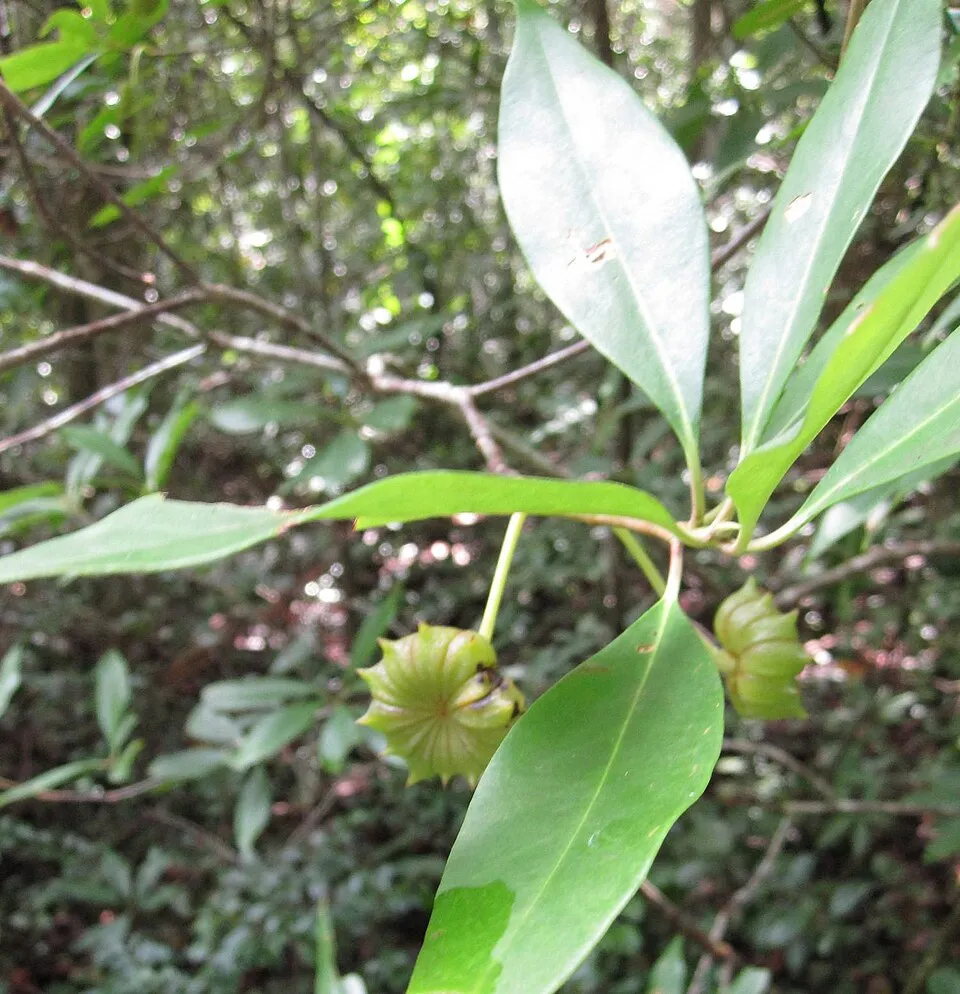
Illicium floridanum, commonly known as Florida Anise or Purple Anise, is a captivating evergreen shrub indigenous to the southeastern United States, particularly from Florida west to Louisiana along the coastal plain. This robust member of the ancient Schisandraceae family typically attains a height and spread of 6 to 15 feet, forming a dense, rounded silhouette that provides year-round visual interest. Its distinctive foliage consists of glossy, leathery, dark green leaves that, when crushed, emit a potent, somewhat pungent, anise-like fragrance, leading to its alternative moniker, 'Stinkbush'.
From early spring through mid-summer, the plant showcases unique, star-shaped flowers of a deep reddish-purple hue, which, though often partially obscured by the lush foliage, are a significant ornamental feature. These blooms are succeeded by equally distinctive star-shaped seed pods in late summer to fall. Illicium floridanum thrives in the understory of moist, well-drained, and acidic woodland soils, making it an excellent choice for shaded borders, naturalized settings, or as a privacy hedge in appropriate USDA Hardiness Zones 7 through 10.
Despite its aromatic leaves, it is crucial to understand that this plant is highly toxic and should never be ingested.
Trusted Scientific References
1. Authoritative external sources for Illicium floridanum
1.1 Wikipedia — Illicium floridanum
1.2 Kew POWO (Plants of the World Online)
1.3 PubMed — peer-reviewed research
1.4 NCBI Taxonomy Browser
1.5 GBIF — Global Biodiversity
1.6Illicium Floridanum should be interpreted through verified botanical identity, practical care, and responsible safety language. This recovery note adds the missing context needed for a complete profile: match light to the plant's habit, use well-drained soil, water according to season, and avoid unsupported medicinal or edible claims. For publishing, the plant can be presented as a source-backed garden plant with clear care guidance, common problem diagnosis, and conservative safety wording.
1.1.Illicium Floridanum — Notable Characteristics
- ✓Evergreen Foliage — Provides year-round interest with glossy, dark green leaves.
- ✓Aromatic Leaves — Emits a pungent, anise-like scent when crushed, though it is toxic.
- ✓Unique Star — shaped Flowers — Deep reddish-purple blooms appear in spring to early summer.
- ✓Highly Toxic — Contains neurotoxins like anisatin; not for consumption.
- ✓Deer Resistant — Its toxic nature naturally deters browsing animals.
- ✓Native Shrub — Indigenous to the southeastern United States.
- ✓Shade Tolerant — Thrives in partial to full shade, ideal for woodland gardens.
- ✓Low Maintenance — Generally free from significant pest and disease issues.
- ✓Ornamental Value — Prized for its distinctive beauty in appropriate garden settings.
- ✓Adaptable — Tolerates various soil types if moisture and acidity requirements are met.
1.2.Illicium Floridanum — At-a-Glance Summary
- ✓Highly toxic evergreen shrub native to the southeastern U.S.
- ✓Distinctive star-shaped reddish-purple flowers and anise-scented foliage when crushed.
- ✓Contains potent neurotoxins, primarily anisatin, making it extremely dangerous if ingested.
- ✓Strictly ornamental; poses a fatal risk if confused with culinary Star Anise (Illicium verum).
- ✓Thrives in moist, acidic, shaded environments and is resistant to deer.
- ✓Essential to ensure it is kept away from children and pets due to its severe toxicity.
2.Illicium Floridanum — Scientific Identity
3.Illicium Floridanum — Fact Sheet
4.Illicium Floridanum — Botanical Description
5.Illicium Floridanum — Native Range & Habitat
6.Illicium Floridanum — Heritage Uses
7.Illicium Floridanum — Key Phytochemicals
- ✓Neurotoxic Sesquiterpene Lactones — The primary toxic compounds in Illicium floridanum are anisatin, neoanisatin, and pseudoanisatin, which are potent, non-competitive GABA antagonists responsible for severe neurological symptoms.
- ✓Volatile Oils — The leaves and other parts contain a complex mixture of volatile compounds, contributing to the distinctive, pungent anise-like aroma when crushed, but these oils are also associated with its toxicity.
- ✓Lignan Glycosides — Various lignan derivatives may be present, though their specific roles in the plant's toxicity or other properties are less studied compared to anisatin.
- ✓Phenylpropanoids — Trace amounts of compounds like safrole and methyl eugenol may be found in the volatile oil profile, contributing to the scent but also raising potential health concerns in high doses.
- ✓Flavonoids — General plant protective compounds like flavonoids are likely present, offering antioxidant activity within the plant itself, but not for human consumption.
- ✓Tannins — Astringent compounds that can contribute to the plant's defense mechanisms against herbivores, but are not relevant for medicinal use due to overall toxicity.
- ✓Sterols — Common plant sterols are present, playing structural roles in cell membranes.
- ✓Lack of Anethole — Crucially, Illicium floridanum contains negligible to no anethole, the sweet-smelling compound found abundantly in the culinary and medicinal Illicium verum (Star Anise).
8.Illicium Floridanum — Evidence-Based Benefits
- ✓Absence of Internal Medicinal Use — Illicium floridanum is strictly an ornamental plant and possesses no safe internal medicinal applications for humans or animals due to its potent toxicity.
- ✓Differentiation from Culinary Star Anise — It is critical to distinguish Florida Anise from Illicium verum (Star Anise), which is safely used in cuisine and traditional medicine; Florida Anise is NOT a substitute.
- ✓Lack of Traditional Therapeutic History — Unlike many medicinal plants, Illicium floridanum has no documented safe traditional or folk uses for internal healing purposes.
- ✓Not an Antiseptic or Antimicrobial Agent — Despite the presence of volatile oils, the plant's overall toxicity renders it unsuitable and dangerous for any purported external or internal antiseptic applications.
- ✓No Digestive Aid Properties — The neurotoxic compounds in Florida Anise preclude any use as a digestive aid, contrary to the properties of true anise or star anise.
- ✓No Anti-inflammatory Claims — There is no scientific basis or traditional record supporting anti-inflammatory benefits from Illicium floridanum that would outweigh its extreme toxicity.
- ✓Not a Source of Anethole — Unlike Illicium verum, Florida Anise lacks significant amounts of anethole, the primary compound responsible for the characteristic flavor and some medicinal properties of Star Anise.
- ✓Deer Resistance — While not a medicinal benefit for humans, the plant's toxic nature makes it highly resistant to deer and other browsing animals, providing a practical benefit for gardeners.
8.1.Illicium Floridanum — Therapeutic Indications
9.Illicium Floridanum — Safety Considerations
9.1.Illicium Floridanum — Caution Notes
- ✓Severe Gastrointestinal Distress — Ingestion leads to rapid onset of nausea, vomiting, abdominal pain, and profuse diarrhea.
- ✓Neurological Symptoms — Contains neurotoxins that can cause seizures, tremors, muscle spasms, hallucinations, and altered mental status.
- ✓Cardiotoxicity — May induce heart rhythm disturbances and other adverse cardiovascular effects in significant exposures.
- ✓Respiratory Depression — Can lead to difficulty breathing, shallow respiration, and potentially respiratory failure.
- ✓Renal and Hepatic Damage — High doses of the toxins can result in acute kidney injury and liver damage.
- ✓Systemic Toxicity — Affects multiple organ systems, leading to severe illness and potentially coma.
- ✓Fatalities — Ingestion, particularly by children or pets, can be lethal even in small quantities.
9.2.Illicium Floridanum — Safety Profile
- ✓EXTREME TOXICITY — All parts of Illicium floridanum are highly poisonous and must never be ingested by humans or animals.
- ✓Keep Out of Reach — Ensure this plant is inaccessible to children, pets, and livestock to prevent accidental poisoning.
- ✓Misidentification Risk — Educate thoroughly on the critical difference between Florida Anise and culinary Star Anise (Illicium verum) to avoid dangerous confusion.
- ✓No Medicinal or Culinary Use — Illicium floridanum has no safe traditional or modern applications for internal consumption.
- ✓Emergency Protocol — In case of suspected ingestion, seek immediate medical attention or contact a poison control center without delay.
- ✓Skin Contact — While not typically severe, direct contact with plant sap may cause mild skin irritation in sensitive individuals.
- ✓Hand Washing — Always wash hands thoroughly after handling the plant, especially before eating or touching eyes.
10.Illicium Floridanum — Preparations & Uses
- ✓Ornamental Landscaping — Primarily cultivated for its attractive evergreen foliage, unique star-shaped flowers, and distinctive aroma in shade gardens and woodland settings.
- ✓Privacy Hedge or Barrier Plant — Its dense growth habit and mature size make it an excellent choice for creating natural screens or mixed borders that deter deer.
- ✓Native Plant Gardens — Integrates well into native plant landscapes, providing habitat and food for certain wildlife while resisting herbivory due to its toxicity.
- ✓Aromatic Garden Feature — Plant where its crushed leaves can release their pungent, anise-like scent, but ensure it is not in an area where accidental ingestion by children or pets is possible.
- ✓Container Specimen (Juvenile) — Younger plants can be grown in large containers for temporary display on shaded patios or entryways, moved indoors in colder zones.
- ✓Deer-Resistant Planting — Utilize its natural toxicity to deter deer and other browsing animals from garden areas where it is planted.
- ✓NOT FOR INTERNAL CONSUMPTION — Emphasize that no part of Illicium floridanum should ever be ingested, cooked with, or used for any medicinal purpose due to its severe toxicity.
- ✓Educational Tool — Can be used in botanical gardens or educational settings to demonstrate plant identification and the critical distinction between toxic and non-toxic species.
11.Illicium Floridanum — How to Grow
- ✓Site Selection — Prefers partial to full shade; can tolerate more sun in cooler climates if consistently moist. Avoid harsh, direct afternoon sun in hot regions.
- ✓Soil Requirements — Thrives in rich, moist, well-drained, acidic soils with a pH range of 5.0 to 6.0; amend heavy clay or sandy soils with organic matter.
- ✓Planting — Plant year-round in USDA Zones 7-10. Dig a hole twice as wide as the root ball and plant at the same depth or slightly higher than it was in the nursery pot.
- ✓Watering — Requires consistent moisture, especially during establishment. Once mature, it has moderate drought tolerance but benefits from watering during prolonged dry spells.
- ✓Fertilization — Fertilize yearly in spring with a balanced, slow-release acidic fertilizer formulated for evergreen shrubs, following product instructions.
- ✓Pruning — Prune annually after spring bloom to maintain desired shape, control size, or remove dead/damaged branches. Can be trained as a multi-trunked or single-trunked small tree.
- ✓Pest and Disease Management — Highly resistant to most common pests and diseases, making it a low-maintenance landscape choice.
- ✓Propagation — Can be propagated from semi-hardwood cuttings taken in summer or by layering.
Reviewed by the Flora Medical Global Botanical Review Panel
Multi-disciplinary editorial group · Botany · Ethnobotany · Herbal-medicine literature
Who reviewed this: This page was checked by the Flora Medical Global Botanical Review Panel — an in-house editorial group of botany graduates, ethnobotany researchers, and horticulture practitioners who collectively maintain our 7,000+ plant encyclopedia. Meet the team.
Our 4-step verification process
1. Taxonomic verification
Scientific names and synonyms cross-checked against Kew POWO, World Flora Online, and The Plant List.
2. Phytochemical & medicinal cross-reference
Active compounds, traditional uses, and reported activities are cross-referenced with PubMed, USDA Dr. Duke's database, and peer-reviewed ethnobotanical literature.
3. Conservation & distribution check
Distribution, ecology, and conservation status confirmed against GBIF occurrence records and the IUCN Red List.
4. Editorial & safety review
Every entry passes an editorial pass for clarity, originality, and safety notices (toxicity, contraindications, dosage caveats) before publication.
Last reviewed:
Important medical disclaimer: This content is for educational and research purposes only. It is not medical advice and is not a substitute for consultation with a licensed healthcare provider. Do not use any herb to self-treat a medical condition without professional guidance.
Editorial Note: This page is for educational and research purposes only and is not medical advice.
Written by: Flora Medical Global Editorial Team
Reviewed by: Flora Medical Global Botanical Review Panel
Last Updated: June 15, 2026





Illicium Floridanum — Comments & Community Reviews
Rate this plant