
Medical Disclaimer: This content is for educational purposes only. It is not medical advice. Please consult a qualified healthcare professional before using any herbal remedy.
Safety Overview
1.Inula Helenium — At a Glance
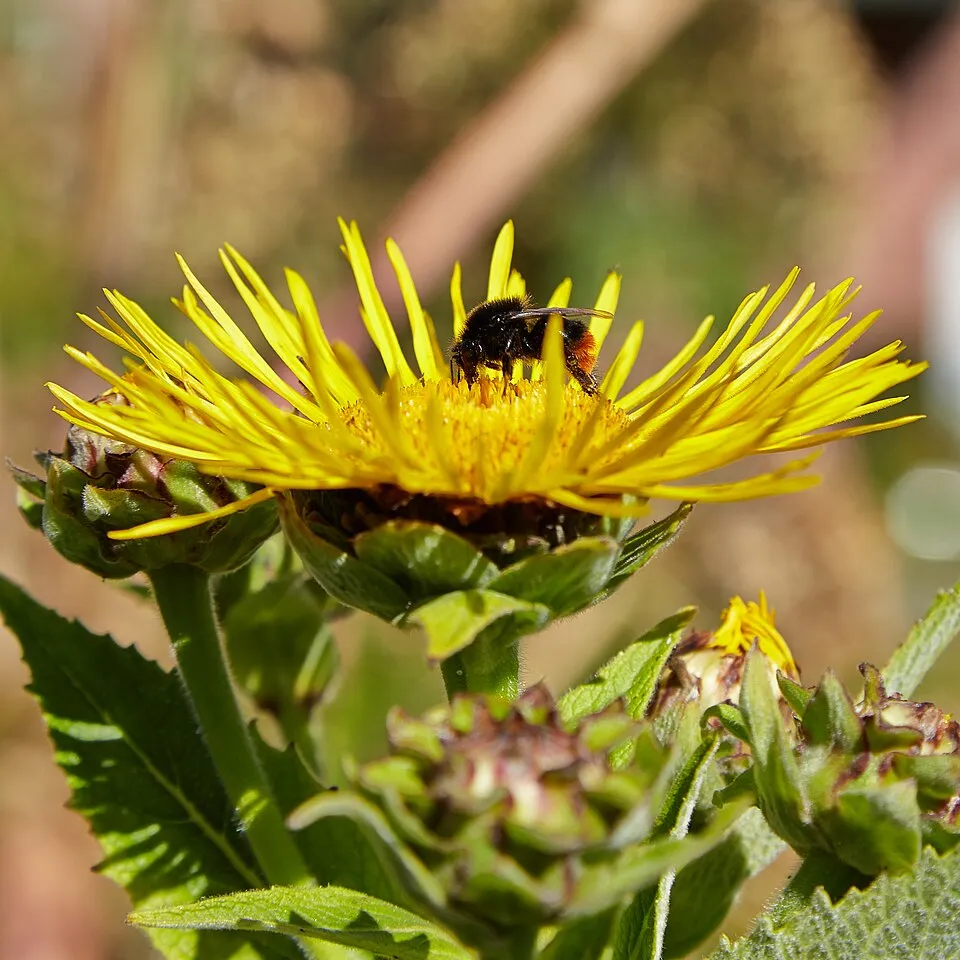
Inula helenium, universally recognized as elecampane, is a commanding perennial herbaceous plant belonging to the Asteraceae family. This impressive species is characterized by its substantial, broad, ovate leaves, which can reach lengths of up to 60 cm and feature a distinctive hairy texture on their undersides. During the period from mid-summer through early autumn, the plant proudly displays large, daisy-like flower heads, typically measuring 5-8 cm in diameter.
These striking inflorescences are composed of vibrant yellow ray florets encircling a dense central disc of yellow tubular florets. Below ground, Inula helenium develops a robust and fleshy root system, forming a thick rhizome that is highly valued and frequently harvested for its significant medicinal and occasional culinary applications. Native to expansive regions of Europe and Asia, elecampane has successfully naturalized across various other parts of the world, thriving in diverse habitats such as damp meadows, pastures, and along the edges of roadsides.
Its unique morphological characteristics and profound historical utility have solidified its status as an important species within both the realm of traditional herbalism and contemporary botanical gardens. Other common names include horse heal, scabwort, velvet dock, elfwort, elfdock, and wild sunflower, reflecting its varied cultural associations and appearance.
Trusted Scientific References
1. Authoritative external sources for Inula Helenium
1.1 Wikipedia — Inula Helenium
1.2 Kew POWO (Plants of the World Online)
1.3 PubMed — peer-reviewed research
1.4 NCBI Taxonomy Browser
1.5 GBIF — Global Biodiversity
1.6Inula Helenium should be interpreted through verified botanical identity, practical care, and responsible safety language. This recovery note adds the missing context needed for a complete profile: match light to the plant's habit, use well-drained soil, water according to season, and avoid unsupported medicinal or edible claims. For publishing, the plant can be presented as a source-backed garden plant with clear care guidance, common problem diagnosis, and conservative safety wording.
1.1.Inula Helenium — Notable Characteristics
- ✓Large, distinctive daisy — like yellow flowers that bloom in late summer.
- ✓Robust and fleshy — Robust and fleshy rhizome, the primary part used in herbal medicine.
- ✓Contains significant levels — Contains significant levels of sesquiterpene lactones, including alantolactone.
- ✓High concentration of — High concentration of inulin, a prebiotic fructan, in its root.
- ✓Historically revered for — Historically revered for its expectorant and antimicrobial properties.
- ✓Native to Europe — Native to Europe and Asia, now naturalized in many temperate regions.
- ✓Hardy perennial, relatively — Hardy perennial, relatively easy to cultivate in suitable conditions.
- ✓Traditionally used as — Traditionally used as a digestive bitter and immune system supporter.
- ✓Characterized by large, — Characterized by large, ovate leaves that are hairy on the underside.
- ✓Known by various — Known by various common names, including horse heal and elfwort.
1.2.Inula Helenium — At-a-Glance Summary
- ✓Potent respiratory expectorant, particularly for coughs and bronchitis.
- ✓Rich in beneficial compounds like alantolactone, isoalantolactone, and inulin.
- ✓Historically used across various traditional medicine systems for lung and digestive health.
- ✓A striking perennial with large yellow flowers and a robust, medicinally valued root.
- ✓Requires careful consideration regarding allergies, pregnancy, and potential drug interactions.
2.Inula Helenium — Botanical Identity
3.Inula Helenium — Vital Statistics
4.Inula Helenium — Physical Description
5.Inula Helenium — Origin & Spread
6.Inula Helenium — Folk Medicine Applications
7.Inula Helenium — Chemical Profile
- ✓Sesquiterpene Lactones — Alantolactone, isoalantolactone, and dihydroalantolactone are key active compounds responsible for much of elecampane’s expectorant, antimicrobial, and anti-inflammatory properties.
- ✓Essential Oils — The volatile oil contains compounds such as camphor, cineole (eucalyptol), and borneol, which contribute to its antiseptic, expectorant, and aromatic qualities.
- ✓Polysaccharides/Fructans — Inulin, a significant component, is a non-digestible fructan that acts as a prebiotic, supporting gut health and contributing demulcent properties.
- ✓Bitter Glycosides — These compounds are responsible for the plant's bitter taste and its ability to stimulate digestive secretions, thereby enhancing appetite and digestion.
- ✓Triterpenes and Saponins — These constituents contribute to the herb's expectorant action by promoting the secretion of respiratory fluids and may also possess anti-inflammatory effects.
- ✓Flavonoids — Present in smaller amounts, flavonoids offer antioxidant and anti-inflammatory benefits, supporting cellular health and reducing oxidative stress.
- ✓Plant Sterols — Including beta-sitosterol, these compounds are common in plants and contribute to the overall physiological effects without specific primary actions.
- ✓Resins — Various resinous components are present, contributing to the overall therapeutic profile and possibly aiding in the plant's protective mechanisms.
- ✓Mucilage — Besides inulin, other mucilaginous substances provide a soothing, demulcent effect on mucous membranes, particularly in the respiratory and digestive tracts.
8.Inula Helenium — Evidence-Based Benefits
- ✓Expectorant Action — Elecampane root is highly valued for its ability to loosen and expel tenacious mucus from the respiratory tract, providing relief for conditions like chronic coughs and bronchitis.
- ✓Antimicrobial Properties — The sesquiterpene lactones, particularly alantolactone, exhibit significant antimicrobial activity against various bacteria and fungi, contributing to its traditional use in infections.
- ✓Anti-inflammatory Effects — Compounds within Inula helenium help to reduce inflammation, especially in the respiratory and digestive systems, alleviating discomfort associated with inflammatory conditions.
- ✓Digestive Tonic — As a bitter herb, elecampane stimulates digestive secretions, enhances appetite, and supports overall digestive function, making it useful for indigestion and dyspepsia.
- ✓Prebiotic Support — The high concentration of inulin in the root acts as a prebiotic, nourishing beneficial gut bacteria and promoting a healthy microbiome.
- ✓Diuretic Activity — Traditionally, it has been used to promote urine production, aiding in the elimination of excess fluids and supporting kidney function.
- ✓Anthelmintic Use — Historically, elecampane was employed to combat intestinal parasites, a use supported by the anthelmintic properties of its active compounds.
- ✓Antispasmodic Relief — It helps to alleviate spasms of smooth muscles, which can be beneficial in calming persistent coughs and digestive cramps.
- ✓Immune System Modulation — Elecampane is believed to offer general immune system support, helping the body to resist infections and recover faster.
- ✓Dermatological Aid — Topical applications of elecampane have been traditionally used for various skin conditions, likely due to its antiseptic and anti-inflammatory actions.
8.1.Inula Helenium — Indications & Uses
9.Inula Helenium — Cautions & Contraindications
9.1.Inula Helenium — Reported Side Effects
- ✓Allergic Reactions — Individuals sensitive to the Asteraceae family (e.g., ragweed, chamomile) may experience allergic reactions, including skin rashes or respiratory distress.
- ✓Gastrointestinal Upset — High doses can lead to nausea, vomiting, or diarrhea due to its strong bitter compounds and potential irritant effects.
- ✓Contact Dermatitis — Direct skin contact with fresh elecampane, particularly the sesquiterpene lactones, can cause irritation or allergic contact dermatitis in susceptible individuals.
- ✓Uterine Stimulation — Elecampane may have emmenagogic properties, potentially stimulating uterine contractions, making it contraindicated during pregnancy.
- ✓Hypoglycemia Risk — There is a theoretical risk of elecampane interacting with blood glucose levels, potentially affecting individuals with diabetes or on anti-diabetic medications.
- ✓Drug Interactions — It may interact with diuretics, blood thinners, or immunosuppressants; consult a healthcare provider if on medication.
- ✓Photosensitivity — Some individuals may experience increased skin sensitivity to sunlight after consuming elecampane, though this is rare.
9.2.Inula Helenium — Safety Overview
- ✓Pregnancy and Lactation — Avoid use during pregnancy due to potential uterine stimulant effects; insufficient data exists for safe use during lactation.
- ✓Allergies — Individuals with known allergies to plants in the Asteraceae family should exercise extreme caution or avoid elecampane entirely.
- ✓Children — Use with caution in children; always consult a qualified healthcare practitioner for appropriate dosing and safety.
- ✓Pre-existing Conditions — Individuals with liver disease, kidney disease, heart conditions, or diabetes should consult a healthcare professional before use.
- ✓Medication Interactions — Elecampane may interact with certain medications, including diuretics, blood thinners, and drugs affecting blood sugar; professional advice is recommended.
- ✓Dosage Adherence — Always adhere to recommended dosages from reputable sources or healthcare professionals to minimize the risk of adverse effects.
- ✓Quality and Purity — Ensure that elecampane products are sourced from reputable suppliers to guarantee purity and prevent contamination or misidentification.
10.Inula Helenium — Preparations & Uses
- ✓Decoction (Tea) — Prepare a strong decoction by simmering 1-2 teaspoons of dried, chopped elecampane root in a cup of water for 10-15 minutes, then strain and drink.
- ✓Tincture — A tincture is made by steeping fresh or dried elecampane root in alcohol (e.g., vodka) for several weeks, then straining; dosage typically involves drops or small amounts.
- ✓Syrups — Infuse or decoct the root, then combine the strained liquid with honey or sugar to create a soothing syrup, particularly effective for coughs and sore throats.
- ✓Powdered Root — Dried elecampane root can be ground into a fine powder and encapsulated, or mixed into beverages or food for internal consumption.
- ✓External Applications — For skin conditions, a strong decoction or infused oil can be used as a compress, poultice, or liniment.
- ✓Culinary Uses — Historically, elecampane root has been used in the production of certain liqueurs, such as absinthe and vermouth, imparting a unique bitter and aromatic flavor.
- ✓Herbal Infusions — The leaves, though less commonly used medicinally than the root, can be used to make a milder herbal infusion.
11.Inula Helenium — Cultivation & Care
- ✓Propagation — Elecampane can be easily propagated from seeds sown indoors in early spring or directly outdoors after the last frost, or by root division in the fall.
- ✓Soil Requirements — It thrives in moist, well-drained soil that is rich in organic matter, tolerating a range of soil types but preferring fertile conditions.
- ✓Light Conditions — The plant performs best in full sun to partial shade, adapting well to various light exposures but favoring adequate sunlight for robust growth.
- ✓Watering Regimen — Consistent moisture is crucial; water regularly to keep the soil moist but not waterlogged, especially during dry spells.
- ✓Spacing for Growth — Allow ample space for mature plants, which can reach heights of 3-6 feet and spread 2-3 feet wide, to ensure proper air circulation and development.
- ✓Fertilization — While not strictly necessary, applying a top-dressing of organic compost in the spring will significantly benefit plant vigor, particularly if harvesting the roots.
- ✓Root Harvesting — Roots are typically harvested in the fall of the second or third year of growth, when their medicinal potency is highest, after the foliage has died back.
- ✓Hardiness — As a hardy perennial, elecampane is resilient to cold temperatures and can overwinter in many temperate climates, returning year after year.
Reviewed by the Flora Medical Global Botanical Review Panel
Multi-disciplinary editorial group · Botany · Ethnobotany · Herbal-medicine literature
Who reviewed this: This page was checked by the Flora Medical Global Botanical Review Panel — an in-house editorial group of botany graduates, ethnobotany researchers, and horticulture practitioners who collectively maintain our 7,000+ plant encyclopedia. Meet the team.
Our 4-step verification process
1. Taxonomic verification
Scientific names and synonyms cross-checked against Kew POWO, World Flora Online, and The Plant List.
2. Phytochemical & medicinal cross-reference
Active compounds, traditional uses, and reported activities are cross-referenced with PubMed, USDA Dr. Duke's database, and peer-reviewed ethnobotanical literature.
3. Conservation & distribution check
Distribution, ecology, and conservation status confirmed against GBIF occurrence records and the IUCN Red List.
4. Editorial & safety review
Every entry passes an editorial pass for clarity, originality, and safety notices (toxicity, contraindications, dosage caveats) before publication.
Last reviewed:
Important medical disclaimer: This content is for educational and research purposes only. It is not medical advice and is not a substitute for consultation with a licensed healthcare provider. Do not use any herb to self-treat a medical condition without professional guidance.
Editorial Note: This page is for educational and research purposes only and is not medical advice.
Written by: Flora Medical Global Editorial Team
Reviewed by: Flora Medical Global Botanical Review Panel
Last Updated: June 15, 2026





Inula Helenium — Comments & Community Reviews
Rate this plant