
Medical Disclaimer: This content is for educational purposes only. It is not medical advice. Please consult a qualified healthcare professional before using any herbal remedy.
Safety Overview
1.Inula Magnifica — Botanical Snapshot
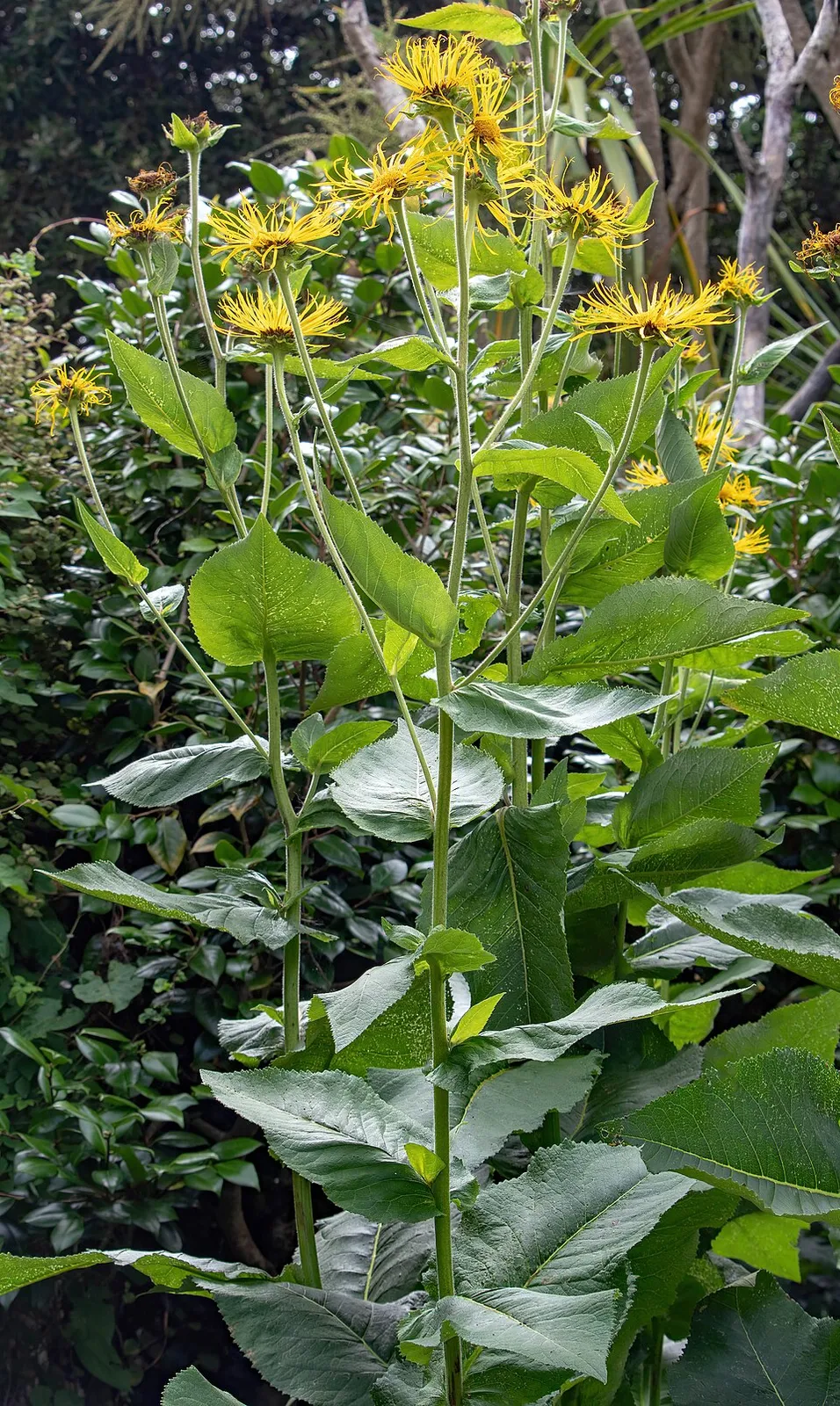
Inula Magnifica, commonly known as Giant Fleabane, Magnificent Elecampane, or Showy Elecampane, is a truly majestic herbaceous perennial belonging to the Asteraceae (Compositae) family. Native to the mountainous regions of the Caucasus and eastern Turkey, this imposing plant commands attention with its remarkable stature, typically reaching heights of 1.5 to 2.5 meters (5 to 8 feet) and spreading up to 90 cm (3 feet) wide. Its basal foliage forms a bold, lush clump of large, rough-textured, ovate to lanceolate leaves, which can measure up to 90 cm (3 feet) in length, providing significant architectural interest even before flowering.
In mid to late summer, Inula Magnifica erupts with an abundance of spectacular, solitary, daisy-like flowers. These enormous blooms, often 10-15 cm (4-6 inches) across, feature vibrant golden-yellow ray florets gracefully radiating from a prominent central disc. The tall, branching purplish stems, clad with hairy ovate leaves, support these showy flower clusters, creating a dynamic visual display that quivers and shimmers in the wind.
Beyond its ornamental appeal, its robust nature and ability to thrive in moist, fertile soils make it a standout specimen for various garden settings, attracting a wealth of pollinators like bees and butterflies, thereby contributing significantly to local biodiversity.
Trusted Scientific References
1. Authoritative external sources for Inula Magnifica
1.1 Wikipedia — Inula Magnifica
1.2 Kew POWO (Plants of the World Online)
1.3 PubMed — peer-reviewed research
1.4 NCBI Taxonomy Browser
1.5 GBIF — Global Biodiversity
1.6Inula Magnifica should be interpreted through verified botanical identity, practical care, and responsible safety language. This recovery note adds the missing context needed for a complete profile: match light to the plant's habit, use well-drained soil, water according to season, and avoid unsupported medicinal or edible claims. For publishing, the plant can be presented as a source-backed garden plant with clear care guidance, common problem diagnosis, and conservative safety wording.
1.1.Inula Magnifica — Notable Characteristics
- ✓Majestic Stature — Reaches impressive heights of 1.5 to 2.5 meters (5 to 8 feet), providing significant vertical interest.
- ✓Striking Blooms — Produces enormous, solitary, golden-yellow daisy-like flowers up to 15 cm (6 inches) across.
- ✓Pollinator Attractor — Actively draws bees and butterflies, contributing to garden biodiversity and ecosystem health.
- ✓Architectural Interest — Its imposing size and bold foliage offer a strong structural element in garden designs.
- ✓Moisture Loving — Thrives in consistently moist to even boggy soil conditions, making it suitable for damp areas.
- ✓Low Maintenance — Generally trouble-free and robust once established in suitable growing conditions.
- ✓Asteraceae Family — Belongs to the large and diverse daisy family, known for many medicinal and ornamental species.
- ✓Traditional Genus Uses — Related species, like Elecampane, are traditionally used for respiratory and anti-parasitic benefits.
- ✓Pharmacologically Active Compounds — Contains important phytochemicals such as sesquiterpene lactones and inulin.
- ✓Cold Hardy — Tolerates a wide range of climates, hardy in USDA zones 5-8.
1.2.Inula Magnifica — In Brief
- ✓Majestic perennial reaching 1.5-2.5 meters with large golden-yellow flowers.
- ✓Part of the Inula genus, known for traditional respiratory, digestive, and anti-parasitic uses.
- ✓Contains active compounds such as sesquiterpene lactones, inulin, and flavonoids.
- ✓Exhibits potential expectorant, anti-inflammatory, anthelmintic, and antimicrobial properties.
- ✓Requires full sun and consistently moist, fertile soil for optimal growth.
- ✓Use with caution; consult a healthcare professional, especially during pregnancy or for allergies.
2.Inula Magnifica — Scientific Identity
3.Inula Magnifica — Fact Sheet
4.Inula Magnifica — Physical Description
5.Inula Magnifica — Native Range & Habitat
6.Inula Magnifica — Heritage Uses
7.Inula Magnifica — Chemical Profile
- ✓Sesquiterpene Lactones — Key compounds include alantolactone and isoalantolactone, primarily found in the roots, responsible for anthelmintic, anti-inflammatory, and antimicrobial activities.
- ✓Essential Oils — A complex mixture of volatile compounds, contributing to the plant's characteristic aroma and exhibiting antiseptic, expectorant, and anti-inflammatory properties.
- ✓Triterpenes — Pentacyclic triterpenoids are present, potentially offering anti-inflammatory, hepatoprotective, and adaptogenic effects within the plant.
- ✓Flavonoids — Compounds like quercetin and kaempferol derivatives are found, acting as potent antioxidants and contributing to anti-inflammatory and vascular protective activities.
- ✓Polysaccharides — Inulin, a fructan, is a significant storage carbohydrate, especially in the roots, known for its prebiotic effects and potential to support digestive health.
- ✓Phenolic Acids — Caffeic acid and chlorogenic acid are examples of phenolic compounds contributing to the plant's antioxidant and anti-inflammatory profiles.
- ✓Phytosterols — Plant sterols such as beta-sitosterol may be present, known for potential anti-inflammatory and cholesterol-lowering properties.
- ✓Coumarins — A class of compounds that can exhibit anti-inflammatory, antimicrobial, and mild anticoagulant activities.
- ✓Resins — Complex mixtures of plant metabolites that contribute to the overall therapeutic effects, often possessing antiseptic and protective qualities.
- ✓Saponins — Glycosides that may contribute to expectorant action and possess mild anti-inflammatory properties.
8.Inula Magnifica — Scientific Evidence
- ✓Expectorant — Supports respiratory health by thinning tenacious mucus and promoting its expulsion from the airways, beneficial for coughs and bronchitis, primarily extrapolated from the Inula genus.
- ✓Anti-inflammatory — Helps to reduce systemic and localized inflammation, potentially alleviating discomfort associated with respiratory irritation and other inflammatory conditions, attributed to compounds like sesquiterpene lactones.
- ✓Antitussive — Aids in suppressing persistent cough reflexes, providing relief from chronic or acute coughing, a property observed in related Inula species.
- ✓Antiseptic — Possesses properties that inhibit the growth and spread of various microorganisms, traditionally employed for minor infections and wound care.
- ✓Anthelmintic — Historically utilized to expel intestinal parasites, particularly due to the action of sesquiterpene lactones such as alantolactone found in the genus.
- ✓Antimicrobial — Exhibits broad-spectrum activity against certain bacteria and fungi, contributing to its traditional use in managing diverse infectious conditions.
- ✓Digestive Aid — The presence of inulin, a fructan polysaccharide, suggests potential prebiotic benefits, supporting a healthy gut microbiome and improving digestion, though specific to I. magnifica is limited.
- ✓Immune Support — Certain phytochemicals within the Inula genus may modulate immune responses, potentially enhancing the body's natural defense mechanisms.
- ✓Topical Wound Healing — Due to its combined antiseptic and anti-inflammatory attributes, extracts could be applied topically to assist in the healing of minor cuts, scrapes, and skin irritations.
- ✓Antioxidant — Flavonoids and other phenolic compounds contribute to antioxidant activity, helping to neutralize free radicals and protect cells from oxidative damage.
- ✓Bronchodilator — Some compounds in related Inula species may exert mild bronchodilatory effects, potentially easing breathing in respiratory conditions.
8.1.Inula Magnifica — Conditions Traditionally Used For
9.Inula Magnifica — Cautions & Contraindications
9.1.Inula Magnifica — Warnings
- ✓Allergic Reactions — May cause contact dermatitis, skin irritation, or allergic reactions, especially in individuals sensitive to plants in the Asteraceae family.
- ✓Gastrointestinal Upset — High doses, particularly of root extracts, can lead to nausea, vomiting, stomach cramps, or diarrhea in sensitive individuals.
- ✓Drug Interactions — Potential to interact with anticoagulant medications, immunosuppressants, or drugs metabolized by the liver, requiring caution.
- ✓Uterine Stimulation — Some Inula species are traditionally cautioned against during pregnancy due to potential uterine stimulating effects, posing a miscarriage risk.
- ✓Liver Toxicity — Extremely high or prolonged dosages of certain Inula species extracts might theoretically pose a risk of hepatotoxicity.
- ✓Skin Photosensitivity — Rare instances of increased skin sensitivity to sunlight have been reported with topical use in susceptible individuals.
- ✓Hypotension — Very large quantities might induce a temporary drop in blood pressure in individuals prone to low blood pressure.
9.2.Inula Magnifica — Risk Assessment
- ✓Professional Guidance — Always consult a qualified medical herbalist or healthcare practitioner before using Inula Magnifica for medicinal purposes.
- ✓Pregnancy and Lactation — Contraindicated during pregnancy and breastfeeding due to insufficient safety data and potential uterine stimulant properties.
- ✓Allergy Alert — Avoid use in individuals with known allergies to plants in the Asteraceae (Compositae) family, such as ragweed, marigolds, or daisies.
- ✓Children — Not recommended for use in infants, toddlers, or young children without explicit guidance from a pediatric herbalist or physician.
- ✓Pre-existing Conditions — Exercise extreme caution for individuals with liver disease, autoimmune disorders, or those on prescription medications; consult a doctor.
- ✓Dosage Adherence — Strictly adhere to recommended dosages from a qualified practitioner to minimize the risk of adverse effects.
- ✓Topical Patch Test — Perform a small patch test on the skin before widespread topical application to check for any allergic reactions or sensitivities.
10.Inula Magnifica — Usage Guide
- ✓Decoction — Prepare a strong decoction by simmering dried root material in water for 15-20 minutes, traditionally used for respiratory ailments.
- ✓Tincture — Create an alcohol-based tincture from fresh or dried roots for a concentrated extract, typically taken in drops for internal use.
- ✓Infusion — While roots are most potent, a milder infusion can be made from dried leaves or flowers for general tonic properties.
- ✓Poultice — A crushed or powdered root mixed with a small amount of water can be applied topically as a poultice for skin irritations or inflammation.
- ✓Syrups — Combine a root decoction with honey to formulate a soothing herbal syrup, particularly effective for coughs and sore throats.
- ✓Capsules/Powder — Dried root material can be finely powdered and encapsulated for convenient and precise oral administration.
- ✓Gargle — A diluted decoction can be used as a gargle to alleviate symptoms of sore throats or mouth irritations.
- ✓Topical Oil Infusion — Infuse dried root in a carrier oil (e.g., olive oil) to create a medicinal oil for external application to sore muscles or skin conditions.
11.Inula Magnifica — Garden Cultivation
- ✓Site Selection — Thrives in full sun exposure, ensuring robust growth and abundant flowering.
- ✓Soil Requirements — Prefers deep, fertile, consistently moist soils; tolerates boggy conditions and a wide pH range (acid, alkaline, neutral).
- ✓Watering — Requires average to high water needs, especially during dry periods, to maintain soil moisture.
- ✓Propagation — Can be propagated by seed sown in spring or as soon as ripe in autumn, or by division of established clumps in early spring or fall.
- ✓Maintenance — Cut back old stems and spent foliage in late autumn or early winter as the plant dies back; staking may be necessary for taller specimens.
- ✓Pest and Disease — Generally trouble-free, but monitor for powdery mildew, particularly in humid conditions.
- ✓Hardiness — Hardy in USDA zones 5-8 and heat zones 5-8, making it suitable for temperate climates.
- ✓Spacing — Allow ample space, approximately 36 inches (90 cm) between plants, to accommodate its mature spread and prevent overcrowding.
Reviewed by the Flora Medical Global Botanical Review Panel
Multi-disciplinary editorial group · Botany · Ethnobotany · Herbal-medicine literature
Who reviewed this: This page was checked by the Flora Medical Global Botanical Review Panel — an in-house editorial group of botany graduates, ethnobotany researchers, and horticulture practitioners who collectively maintain our 7,000+ plant encyclopedia. Meet the team.
Our 4-step verification process
1. Taxonomic verification
Scientific names and synonyms cross-checked against Kew POWO, World Flora Online, and The Plant List.
2. Phytochemical & medicinal cross-reference
Active compounds, traditional uses, and reported activities are cross-referenced with PubMed, USDA Dr. Duke's database, and peer-reviewed ethnobotanical literature.
3. Conservation & distribution check
Distribution, ecology, and conservation status confirmed against GBIF occurrence records and the IUCN Red List.
4. Editorial & safety review
Every entry passes an editorial pass for clarity, originality, and safety notices (toxicity, contraindications, dosage caveats) before publication.
Last reviewed:
Important medical disclaimer: This content is for educational and research purposes only. It is not medical advice and is not a substitute for consultation with a licensed healthcare provider. Do not use any herb to self-treat a medical condition without professional guidance.
Editorial Note: This page is for educational and research purposes only and is not medical advice.
Written by: Flora Medical Global Editorial Team
Reviewed by: Flora Medical Global Botanical Review Panel
Last Updated: June 15, 2026





Inula Magnifica — Comments & Community Reviews
Rate this plant