
Medical Disclaimer: This content is for educational purposes only. It is not medical advice. Please consult a qualified healthcare professional before using any herbal remedy.
Safety Overview
1.Ixora Javanica — Overview
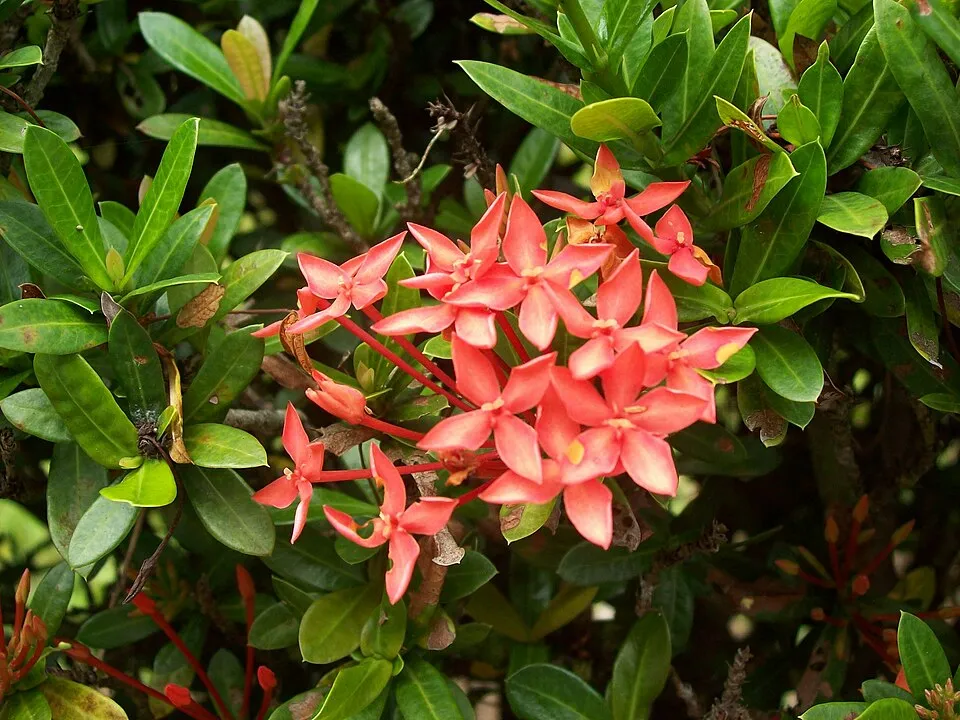
Ixora javanica, commonly known as the Jungle Flame or Javanese Ixora, is a captivating tropical evergreen shrub belonging to the Rubiaceae family, a diverse group renowned for species like coffee and gardenia. This species typically reaches a height of 1 to 3 meters in its native habitat but remains more compact, often 2 to 4 feet tall, when cultivated indoors. Its robust growth is characterized by sturdy, smooth green stems that support a dense canopy of foliage.
The leaves are a striking feature, being glossy, dark green, and ovate to elliptical in shape, ranging from 3 to 6 inches in length. These leathery leaves are crucial for moisture retention, contributing to the plant's lush appearance.
The plant is celebrated for its vibrant, domed clusters of tubular flowers, which typically display a brilliant orange-red hue. These showy blooms are highly attractive to various pollinators, including butterflies and hummingbirds, making it a lively addition to any garden or conservatory. Ixora javanica naturally thrives in the tropical and subtropical regions of Southeast Asia, which is considered its center of diversity.
It also flourishes in similar climates elsewhere, such as Florida in the United States, where it is sometimes called West Indian jasmine. This species prefers bright, filtered sunlight and consistent warmth, blooming from late spring through summer, offering an extended display of its characteristic fiery blossoms. It is adaptable to USDA hardiness zones 8 to 11, indicating its preference for frost-free environments.
Trusted Scientific References
1. Authoritative external sources for Ixora javanica
1.1 Wikipedia — Ixora javanica
1.2 Kew POWO (Plants of the World Online)
1.3 PubMed — peer-reviewed research
1.4 NCBI Taxonomy Browser
1.5 GBIF — Global Biodiversity
1.6Ixora Javanica should be interpreted through verified botanical identity, practical care, and responsible safety language. This recovery note adds the missing context needed for a complete profile: match light to the plant's habit, use well-drained soil, water according to season, and avoid unsupported medicinal or edible claims. For publishing, the plant can be presented as a source-backed indoor plant with clear care guidance, common problem diagnosis, and conservative safety wording.
1.1.Ixora Javanica — Defining Traits
- ✓Vibrant orange — red, tubular flowers in large domed clusters.
- ✓Glossy, dark green, ovate to elliptical leaves (3 — 6 inches long).
- ✓Attracts pollinators like — Attracts pollinators like butterflies and hummingbirds.
- ✓Tropical evergreen shrub, typically 1 — 3 meters tall.
- ✓Native to tropical — Native to tropical and subtropical regions of Southeast Asia.
- ✓Traditional uses include anti — inflammatory, analgesic, and antipyretic.
- ✓Moderate growth rate — Moderate growth rate under optimal conditions.
- ✓Requires high humidity — Requires high humidity and warm temperatures (USDA zones 8-11).
- ✓Sturdy, smooth green — Sturdy, smooth green stems.
- ✓Member of the — Member of the diverse Rubiaceae family.
1.2.Ixora Javanica — In Brief
- ✓Ixora javanica is a vibrant tropical evergreen shrub known for its fiery orange-red flowers.
- ✓Traditionally used in Southeast Asian folk medicine for its anti-inflammatory and analgesic properties.
- ✓Rich in phytochemicals such as flavonoids, triterpenes, and tannins.
- ✓Requires warm temperatures, high humidity, and consistent moisture for optimal growth.
- ✓Preparations include poultices for topical use and decoctions for internal ailments like fever.
- ✓Always consult a healthcare professional before using Ixora javanica for medicinal purposes.
2.Ixora Javanica — Taxonomic Classification
3.Ixora Javanica — Reference Facts
4.Ixora Javanica — Morphological Account
5.Ixora Javanica — Where It Grows
6.Ixora Javanica — Cultural & Traditional Roles
7.Ixora Javanica — Active Compounds
- ✓Flavonoids — Compounds like quercetin, kaempferol, and their glycosides are often present, contributing to the plant's antioxidant, anti-inflammatory, and anticarcinogenic activities.
- ✓Triterpenes — Pentacyclic triterpenes such as ursolic acid and oleanolic acid are common, known for their anti-inflammatory, hepatoprotective, and anticancer properties.
- ✓Saponins — These glycosides create a frothing effect and exhibit hemolytic, immunomodulatory, and cholesterol-lowering properties, though caution is advised with internal use.
- ✓Alkaloids — The genus Ixora is known to contain various alkaloids, which can have diverse pharmacological effects including analgesic and anti-inflammatory actions.
- ✓Tannins — Polyphenolic compounds that contribute to the plant's astringent properties, beneficial for wound healing and as antioxidants, and can also have antimicrobial effects.
- ✓Phenolic Acids — Including gallic acid and caffeic acid, these compounds are strong antioxidants and contribute to anti-inflammatory and antimicrobial activities.
- ✓Glycosides — Various types of glycosides, beyond saponins, are present, often responsible for specific pharmacological actions and contributing to the plant's overall therapeutic profile.
- ✓Steroids — Plant steroids, or phytosterols, can have anti-inflammatory effects and contribute to the plant's medicinal value, often influencing hormonal pathways.
- ✓Coumarins — These compounds can exhibit anticoagulant, anti-inflammatory, and antimicrobial properties, and are often found in various plant species.
- ✓Anthraquinones — Some species in the Rubiaceae family contain anthraquinones, which can have laxative, antimicrobial, and antioxidant properties, though their presence in Ixora javanica requires specific confirmation.
8.Ixora Javanica — What Research Suggests
- ✓Anti-inflammatory Properties — Traditionally, poultices made from Ixora javanica leaves are applied topically to reduce swelling and inflammation associated with wounds, burns, and skin irritations by modulating inflammatory pathways.
- ✓Analgesic Effects — The plant has been historically used to alleviate pain, suggesting natural analgesic compounds that may interact with pain receptors or reduce pain-causing inflammation.
- ✓Antipyretic Action — Decoctions of Ixora javanica roots and leaves have been employed in folk medicine to help reduce fever, indicating potential compounds that influence thermoregulation.
- ✓Antitussive Relief — Traditional remedies utilize preparations from this plant to soothe coughs, suggesting the presence of constituents that may calm respiratory irritation or suppress cough reflexes.
- ✓Wound Healing Acceleration — Topical application of leaf preparations is believed to promote faster healing of cuts and burns, possibly due to antimicrobial and regenerative compounds that support tissue repair.
- ✓Antioxidant Activity — While research is ongoing, many plants in the Rubiaceae family contain potent antioxidants, which could help protect cells from oxidative stress and damage.
- ✓Antimicrobial Potential — Given its traditional use on wounds, Ixora javanica may possess compounds that inhibit the growth of certain bacteria and fungi, preventing infection.
- ✓Hepatoprotective Support — Some related Ixora species show potential for liver protection; Ixora javanica might share similar properties, supporting liver health against toxins.
- ✓Diuretic Properties — Certain traditional uses suggest a mild diuretic effect, which could aid in fluid balance and detoxification through increased urine output.
- ✓Immunomodulatory Effects — Phytochemicals in various medicinal plants, including potentially Ixora javanica, can influence the immune system, helping to regulate its responses.
8.1.Ixora Javanica — Health Applications
9.Ixora Javanica — Adverse Effects
9.1.Ixora Javanica — Side Effects & Warnings
- ✓Allergic Reactions — Some individuals may experience skin irritation, itching, or rash when Ixora javanica is applied topically, or allergic responses if ingested.
- ✓Gastrointestinal Upset — Internal consumption, especially in large doses, might lead to mild digestive issues such as nausea, vomiting, or diarrhea.
- ✓Medication Interactions — Potential for interaction with certain medications, particularly those affecting blood clotting or blood sugar levels, due to its active compounds.
- ✓Photosensitivity — While rare, some plant constituents can increase skin sensitivity to sunlight, leading to phototoxic reactions in susceptible individuals.
- ✓Overdose Toxicity — Excessive internal intake of Ixora javanica preparations could lead to adverse systemic effects, requiring careful adherence to dosage guidelines.
- ✓Skin Discoloration — Prolonged topical use of certain plant preparations might, in rare cases, cause temporary skin discoloration.
9.2.Ixora Javanica — Safety Overview
- ✓Pregnancy and Lactation — Avoid use during pregnancy and breastfeeding due to insufficient safety data; consult a healthcare professional before use.
- ✓Pediatric Use — Not recommended for infants and young children without professional medical guidance; dosages should be significantly reduced and carefully monitored.
- ✓Pre-existing Conditions — Individuals with chronic health conditions, especially liver, kidney, or cardiovascular issues, should consult a doctor before using Ixora javanica.
- ✓Allergy Test — Perform a patch test on a small skin area before extensive topical application to check for allergic reactions or sensitivities.
- ✓Dosage Adherence — Strictly follow recommended dosages from qualified herbalists or healthcare providers to prevent potential adverse effects.
- ✓Purity and Sourcing — Ensure plant material is sourced from reputable suppliers to guarantee authenticity and freedom from contaminants or adulteration.
- ✓Long-term Use — Monitor for any unusual symptoms or adverse reactions if considering long-term internal use, and periodically reassess its suitability with a healthcare expert.
10.Ixora Javanica — Application Forms
- ✓Decoction — Prepare a decoction by simmering dried roots or tough leaves in water for 15-20 minutes; traditionally used internally for fevers and coughs.
- ✓Infusion — Create an infusion by steeping fresh or dried flowers and tender leaves in hot water for 5-10 minutes; often consumed as a tea for general well-being.
- ✓Poultice — Make a fresh poultice by crushing fresh leaves and applying them directly to affected skin areas; traditionally used for wounds, burns, and skin irritations.
- ✓Tincture — Prepare an alcohol-based tincture by steeping plant material in a solvent for several weeks; used internally in diluted form or externally for concentrated effects.
- ✓Topical Oil/Cream — Infuse dried plant material into a carrier oil to create a medicinal oil, or incorporate extracts into creams for localized anti-inflammatory and healing applications.
- ✓Compress — Soak a clean cloth in a cooled decoction or strong infusion and apply as a compress to relieve localized pain, swelling, or skin discomfort.
- ✓Powder — Dry and grind leaves or roots into a fine powder, which can be encapsulated for internal use or mixed with a carrier for external applications.
11.Ixora Javanica — Growth Requirements
- ✓Sunlight — Provide full sun to partial shade; at least 4-6 hours of direct light daily is ideal for optimal flowering and growth.
- ✓Soil — Plant in rich, well-draining soil with ample organic matter; a slightly acidic to neutral pH (5.5-7.0) is preferred for healthy development.
- ✓Watering — Maintain consistent soil moisture, especially during active growth and blooming periods; do not allow the soil to dry out completely between waterings.
- ✓Humidity — Ensure high humidity levels, ideally above 70%, by misting regularly, using a pebble tray, or placing near a humidifier, mimicking its tropical native environment.
- ✓Temperature — Keep temperatures warm, with an optimal range of 18-30°C (65-86°F); minimum tolerance is around 10°C (50°F), as it is sensitive to cold.
- ✓Fertilization — Feed fortnightly during the growing season (spring and summer) with a balanced liquid fertilizer formulated for acid-loving plants to encourage vigorous growth and abundant blooms.
- ✓Pruning — Prune after flowering to maintain a desirable shape, encourage bushier growth, and remove spent flowers to promote continuous blooming and enhance plant vigor.
- ✓Propagation — Propagate primarily via semi-hardwood cuttings taken in summer or softwood cuttings in spring; air layering is also an effective method for larger specimens.
Reviewed by the Flora Medical Global Botanical Review Panel
Multi-disciplinary editorial group · Botany · Ethnobotany · Herbal-medicine literature
Who reviewed this: This page was checked by the Flora Medical Global Botanical Review Panel — an in-house editorial group of botany graduates, ethnobotany researchers, and horticulture practitioners who collectively maintain our 7,000+ plant encyclopedia. Meet the team.
Our 4-step verification process
1. Taxonomic verification
Scientific names and synonyms cross-checked against Kew POWO, World Flora Online, and The Plant List.
2. Phytochemical & medicinal cross-reference
Active compounds, traditional uses, and reported activities are cross-referenced with PubMed, USDA Dr. Duke's database, and peer-reviewed ethnobotanical literature.
3. Conservation & distribution check
Distribution, ecology, and conservation status confirmed against GBIF occurrence records and the IUCN Red List.
4. Editorial & safety review
Every entry passes an editorial pass for clarity, originality, and safety notices (toxicity, contraindications, dosage caveats) before publication.
Last reviewed:
Important medical disclaimer: This content is for educational and research purposes only. It is not medical advice and is not a substitute for consultation with a licensed healthcare provider. Do not use any herb to self-treat a medical condition without professional guidance.
Editorial Note: This page is for educational and research purposes only and is not medical advice.
Written by: Flora Medical Global Editorial Team
Reviewed by: Flora Medical Global Botanical Review Panel
Last Updated: June 15, 2026





Ixora Javanica — Comments & Community Reviews
Rate this plant