

Medical Disclaimer: This content is for educational purposes only. It is not medical advice. Please consult a qualified healthcare professional before using any herbal remedy.
Safety Overview
1.Jacobaea Maritima — At a Glance
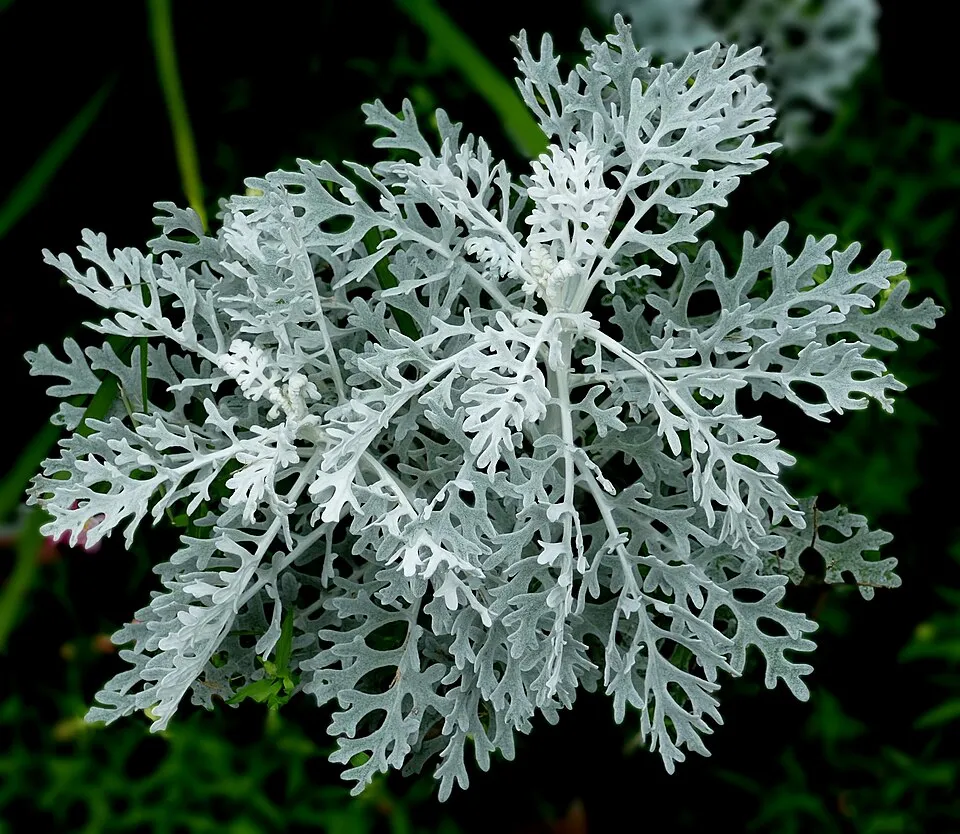
Jacobaea maritima, commonly known as Silver Ragwort or Dusty Miller, is a striking ornamental plant belonging to the Asteraceae family. Native to the Mediterranean basin, it thrives in coastal areas and dry, rocky soils, reflecting its drought-tolerant nature. This short-lived perennial is frequently cultivated as an annual in cooler climates due to its sensitivity to frost.
Its most distinctive feature is its silvery-white foliage, which is deeply lobed or pinnatifid, creating a finely dissected appearance. The leaves are covered in a dense, woolly indumentum composed of fine, matted hairs, giving them a soft, felt-like texture and brilliant reflective quality. While it produces small, daisy-like yellow flowers in summer, these are often pruned by gardeners to maintain the plant's compact form and emphasize its highly valued textural and color contrast.
Jacobaea maritima typically forms a mounding habit, reaching about 1 to 2 feet in height and spread. Its robust nature and tolerance to various growing conditions, including full sun and poor soil, make it a versatile and popular choice for landscape design, container plantings, and borders, where its unique silver hue provides an excellent foil for other vibrant plants.
Trusted Scientific References
1. Authoritative external sources for Jacobaea Maritima
1.1 Wikipedia — Jacobaea Maritima
1.2 Kew POWO (Plants of the World Online)
1.3 PubMed — peer-reviewed research
1.4 NCBI Taxonomy Browser
1.5 GBIF — Global Biodiversity
1.6Jacobaea Maritima should be interpreted through verified botanical identity, practical care, and responsible safety language. This recovery note adds the missing context needed for a complete profile: match light to the plant's habit, use well-drained soil, water according to season, and avoid unsupported medicinal or edible claims. For publishing, the plant can be presented as a source-backed garden plant with clear care guidance, common problem diagnosis, and conservative safety wording.
1.1.Jacobaea Maritima — Highlights
- ✓Striking silvery — white, deeply lobed foliage.
- ✓Dense, woolly indumentum giving a felt — like texture.
- ✓Native to the — Native to the Mediterranean region.
- ✓Primarily grown as an ornamental annual or short — lived perennial.
- ✓Drought — tolerant and heat-resistant.
- ✓Requires full sun — Requires full sun for best foliage color and compact growth.
- ✓Contains hepatotoxic and — Contains hepatotoxic and carcinogenic pyrrolizidine alkaloids.
- ✓Not safe for — Not safe for internal medicinal use or consumption.
- ✓Low maintenance and — Low maintenance and adaptable to various soil types.
- ✓Excellent for garden — Excellent for garden borders, containers, and xeriscaping.
1.2.Jacobaea Maritima — In Brief
- ✓Jacobaea maritima, or Dusty Miller, is an ornamental plant.
- ✓Valued for its silvery, woolly foliage and drought tolerance.
- ✓Contains highly toxic pyrrolizidine alkaloids (PAs).
- ✓Ingestion causes severe liver damage and is carcinogenic.
- ✓Strictly for external, ornamental use only; never ingest.
- ✓Easy to grow in full sun and well-drained soil.
2.Jacobaea Maritima — Botanical Identity
3.Jacobaea Maritima — Vital Statistics
4.Jacobaea Maritima — Botanical Description
5.Jacobaea Maritima — Native Range & Habitat
6.Jacobaea Maritima — Folk Medicine Applications
7.Jacobaea Maritima — Phytochemistry
- ✓Pyrrolizidine Alkaloids (PAs) — Includes senecionine, seneciphylline, jacobine, seneciphylline N-oxide, and senecionine N-oxide; highly hepatotoxic and carcinogenic compounds.
- ✓Flavonoids — Such as quercetin, kaempferol, and their glycosides; known for antioxidant properties, though not for internal use due to PA toxicity.
- ✓Sesquiterpenoids — Compounds that contribute to the plant's defense mechanisms and potential aromatic properties.
- ✓Triterpenes — Including types like α-amyrin and β-amyrin, often associated with anti-inflammatory effects in other plants.
- ✓Caffeoylquinic Acids — Derivatives like chlorogenic acid and cynarin, which are common phenolic acids with antioxidant activity.
- ✓Volatile Organic Compounds (VOCs) — Responsible for any faint scent, though not prominent in this species; may include monoterpenes.
- ✓Waxes and Cuticular Lipids — Form the protective layer on the leaves, contributing to their silvery appearance and drought resistance.
8.Jacobaea Maritima — Evidence-Based Benefits
- ✓Ornamental Value — Primarily cultivated for its striking silvery-white foliage, providing aesthetic contrast and texture in gardens.
- ✓Drought Tolerance — Adaptable to dry conditions once established, requiring minimal water, beneficial for xeriscaping.
- ✓Heat Resistance — Thrives in full sun and hot climates, making it suitable for warm-region landscaping.
- ✓Soil Adaptability — Tolerates various soil types, including poor or rocky soils, as long as drainage is adequate.
- ✓Pest and Disease Resistance — Generally robust and not prone to significant pest infestations or diseases, reducing maintenance needs.
- ✓Erosion Control (Limited) — Its fibrous root system can offer some stabilization in sandy or loose soils, particularly in coastal environments.
- ✓Companion Planting — Its neutral silver color enhances the visual appeal of brightly colored flowering plants.
- ✓Low Maintenance — Requires minimal pruning, fertilization, or specialized care once established, making it ideal for busy gardeners.
- ✓Air Purification (Minor) — Like many plants, it contributes to local air quality through photosynthesis, though not its primary function.
- ✓Biodiversity Support (Limited) — Its flowers, if allowed to bloom, can attract some generalist pollinators, contributing to local insect populations.
8.1.Jacobaea Maritima — Reported Uses
9.Jacobaea Maritima — Safety & Side Effects
9.1.Jacobaea Maritima — Caution Notes
- ✓Severe Liver Damage — Ingestion leads to hepatotoxicity due to pyrrolizidine alkaloids, causing irreversible liver failure.
- ✓Carcinogenic Effects — Pyrrolizidine alkaloids are known carcinogens, increasing cancer risk with exposure.
- ✓Gastrointestinal Distress — Nausea, vomiting, abdominal pain, and diarrhea can occur upon ingestion.
- ✓Veno-occlusive Disease — PAs can cause blockage of small veins in the liver, leading to severe circulatory issues.
- ✓Organ Failure — Beyond the liver, PAs can affect other organs, leading to multi-organ system failure in severe cases.
- ✓Skin Irritation — Direct contact with plant sap may cause mild skin irritation or dermatitis in sensitive individuals.
- ✓Teratogenicity — PAs are known to be teratogenic, posing significant risks during pregnancy.
9.2.Jacobaea Maritima — Safety Profile
- ✓Highly Toxic — Jacobaea maritima is considered highly toxic to humans and animals if ingested due to pyrrolizidine alkaloids.
- ✓Not for Internal Use — Absolutely contra-indicated for consumption, tinctures, teas, or any internal medicinal application.
- ✓Handle with Care — Wear gloves when handling to avoid potential skin irritation, especially for individuals with sensitivities.
- ✓Keep Away from Children and Pets — Ensure the plant is inaccessible to small children and household pets to prevent accidental ingestion.
- ✓Avoid Herbivorous Animals — Do not plant in areas where livestock or other herbivorous animals may graze, as it is toxic to them.
- ✓Proper Disposal — Dispose of plant material responsibly to prevent accidental consumption by animals.
- ✓Educational Awareness — Inform others about the plant's toxicity, especially when used in public or shared garden spaces.
- ✓No Therapeutic Index — There is no safe therapeutic dose for internal use due to its potent hepatotoxic and carcinogenic compounds.
10.Jacobaea Maritima — Usage Guide
- ✓Ornamental Planting — Primarily used for its striking silvery foliage to add texture and contrast in garden beds, borders, and rock gardens.
- ✓Container Gardening — Excellent choice for pots, hanging baskets, and window boxes due to its compact size and visual appeal.
- ✓Companion Planting — Often paired with vibrant annuals and perennials like petunias, salvias, or zinnias to highlight color.
- ✓Xeriscaping — Suitable for drought-tolerant landscapes due to its low water requirements once established.
- ✓Foliage Accent — Used to create visual interest and brighten garden compositions, especially in moon gardens.
- ✓Cut Foliage — Its durable, attractive leaves can be used in floral arrangements for texture and color contrast.
- ✓Educational Display — Can be included in botanical gardens or educational settings to demonstrate plant adaptations to dry environments.
- ✓Never for Internal Use — Due to its high content of toxic pyrrolizidine alkaloids, Jacobaea maritima must never be ingested or used medicinally.
11.Jacobaea Maritima — Garden Cultivation
- ✓Seed Sowing — Sow seeds indoors 6-8 weeks before the last frost, or directly outdoors after frost danger has passed.
- ✓Light Requirements — Prefers full sun exposure to maintain compact growth and vibrant silver foliage; partial shade can lead to leggy plants.
- ✓Soil Preferences — Thrives in well-drained soil; tolerates various soil types, including sandy or rocky, but good drainage is crucial.
- ✓Watering — Drought-tolerant once established; water sparingly, allowing soil to dry out between waterings to prevent root rot.
- ✓Fertilization — Light feeders; generally requires minimal fertilization, especially in good garden soil; may benefit from compost in poor soils.
- ✓Pruning — Optional; remove yellowing leaves or flower stalks to encourage denser foliage and maintain a compact shape.
- ✓Propagation — Easily propagated from stem cuttings in spring; dip cuttings in rooting hormone for better success.
- ✓Hardiness — Grown as an annual in most regions; perennial in USDA Zones 8-11, sometimes overwintering in Zone 5 or 4 with protection.
Reviewed by the Flora Medical Global Botanical Review Panel
Multi-disciplinary editorial group · Botany · Ethnobotany · Herbal-medicine literature
Who reviewed this: This page was checked by the Flora Medical Global Botanical Review Panel — an in-house editorial group of botany graduates, ethnobotany researchers, and horticulture practitioners who collectively maintain our 7,000+ plant encyclopedia. Meet the team.
Our 4-step verification process
1. Taxonomic verification
Scientific names and synonyms cross-checked against Kew POWO, World Flora Online, and The Plant List.
2. Phytochemical & medicinal cross-reference
Active compounds, traditional uses, and reported activities are cross-referenced with PubMed, USDA Dr. Duke's database, and peer-reviewed ethnobotanical literature.
3. Conservation & distribution check
Distribution, ecology, and conservation status confirmed against GBIF occurrence records and the IUCN Red List.
4. Editorial & safety review
Every entry passes an editorial pass for clarity, originality, and safety notices (toxicity, contraindications, dosage caveats) before publication.
Last reviewed:
Important medical disclaimer: This content is for educational and research purposes only. It is not medical advice and is not a substitute for consultation with a licensed healthcare provider. Do not use any herb to self-treat a medical condition without professional guidance.
Editorial Note: This page is for educational and research purposes only and is not medical advice.
Written by: Flora Medical Global Editorial Team
Reviewed by: Flora Medical Global Botanical Review Panel
Last Updated: June 15, 2026





Jacobaea Maritima — Comments & Community Reviews
Rate this plant