


Medical Disclaimer: This content is for educational purposes only. It is not medical advice. Please consult a qualified healthcare professional before using any herbal remedy.
Safety Overview
1.Jasione — At a Glance
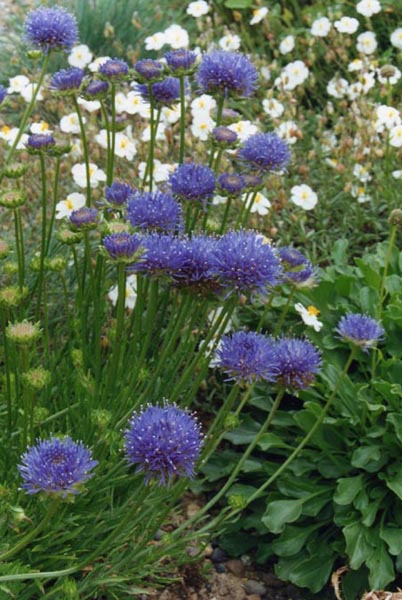
Jasione laevis, commonly known as Sheep's Bit Scabious or Blue Bonnets, is an enchanting perennial wildflower belonging to the Campanulaceae family. This species is indigenous to Western Europe, particularly thriving across dry grasslands, heathlands, and rocky terrains. Morphologically, it presents as a low-growing plant, forming neat basal rosettes of narrowly oblong to lance-shaped, grey-green leaves.
From these rosettes, slender, erect stems ascend, each culminating in distinctive, globe-shaped clusters of vibrant blue to violet-blue flowers. Each flower head, often likened to a small pincushion, is intricately composed of numerous tiny florets, creating a striking visual spectacle from early summer through autumn. The plant's aesthetic appeal, combined with its ecological role in attracting pollinators like bees and butterflies, makes it a favored choice for rock gardens, borders, and naturalized meadows.
Jasione laevis is highly valued for its remarkable drought tolerance and its ability to flourish in poor, well-drained soils, establishing it as a low-maintenance and resilient addition to diverse garden settings. Its distribution is primarily concentrated in the western and southern regions of Europe, showcasing its adaptability to various temperate climates.
Trusted Scientific References
1. Authoritative external sources for Jasione laevis
1.1 Wikipedia — Jasione laevis
1.2 Kew POWO (Plants of the World Online)
1.3 PubMed — peer-reviewed research
1.4 NCBI Taxonomy Browser
1.5 GBIF — Global Biodiversity
1.6Jasione should be interpreted through verified botanical identity, practical care, and responsible safety language. This recovery note adds the missing context needed for a complete profile: match light to the plant's habit, use well-drained soil, water according to season, and avoid unsupported medicinal or edible claims. For publishing, the plant can be presented as a source-backed garden plant with clear care guidance, common problem diagnosis, and conservative safety wording.
1.1.Jasione — Notable Characteristics
- ✓Common Names — Sheep's Bit Scabious, Blue Bonnets.
- ✓Scientific Name — Jasione laevis.
- ✓Family — Campanulaceae (Bellflower family).
- ✓Native Range — Western and Southern Europe.
- ✓Flower Color — Bright blue to violet-blue.
- ✓Growth Habit — Low-growing perennial with basal rosettes.
- ✓Soil Preference — Well-drained, sandy or loamy soils.
- ✓Sun Exposure — Full sun to partial shade.
- ✓Drought Tolerance — High.
- ✓Pollinator Friendly — Attracts bees and butterflies.
1.2.Jasione — Quick Summary
- ✓Jasione laevis is an ornamental European wildflower.
- ✓Known for its vibrant blue, pincushion-like flowers.
- ✓Highly valued for drought tolerance and low maintenance.
- ✓Attracts pollinators, supporting biodiversity.
- ✓No significant documented medicinal uses.
- ✓Generally non-toxic and safe for garden use.
2.Jasione — Nomenclature & Classification
3.Jasione — Vital Statistics
4.Jasione — Physical Description
5.Jasione — Native Range & Habitat
6.Jasione — Heritage Uses
7.Jasione — Key Phytochemicals
- ✓Flavonoids — Potentially offer antioxidant and anti-inflammatory properties, common in many plant species.
- ✓Phenolic Acids — Contribute to the plant's defense mechanisms and may have antioxidant activity.
- ✓Triterpenoid Saponins — Could possess mild surfactant properties; their presence requires further investigation.
- ✓Iridoids — Often found in Campanulaceae, these compounds can have bitter tastes and potential defensive roles.
- ✓Anthocyanins — Responsible for the blue and violet coloration of the flowers, acting as natural pigments.
- ✓Polysaccharides — May contribute to the structural integrity of the plant and could have immunomodulatory potential.
- ✓Volatile Organic Compounds — Contribute to the plant's scent, primarily for pollinator attraction, but specific composition is unknown.
- ✓Carotenoids — Present in leaves, involved in photosynthesis and may offer antioxidant benefits.
- ✓Alkaloids — While not prominently reported, trace amounts might exist, warranting further phytochemical screening.
- ✓Lignans — Structural components of plant cell walls, which may also exhibit various biological activities.
8.Jasione — Pharmacological Findings
- ✓Ornamental Value — Jasione laevis is primarily cultivated for its aesthetic appeal, enhancing garden beauty and biodiversity.
- ✓Pollinator Attraction — Its vibrant flowers attract bees, butterflies, and other beneficial insects, supporting ecosystem health.
- ✓Landscape Resilience — Known for drought tolerance, it helps stabilize dry, rocky soils and prevents erosion in challenging environments.
- ✓Soil Improvement — As a low-maintenance plant, it contributes to soil health by requiring minimal chemical inputs.
- ✓Biodiversity Support — By providing nectar and habitat, it aids in the conservation of local insect populations.
- ✓Aesthetic Appeal — Its unique pincushion-like blue flowers offer visual interest and can be used in floral arrangements.
- ✓Low Maintenance Gardening — Requires minimal watering and care once established, making it suitable for sustainable gardening practices.
- ✓Habitat Creation — Provides cover and food for small wildlife in naturalized settings.
- ✓Xeriscaping Component — Ideal for water-wise landscaping due to its ability to thrive with little irrigation.
- ✓Educational Value — Can be used in botanical gardens to showcase native European flora and explain plant adaptation to harsh conditions.
8.1.Jasione — Reported Uses
9.Jasione — Safety & Side Effects
9.1.Jasione — Side Effects & Warnings
- ✓Allergic Reactions — Potential for contact dermatitis in sensitive individuals, though rare.
- ✓Digestive Upset — Ingesting large quantities is not recommended and may cause mild gastrointestinal discomfort.
- ✓Pollen Allergies — Like many flowering plants, its pollen could trigger allergies in susceptible individuals.
- ✓Skin Irritation — Direct contact with sap might cause minor skin irritation in some people.
- ✓Unknown Interactions — Due to lack of medicinal research, interactions with medications are unknown.
- ✓Lack of Medicinal Efficacy — Should not be relied upon for treating medical conditions as no proven medicinal benefits exist.
9.2.Jasione — Toxicity Assessment
- ✓Non-Toxic — Generally considered non-toxic to humans and pets, making it safe for gardens.
- ✓External Use Only — Avoid internal consumption due to lack of toxicological data and medicinal efficacy.
- ✓Consult Professionals — Always consult a healthcare provider before using any plant for medicinal purposes.
- ✓Keep Out of Reach — Store plant materials away from children to prevent accidental ingestion.
- ✓No Known Contraindications — No specific contraindications are widely documented due to its primary ornamental use.
- ✓Allergic Sensitivity — Individuals with plant allergies should exercise caution during handling.
- ✓Horticultural Use — Primarily intended for ornamental and ecological gardening purposes.
10.Jasione — Preparation Methods
- ✓Garden Ornamental — Plant in rock gardens, borders, or naturalized meadows for aesthetic beauty and ecological benefit.
- ✓Pollinator Garden — Incorporate into gardens designed to attract and support bees, butterflies, and other beneficial insects.
- ✓Xeriscape Design — Utilize in water-wise landscapes due to its high drought tolerance.
- ✓Cut Flower Displays — Harvest fresh flowers for small, informal bouquets or mixed floral arrangements.
- ✓Erosion Control — Plant on banks and slopes to help stabilize soil and prevent erosion.
- ✓Habitat Restoration — Use in native plant restoration projects to re-establish local flora and support wildlife.
- ✓Educational Display — Feature in botanical collections to illustrate European native plants and their adaptations.
- ✓Low-Maintenance Groundcover — Suitable for areas where a resilient, attractive, and undemanding plant is desired.
11.Jasione — Cultivation & Care
- ✓Choosing Location — Plant in full sun (6-8 hours daily) to partial shade for optimal growth and flowering.
- ✓Soil Preparation — Requires well-drained, sandy or loamy soil with a pH between 6.0-7.5 to prevent root rot.
- ✓Planting Techniques — Space plants 12-18 inches apart; sow seeds or seedlings at a depth of about 1/4 inch.
- ✓Watering Requirements — Water regularly until established, then reduce frequency; use drip irrigation to keep foliage dry.
- ✓Fertilizing — Apply a balanced NPK fertilizer in early spring and again in mid-summer to support healthy growth.
- ✓Pruning — Deadhead spent flowers and trim leggy growth after flowering to encourage bushier growth and prolonged blooming.
- ✓Winter Care — Apply mulch in winter to protect roots and retain moisture, ensuring plant health through colder months.
- ✓Propagation — Can be propagated by seed in spring (germination in 2-4 weeks) or by division of established plants in early spring or fall.
Reviewed by the Flora Medical Global Botanical Review Panel
Multi-disciplinary editorial group · Botany · Ethnobotany · Herbal-medicine literature
Who reviewed this: This page was checked by the Flora Medical Global Botanical Review Panel — an in-house editorial group of botany graduates, ethnobotany researchers, and horticulture practitioners who collectively maintain our 7,000+ plant encyclopedia. Meet the team.
Our 4-step verification process
1. Taxonomic verification
Scientific names and synonyms cross-checked against Kew POWO, World Flora Online, and The Plant List.
2. Phytochemical & medicinal cross-reference
Active compounds, traditional uses, and reported activities are cross-referenced with PubMed, USDA Dr. Duke's database, and peer-reviewed ethnobotanical literature.
3. Conservation & distribution check
Distribution, ecology, and conservation status confirmed against GBIF occurrence records and the IUCN Red List.
4. Editorial & safety review
Every entry passes an editorial pass for clarity, originality, and safety notices (toxicity, contraindications, dosage caveats) before publication.
Last reviewed:
Important medical disclaimer: This content is for educational and research purposes only. It is not medical advice and is not a substitute for consultation with a licensed healthcare provider. Do not use any herb to self-treat a medical condition without professional guidance.
Editorial Note: This page is for educational and research purposes only and is not medical advice.
Written by: Flora Medical Global Editorial Team
Reviewed by: Flora Medical Global Botanical Review Panel
Last Updated: June 15, 2026





Jasione — Comments & Community Reviews
Rate this plant