
Medical Disclaimer: This content is for educational purposes only. It is not medical advice. Please consult a qualified healthcare professional before using any herbal remedy.
Safety Overview
1.Juncus Effusus Spiralis — At a Glance
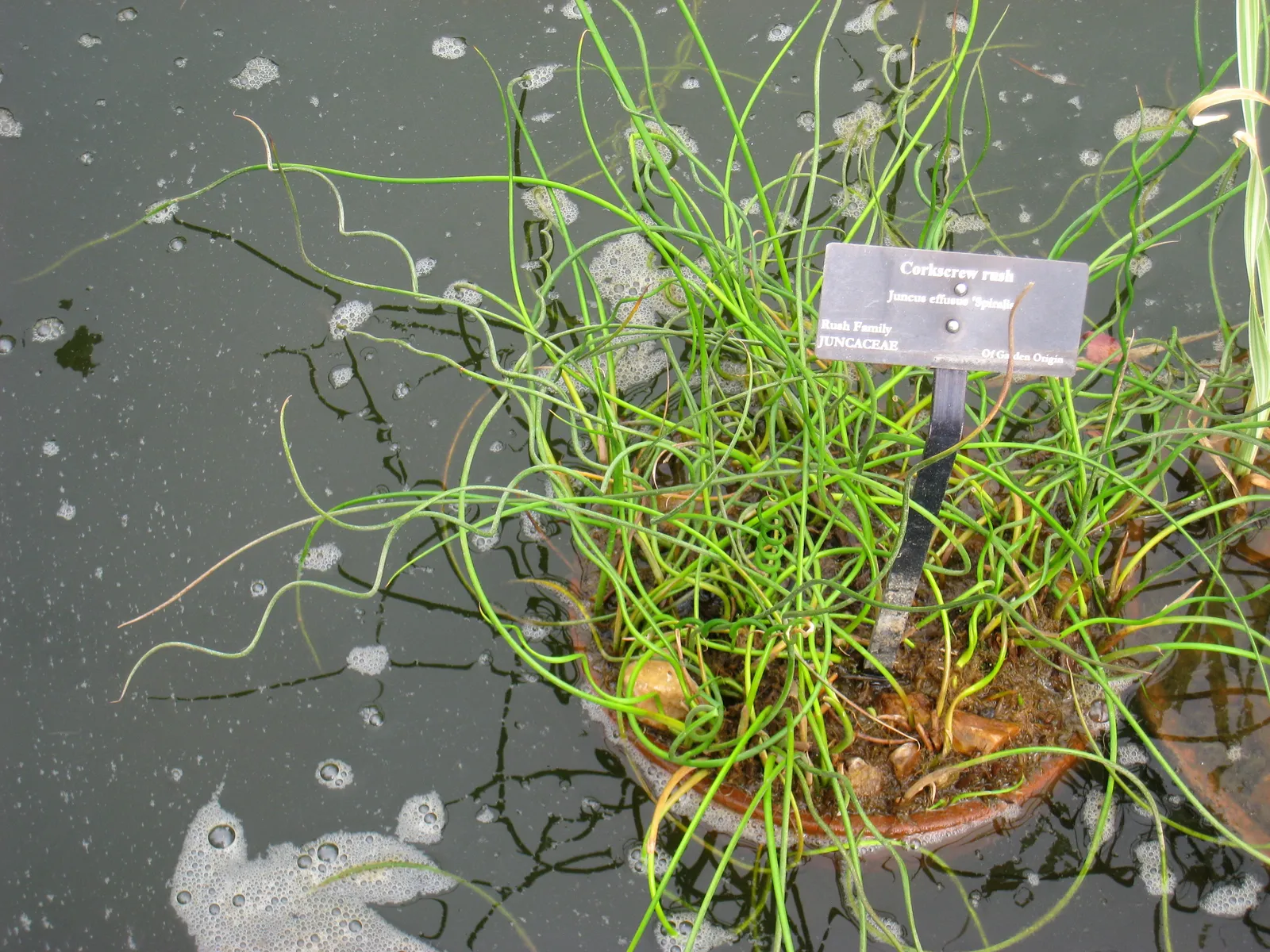
Juncus effusus 'Spiralis', commonly known as the Corkscrew Rush, is a captivating perennial herbaceous plant belonging to the Juncaceae family. This distinctive cultivar of the common rush, Juncus effusus, is celebrated for its unique morphological features. It typically forms dense, upright clumps, reaching heights of 30 to 45 centimeters (12 to 18 inches) and similar widths.
The most striking characteristic of the Corkscrew Rush is its dark green, cylindrical stems, which are devoid of true leaves. Instead, these stems perform photosynthesis and grow in an intriguing, tightly coiled or spiraling fashion, creating a sculptural and architectural display. Each stem is smooth to the touch and can be up to 1 centimeter in diameter.
In late summer, the plant produces inconspicuous, yellowish-green to brownish flowers in small, irregular clusters (cymes) near the stem tips. These small scaly flowers are followed by obovoid capsules as fruit.
Ecologically, Juncus effusus 'Spiralis' thrives in consistently moist to wet conditions, characteristic of its native temperate regions across Europe, North America, and Asia. It is frequently found in wetlands, marshy areas, along stream banks, and at the edges of ponds, often growing with several inches of water over its crown. Taxonomically, it is classified within the order Poales.
While primarily cultivated for its ornamental appeal in water gardens, rain gardens, and as a houseplant, its robust nature also contributes to the biodiversity of aquatic habitats. In warmer climates, it can remain semi-evergreen, but in cooler zones, its foliage typically yellows and dies back to the ground during winter, regrowing in spring.
Trusted Scientific References
1. Authoritative external sources for Juncus effusus Spiralis
1.1 Wikipedia — Juncus effusus Spiralis
1.2 Kew POWO (Plants of the World Online)
1.3 PubMed — peer-reviewed research
1.4 NCBI Taxonomy Browser
1.5 GBIF — Global Biodiversity
1.6Juncus Effusus Spiralis should be interpreted through verified botanical identity, practical care, and responsible safety language. This recovery note adds the missing context needed for a complete profile: match light to the plant's habit, use well-drained soil, water according to season, and avoid unsupported medicinal or edible claims. For publishing, the plant can be presented as a source-backed indoor plant with clear care guidance, common problem diagnosis, and conservative safety wording.
1.1.Juncus Effusus Spiralis — Distinguishing Points
- ✓Distinctive corkscrew — like, spiraling green stems.
- ✓Perennial herbaceous plant — Perennial herbaceous plant with a clumping growth habit.
- ✓Adaptable to full — Adaptable to full sun to partial shade conditions.
- ✓Thrives in consistently — Thrives in consistently moist to wet, boggy soils.
- ✓Excellent choice for — Excellent choice for water gardens, rain gardens, and containers.
- ✓Suitable as a unique and low — maintenance houseplant.
- ✓Produces inconspicuous, small — Produces inconspicuous, small brownish flowers in summer.
- ✓Native to temperate — Native to temperate regions across multiple continents.
- ✓Contributes to local biodiversity in aquatic and semi — aquatic habitats.
- ✓Known for its — Known for its potential to act as a natural indoor air purifier.
1.2.Juncus Effusus Spiralis — Concise Overview
- ✓Unique spiraling stems make it a distinctive ornamental plant.
- ✓Thrives in wet, boggy conditions, ideal for water gardens and containers.
- ✓Low-maintenance and easy to grow, suitable for indoor environments.
- ✓Traditional uses of related Juncus species include diuretic, anti-inflammatory, and calming effects.
- ✓Primarily valued for its aesthetic appeal and environmental benefits like air purification.
2.Juncus Effusus Spiralis — Scientific Identity
3.Juncus Effusus Spiralis — Fact Sheet
4.Juncus Effusus Spiralis — Botanical Description
5.Juncus Effusus Spiralis — Native Range & Habitat
6.Juncus Effusus Spiralis — Traditional Uses
7.Juncus Effusus Spiralis — Chemical Profile
- ✓Flavonoids — These potent plant pigments, including flavone glycosides, are known for their antioxidant, anti-inflammatory, and potential diuretic activities, contributing to cellular protection.
- ✓Phenolic Acids — Compounds such as caffeic acid derivatives are present, offering significant antioxidant and antimicrobial properties that support overall plant health and potentially human well-being.
- ✓Triterpenoids — This diverse class includes compounds that may exhibit anti-inflammatory, adaptogenic, and cytoprotective effects, often found in various plant parts.
- ✓Lignans — Present in the stems and rhizomes, lignans are phenylpropanoid derivatives recognized for their antioxidant and potential anti-inflammatory actions.
- ✓Polysaccharides — Complex carbohydrates found within the plant's structure contribute to its fibrous nature and may possess immunomodulatory and bulk-forming properties.
- ✓Tannins — These astringent compounds, if present, can offer antimicrobial and anti-inflammatory benefits, traditionally used for skin conditions and digestive support.
- ✓Sterols — Plant sterols are natural compounds with potential anti-inflammatory effects and roles in plant growth and defense mechanisms.
- ✓Alkaloids — While typically found in trace amounts, certain alkaloids can have diverse pharmacological activities, although specific types and their significance in Juncus are not well-defined.
- ✓Saponins — These soap-like compounds may contribute to expectorant and anti-inflammatory actions, though their specific presence and concentration in Juncus require further research.
- ✓Fiber — The structural components of the stems provide dietary fiber, which is crucial for digestive health and traditional bulk-forming applications.
8.Juncus Effusus Spiralis — Pharmacological Findings
- ✓Diuretic Support — Based on traditional uses of Juncus species, extracts are believed to promote urine flow, aiding in the body's natural detoxification processes and reducing fluid retention.
- ✓Anti-inflammatory Action — Historically, various Juncus species have been applied topically to soothe minor inflammations and irritations, suggesting potential anti-inflammatory properties.
- ✓Wound Healing Aid — In folk medicine, preparations from related rushes were sometimes used on minor cuts and abrasions, believed to support skin regeneration and reduce swelling.
- ✓Gastrointestinal Regulation — The fibrous nature of Juncus plants traditionally served as a bulk-forming agent, potentially assisting in digestive regularity and alleviating mild gastrointestinal complaints.
- ✓Calming and Sedative Effects — The pith of Juncus effusus (Deng Xin Cao) is recognized in Traditional Chinese Medicine for its heart-clearing and tranquilizing properties, used to address insomnia and restlessness.
- ✓Antioxidant Potential — Like many plants, Juncus species likely contain phenolic compounds and flavonoids that can help neutralize free radicals, protecting cellular health.
- ✓Pain Relief — Linked to its traditional anti-inflammatory uses, some Juncus preparations were historically employed to alleviate minor aches and discomfort.
- ✓Detoxification Enhancement — By supporting diuretic function, Juncus species may indirectly contribute to the elimination of metabolic waste products from the body.
- ✓Respiratory Comfort — Traditional remedies involving related Juncus species have been used to ease symptoms of common colds and coughs, likely due to soothing or expectorant actions.
- ✓Topical Astringent — The presence of tannins in some Juncus species could confer astringent properties, useful for tightening tissues and reducing minor skin secretions.
- ✓Immune System Support — While not a primary use, general plant compounds like polysaccharides and flavonoids can offer broad-spectrum support for immune function.
- ✓Fluid Retention Management — Its traditional diuretic application suggests a role in managing conditions characterized by excess fluid accumulation, such as mild edema.
8.1.Juncus Effusus Spiralis — Health Applications
9.Juncus Effusus Spiralis — Safety & Side Effects
9.1.Juncus Effusus Spiralis — Warnings
- ✓Allergic Reactions — Direct skin contact may cause mild irritation or allergic dermatitis in sensitive individuals.
- ✓Gastrointestinal Upset — Ingesting large quantities of any plant material, including Juncus, could potentially lead to mild digestive discomfort, such as bloating or nausea.
- ✓Electrolyte Imbalance — If strong diuretic extracts from related Juncus species were consumed excessively, there is a theoretical risk of electrolyte disturbance.
- ✓Contamination Risk — Wild-harvested Juncus from polluted waters may contain heavy metals or other toxins, posing a health risk if ingested.
- ✓Medication Interactions — Hypothetically, if active compounds were consumed, they could interact with diuretics, blood thinners, or other medications, altering their efficacy.
- ✓Photosensitivity — While uncommon for Juncus, some plant compounds can induce photosensitivity in susceptible individuals upon skin exposure or ingestion.
9.2.Juncus Effusus Spiralis — Toxicity Assessment
- ✓Not for Internal Consumption — Juncus effusus 'Spiralis' is primarily an ornamental plant and is not recommended for internal consumption without expert guidance.
- ✓Pregnancy and Lactation — Pregnant or nursing individuals should avoid any medicinal use of Juncus species due to insufficient safety data.
- ✓Children — Keep out of reach of children and pets, as ingestion may lead to mild gastrointestinal upset.
- ✓Pre-existing Conditions — Individuals with kidney disease, heart conditions, or other chronic illnesses should consult a healthcare professional before considering any traditional Juncus remedies.
- ✓Allergies — People with known allergies to plants in the Juncaceae family or related monocots should exercise caution.
- ✓Drug Interactions — There is no established data on drug interactions for Juncus effusus 'Spiralis'; however, caution is advised with any medication when considering related species' uses.
10.Juncus Effusus Spiralis — Usage Guide
- ✓Ornamental Cultivation — Primarily grown for its unique aesthetic appeal in water gardens, rain gardens, containers, and as an indoor houseplant.
- ✓Traditional Decoction (Related Species) — For fibrous plant parts of related Juncus species, a decoction could be prepared by simmering the material in water to extract compounds for internal use.
- ✓Traditional Infusion (Related Species) — Softer parts of related Juncus species might be steeped in hot water to create an infusion for diuretic or calming effects, similar to a tea.
- ✓Topical Poultice (Related Species) — Crushed or macerated plant material from related Juncus species could be applied directly to the skin as a poultice for traditional wound healing or anti-inflammatory purposes.
- ✓Tincture Preparation (Related Species) — An alcohol-based extract could be made from related Juncus species to concentrate active compounds for potential internal or external application.
- ✓Powdered Form (Related Species) — Dried and powdered Juncus material, traditionally from related species, might be encapsulated or mixed with liquids for bulk-forming or other internal uses.
- ✓Herbal Bath (Related Species) — Infusions or decoctions of related Juncus species could be added to bathwater for a calming or skin-soothing experience.
11.Juncus Effusus Spiralis — Garden Cultivation
- ✓Site Selection — Prefers full sun (6+ hours direct sunlight) but tolerates partial shade (2-6 hours).
- ✓Soil Requirements — Thrives in consistently moist, boggy, or wet soils; adaptable to clay, loam, or sand textures with neutral pH (6.0-8.0).
- ✓Water Management — Requires abundant water; can grow with 1 to 6 inches of water over its crown, making it ideal for water gardens or boggy sites.
- ✓Container Growing — Excellent as a container plant or houseplant; use pots 2 gallons or larger to accommodate its clumping habit.
- ✓Propagation — Primarily propagated by division of its rhizomes, which helps manage its spread, especially when planted directly in the ground.
- ✓Spread Control — To limit self-seeding and spread, keep plants in pots or sink potted plants into the ground with the lip above soil level.
- ✓Winter Care — In zones 5a-11b, it can be semi-evergreen; in cooler climates, foliage may yellow and die back, requiring trimming in spring.
- ✓Maintenance — Considered low-maintenance, requiring consistent moisture and occasional division to maintain vigor.
Reviewed by the Flora Medical Global Botanical Review Panel
Multi-disciplinary editorial group · Botany · Ethnobotany · Herbal-medicine literature
Who reviewed this: This page was checked by the Flora Medical Global Botanical Review Panel — an in-house editorial group of botany graduates, ethnobotany researchers, and horticulture practitioners who collectively maintain our 7,000+ plant encyclopedia. Meet the team.
Our 4-step verification process
1. Taxonomic verification
Scientific names and synonyms cross-checked against Kew POWO, World Flora Online, and The Plant List.
2. Phytochemical & medicinal cross-reference
Active compounds, traditional uses, and reported activities are cross-referenced with PubMed, USDA Dr. Duke's database, and peer-reviewed ethnobotanical literature.
3. Conservation & distribution check
Distribution, ecology, and conservation status confirmed against GBIF occurrence records and the IUCN Red List.
4. Editorial & safety review
Every entry passes an editorial pass for clarity, originality, and safety notices (toxicity, contraindications, dosage caveats) before publication.
Last reviewed:
Important medical disclaimer: This content is for educational and research purposes only. It is not medical advice and is not a substitute for consultation with a licensed healthcare provider. Do not use any herb to self-treat a medical condition without professional guidance.
Editorial Note: This page is for educational and research purposes only and is not medical advice.
Written by: Flora Medical Global Editorial Team
Reviewed by: Flora Medical Global Botanical Review Panel
Last Updated: June 15, 2026





Juncus Effusus Spiralis — Comments & Community Reviews
Rate this plant