
Medical Disclaimer: This content is for educational purposes only. It is not medical advice. Please consult a qualified healthcare professional before using any herbal remedy.
Safety Overview
1.Kalanchoe Blossfeldiana — Overview
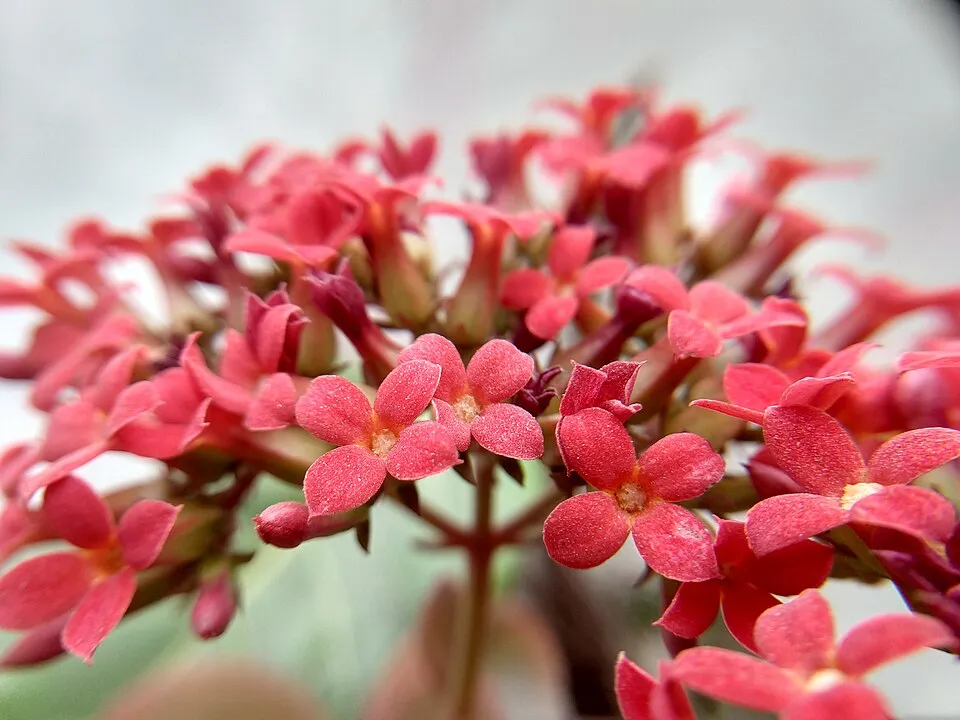
Kalanchoe blossfeldiana, widely recognized as Kalanchoe or Flaming Katy, is a globally popular succulent houseplant celebrated for its profusion of vibrant, long-lasting flowers. This perennial evergreen succulent is native to the cool, elevated regions of Madagascar, where it thrives in well-drained, sandy-loamy soils, often found nestled in rock crevices or among sparse vegetation in mountainous areas characterized by distinct wet and dry seasons. The plant typically forms a compact, bushy mound, reaching heights of 15-45 cm (6-18 inches) with an equivalent spread.
Its distinctive foliage consists of thick, succulent, dark green leaves, which are ovate to obovate with scalloped or crenate margins, frequently exhibiting a reddish tinge along the edges when exposed to ample sunlight. This decorative foliage provides year-round visual appeal, even outside of its blooming period.
What truly sets Kalanchoe blossfeldiana apart are its prolific clusters of small, four-petaled florets, which are borne in dense cymes above the foliage on sturdy stems. While the original wild forms typically displayed red flowers, extensive horticultural hybridization since its introduction to Europe in 1932 by German hybridizer Robert Blossfeld has yielded a spectacular spectrum of colors, including various shades of red, orange, yellow, pink, white, and even striking bi-colored varieties.
These brilliant blooms can persist for several weeks, often gracing indoor spaces from late autumn through spring, making it a favored choice for adding color during colder months. The plant's photoperiodic nature, which necessitates short days and long nights to initiate flowering, is strategically utilized by florists to force blooms for holiday seasons, cementing its status as a cherished ornamental.
Trusted Scientific References
1. Authoritative external sources for Kalanchoe blossfeldiana
1.1 Wikipedia — Kalanchoe blossfeldiana
1.2 Kew POWO (Plants of the World Online)
1.3 PubMed — peer-reviewed research
1.4 NCBI Taxonomy Browser
1.5 GBIF — Global Biodiversity
1.1.Kalanchoe Blossfeldiana — Defining Traits
- ✓Vibrant, Long — Lasting Flowers — Produces dense clusters of colorful florets that bloom for several weeks.
- ✓Succulent Foliage — Features thick, waxy, dark green leaves with scalloped margins.
- ✓Photoperiodic Blooming — Flowers are triggered by short-day/long-night conditions, making it a popular winter bloomer.
- ✓Easy Indoor Care — Relatively low-maintenance as a houseplant, requiring bright light and infrequent watering.
- ✓Native to Madagascar — Originates from the cool, elevated regions of this island nation.
- ✓Crassulaceae Family — A member of the stonecrop family, known for succulent plants.
- ✓Traditional Topical Uses — Historically applied externally for wound healing and inflammation.
- ✓Contains Cardiac Glycosides — Presence of bufadienolides necessitates strict caution against internal consumption.
- ✓Wide Cultivar Range — Available in a spectrum of flower colors due to extensive hybridization.
- ✓Compact Growth Habit — Forms a bushy, mounding plant suitable for indoor pots and containers.
1.2.Kalanchoe Blossfeldiana — In Brief
- ✓Kalanchoe blossfeldiana, or Flaming Katy, is a popular ornamental succulent known for vibrant, long-lasting flowers.
- ✓Native to Madagascar, it belongs to the Crassulaceae family and thrives in cool, elevated, well-drained environments.
- ✓Traditionally used topically for anti-inflammatory, wound-healing, and antiseptic properties in some folk medicine systems.
- ✓Contains bufadienolides, potent cardiac glycosides, making it toxic if ingested.
- ✓Requires abundant sunlight, cool temperatures, and specific light cycles to bloom profusely.
- ✓Primarily cultivated as a houseplant, offering aesthetic value with critical safety considerations for medicinal use.
2.Kalanchoe Blossfeldiana — Scientific Profile
3.Kalanchoe Blossfeldiana — Quick Facts
4.Kalanchoe Blossfeldiana — Plant Morphology
5.Kalanchoe Blossfeldiana — Habitat & Distribution
6.Kalanchoe Blossfeldiana — Historical Applications
7.Kalanchoe Blossfeldiana — Active Compounds
- ✓Flavonoids — Compounds like quercetin, kaempferol, and their glycosides contribute to the plant's antioxidant and anti-inflammatory activities, protecting against cellular damage.
- ✓Bufadienolides — Potent cardiac glycosides such as bryophyllin A and B are present, which are responsible for the plant's toxicity upon ingestion but also show emerging cytotoxic and insecticidal properties in controlled studies.
- ✓Phenolic Acids — Including caffeic acid and ferulic acid, these compounds contribute significantly to the plant's antioxidant, antimicrobial, and anti-inflammatory potential.
- ✓Triterpenes — Such as ursolic acid and oleanolic acid, known for their anti-inflammatory, hepatoprotective, and potential anti-cancer activities.
- ✓Sterols — Phytosterols like beta-sitosterol are present, which can have cholesterol-lowering and anti-inflammatory effects.
- ✓Organic Acids — Various organic acids contribute to the plant's metabolic processes and may play a role in its overall biological activities.
- ✓Alkaloids — While less prominent than other classes, some alkaloidal compounds may be present, contributing to diverse pharmacological actions.
- ✓Polysaccharides — Complex carbohydrates that can possess immunomodulatory and wound-healing properties, supporting tissue repair and immune function.
8.Kalanchoe Blossfeldiana — Research Insights
- ✓Anti-inflammatory Properties — Extracts from Kalanchoe blossfeldiana have shown potential in modulating inflammatory responses, possibly by inhibiting pro-inflammatory mediators, which could be beneficial for various inflammatory conditions.
- ✓Wound Healing Acceleration — Traditionally, Kalanchoe species are used topically to promote the healing of cuts, burns, and abrasions, with research suggesting its compounds may stimulate tissue regeneration and collagen synthesis.
- ✓Antioxidant Activity — The plant contains phenolic compounds and flavonoids that exhibit significant antioxidant capacity, helping to neutralize free radicals and protect cells from oxidative stress.
- ✓Antimicrobial Effects — Studies indicate that K. blossfeldiana extracts possess inhibitory effects against certain bacteria and fungi, suggesting potential as a natural antiseptic for minor skin infections.
- ✓Analgesic Potential — Some traditional applications point to its use for pain relief, particularly when applied topically to soothe localized discomfort from inflammation or minor injuries.
- ✓Immunomodulatory Support — Certain constituents may interact with the immune system, potentially enhancing or modulating immune responses, although specific mechanisms require further investigation.
- ✓Topical Antipruritic — Applied externally, the plant's sap or poultice may help alleviate itching associated with insect bites, rashes, or minor skin irritations due to its soothing properties.
- ✓Cytoprotective Effects — Beyond antioxidant action, compounds in Kalanchoe blossfeldiana may offer protection to cellular structures against various forms of damage, supporting overall cellular health.
- ✓Antiseptic Action — Its traditional use for skin ailments is partly attributed to its mild antiseptic qualities, helping to cleanse and protect wounds from microbial contamination.
8.1.Kalanchoe Blossfeldiana — Therapeutic Indications
9.Kalanchoe Blossfeldiana — Precautions & Warnings
9.1.Kalanchoe Blossfeldiana — Warnings
- ✓Cardiac Toxicity — Ingestion, particularly of large quantities, can cause severe cardiac symptoms due to bufadienolides, including arrhythmias, bradycardia, and heart failure.
- ✓Gastrointestinal Upset — Oral consumption may lead to nausea, vomiting, diarrhea, and abdominal pain.
- ✓Skin Irritation — Direct contact with the sap can cause dermatitis or allergic reactions in sensitive individuals, manifesting as redness, itching, or rash.
- ✓Drug Interactions — The cardiac glycosides may interact dangerously with heart medications, diuretics, or other drugs affecting electrolyte balance.
- ✓Liver and Kidney Damage — Prolonged or high-dose internal use could potentially lead to hepatotoxicity or nephrotoxicity, though research is limited for K. blossfeldiana specifically.
- ✓Hypersensitivity Reactions — Allergic reactions, beyond simple skin irritation, can occur in susceptible individuals.
- ✓Central Nervous System Effects — In severe poisoning cases, neurological symptoms like lethargy or weakness may be observed.
9.2.Kalanchoe Blossfeldiana — Clinical Safety Notes
- ✓Internal Consumption Contraindicated — Kalanchoe blossfeldiana is highly toxic if ingested due to the presence of bufadienolides (cardiac glycosides); it should never be consumed internally without expert medical supervision.
- ✓Keep Away from Children and Pets — Ensure the plant is placed out of reach of children and domestic animals, as ingestion can be fatal.
- ✓Pregnancy and Lactation — Avoid use during pregnancy and breastfeeding due to potential toxicity and lack of safety data.
- ✓Cardiac Conditions — Individuals with heart conditions or those taking cardiac medications, such as digoxin, must strictly avoid any internal or topical use.
- ✓Topical Use Caution — Perform a patch test on a small skin area before widespread topical application to check for sensitivity or allergic reactions.
- ✓Consult a Healthcare Professional — Always consult a qualified medical herbalist or healthcare provider before considering any medicinal use of Kalanchoe blossfeldiana.
- ✓Ornamental Use Only — For most households, Kalanchoe blossfeldiana should be treated solely as an ornamental plant.
10.Kalanchoe Blossfeldiana — Preparation & Dosage
- ✓Topical Poultice — For traditional external applications, crushed fresh leaves can be prepared as a poultice and applied directly to minor wounds, burns, or inflammatory skin conditions.
- ✓Compresses — An infusion or decoction of the leaves can be used to soak a cloth for external compresses, offering soothing relief for localized pain or swelling.
- ✓Infused Oil — Leaves can be gently heated in a carrier oil (e.g., olive oil) to create an infused oil for topical application, potentially for massage or skin conditioning.
- ✓Tincture (External Use Only) — A hydroalcoholic extract of the leaves, prepared by maceration, can be used externally as an antiseptic wash or dabbed onto insect bites.
- ✓Juiced Preparation (Extreme Caution) — In very specific traditional contexts, fresh leaf juice might be diluted for highly controlled external uses; internal consumption is strongly discouraged due to toxicity.
- ✓Non-Medicinal Application — Primarily cultivated as an ornamental, its vibrant flowers and succulent foliage are used to enhance indoor aesthetics and add color to home and office environments.
- ✓Horticultural Display — Used extensively in garden beds and containers in warm climates, or as a seasonal potted plant indoors globally, valued for its low maintenance and extended bloom time.
11.Kalanchoe Blossfeldiana — Propagation & Care
- ✓Light — Provide abundant sunlight, ideally at least four hours of direct sun daily; a south-facing window is optimal, or filtered shade if moved outdoors in summer.
- ✓Watering — Water thoroughly when the top few inches of soil feel dry to the touch, always erring on the side of dryness; ensure to empty the run-off dish after 15 minutes.
- ✓Temperature — Kalanchoe blossfeldiana thrives in cool conditions, preferring night temperatures between 50-60°F (10-15°C) and day temperatures of 65-70°F (18-21°C) for extended blooming.
- ✓Feeding — Fertilize with a balanced houseplant fertilizer twice monthly from late spring to early winter, then cease feeding from March through May.
- ✓Repotting — Repot in the spring after flowering into a slightly larger container, using a rich, well-drained, porous mix comprising houseplant potting soil, crushed stones, coarse builder's sand, and organic matter.
- ✓Encouraging Flowers — To stimulate re-blooming, provide 12-14 hours of uninterrupted darkness each night for four weeks, typically starting in early September, to mimic short-day conditions.
- ✓Propagation — Easily propagated from 2-3 inch stem tip cuttings taken in spring or summer; allow cuttings to harden off for about a week before applying rooting hormone and planting in a moist, light soil mix.
- ✓Pruning — After flowering, cut back spent stems and lightly prune to reshape the plant, which encourages branching and more flower-bearing tips.
Reviewed by the Flora Medical Global Botanical Review Panel
Multi-disciplinary editorial group · Botany · Ethnobotany · Herbal-medicine literature
Who reviewed this: This page was checked by the Flora Medical Global Botanical Review Panel — an in-house editorial group of botany graduates, ethnobotany researchers, and horticulture practitioners who collectively maintain our 7,000+ plant encyclopedia. Meet the team.
Our 4-step verification process
1. Taxonomic verification
Scientific names and synonyms cross-checked against Kew POWO, World Flora Online, and The Plant List.
2. Phytochemical & medicinal cross-reference
Active compounds, traditional uses, and reported activities are cross-referenced with PubMed, USDA Dr. Duke's database, and peer-reviewed ethnobotanical literature.
3. Conservation & distribution check
Distribution, ecology, and conservation status confirmed against GBIF occurrence records and the IUCN Red List.
4. Editorial & safety review
Every entry passes an editorial pass for clarity, originality, and safety notices (toxicity, contraindications, dosage caveats) before publication.
Last reviewed:
Important medical disclaimer: This content is for educational and research purposes only. It is not medical advice and is not a substitute for consultation with a licensed healthcare provider. Do not use any herb to self-treat a medical condition without professional guidance.
Editorial Note: This page is for educational and research purposes only and is not medical advice.
Written by: Flora Medical Global Editorial Team
Reviewed by: Flora Medical Global Botanical Review Panel
Last Updated: June 15, 2026





Kalanchoe Blossfeldiana — Comments & Community Reviews
Rate this plant