
Medical Disclaimer: This content is for educational purposes only. It is not medical advice. Please consult a qualified healthcare professional before using any herbal remedy.
Safety Overview
1.Kalanchoe Daigremontiana — Plant Snapshot
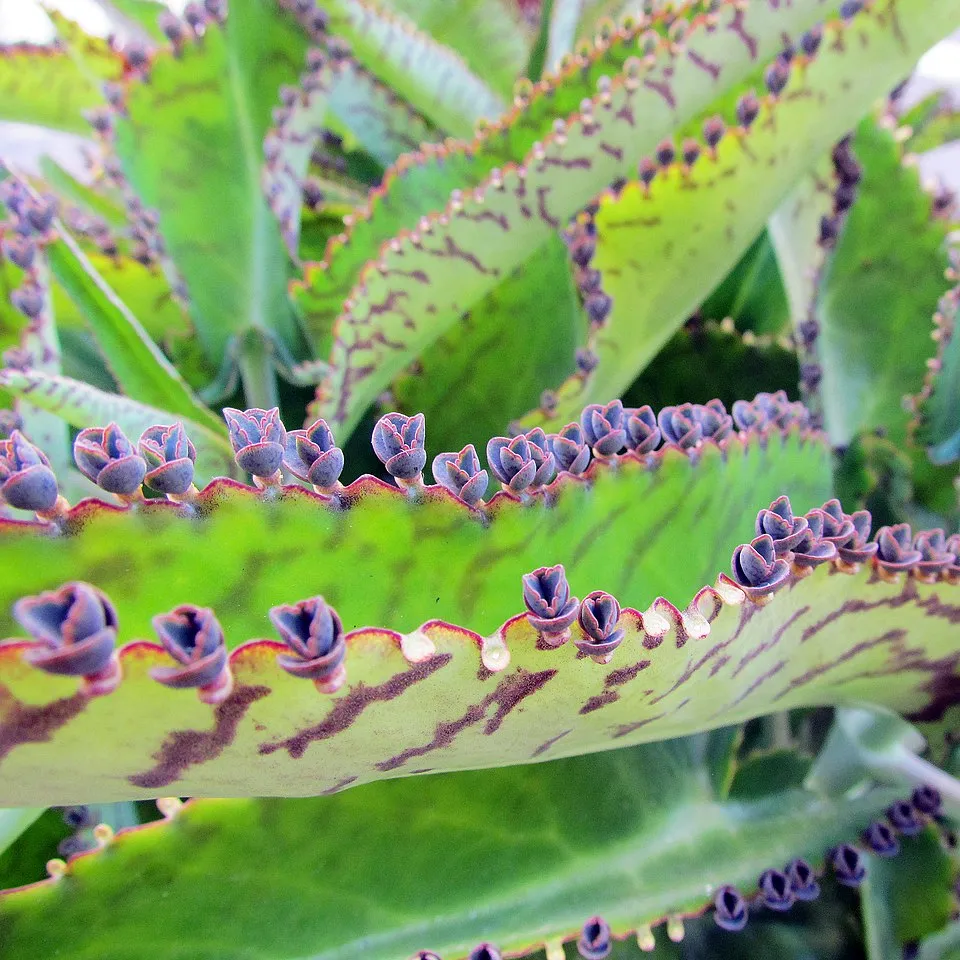
Kalanchoe daigremontiana, commonly known as Mother of Thousands, Devil's Backbone, or Alligator Plant, is an iconic succulent belonging to the Crassulaceae family. It is indigenous to the Fikambana Peninsula in southwestern Madagascar, thriving in its arid to semi-arid climates. This remarkable plant is celebrated for its viviparous reproduction, a distinct botanical trait where numerous plantlets, or bulbils, form along the crenate margins of its fleshy leaves.
These miniature replicas readily detach, fall to the ground, and root independently, contributing to its prolific propagation and, in some regions, its classification as an invasive species. Morphologically, Kalanchoe daigremontiana typically grows as a monocarpic perennial, meaning it flowers once before generally dying back, though it often produces offsets from its base. Its distinctive appearance features large, thick, triangular-ovate green leaves, frequently mottled with purplish-brown spots on their underside.
This succulent exhibits remarkable drought tolerance, a characteristic facilitated by its Crassulacean Acid Metabolism (CAM) pathway, which allows it to efficiently convert CO2 into malic acid during the cooler night hours, significantly conserving water. While its historical use in traditional medicine systems is not as extensively documented as some other Kalanchoe species, modern pharmacological research, particularly in European and South American contexts, has focused considerable attention on its unique phytochemistry and potential therapeutic properties, notably its purported anti-cancer, anti-inflammatory, and antimicrobial effects. Despite its ornamental appeal, the plant's inherent toxicity to various animals, including household pets, is a critical concern, primarily attributed to the presence of cardiac glycosides.
Trusted Scientific References
1. Authoritative external sources for Kalanchoe daigremontiana
1.1 Wikipedia — Kalanchoe daigremontiana
1.2 Kew POWO (Plants of the World Online)
1.3 PubMed — peer-reviewed research
1.4 NCBI Taxonomy Browser
1.5 GBIF — Global Biodiversity
1.1.Kalanchoe Daigremontiana — Defining Traits
- ✓Viviparous Reproduction — Produces numerous plantlets (bulbils) along its leaf margins, leading to prolific propagation.
- ✓Crassulacean Acid Metabolism (CAM) — Utilizes CAM photosynthesis for efficient water conservation in arid environments.
- ✓High Toxicity — Contains cardiac glycosides, making it dangerous if ingested by humans or animals.
- ✓Ornamental Appeal — Valued for its distinctive fleshy, triangular-ovate leaves often mottled with purplish-brown spots.
- ✓Invasive Potential — Its rapid and easy propagation can lead to it becoming an invasive species in suitable climates.
- ✓Anti — cancer Research Focus — Subject of significant modern research for its cytotoxic bufadienolides against cancer cells.
- ✓Drought Tolerant Succulent — Highly adapted to dry conditions, requiring minimal water.
- ✓Monocarpic Perennial — Typically flowers once and then dies, though it produces many offsets.
- ✓Limited Traditional Documentation — Unlike some Kalanchoe species, its historical medicinal use is less documented, with modern research driving interest.
- ✓Rich Phytochemistry — Characterized by a complex profile of bufadienolides, flavonoids, triterpenes, and phenolic acids.
1.2.Kalanchoe Daigremontiana — Snapshot Summary
- ✓Native to Madagascar, Kalanchoe daigremontiana is known for its viviparous reproduction and drought tolerance.
- ✓Contains potent cardiac glycosides (bufadienolides), flavonoids, and triterpenes.
- ✓Modern research explores its anti-cancer, anti-inflammatory, and antimicrobial properties.
- ✓The plant is highly toxic; internal use is strictly contraindicated without expert medical guidance.
- ✓Easy to cultivate as an ornamental but can become invasive if not contained.
- ✓Requires well-draining soil and abundant light for optimal growth and health.
2.Kalanchoe Daigremontiana — Systematic Position
3.Kalanchoe Daigremontiana — Quick Facts
4.Kalanchoe Daigremontiana — Morphological Account
5.Kalanchoe Daigremontiana — Geographic Distribution
6.Kalanchoe Daigremontiana — Historical Applications
7.Kalanchoe Daigremontiana — Bioactive Constituents
- ✓Bufadienolides — Potent cardiac glycosides such as Bryophyllin A, Daigremontianin, and Bersaldegenin-1-acetate, responsible for cytotoxic, anti-tumor, and cardiotonic activities.
- ✓Flavonoids — Compounds like quercetin, kaempferol, and their glycosides, which contribute significantly to the plant's antioxidant and anti-inflammatory effects.
- ✓Triterpenes — Including ursolic acid and oleanolic acid, known for their anti-inflammatory, hepatoprotective, and potential anti-cancer properties.
- ✓Phenolic Acids — Such as caffeic acid and p-coumaric acid, which provide additional antioxidant and antimicrobial benefits.
- ✓Steroids — Various phytosterols that play roles in cell membrane structure and may possess hormonal influences.
- ✓Organic Acids — Notably malic acid, accumulated during the night as part of its Crassulacean Acid Metabolism (CAM) for efficient photosynthesis.
- ✓Alkanes — Long-chain hydrocarbons found in epicuticular waxes, providing physical protection against water loss and pathogens.
- ✓Glycosides — Beyond bufadienolides, other glycosidic compounds with diverse biological activities have been identified in the plant.
- ✓Essential Minerals — Contains trace amounts of vital minerals essential for plant growth and potentially for biological activity.
8.Kalanchoe Daigremontiana — What Research Suggests
- ✓Anti-cancer Activity — Research indicates that bufadienolides present in Kalanchoe daigremontiana exhibit potent cytotoxic effects against various human cancer cell lines, inhibiting their proliferation and inducing apoptosis.
- ✓Anti-inflammatory Effects — Flavonoids and triterpenes found in the plant contribute to its anti-inflammatory properties by modulating inflammatory pathways and reducing edema in preclinical models.
- ✓Antimicrobial Properties — Extracts of Kalanchoe daigremontiana have demonstrated activity against a range of bacteria and fungi, suggesting potential in combating microbial infections.
- ✓Antioxidant Support — The plant contains phenolic compounds and flavonoids that act as free radical scavengers, helping to protect cells from oxidative damage.
- ✓Immunomodulatory Action — Certain constituents may influence the immune system, potentially enhancing immune responses or modulating inflammatory signals.
- ✓Wound Healing — Traditional applications and some studies suggest the plant may promote tissue regeneration and reduce infection risk in minor cuts and abrasions.
- ✓Hepatoprotective Potential — Preclinical studies have indicated that Kalanchoe daigremontiana extracts may offer protection to liver cells against various forms of damage.
- ✓Antidiabetic Effects — Some research points to a potential role in blood glucose regulation, with extracts showing promise in managing hyperglycemia in animal models.
- ✓Antileishmanial Activity — Specific compounds from the plant have shown efficacy against Leishmania parasites in in vitro studies, suggesting antiparasitic potential.
- ✓Analgesic Properties — The plant may possess pain-relieving effects, which could contribute to its traditional use in managing localized discomfort.
8.1.Kalanchoe Daigremontiana — Reported Uses
9.Kalanchoe Daigremontiana — Precautions & Warnings
9.1.Kalanchoe Daigremontiana — Possible Adverse Reactions
- ✓Cardiac Toxicity — Ingestion, even of small amounts, can cause severe cardiac arrhythmias, bradycardia, heart palpitations, and potentially fatal cardiac arrest due to bufadienolides.
- ✓Gastrointestinal Distress — Common symptoms after ingestion include nausea, vomiting, severe diarrhea, and abdominal cramps.
- ✓Neurological Symptoms — May induce drowsiness, lethargy, muscle weakness, tremors, and in severe cases, convulsions or paralysis.
- ✓Hypotension — Can cause a significant drop in blood pressure, especially if combined with other hypotensive medications.
- ✓Allergic Contact Dermatitis — Topical application may cause skin irritation, redness, itching, or allergic reactions in sensitive individuals.
- ✓Hepatic Impairment — Chronic or high-dose internal use could potentially lead to liver damage or dysfunction.
- ✓Teratogenicity — Strongly contraindicated during pregnancy due to potential harm to fetal development.
9.2.Kalanchoe Daigremontiana — Safety Overview
- ✓High Toxicity Warning — Kalanchoe daigremontiana is extremely toxic to humans, pets, and livestock. Ingestion of any part of the plant can be dangerous and potentially fatal.
- ✓Avoid Internal Self-Medication — Internal use is strictly discouraged and should only be considered under the direct supervision of a highly qualified medical herbalist or physician with expertise in plant toxicology.
- ✓Keep Out of Reach — Ensure the plant is inaccessible to children and pets to prevent accidental ingestion. It is a common cause of poisoning in domestic animals.
- ✓Contraindicated in Pregnancy & Lactation — Due to its potent compounds and potential teratogenic effects, Kalanchoe daigremontiana must not be used during pregnancy or breastfeeding.
- ✓Cardiac Conditions — Individuals with pre-existing heart conditions, or those taking cardiac medications, should absolutely avoid any form of Kalanchoe daigremontiana.
- ✓Drug Interactions — May interact dangerously with diuretics, corticosteroids, digoxin, and other medications affecting electrolyte balance or cardiac function.
- ✓Topical Application Caution — Always perform a patch test on a small skin area before widespread topical use to check for adverse reactions or sensitivity.
10.Kalanchoe Daigremontiana — How to Use
- ✓Topical Application — Freshly crushed leaves or their expressed juice can be applied directly to the skin for minor irritations, wounds, or localized inflammatory conditions, though caution is advised due to potential skin sensitivity.
- ✓Infusion/Tea (Extreme Caution) — A very diluted infusion of dried leaves has been used traditionally, but internal consumption is highly risky due to toxicity and should only be undertaken under strict expert supervision.
- ✓Tincture (Expert Use Only) — Alcoholic extracts of the leaves are prepared by experienced herbalists for internal use, but dosages must be extremely low and precisely controlled due to the plant's potent cardiac glycosides.
- ✓Poultice — Macerated fresh leaves can be formed into a poultice and applied externally to affected areas to draw out inflammation or address localized pain, ensuring no broken skin contact.
- ✓Fresh Juice (Strictly Supervised) — Fresh juice from the leaves is sometimes used internally in highly diluted forms by trained practitioners for specific conditions, emphasizing the need for precise dosing and monitoring.
- ✓Standardized Extracts — In some research or controlled clinical settings, standardized extracts in capsule or tablet form are used to ensure accurate dosing and minimize toxicity risks.
- ✓Homeopathic Preparations — Highly diluted homeopathic remedies derived from Kalanchoe daigremontiana are used by homeopathic practitioners for various ailments, adhering to homeopathic principles of minimal dose.
11.Kalanchoe Daigremontiana — Propagation & Care
- ✓Soil Requirements — Kalanchoe daigremontiana thrives in a well-draining, gritty soil mix, ideally a commercial cactus or succulent blend amended with pumice, perlite, or coarse sand. Avoid heavy, moisture-retentive potting soils.
- ✓Light Exposure — This plant requires abundant light; full sun to bright indirect light is optimal. Outdoors, it prefers hot, bright conditions. Indoors, a south-facing window is ideal, while east or west-facing windows are secondary choices. Insufficient light leads to leggy growth.
- ✓Watering Schedule — Like most succulents, allow the soil to dry out completely between waterings. Water thoroughly until runoff is achieved, then ensure the pot does not sit in standing water.
- ✓Propagation — Easily propagated from the numerous plantlets (bulbils) that form along the leaf margins. These detach naturally and root readily. Stem cuttings can also be used.
- ✓Temperature & Climate — Prefers warm temperatures and is not frost-tolerant. In cooler climates, it must be grown indoors or protected during winter.
- ✓Container Growing — Due to its invasive potential in suitable climates, it is best grown in containers to control its spread. Ensure pots have adequate drainage holes.
- ✓Fertilization — Fertilize sparingly during the growing season (spring to summer) with a diluted, balanced liquid fertilizer formulated for succulents.
- ✓Pruning — Pinch off dead or damaged leaves to maintain plant health and encourage new growth and plantlet production.
Reviewed by the Flora Medical Global Botanical Review Panel
Multi-disciplinary editorial group · Botany · Ethnobotany · Herbal-medicine literature
Who reviewed this: This page was checked by the Flora Medical Global Botanical Review Panel — an in-house editorial group of botany graduates, ethnobotany researchers, and horticulture practitioners who collectively maintain our 7,000+ plant encyclopedia. Meet the team.
Our 4-step verification process
1. Taxonomic verification
Scientific names and synonyms cross-checked against Kew POWO, World Flora Online, and The Plant List.
2. Phytochemical & medicinal cross-reference
Active compounds, traditional uses, and reported activities are cross-referenced with PubMed, USDA Dr. Duke's database, and peer-reviewed ethnobotanical literature.
3. Conservation & distribution check
Distribution, ecology, and conservation status confirmed against GBIF occurrence records and the IUCN Red List.
4. Editorial & safety review
Every entry passes an editorial pass for clarity, originality, and safety notices (toxicity, contraindications, dosage caveats) before publication.
Last reviewed:
Important medical disclaimer: This content is for educational and research purposes only. It is not medical advice and is not a substitute for consultation with a licensed healthcare provider. Do not use any herb to self-treat a medical condition without professional guidance.
Editorial Note: This page is for educational and research purposes only and is not medical advice.
Written by: Flora Medical Global Editorial Team
Reviewed by: Flora Medical Global Botanical Review Panel
Last Updated: June 15, 2026





Kalanchoe Daigremontiana — Comments & Community Reviews
Rate this plant