
Medical Disclaimer: This content is for educational purposes only. It is not medical advice. Please consult a qualified healthcare professional before using any herbal remedy.
Safety Overview
1.Kalanchoe Thyrsiflora — Plant Snapshot
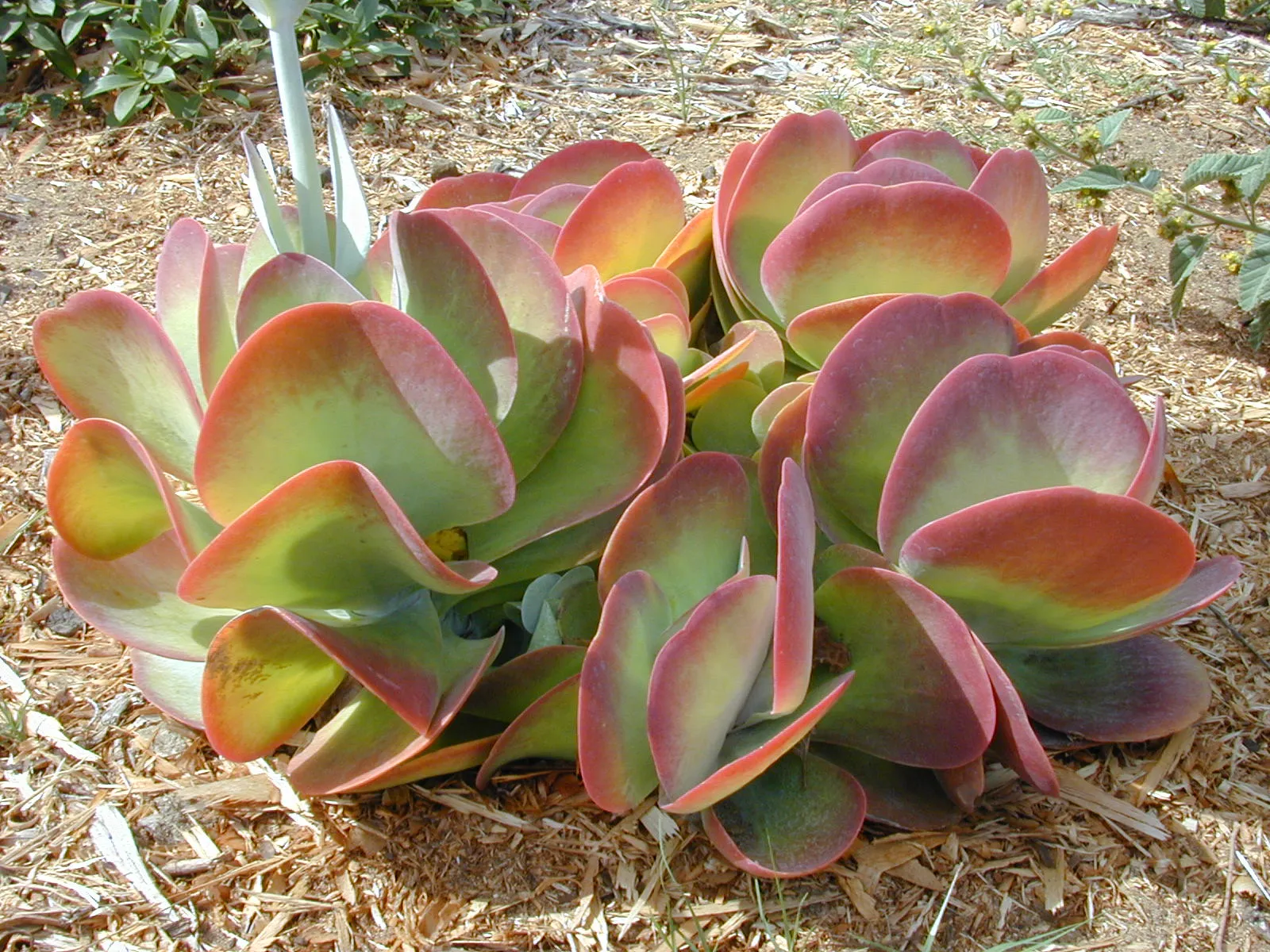
Kalanchoe thyrsiflora, widely recognized as the Flapjack Plant, Paddle Plant, Desert Cabbage, or Dog Tongue, is a distinctive succulent perennial belonging to the Crassulaceae family. This species is celebrated for its striking morphology, characterized by thick, fleshy, obovate to orbicular leaves that are arranged in a basal rosette. The leaves can grow up to 10-15 cm in length and width, often displaying a glaucous, pale green to grayish-white surface that develops prominent reddish-pink margins when exposed to ample sunlight or environmental stress.
This vibrant coloration is a key ornamental feature, intensifying during cooler months or under direct sun. The leaves are typically sessile, clasping the stem, and stacked like pancakes, giving rise to its common 'Flapjack' moniker. The plant usually grows as a monocarpic rosette, meaning the main rosette flowers once and then dies, though it often produces offsets (pups) at its base to continue the growth cycle.
From the center of the mature rosette, a tall, erect inflorescence stalk emerges, typically reaching heights of 60-150 cm. This robust stalk is often covered with a white, waxy bloom, known as farina or epicuticular wax, and bears numerous small, tubular, yellow to orange-yellow flowers. The flowers are arranged in dense, terminal thyrses or panicles, appearing from late winter to spring.
Each flower features four fused petals, characteristic of the Kalanchoe genus, and contains eight stamens. The root system of Kalanchoe thyrsiflora is generally shallow and fibrous, adapted for efficient water absorption from superficial soil layers, a common trait among succulents thriving in arid environments. The stem, when present and mature, is thick and woody at the base, becoming more herbaceous towards the apex, supporting the substantial weight of the succulent leaves and the tall flower stalk.
Native to the arid and semi-arid regions of South Africa, particularly the Free State, KwaZulu-Natal, and Mpumalanga provinces, Kalanchoe thyrsiflora thrives in well-drained, sandy soils and is highly drought-tolerant. It is sometimes confused with Kalanchoe luciae, but K.
thyrsiflora typically has a more pronounced white powdery coating (farina) and yellow, fragrant flowers.
Trusted Scientific References
1. Authoritative external sources for Kalanchoe thyrsiflora
1.1 Wikipedia — Kalanchoe thyrsiflora
1.2 Kew POWO (Plants of the World Online)
1.3 PubMed — peer-reviewed research
1.4 NCBI Taxonomy Browser
1.5 GBIF — Global Biodiversity
1.1.Kalanchoe Thyrsiflora — Key Features
- ✓Common Names — Flapjack Plant, Paddle Plant, Desert Cabbage, Dog Tongue.
- ✓Scientific Name — Kalanchoe thyrsiflora, belonging to the Crassulaceae family.
- ✓Distinctive Foliage — Thick, obovate to orbicular leaves with a glaucous surface and vibrant red margins.
- ✓Growth Habit — Forms a basal rosette, monocarpic (flowers once then dies), but produces numerous offsets.
- ✓Inflorescence — A tall (up to 1.5m), erect spike bearing dense clusters of small, yellow, tubular flowers.
- ✓Native Range — Indigenous to arid and semi-arid regions of South Africa.
- ✓Toxicity — Contains cardiac glycosides (bufadienolides), rendering it toxic to humans and pets upon ingestion.
- ✓Cultivation — Prefers full sun, well-drained soil, and is highly drought-tolerant.
- ✓Ornamental Value — Highly prized globally for its unique form, striking coloration, and architectural interest in gardens and containers.
- ✓Protective Farina — Leaves are covered with a powdery white wax, epicuticular wax, which aids in water conservation and sun protection.
1.2.Kalanchoe Thyrsiflora — Concise Overview
- ✓Kalanchoe thyrsiflora is an ornamental succulent known for its striking paddle-shaped, red-edged leaves.
- ✓Native to South Africa, it thrives in arid, sunny conditions with minimal water.
- ✓Characterized by a monocarpic growth habit, flowering once then producing offsets.
- ✓Contains bufadienolides, making it toxic if ingested by humans or pets.
- ✓Requires well-drained soil, full sun, and careful handling to preserve its protective farina.
- ✓Primarily valued for its aesthetic appeal in xeriscapes and as a low-maintenance houseplant.
2.Kalanchoe Thyrsiflora — Systematic Position
3.Kalanchoe Thyrsiflora — Reference Facts
4.Kalanchoe Thyrsiflora — Morphological Account
5.Kalanchoe Thyrsiflora — Geographic Distribution
6.Kalanchoe Thyrsiflora — Ethnobotanical Uses
7.Kalanchoe Thyrsiflora — Bioactive Constituents
- ✓Bufadienolides — Potent cardiac glycosides such as bryophyllin A, B, and C, responsible for the plant's toxicity and its effects on cardiac function.
- ✓Flavonoids — A diverse group of polyphenolic compounds, including quercetin and kaempferol derivatives, which act as antioxidants and provide photoprotection to the plant.
- ✓Triterpenes — Various triterpenoid compounds, including ursane and oleanane types, contributing to plant defense mechanisms and structural integrity.
- ✓Organic Acids — Predominantly malic acid, which accumulates during the night as part of the Crassulacean Acid Metabolism (CAM) pathway for CO2 fixation.
- ✓Polysaccharides — Complex carbohydrates that contribute to the structural support of the succulent tissues and play a role in water retention.
- ✓Phenolic Acids — Compounds like caffeic acid and ferulic acid, which possess antioxidant properties and are involved in plant defense responses.
- ✓Epicuticular Waxes — A protective layer of long-chain alkanes and fatty acid esters that form the farina, reducing water loss and reflecting excessive sunlight.
- ✓Phytosterols — Plant sterols such as beta-sitosterol, which are essential components of cell membranes and may exhibit various biological activities.
- ✓Tannins — Astringent compounds found in various plant parts, contributing to defense against herbivores and pathogens through their bitter taste and protein-binding properties.
8.Kalanchoe Thyrsiflora — What Research Suggests
- ✓Ornamental Appeal — Kalanchoe thyrsiflora is primarily valued for its unique and striking aesthetic, making it a popular choice for decorative gardens and indoor spaces.
- ✓Drought Tolerance — Its succulent nature allows it to store water efficiently, making it highly resilient in arid conditions and suitable for xeriscaping.
- ✓Low Maintenance — This plant requires minimal care once established, thriving with infrequent watering and bright light, ideal for busy gardeners.
- ✓Air Quality Enhancement — Like many houseplants, it contributes to indoor air quality by taking up carbon dioxide and releasing oxygen, especially during its nighttime CAM photosynthesis.
- ✓Biodiversity Support (Native Habitat) — In its natural South African range, Kalanchoe thyrsiflora plays a role in local ecosystems, supporting flora and possibly microfauna.
- ✓Educational Specimen — Serves as an excellent example for studying plant adaptations to arid environments, including succulence and Crassulacean Acid Metabolism (CAM).
- ✓Aesthetic Enhancement — Its architectural form and dynamic leaf coloration, especially the red margins under stress, add significant visual interest to any setting.
- ✓Horticultural Therapy — Engaging with the cultivation and care of resilient plants like Kalanchoe thyrsiflora can provide therapeutic benefits, promoting mental well-being and a connection to nature.
- ✓Soil Erosion Control — In its native habitat, its shallow, fibrous root system can help stabilize superficial soil layers, particularly on slopes or rocky terrain.
8.1.Kalanchoe Thyrsiflora — Therapeutic Indications
9.Kalanchoe Thyrsiflora — Precautions & Warnings
9.1.Kalanchoe Thyrsiflora — Reported Side Effects
- ✓Gastrointestinal Upset — Ingestion of any part of Kalanchoe thyrsiflora can lead to symptoms like nausea, vomiting, diarrhea, and abdominal pain in humans and animals.
- ✓Cardiotoxicity — Contains bufadienolides, which are cardiac glycosides that can disrupt normal heart rhythm and function, potentially causing serious cardiac events.
- ✓Neurological Symptoms — May induce lethargy, weakness, tremors, incoordination, or seizures, particularly in susceptible pets that have ingested the plant material.
- ✓Oral Irritation — Direct contact with the plant sap or chewing on leaves can cause irritation and inflammation of the mucous membranes in the mouth and throat.
- ✓Dermatitis — Skin contact with the sap can occasionally cause mild irritation, redness, or allergic reactions in sensitive individuals.
- ✓Systemic Poisoning — Severe cases of ingestion, especially large quantities, can result in profound systemic toxicity, requiring immediate medical or veterinary intervention.
9.2.Kalanchoe Thyrsiflora — Clinical Safety Notes
- ✓Keep Out of Reach — Absolutely essential to keep Kalanchoe thyrsiflora away from children and all pets due to its inherent toxicity.
- ✓Avoid Ingestion — Emphasize that no part of this plant should ever be consumed by humans or animals, as it contains potent cardiac glycosides.
- ✓Wear Gloves — Recommended when handling the plant, especially during propagation or pruning, to prevent potential skin irritation from the sap.
- ✓Proper Identification — Ensure correct identification of Kalanchoe thyrsiflora to avoid confusion with other, possibly less toxic, ornamental plants or misidentification for medicinal use.
- ✓Wash Hands Thoroughly — Always wash hands with soap and water after handling the plant or any tools used on it to remove residual sap.
- ✓Seek Medical/Veterinary Help — In case of accidental ingestion, immediately contact a poison control center or a veterinarian for urgent guidance and treatment.
- ✓Ornamental Use Only — This plant is strictly for decorative purposes and should not be considered for herbal remedies, culinary applications, or any internal use.
10.Kalanchoe Thyrsiflora — Preparation & Dosage
- ✓Ornamental Display — Primarily cultivated as an attractive succulent for rock gardens, xeriscapes, or as a striking potted houseplant due to its unique appearance.
- ✓Indoor Decoration — Position in brightly lit indoor spaces, such as near south- or west-facing windows, to encourage its vibrant leaf coloration.
- ✓Outdoor Landscaping — Suitable for frost-free zones (USDA 10-12) in sunny, well-drained garden beds, adding architectural interest and drought resilience.
- ✓Propagation by Cuttings — Healthy stem cuttings can be taken, allowed to callus for a few days, and then rooted in moist succulent mix to establish new plants.
- ✓Offset Division — Mature plants naturally produce small offsets (pups) around their base, which can be carefully separated and repotted to propagate new specimens.
- ✓Seed Sowing — Kalanchoe thyrsiflora can be grown from seed; sow seeds on the surface of seed-starting mix, as they require light for germination, and keep consistently moist.
- ✓Companion Planting — Use in succulent arrangements or mixed with other drought-tolerant plants that share similar light and water requirements for cohesive garden designs.
- ✓Educational Specimen — Ideal for botanical collections or educational settings to demonstrate succulent adaptations, CAM photosynthesis, and unique plant morphology.
11.Kalanchoe Thyrsiflora — Growing Guide
- ✓Soil Requirements — Plant in loose, sandy, well-drained soil, ideally a specialized cactus or succulent mix to prevent root rot.
- ✓Light Exposure — Requires full sun outdoors; indoors, provide direct to bright, indirect sunlight, such as from a south or west-facing window.
- ✓Watering Regime — Water deeply only when the soil has completely dried out; allow full drainage and significantly reduce watering during winter dormancy.
- ✓Temperature and Humidity — Thrives in warm temperatures (above 30°F/-1°C) and low humidity; it is highly sensitive to frost and cold conditions.
- ✓Fertilization Schedule — Feed monthly from late winter through summer with a balanced liquid houseplant fertilizer diluted to half strength, ceasing in fall and winter.
- ✓Farina Protection — Handle with care to preserve the natural powdery, white wax (farina) on leaves, which is crucial for sun protection and water retention.
- ✓Container Growing — Excellent for pots due to its shallow root system and preference for controlled environments, especially in regions colder than USDA Zone 10.
- ✓Propagation — Easily propagated from stem cuttings or by carefully separating the offsets (pups) that develop around the base of the mature plant.
Reviewed by the Flora Medical Global Botanical Review Panel
Multi-disciplinary editorial group · Botany · Ethnobotany · Herbal-medicine literature
Who reviewed this: This page was checked by the Flora Medical Global Botanical Review Panel — an in-house editorial group of botany graduates, ethnobotany researchers, and horticulture practitioners who collectively maintain our 7,000+ plant encyclopedia. Meet the team.
Our 4-step verification process
1. Taxonomic verification
Scientific names and synonyms cross-checked against Kew POWO, World Flora Online, and The Plant List.
2. Phytochemical & medicinal cross-reference
Active compounds, traditional uses, and reported activities are cross-referenced with PubMed, USDA Dr. Duke's database, and peer-reviewed ethnobotanical literature.
3. Conservation & distribution check
Distribution, ecology, and conservation status confirmed against GBIF occurrence records and the IUCN Red List.
4. Editorial & safety review
Every entry passes an editorial pass for clarity, originality, and safety notices (toxicity, contraindications, dosage caveats) before publication.
Last reviewed:
Important medical disclaimer: This content is for educational and research purposes only. It is not medical advice and is not a substitute for consultation with a licensed healthcare provider. Do not use any herb to self-treat a medical condition without professional guidance.
Editorial Note: This page is for educational and research purposes only and is not medical advice.
Written by: Flora Medical Global Editorial Team
Reviewed by: Flora Medical Global Botanical Review Panel
Last Updated: June 15, 2026





Kalanchoe Thyrsiflora — Comments & Community Reviews
Rate this plant