

Medical Disclaimer: This content is for educational purposes only. It is not medical advice. Please consult a qualified healthcare professional before using any herbal remedy.
Safety Overview
1.Karkataka Shringi — Plant Snapshot
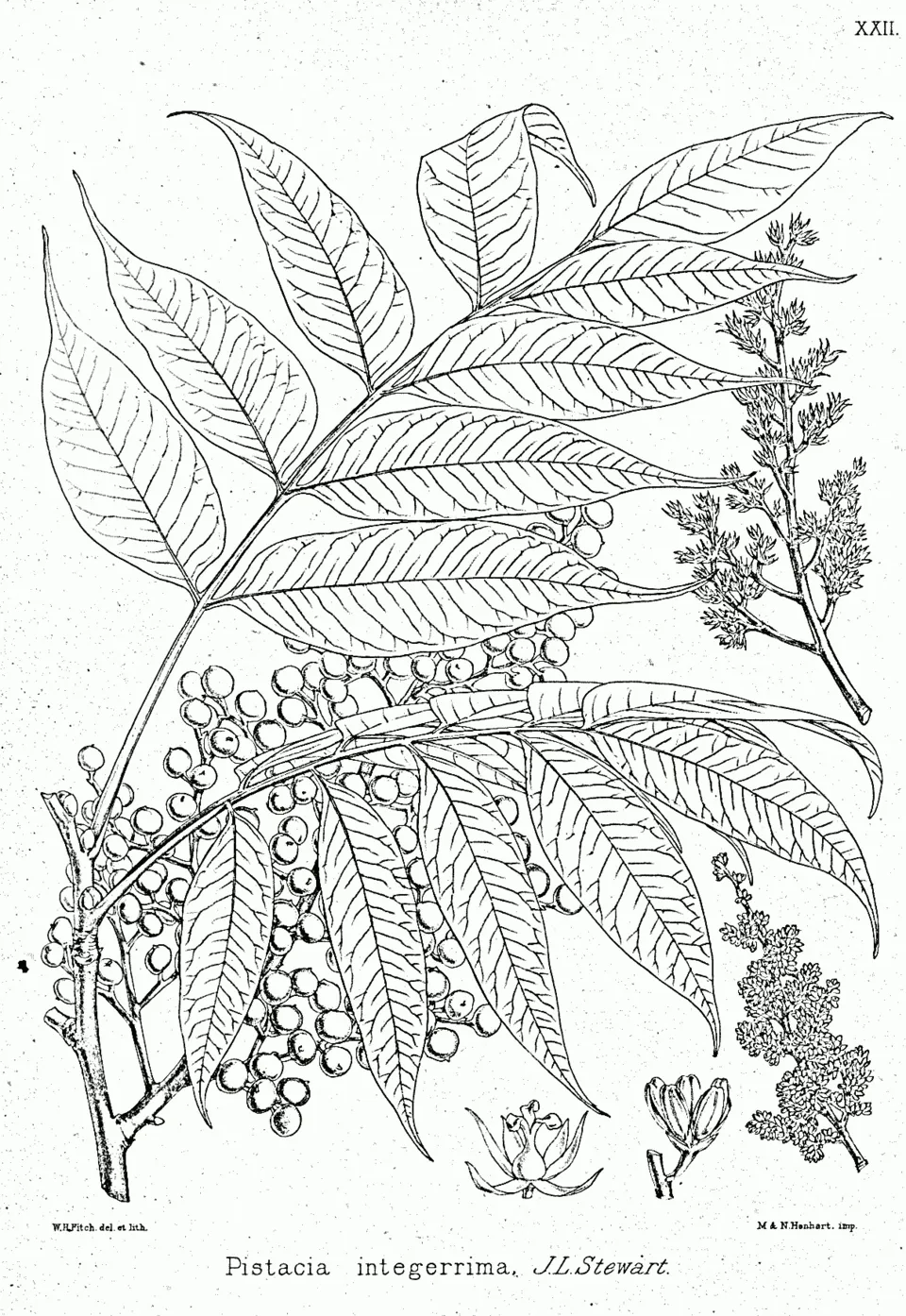
Pistacia integerrima, commonly known as Karkataka Shringi, is a remarkable deciduous shrub or small to medium-sized tree, typically reaching heights of 10 to 20 meters. It is particularly renowned for the distinctive, horn-like galls that form on its twigs, leaves, and branches, which are a fascinating defense mechanism against aphid infestations. These galls, from which the plant derives its Sanskrit name 'Karkata' (crab) and 'Shringi' (horn), are the primary part utilized in traditional medicine.
The foliage of Karkataka Shringi is characterized by its pinnately compound leaves, which can extend 15 to 30 centimeters in length. Each leaf comprises 5 to 11 lanceolate leaflets, approximately 5 to 10 centimeters long, presenting a striking glossy dark green appearance. In spring, the tree produces small, inconspicuous yellowish-green flowers arranged in clusters, which eventually mature into small, fleshy drupes.
These fruits transition from red to a deep purple hue upon ripening, adding to the plant's seasonal aesthetic. The bark is rough and scaly, displaying a grayish-brown color, which contributes to the tree's distinctive character in its native environment.
This resilient species thrives in the dry, hilly regions of the Indian subcontinent, predominantly found across the Himalayan ranges. Its geographical distribution spans from Afghanistan eastward through Pakistan, Jammu and Kashmir, Uttarakhand, and into Nepal and Bhutan, typically at elevations between 1500 and 2500 meters. Karkataka Shringi exhibits a preference for well-drained, rocky, and semi-arid soils, commonly inhabiting forested slopes and valleys where it forms an integral part of scrub forest ecosystems.
Taxonomically, Pistacia integerrima belongs to the Anacardiaceae family, a diverse group that also includes economically significant plants such as the cashew (Anacardium occidentale) and mango (Mangifera indica). Its resilience in harsh environments underscores its ecological importance, contributing significantly to the biodiversity and stability of its native habitats, while its unique galls hold deep historical and medicinal value in indigenous healing systems.
Trusted Scientific References
1. Authoritative external sources for Pistacia integerrima
1.1 Wikipedia — Pistacia integerrima
1.2 Kew POWO (Plants of the World Online)
1.3 PubMed — peer-reviewed research
1.4 NCBI Taxonomy Browser
1.5 GBIF — Global Biodiversity
1.1.Karkataka Shringi — Standout Qualities
- ✓Unique Gall Formation — Distinctive horn-like galls, primarily used for medicinal purposes, formed by aphid infestation.
- ✓Ayurvedic Cornerstone — A prominent herb in traditional Indian medicine, particularly for respiratory and digestive health.
- ✓Expectorant Properties — Effectively aids in clearing mucus and phlegm from the respiratory tract.
- ✓Bronchodilator Action — Helps in widening airways, beneficial for asthma and bronchitis.
- ✓Potent Astringent — Reduces excessive secretions and inflammation in the digestive system.
- ✓Natural Antimicrobial — Exhibits activity against various bacteria and fungi.
- ✓Rich in Antioxidants — Contains flavonoids and phenolics that combat oxidative stress.
- ✓Anti — inflammatory Benefits — Reduces systemic and localized inflammation.
- ✓Antipyretic Use — Traditionally employed to alleviate fever.
- ✓Himalayan Origin — Native to the dry, hilly regions of the Indian Himalayas and surrounding areas.
- ✓Deciduous Tree — A medium-sized deciduous tree with glossy pinnate leaves.
- ✓Anacardiaceae Family — Belongs to the cashew and mango family.
- ✓Traditional Pediatric Remedy — Often used for common childhood ailments like cough and cold.
- ✓Versatile Preparations — Can be used as powder, decoction, paste, or in compounded formulations.
- ✓Sustainable Harvesting — Galls are collected seasonally, promoting sustainable practices.
1.2.Karkataka Shringi — Concise Overview
- ✓Karkataka Shringi (Pistacia integerrima) is a Himalayan tree known for its unique medicinal galls.
- ✓Highly valued in Ayurveda for respiratory, digestive, and anti-inflammatory benefits.
- ✓Acts as an expectorant, bronchodilator, astringent, and antimicrobial agent.
- ✓Rich in essential oils, tannins, and flavonoids, contributing to its therapeutic profile.
- ✓Traditionally used for cough, asthma, diarrhea, fever, and skin conditions.
- ✓Requires careful dosage and medical supervision, especially for sensitive populations.
- ✓Found in dry, hilly regions of the Indian subcontinent, thriving in semi-arid soils.
2.Karkataka Shringi — Scientific Profile
3.Karkataka Shringi — Botanical Stats
4.Karkataka Shringi — Structural Profile
5.Karkataka Shringi — Where It Grows
6.Karkataka Shringi — Historical Applications
7.Karkataka Shringi — Bioactive Constituents
- ✓Essential Oils — Rich in monoterpenes and sesquiterpenes such as alpha-pinene, beta-pinene, limonene, myrcene, and camphene. These compounds contribute to its distinctive aroma and exhibit significant antimicrobial, anti-inflammatory, and expectorant activities.
- ✓Tannins — Predominantly gallotannins and condensed tannins, which are responsible for the plant's potent astringent properties. They aid in reducing inflammation, combating diarrhea, and providing antimicrobial effects.
- ✓Flavonoids — Key antioxidants including quercetin, kaempferol, and their glycosides. These compounds offer strong free radical scavenging capabilities, anti-inflammatory, and immunomodulatory benefits.
- ✓Alkaloids — Various alkaloidal compounds, though often in lower concentrations, may contribute to the plant's therapeutic profile, particularly in respiratory and gastrointestinal support.
- ✓Resins and Gums — These sticky exudates act as natural mucolytics and demulcents, helping to soothe irritated mucous membranes and facilitate the expulsion of phlegm from the respiratory tract.
- ✓Phenolic Acids — Compounds like gallic acid and ellagic acid, which are known for their antioxidant, anti-inflammatory, and antimicrobial properties, often working synergistically with tannins and flavonoids.
- ✓Terpenoids — Beyond essential oils, other complex terpenoids are present, contributing to a broad spectrum of biological activities, including anti-inflammatory and antiseptic effects.
- ✓Saponins — These glycosides may contribute to expectorant and anti-inflammatory actions, and also possess some immune-stimulating properties.
- ✓Steroids — Plant sterols and triterpenoids, such as beta-sitosterol, are found, which can have anti-inflammatory and cholesterol-lowering effects.
- ✓Glycosides — Various types of glycosides are present, influencing diverse pharmacological activities, including cardiovascular and digestive support.
- ✓Fatty Acids — Small amounts of essential fatty acids found in the plant can contribute to cellular health and membrane integrity.
- ✓Minerals and Trace Elements — Contains essential minerals such as calcium, magnesium, iron, and zinc, which are vital for numerous physiological functions and overall health.
8.Karkataka Shringi — What Research Suggests
- ✓Respiratory Support — Karkataka Shringi acts as an expectorant and bronchodilator, effectively loosening mucus and aiding in its expulsion from the respiratory tract. This action helps to alleviate congestion and improve breathing in conditions like asthma, bronchitis, and chronic cough.
- ✓Anti-inflammatory Action — The plant's compounds, particularly flavonoids and essential oils, exhibit potent anti-inflammatory properties, reducing swelling and discomfort in both the respiratory and digestive systems. This makes it beneficial for conditions involving systemic inflammation.
- ✓Astringent Properties — Rich in tannins, Pistacia integerrima helps to tighten tissues and reduce excessive secretions, making it highly effective in managing diarrhea, dysentery, and other gastrointestinal disorders by soothing the inflamed digestive tract.
- ✓Antimicrobial Agent — Karkataka Shringi demonstrates strong antimicrobial and antifungal activities, attributed to its essential oils and other bioactive constituents. This helps combat various pathogenic bacteria and fungi, preventing and treating infections.
- ✓Antioxidant Effects — Flavonoids present in the galls and other parts of the plant act as powerful antioxidants, protecting cells from oxidative stress and damage caused by free radicals. This contributes to overall cellular health and disease prevention.
- ✓Antipyretic Action — Traditionally, Karkataka Shringi is used to reduce fever and manage febrile conditions, particularly in children. Its cooling potency (Sheeta Virya in Ayurveda) helps in lowering elevated body temperature.
- ✓Digestive Health Enhancement — Beyond its astringent qualities, it improves overall digestive function, helping to relieve indigestion and soothe intestinal inflammation. It balances digestive fire and aids in nutrient absorption.
- ✓Skin Disorder Management — Due to its anti-inflammatory and antimicrobial properties, topical applications of Karkataka Shringi can be beneficial in treating inflammatory skin conditions such as acne, eczema, and minor skin infections.
- ✓Oral Health Improvement — When used as a gargle or mouth rinse, the decoction of Karkataka Shringi helps alleviate sore throat, mouth ulcers, and gum infections, thanks to its astringent and antimicrobial actions.
- ✓Childhood Ailment Relief — Its mild yet effective nature makes it a suitable remedy for managing common childhood ailments like cough, cold, fever, and gastrointestinal disturbances, with appropriate dosage.
- ✓Immunomodulatory Effects — Some constituents may enhance the body's natural defense mechanisms, acting as an immunomodulator to strengthen immunity against various infections and diseases.
- ✓Analgesic Properties — In traditional systems like Ayurveda, the leaves are believed to possess analgesic properties, making them useful for alleviating general body aches and joint pain.
- ✓Anti-arthritic Potential — The anti-inflammatory compounds contribute to its traditional use in managing symptoms of arthritis and joint pain, helping to reduce inflammation and discomfort in affected joints.
- ✓Liver Protective Action — Preliminary research suggests potential hepatoprotective effects, helping to safeguard liver cells from damage and supporting liver function.
- ✓Anti-diabetic Potential — Some studies indicate that certain compounds in Pistacia integerrima may help in regulating blood sugar levels, showing promise in the management of diabetes.
- ✓Cardioprotective Effects — Antioxidants and other beneficial compounds may contribute to cardiovascular health by reducing oxidative stress and inflammation, supporting heart function.
8.1.Karkataka Shringi — Conditions Traditionally Used For
9.Karkataka Shringi — Risk Profile
9.1.Karkataka Shringi — Caution Notes
- ✓Dryness — Excessive or prolonged use may lead to a feeling of dryness in the mouth or digestive tract due to its Ruksha (dry) quality.
- ✓Constipation — Overuse, particularly in individuals prone to Vata imbalance, can potentially induce or worsen constipation.
- ✓Vata Aggravation — Its dry and light qualities might aggravate Vata dosha in sensitive individuals, leading to symptoms like bloating, gas, or anxiety.
- ✓Allergic Reactions — Individuals with known sensitivities or allergies to plants in the Anacardiaceae family (e.g., cashew, mango, poison ivy) should exercise caution due to potential cross-reactivity, possibly manifesting as skin rashes or itching.
- ✓Gastrointestinal Upset — In rare cases, high doses might cause mild stomach discomfort or nausea.
- ✓Drug Interactions — Potential interactions with certain medications, especially those affecting blood clotting or blood pressure, should be considered, though specific interactions are not extensively documented.
- ✓Drowsiness — Extremely high doses might rarely induce mild drowsiness, though this is not a common side effect.
- ✓Bitter Taste — Some individuals may find the taste of the decoction or powder unpalatable.
9.2.Karkataka Shringi — Safety Profile
- ✓Pregnancy and Lactation — Use of Karkataka Shringi during pregnancy or lactation should only be undertaken under strict medical supervision, as comprehensive safety data is limited.
- ✓Pediatric Use — While traditionally used for children's ailments, dosages must be carefully monitored and prescribed by a qualified Ayurvedic practitioner.
- ✓Medical Supervision — Always consult a qualified healthcare professional or Ayurvedic physician before using Karkataka Shringi, especially for chronic or severe health conditions.
- ✓Anacardiaceae Family Sensitivity — Individuals with allergies to other plants in the Anacardiaceae family should approach with caution due to potential cross-allergies.
- ✓Dosage Adherence — Strict adherence to recommended dosages is crucial to avoid potential side effects like dryness or Vata imbalance.
- ✓Pre-existing Conditions — Individuals with pre-existing conditions, particularly those affecting digestion or blood pressure, should seek medical advice prior to use.
- ✓Herbal Quality — Ensure the source of Karkataka Shringi is reputable to avoid adulterated or contaminated products.
- ✓Storage — Store in a cool, dry place away from direct sunlight to maintain potency and prevent degradation.
- ✓Monitoring for Reactions — Discontinue use and consult a healthcare provider if any adverse reactions or unusual symptoms occur.
10.Karkataka Shringi — Preparation & Dosage
- ✓Powder (Churna) — Dried Karkataka Shringi galls are ground into a fine powder, often consumed with honey or warm water for respiratory and digestive ailments.
- ✓Decoction (Kashayam) — Prepared by boiling crushed galls in water until reduced, used as a potent liquid extract for internal consumption or external gargles.
- ✓Infusion — Dried galls or leaves can be steeped in hot water to make a tea, a milder preparation suitable for general wellness and mild fevers.
- ✓Paste (Lepa) — Powder mixed with water, rosewater, or neem paste applied topically for skin conditions like acne, eczema, or inflammation.
- ✓Syrups and Electuaries — Incorporated into herbal syrups with honey and other ingredients, particularly for cough and cold relief.
- ✓Gargles and Mouth Rinses — Decoctions are used to gargle for sore throats, oral ulcers, and gum infections, leveraging its astringent and antimicrobial properties.
- ✓Capsules/Tablets — Standardized extracts or powdered galls are encapsulated or pressed into tablets for convenient and precise dosing.
- ✓Medicated Oils — Infused into carrier oils for topical application in joint pain or muscle aches, benefiting from its anti-inflammatory effects.
- ✓Nasal Drops (Nasya) — In highly diluted forms, sometimes used as Nasya in Ayurvedic practice for specific respiratory conditions under expert guidance.
- ✓With Buttermilk — Karkataka Shringi powder is often taken with buttermilk to enhance its efficacy in managing diarrhea and intestinal inflammation.
- ✓Combination Formulations — Frequently combined with other synergistic herbs in polyherbal formulations to amplify therapeutic outcomes for various conditions.
11.Karkataka Shringi — Propagation & Care
- ✓Climate Preference — Thrives in subtropical to temperate climates, adapting well to dry, hilly, and semi-arid conditions.
- ✓Soil Requirements — Prefers well-drained, rocky, and sandy loam soils with a slightly alkaline to neutral pH (6.5-7.5).
- ✓Sunlight Exposure — Requires full sun exposure for optimal growth and gall formation, needing at least 6-8 hours of direct sunlight daily.
- ✓Propagation — Primarily propagated by seeds, which require stratification for improved germination rates, or sometimes by stem cuttings.
- ✓Watering — Young plants need regular watering until established; mature trees are drought-tolerant and require minimal supplementary irrigation.
- ✓Fertilization — Generally low-maintenance; can benefit from organic compost or a balanced slow-release fertilizer during early growth stages.
- ✓Pruning — Minimal pruning is needed, mainly for shaping or removing dead/diseased branches to maintain plant health.
- ✓Pest and Disease Management — Generally robust, but susceptible to aphid infestations (which induce medicinal galls) and occasional fungal issues in overly wet conditions.
- ✓Harvesting of Galls — Galls are typically harvested in the autumn season when they are mature, then carefully dried for medicinal use.
- ✓Rootstock Grafting — Can be grafted onto other Pistacia species rootstocks to improve hardiness or adapt to specific soil conditions.
Reviewed by the Flora Medical Global Botanical Review Panel
Multi-disciplinary editorial group · Botany · Ethnobotany · Herbal-medicine literature
Who reviewed this: This page was checked by the Flora Medical Global Botanical Review Panel — an in-house editorial group of botany graduates, ethnobotany researchers, and horticulture practitioners who collectively maintain our 7,000+ plant encyclopedia. Meet the team.
Our 4-step verification process
1. Taxonomic verification
Scientific names and synonyms cross-checked against Kew POWO, World Flora Online, and The Plant List.
2. Phytochemical & medicinal cross-reference
Active compounds, traditional uses, and reported activities are cross-referenced with PubMed, USDA Dr. Duke's database, and peer-reviewed ethnobotanical literature.
3. Conservation & distribution check
Distribution, ecology, and conservation status confirmed against GBIF occurrence records and the IUCN Red List.
4. Editorial & safety review
Every entry passes an editorial pass for clarity, originality, and safety notices (toxicity, contraindications, dosage caveats) before publication.
Last reviewed:
Important medical disclaimer: This content is for educational and research purposes only. It is not medical advice and is not a substitute for consultation with a licensed healthcare provider. Do not use any herb to self-treat a medical condition without professional guidance.
Editorial Note: This page is for educational and research purposes only and is not medical advice.
Written by: Flora Medical Global Editorial Team
Reviewed by: Flora Medical Global Botanical Review Panel
Last Updated: June 15, 2026





Karkataka Shringi — Comments & Community Reviews
Rate this plant