
Medical Disclaimer: This content is for educational purposes only. It is not medical advice. Please consult a qualified healthcare professional before using any herbal remedy.
Safety Overview
1.Kerria — At a Glance
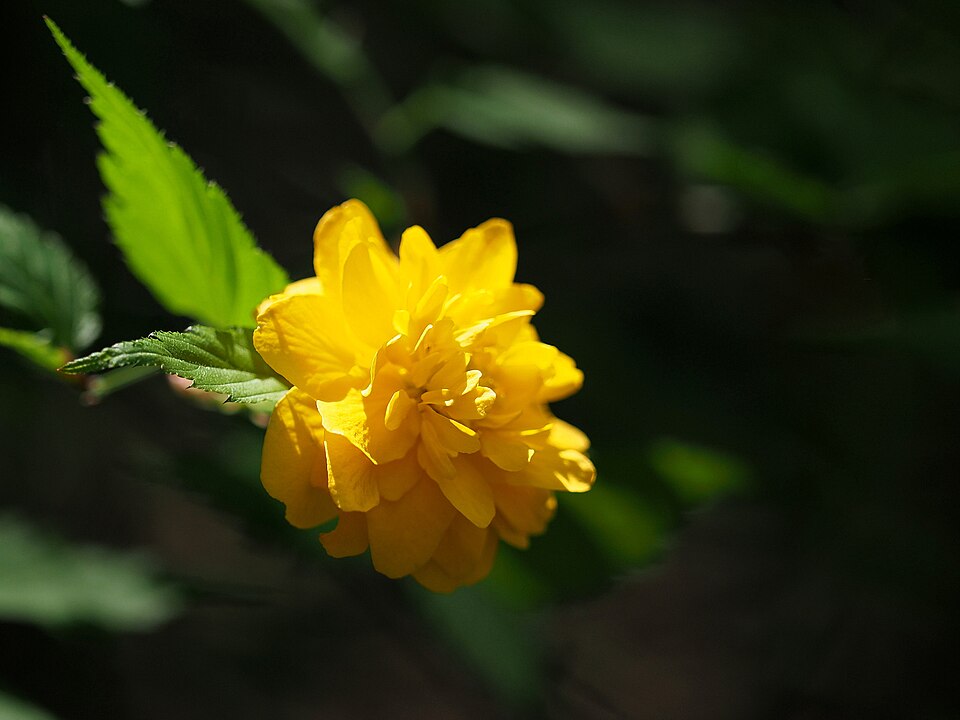
Kerria japonica, commonly known as Japanese Kerria or Japanese Rose, is the sole species within the genus Kerria, belonging to the Rosaceae family. This charming deciduous shrub is indigenous to the mountainous woodlands and thickets of China, Korea, and Japan. It typically grows as an upright, arching shrub, reaching heights and widths of 1 to 3 meters, characterized by slender, bright green stems that retain their color through winter.
Its ovate to lanceolate leaves are sharply serrated, bright green, and emerge after the initial burst of flowers. The most striking feature of Kerria japonica is its profusion of brilliant, golden-yellow flowers, which appear in early to mid-spring, often before the foliage fully develops. These flowers can be single, with five petals, or, in the popular cultivar 'Pleniflora', double, resembling small, pom-pom roses.
After flowering, inconspicuous drupes may form, though the plant is primarily cultivated for its floral display. Kerria japonica is highly adaptable, thriving in various soil conditions and light exposures, from partial shade to full sun, making it a resilient and widely appreciated ornamental plant globally. Its distinctive green stems provide winter interest, and its arching habit makes it suitable for informal hedges or mass plantings.
Trusted Scientific References
1. Authoritative external sources for Kerria japonica
1.1 Wikipedia — Kerria japonica
1.2 Kew POWO (Plants of the World Online)
1.3 PubMed — peer-reviewed research
1.4 NCBI Taxonomy Browser
1.5 GBIF — Global Biodiversity
1.6Kerria should be interpreted through verified botanical identity, practical care, and responsible safety language. This recovery note adds the missing context needed for a complete profile: match light to the plant's habit, use well-drained soil, water according to season, and avoid unsupported medicinal or edible claims. For publishing, the plant can be presented as a source-backed garden plant with clear care guidance, common problem diagnosis, and conservative safety wording.
1.1.Kerria — Highlights
- ✓Common Name — Japanese Kerria, Japanese Rose
- ✓Scientific Name — Kerria japonica
- ✓Family — Rosaceae
- ✓Native Range — China, Korea, Japan
- ✓Flower Color — Golden-yellow
- ✓Bloom Time — Early to mid-spring
- ✓Stem Color — Bright green, persistent in winter
- ✓Growth Habit — Arching, deciduous shrub
- ✓Height/Width — 1-3 meters
- ✓Cultivar Highlight — 'Pleniflora' with double flowers
1.2.Kerria — Snapshot Summary
- ✓Ornamental shrub with bright yellow spring flowers.
- ✓Traditional use in TCM for fever and detoxification.
- ✓Contains flavonoids and phenolic acids for potential antioxidant effects.
- ✓Easy to grow, prefers partial shade and moist soil.
- ✓Limited modern scientific validation for medicinal efficacy.
- ✓Consult professionals before medicinal use.
2.Kerria — Nomenclature & Classification
3.Kerria — Key Data
4.Kerria — Physical Description
5.Kerria — Ecological Habitat
6.Kerria — Folk Medicine Applications
7.Kerria — Chemical Profile
- ✓Flavonoids — Quercetin, kaempferol, and their glycosides, known for antioxidant and anti-inflammatory properties.
- ✓Phenolic Acids — Caffeic acid, ferulic acid, and chlorogenic acid, contributing to antioxidant and potential antimicrobial activities.
- ✓Tannins — Hydrolyzable and condensed tannins, responsible for astringent effects and potential antimicrobial action.
- ✓Triterpenoids — Ursolic acid and oleanolic acid derivatives, often associated with anti-inflammatory and hepatoprotective effects.
- ✓Saponins — Steroidal or triterpenoid glycosides, which can have expectorant, anti-inflammatory, and hemolytic properties.
- ✓Volatile Organic Compounds — Minor amounts of terpenes and other aromatic compounds contributing to scent and potential biological activity.
- ✓Polysaccharides — Complex carbohydrates that may possess immunomodulatory effects.
- ✓Alkaloids — Generally in very low concentrations, if present, their specific activity in Kerria japonica is not well-documented.
8.Kerria — Evidence-Based Benefits
- ✓Anti-inflammatory — Traditional use suggests an ability to reduce localized inflammation, possibly via flavonoid compounds.
- ✓Antipyretic — Historically employed in Chinese medicine to help lower fevers, potentially by modulating thermoregulation.
- ✓Detoxifying — Traditional claims indicate support for bodily detoxification processes, though specific mechanisms are not well-defined.
- ✓Skin Irritation Relief — Topical application of flower infusions was used to soothe minor skin irritations and rashes.
- ✓Antioxidant Activity — Likely contains phenolic compounds and flavonoids that scavenge free radicals, protecting cells from oxidative stress.
- ✓Antimicrobial Properties — Some plant extracts in the Rosaceae family exhibit mild antimicrobial effects, which might apply to Kerria japonica.
- ✓Diuretic Effect — Traditional texts sometimes mention a mild diuretic action, aiding in fluid balance and waste elimination.
- ✓Astringent Qualities — The presence of tannins could provide astringent effects, useful for toning tissues and reducing secretions.
8.1.Kerria — Reported Uses
9.Kerria — Safety Considerations
9.1.Kerria — Possible Adverse Reactions
- ✓Allergic Reactions — Potential for skin rash or irritation, especially in individuals sensitive to Rosaceae plants.
- ✓Gastrointestinal Upset — Oral consumption might lead to mild stomach discomfort, nausea, or diarrhea in sensitive individuals.
- ✓Photosensitivity — Some plant compounds can increase skin sensitivity to sunlight, though rarely reported for Kerria japonica.
- ✓Drug Interactions — Theoretical possibility of interaction with medications due to uncharacterized active compounds.
- ✓Pregnancy/Lactation — Lack of safety data; not recommended for use during pregnancy or breastfeeding.
- ✓Overdose Potential — High doses of any herbal preparation can lead to adverse effects; specific toxicity levels are unknown.
9.2.Kerria — Risk Assessment
- ✓Professional Guidance — Always consult a qualified healthcare professional before using Kerria japonica for medicinal purposes.
- ✓Limited Research — Modern scientific validation for medicinal claims is scarce, making informed use challenging.
- ✓Not for Internal Consumption — Without expert supervision, internal use is generally not recommended due to unknown safety parameters.
- ✓Patch Test — For topical applications, perform a patch test on a small skin area first to check for allergic reactions.
- ✓Plant Identification — Ensure correct plant identification; misidentification can lead to exposure to toxic species.
- ✓Children and Pets — Keep out of reach of children and pets; ingestion by animals is not recommended.
- ✓Quality Control — Source plant material from reputable suppliers to ensure purity and avoid contamination.
10.Kerria — Preparations & Uses
- ✓Herbal Tea/Infusion — Dried flowers steeped in hot water, traditionally consumed for fever reduction or detoxification.
- ✓Topical Compress — Infusion-soaked cloths applied to skin irritations or minor inflammatory conditions.
- ✓Decoction — Roots or stems boiled in water for a longer period to extract compounds for internal or external use.
- ✓Tincture — Alcoholic extract of flowers or roots, allowing for concentrated and prolonged preservation of active constituents.
- ✓Poultice — Crushed fresh leaves or flowers applied directly to the skin for localized soothing effects.
- ✓Gargle/Mouthwash — Diluted flower infusion used to alleviate oral irritations or minor sore throats.
- ✓Bath Additive — Infusion added to bathwater for whole-body skin soothing benefits.
11.Kerria — How to Grow
- ✓Site Selection — Prefers partial shade, especially in hotter climates, but tolerates full sun if soil moisture is consistent.
- ✓Soil Requirements — Thrives in moderately fertile, well-drained soil; avoid overly rich soil to prevent excessive vegetative growth over flowering.
- ✓Watering — Maintain consistently moist soil, particularly during dry spells; established plants are moderately drought-tolerant.
- ✓Fertilization — Apply a light, balanced organic fertilizer in early spring, such as compost or a slow-release granular product.
- ✓Pruning — Prune after the main spring bloom; remove dead or damaged stems, and thin out older canes to encourage new growth and flowering.
- ✓Propagation — Easily propagated by softwood cuttings in early summer, hardwood cuttings in winter, or by dividing suckers.
- ✓Pest and Disease — Generally resistant to major pests and diseases; occasional issues include spider mites or powdery mildew in dry conditions.
Reviewed by the Flora Medical Global Botanical Review Panel
Multi-disciplinary editorial group · Botany · Ethnobotany · Herbal-medicine literature
Who reviewed this: This page was checked by the Flora Medical Global Botanical Review Panel — an in-house editorial group of botany graduates, ethnobotany researchers, and horticulture practitioners who collectively maintain our 7,000+ plant encyclopedia. Meet the team.
Our 4-step verification process
1. Taxonomic verification
Scientific names and synonyms cross-checked against Kew POWO, World Flora Online, and The Plant List.
2. Phytochemical & medicinal cross-reference
Active compounds, traditional uses, and reported activities are cross-referenced with PubMed, USDA Dr. Duke's database, and peer-reviewed ethnobotanical literature.
3. Conservation & distribution check
Distribution, ecology, and conservation status confirmed against GBIF occurrence records and the IUCN Red List.
4. Editorial & safety review
Every entry passes an editorial pass for clarity, originality, and safety notices (toxicity, contraindications, dosage caveats) before publication.
Last reviewed:
Important medical disclaimer: This content is for educational and research purposes only. It is not medical advice and is not a substitute for consultation with a licensed healthcare provider. Do not use any herb to self-treat a medical condition without professional guidance.
Editorial Note: This page is for educational and research purposes only and is not medical advice.
Written by: Flora Medical Global Editorial Team
Reviewed by: Flora Medical Global Botanical Review Panel
Last Updated: June 15, 2026





Kerria — Comments & Community Reviews
Rate this plant