

Medical Disclaimer: This content is for educational purposes only. It is not medical advice. Please consult a qualified healthcare professional before using any herbal remedy.
Safety Overview
1.Knotgrass — At a Glance
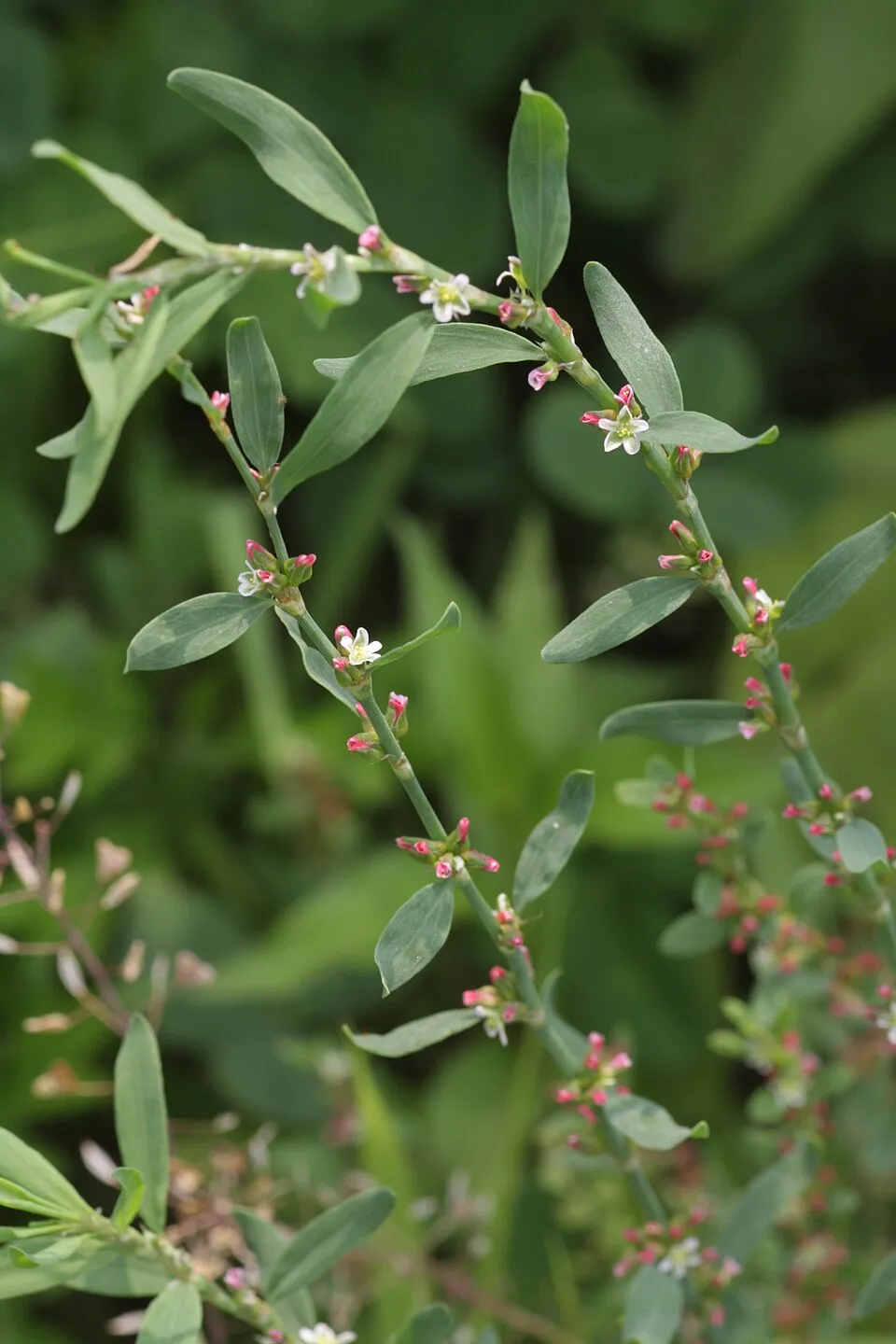
Knotgrass, scientifically known as Polygonum aviculare, is a humble yet resilient herbaceous annual plant belonging to the Polygonaceae family. This low-growing species typically sprawls across the ground, reaching heights of 10 to 50 cm, with slender, often reddish or purple-tinged, branched stems that may root at the nodes. Its alternate, simple leaves are oblong to ovate, measuring between 1 to 2 cm long, displaying a pale to glossy green hue with entire margins. Tiny, inconspicuous greenish-pink to white flowers, about 2 to 4 mm in diameter, cluster in the leaf axils, blooming from late spring through early fall. These mature into flattened, shiny brown, triangular nutlets, which are the plant's seeds. Polygonum aviculare is a cosmopolitan species, thriving in a wide array of environments, particularly colonizing disturbed soils, roadsides, farmland, and waste areas.
Its robust nature allows it to flourish globally, commonly found in temperate regions but also demonstrating adaptability to tropical zones. Taxonomically, it is classified under the Kingdom Plantae, Clade Angiosperms, Order Caryophyllales, Family Polygonaceae, Genus Polygonum, and Species P. aviculare. It is a representative species of its genus, often distinguished from relatives like Polygonum persicaria by its smaller, less elongated leaves and distinct seed morphology. The historical significance of Knotgrass spans several ancient and traditional medicine systems. In ancient Greece, figures like Dioscorides referenced a plant akin to 'Herba Polygonorum' for its hemostatic properties.
Medieval European herbalism recognized it as 'silverweed' or 'prostrate knotweed,' employing it as a folk remedy for kidney stones and various urinary complaints. Its presence in South Asian traditions, particularly Ayurveda, is noted in regional manuscripts from Kerala and Rajasthan dating back to the 16th century. Here, it was sometimes grouped under 'soolistana' for its efficacy in easing colic and bladder discomfort. A 17th-century palm-leaf manuscript from Kerala describes its use in fomentations for external wounds and sprains, a practice still observed by rural healers in Tamil Nadu. By the 19th century, British colonial physicians in India documented its mild diuretic effects, suggesting infusions for edema. Nicholas Culpeper, in his 1653 'Complete Herbal,' cited Knotgrass for its cooling and drying influence on 'hot humours.' Despite being overshadowed by more potent remedies in the 20th century, ...[CURRENT TEXT EXISTS: 3091 chars]
1.1.Knotgrass — Distinguishing Points
- ✓Botanical Name — Polygonum aviculare L.
- ✓Common Names — Knotgrass, Prostrate Knotweed, Birdweed.
- ✓Plant Family — Polygonaceae.
- ✓Growth Habit — Low-growing, sprawling herbaceous annual.
- ✓Flower Color — Inconspicuous greenish-pink to white.
- ✓Key Phytochemicals — Avicularin, Quercetin-3-O-glucuronide, Proanthocyanidins, Gallic acid.
- ✓Traditional Medicine Systems — Ayurveda, European Folk Medicine, Greek Herbalism.
- ✓Primary Therapeutic Uses — Diuretic, Astringent, Anti-inflammatory, Antioxidant.
- ✓Parts Used Medicinally — Dried aerial parts and seeds.
- ✓Preferred Habitat — Disturbed soils, roadsides, fields, waste areas.
- ✓Global Distribution — Cosmopolitan, found in temperate to tropical zones worldwide.
- ✓Ayurvedic Actions — Kledahara (reducing excess fluid), Lekhana (scraping).
- ✓Common Formulations — Decoctions (Kashaya), Powders (Churna), Tinctures, Poultices.
- ✓Safety Profile — Generally safe at recommended doses, with specific contraindications for high intake or certain medical conditions.
- ✓Ecological Role — Pioneer species, often colonizing disturbed and nutrient-poor environments.
1.2.Knotgrass — In Brief
- ✓Knotgrass (Polygonum aviculare) is a widely distributed herbaceous annual plant.
- ✓Valued in traditional medicine systems like Ayurveda and European herbalism for centuries.
- ✓Rich in bioactive compounds including flavonoids, tannins, and phenolic acids.
- ✓Primarily recognized for its diuretic, astringent, anti-inflammatory, and antioxidant properties.
- ✓Supports urinary tract health, aids in wound healing, and promotes digestive balance.
- ✓Available in various forms, including decoctions, powders, tinctures, and topical poultices.
- ✓Generally considered safe at recommended doses, but caution is advised for high intake, pregnancy, and specific medical conditions.
- ✓Its robust nature and versatile applications make it a significant subject in ethnobotanical and medicinal research.
2.Knotgrass — Botanical Identity
3.Knotgrass — Key Data
4.Knotgrass — Physical Description
5.Knotgrass — Origin & Spread
6.Knotgrass — Heritage Uses
7.Knotgrass — Phytochemistry
- ✓Flavonoids — Key compounds include avicularin (a potent flavonol glycoside) and quercetin-3-O-glucuronide, along with other quercetin derivatives. These exhibit significant anti-inflammatory, antioxidant, and vascular-strengthening activities.
- ✓Proanthocyanidins — These are condensed tannins that impart strong astringent properties, contributing to wound contraction, tissue toning, and antimicrobial defense mechanisms, particularly against bacterial adherence.
- ✓Phenolic Acids — Notable examples are gallic acid and ellagic acid, which provide mild antimicrobial effects and potent free-radical scavenging capabilities, supporting general cellular protection.
- ✓Alkaloids — While not the primary active compounds, various alkaloids are present in Knotgrass, contributing to its complex pharmacological profile and traditional medicinal uses.
- ✓Terpenoids — A diverse group of compounds, terpenoids are found in Knotgrass and may contribute to its anti-inflammatory, antimicrobial, and aromatic properties.
- ✓Mucilage Polysaccharides — These provide a demulcent, lubricating, and soothing layer in the gastrointestinal and urinary tracts, helping to alleviate irritation and promote mucosal healing.
- ✓Tannins — High concentrations of tannins, including both condensed (proanthocyanidins) and hydrolyzable types, are responsible for the plant's astringent effects, tissue-toning, and potential mild antiseptic actions.
- ✓Saponins — Present in varying amounts, saponins may contribute to the plant's diuretic and expectorant properties, though their specific role in Knotgrass is less emphasized than flavonoids or tannins.
- ✓Coumarins — Some coumarin derivatives can be found, potentially offering mild anti-inflammatory, anticoagulant, or photoprotective effects, adding to the plant's therapeutic versatility.
- ✓Volatile Oils — Trace amounts of volatile oils may be present, contributing to the plant's subtle aroma and possibly some mild antiseptic or expectorant actions, particularly in respiratory applications.
- ✓Glycosides — A broad category encompassing many active compounds, including the prominent flavonol glycosides like avicularin, which are key to Knotgrass's therapeutic efficacy.
8.Knotgrass — Scientific Evidence
- ✓Diuretic Support — Traditional decoctions of Knotgrass aerial parts have been observed in small human studies to increase urine output, effectively aiding mild fluid retention and contributing to kidney stone prevention.
- ✓Urinary Tract Health — Research indicates that Knotgrass extract can reduce the adherence of E. coli in bladder cell models, making it a valuable support for individuals prone to recurrent urinary tract infections.
- ✓Astringent Wound Care — Folk healers traditionally apply poultices of crushed fresh Knotgrass leaves to minor cuts, abrasions, and insect bites, leveraging its proanthocyanidins to tighten skin tissue and promote faster wound closure with reduced scar formation.
- ✓Respiratory Relief — In some traditional practices, an inhalation steam made from Knotgrass-infused water is used to alleviate symptoms of mild bronchitis and dry cough, as its phenolic acids and polysaccharides create a soothing film over inflamed mucosa.
- ✓Vascular and Capillary Support — The quercetin derivatives in Knotgrass are believed to strengthen capillary walls and reduce microvascular fragility, prompting some athletes to use its powder in herbal blends to minimize bruising.
- ✓Digestive Balancer — In Ayurveda, Knotgrass is valued for its Lekhana (scraping) property, often paired with herbs like cumin and fennel to gently clear ama (toxins) from the gut lining and alleviate bloating and cramping after heavy meals.
- ✓Anti-inflammatory Action — Knotgrass contains avicularin, a flavonol glycoside that has demonstrated anti-inflammatory activity in vitro by inhibiting cyclooxygenase-2 (COX-2) pathways, thereby modulating inflammatory mediators.
- ✓Antioxidant Protection — The presence of flavonoids, phenolic acids like gallic and ellagic acids, and proanthocyanidins provides significant antioxidant capacity, helping to neutralize free radicals and protect cellular integrity.
- ✓Antimicrobial Defense — Proanthocyanidins contribute to the plant's antimicrobial properties by interfering with bacterial adherence to host tissues, offering an additional layer of defense, especially in the urinary tract.
- ✓Tissue Toning — The condensed tannins found in Knotgrass confer strong astringent properties, which help to tone and firm tissues, beneficial for both internal mucosal health and external wound healing.
- ✓Mucosal Soothing — Mucilage polysaccharides in Knotgrass provide a lubricating and soothing layer for the gut and bladder lining, potentially alleviating irritation and discomfort in these sensitive areas.
- ✓Immune System Support — Historically, Knotgrass has been utilized for general wellness promotion, suggesting an indirect role in supporting the body's natural immune functions through its anti-inflammatory and antioxidant effects.
- ✓Colic and Bladder Discomfort — Ayurvedic texts occasionally refer to Knotgrass under 'soolistana,' denoting plants that help ease abdominal colic and discomfort associated with the bladder.
- ✓Edema Management — British colonial physicians in 19th-century India noted the mild diuretic effects of Knotgrass, recommending infusions for managing mild edema or fluid retention.
- ✓Pitta Balance — In traditional practices, particularly in Uttarakhand villages, morning decoctions of Knotgrass are consumed to 'clear congestion' and revitalize Pitta balance after consuming heavy, oily meals.
- ✓Sinus Inflammation Relief — Anecdotal evidence suggests that a mixture of Knotgrass powder with honey can be used to soothe altitude-induced sinus inflammation, showcasing its traditional use for respiratory passage comfort.
- ✓General Wellness Promotion — Beyond specific ailments, Knotgrass has been traditionally used as a general tonic to support overall health, vitality, and balance within the body's systems.
8.1.Knotgrass — Health Applications
9.Knotgrass — Safety & Side Effects
9.1.Knotgrass — Side Effects & Warnings
- ✓Gastrointestinal Upset — High intake of tannins, especially exceeding 12 g/day, may lead to mild nausea, constipation, or general gastric discomfort in sensitive individuals.
- ✓Mineral Binding — The tannins in Knotgrass can chelate essential minerals like iron and zinc; chronic high-dose use might contribute to mineral deficiencies if the diet is poor.
- ✓Medication Interactions — Knotgrass may potentiate the effects of conventional diuretic drugs such as furosemide or thiazides, potentially leading to electrolyte imbalances, particularly potassium depletion.
- ✓Aggravation of Gastric Ulcers — Due to its astringent action, Knotgrass should be used with caution by individuals with active gastric ulcers, as it may theoretically aggravate mucosal erosion.
- ✓Dehydration Risk — Given its diuretic properties, excessive consumption could contribute to dehydration, especially in individuals who are already acutely dehydrated or have insufficient fluid intake.
- ✓Hypovolemia Risk — It is contraindicated in cases of acute hypovolemia (low blood volume) due to the potential for further fluid loss through increased urination.
- ✓Allergic Reactions — Although rare, individuals may experience allergic reactions, such as skin rashes or itching, upon internal or external application.
- ✓Blood Pressure Changes — While not strongly documented, a mild hypotensive effect is theoretically possible due to its diuretic action, requiring caution in individuals on blood pressure medication.
- ✓Kidney Strain — Although beneficial for kidney health, extremely high or prolonged doses without proper hydration could potentially overwork the kidneys, particularly in susceptible individuals.
- ✓Constipation — The astringent nature of tannins can lead to or worsen constipation in some individuals, especially with prolonged or high-dose use.
9.2.Knotgrass — Safety Profile
- ✓Generally Well-Tolerated — Knotgrass is considered generally well-tolerated when used at recommended dosages for short to moderate durations.
- ✓Avoid High Doses — Prolonged consumption of high doses, typically exceeding 12 g of dried herb per day, should be avoided due to the potential for gastrointestinal upset and mineral binding.
- ✓Pregnancy and Lactation — Pregnant or lactating women should only use Knotgrass under the direct supervision and guidance of a qualified healthcare professional due to limited safety data.
- ✓Pediatric Use — For children under 12, usage should be restricted to dosages less than 2 g/day and only after consultation with a professional Ayurvedic practitioner or pediatrician.
- ✓Diuretic Drug Interaction — Individuals taking conventional diuretic medications must monitor their potassium levels closely, as Knotgrass may enhance their effects, potentially leading to electrolyte imbalances.
- ✓Contraindications — Knotgrass is contraindicated in individuals experiencing acute dehydration or hypovolemia due to its diuretic properties.
- ✓Gastric Ulcer Caution — Use with caution in individuals with gastric ulcers, as its astringent action may potentially aggravate existing mucosal irritation.
- ✓Inform Healthcare Provider — Always inform your primary healthcare provider about any herbal supplements, including Knotgrass, that you are taking to avoid potential interactions.
- ✓Quality Sourcing — Ensure that Knotgrass products are sourced from reputable suppliers to guarantee botanical confirmation and screening for heavy metals, pesticides, and microbial contaminants.
- ✓Observe for Reactions — Discontinue use and consult a healthcare professional if any adverse reactions, such as severe gastrointestinal distress or allergic symptoms, occur.
10.Knotgrass — Usage Guide
- ✓Decoction (Kashaya) — Prepare by simmering 5–10 g of dried aerial parts in 200 ml of water for 10–15 minutes; strain and drink warm, 2–3 times daily for diuretic support.
- ✓Powder (Churna) — Take 1–3 g of dried herb powder, mixed with honey or warm water, once daily to soothe digestive irritation and support mild urinary complaints.
- ✓Extracts/Tinctures — Use standardized 1:5 ethanol extracts at a dosage of 1–2 ml twice daily, offering a convenient alternative for those averse to the herb's strong tannin taste.
- ✓Topical Poultice — Crush fresh Knotgrass leaves and apply directly to sprains, minor cuts, or insect bites, securing with gauze to maintain moisture and facilitate healing.
- ✓Infusion/Herbal Tea — Steep 1-2 teaspoons of dried Knotgrass in hot water for 5-10 minutes; consume as a general wellness tonic or to support urinary tract health.
- ✓Inhalation Steam — Add dried Knotgrass to hot water for an inhalation steam, useful for relieving mild bronchitis, dry cough, and sinus congestion.
- ✓Herbal Blends — In Ayurvedic practice, Knotgrass is often combined with other herbs like Triphala or Punarnava to enhance its effects, particularly for kidney and digestive support.
- ✓Gargle/Mouthwash — A cooled decoction can be used as a gargle or mouthwash for its astringent properties, aiding in oral hygiene and soothing inflamed gums.
- ✓Dosage Adjustment — For elderly individuals or those with weakened digestion, commence with a lower dose, such as 2 g of powder, and gradually assess tolerance over several days.
- ✓Professional Guidance — Pregnant or lactating women, as well as children under 12, should only use Knotgrass under the guidance of a qualified Ayurvedic practitioner or healthcare professional.
- ✓Culinary Use — Young, tender shoots of Knotgrass can occasionally be incorporated into salads or cooked as greens, though this is not its primary medicinal application.
- ✓Compresses — A cloth soaked in a strong, cooled Knotgrass decoction can be applied as a compress to localized areas of inflammation or minor skin irritations.
11.Knotgrass — Garden Cultivation
- ✓Soil Requirements — Knotgrass thrives in well-drained, loamy soils, showing adaptability to various soil types including sandy or clayey, often found in nutrient-poor or disturbed areas.
- ✓Sunlight Exposure — It requires adequate sunlight, preferring full sun to partial shade for optimal growth and maximal flavonoid content.
- ✓Watering Regimen — While resilient to drought, regular watering, especially during dry spells, promotes lusher growth; however, it tolerates drier conditions once established.
- ✓Climate Suitability — Adaptable to temperate, subtropical, and even some tropical climates, demonstrating its widespread natural distribution.
- ✓Propagation Method — Primarily propagated by seeds, Knotgrass is an annual that readily self-seeds, often becoming a naturalized weed in gardens and fields.
- ✓Harvesting Practices — Aerial parts are ideally collected just before or during early flowering to maximize the concentration of beneficial flavonoids and other active compounds.
- ✓Drying Procedure — Harvested plants should be sun-dried on raised bamboo trays or in well-ventilated, shaded areas to prevent mold and retain their vibrant green color and phytochemical integrity.
- ✓Storage Conditions — Dried Knotgrass should be stored in breathable muslin sacks or airtight containers in a cool, dry, and dark place to preserve its potency and prevent degradation.
- ✓Pest and Disease Resistance — Generally robust, Knotgrass exhibits strong resistance to most common garden pests and diseases, reflecting its survival in diverse environments.
- ✓Growth Management — Due to its sprawling and sometimes invasive growth habit, cultivation in gardens may require occasional pruning to manage spread and prevent it from outcompeting other plants.
- ✓Nutrient Needs — It is not particularly demanding regarding soil nutrients, often flourishing in marginal soils where other plants struggle, indicating its efficiency in nutrient uptake.
- ✓Sourcing Location — Best quality wild-harvested Knotgrass is often found in the Himalayan foothills of Uttarakhand, the Deccan plateau’s open fields, and various European meadows.
Reviewed by the Flora Medical Global Botanical Review Panel
Multi-disciplinary editorial group · Botany · Ethnobotany · Herbal-medicine literature
Who reviewed this: This page was checked by the Flora Medical Global Botanical Review Panel — an in-house editorial group of botany graduates, ethnobotany researchers, and horticulture practitioners who collectively maintain our 7,000+ plant encyclopedia. Meet the team.
Our 4-step verification process
1. Taxonomic verification
Scientific names and synonyms cross-checked against Kew POWO, World Flora Online, and The Plant List.
2. Phytochemical & medicinal cross-reference
Active compounds, traditional uses, and reported activities are cross-referenced with PubMed, USDA Dr. Duke's database, and peer-reviewed ethnobotanical literature.
3. Conservation & distribution check
Distribution, ecology, and conservation status confirmed against GBIF occurrence records and the IUCN Red List.
4. Editorial & safety review
Every entry passes an editorial pass for clarity, originality, and safety notices (toxicity, contraindications, dosage caveats) before publication.
Last reviewed:
Important medical disclaimer: This content is for educational and research purposes only. It is not medical advice and is not a substitute for consultation with a licensed healthcare provider. Do not use any herb to self-treat a medical condition without professional guidance.
Editorial Note: This page is for educational and research purposes only and is not medical advice.
Written by: Flora Medical Global Editorial Team
Reviewed by: Flora Medical Global Botanical Review Panel
Last Updated: June 15, 2026




Knotgrass — Comments & Community Reviews
Rate this plant