


Medical Disclaimer: This content is for educational purposes only. It is not medical advice. Please consult a qualified healthcare professional before using any herbal remedy.
Safety Overview
1.Koelreuteria Paniculata — Overview
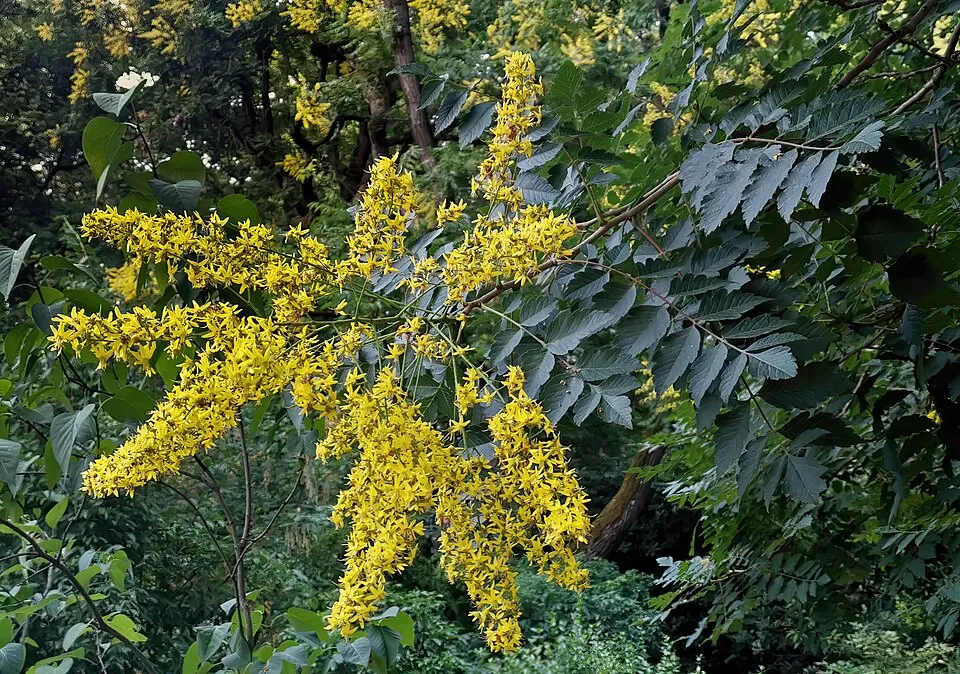
Koelreuteria paniculata, commonly known as the Golden Rain Tree, is an elegant deciduous tree belonging to the Sapindaceae family. Native to East Asia, particularly China and Korea, it is celebrated for its remarkable ornamental value. This medium-sized tree typically reaches heights of 20-40 feet (6-12 meters) with a comparable spread, forming an open, spreading canopy.
Its distinctive pinnately compound leaves unfurl with a reddish tint in spring, mature to a vibrant green in summer, and transform into a striking yellow in autumn, offering seasonal interest. The tree's most captivating feature is its profusion of bright yellow, panicle-like flowers that bloom in mid to late summer, a period when few other trees are in full display. These showy floral clusters are followed by unique, papery, bladder-like seed pods, resembling small lanterns, which mature from green to a striking pinkish-bronze and persist through fall and into winter.
Koelreuteria paniculata is highly adaptable, thriving in full sun and well-drained soils, exhibiting considerable drought tolerance once established. Its resilience to urban environments, including pollution, makes it a favored choice for street plantings, parks, and home gardens globally.
Trusted Scientific References
1. Authoritative external sources for Koelreuteria paniculata
1.1 Wikipedia — Koelreuteria paniculata
1.2 Kew POWO (Plants of the World Online)
1.3 PubMed — peer-reviewed research
1.4 NCBI Taxonomy Browser
1.5 GBIF — Global Biodiversity
1.6Koelreuteria Paniculata should be interpreted through verified botanical identity, practical care, and responsible safety language. This recovery note adds the missing context needed for a complete profile: match light to the plant's habit, use well-drained soil, water according to season, and avoid unsupported medicinal or edible claims. For publishing, the plant can be presented as a source-backed garden plant with clear care guidance, common problem diagnosis, and conservative safety wording.
1.1.Koelreuteria Paniculata — Key Features
- ✓Striking Mid — to-Late Summer Yellow Flowers — A unique bloom time.
- ✓Distinctive Papery Seed Pods — Lantern-like, maturing pinkish-bronze.
- ✓Ornamental Deciduous Tree — Provides year-round interest.
- ✓Adaptable to Urban Conditions — Tolerates pollution and various soils.
- ✓Drought Tolerant — Once established, requires minimal watering.
- ✓Fall Foliage — Leaves turn brilliant yellow in autumn.
- ✓Traditional Chinese Medicine Plant — Various parts have historical uses.
- ✓Rich in Bioactive Compounds — Flavonoids, saponins, tannins.
- ✓Low Maintenance — Requires minimal pruning and care.
- ✓Moderate Size — Ideal for gardens and street trees, typically 20-40 ft tall.
1.2.Koelreuteria Paniculata — Quick Summary
- ✓Golden Rain Tree (Koelreuteria paniculata) is an ornamental deciduous tree.
- ✓Known for its vibrant yellow flowers and papery, lantern-like seed pods.
- ✓Traditionally used in TCM for anti-inflammatory, analgesic, and ophthalmic purposes.
- ✓Rich in flavonoids, saponins, and tannins, contributing to its medicinal properties.
- ✓Internal use, especially of seeds, is highly cautioned due to potential toxicity.
- ✓Thrives in full sun, well-drained soil, and is drought-tolerant once established.
2.Koelreuteria Paniculata — Taxonomic Classification
3.Koelreuteria Paniculata — Botanical Stats
4.Koelreuteria Paniculata — Plant Morphology
5.Koelreuteria Paniculata — Habitat & Distribution
6.Koelreuteria Paniculata — Ethnobotanical Uses
7.Koelreuteria Paniculata — Bioactive Constituents
- ✓Flavonoids — Quercetin, kaempferol, luteolin, and their glycosides, known for their antioxidant, anti-inflammatory, and antiallergic activities.
- ✓Saponins — Triterpenoid saponins found predominantly in the seeds, contributing to expectorant and hemolytic properties; require careful dosage.
- ✓Tannins — Hydrolyzable and condensed tannins, responsible for astringent effects, potential antimicrobial action, and antioxidant capacity.
- ✓Triterpenoids — Compounds like ursolic acid and oleanolic acid derivatives, often associated with anti-inflammatory and hepatoprotective effects.
- ✓Phenolic Acids — Gallic acid, caffeic acid, and ferulic acid, providing significant antioxidant and anti-inflammatory benefits.
- ✓Sterols — Beta-sitosterol and stigmasterol, plant sterols with potential cholesterol-lowering and anti-inflammatory properties.
- ✓Carotenoids — Present in the yellow flowers, acting as antioxidants and precursors to Vitamin A.
- ✓Alkaloids — Minor amounts of various alkaloids, which may contribute to diverse pharmacological effects, though often in low concentrations.
- ✓Fatty Acids — Linoleic acid, oleic acid, and palmitic acid found in seed oil, providing nutritional and emollient properties.
- ✓Volatile Oils — Trace amounts of essential oil components, contributing to the plant's aroma and potential antimicrobial activity.
8.Koelreuteria Paniculata — Research Insights
- ✓Anti-inflammatory — Flavonoids and phenolic compounds in the flowers and bark may help reduce inflammation by inhibiting pro-inflammatory mediators.
- ✓Analgesic — Bark and leaves traditionally used topically for pain relief, possibly due to triterpenoids and saponins that may moderate pain reception.
- ✓Antioxidant — Rich in flavonoids like quercetin and kaempferol, which scavenge free radicals, protecting cells from oxidative damage.
- ✓Astringent — Tannins present in various parts contribute to an astringent action, useful for tightening tissues and reducing secretions.
- ✓Expectorant — Seeds contain saponins that may stimulate mucus secretion and aid in clearing respiratory passages, though internal use requires caution.
- ✓Ophthalmic Support — Traditionally applied as eye washes for conjunctivitis, suggesting potential soothing and anti-inflammatory effects on ocular tissues.
- ✓Wound Healing — External application of bark and leaf poultices for bruises and minor injuries may promote healing through anti-inflammatory and antimicrobial properties.
- ✓Gastrointestinal Aid — Historical use of bark in traditional Chinese medicine for dysentery hints at potential antimicrobial or anti-diarrheal effects.
- ✓Diuretic — Some traditional uses suggest a diuretic effect, aiding in fluid balance and kidney function.
- ✓Antimicrobial — Certain constituents may possess mild antimicrobial properties, contributing to its traditional use in treating infections.
8.1.Koelreuteria Paniculata — Reported Uses
9.Koelreuteria Paniculata — Adverse Effects
9.1.Koelreuteria Paniculata — Warnings
- ✓Gastrointestinal Upset — Internal consumption, especially of seeds, can cause nausea, vomiting, and diarrhea due to saponins.
- ✓Hemolytic Activity — Saponins in seeds can cause red blood cell breakdown if ingested in significant quantities, posing a risk of toxicity.
- ✓Skin Irritation — Topical application may cause contact dermatitis or allergic reactions in sensitive individuals.
- ✓Eye Irritation — Improperly prepared or contaminated eye washes can exacerbate eye conditions or introduce infection.
- ✓Allergic Reactions — Pollen from the flowers may trigger allergic rhinitis or asthma in susceptible individuals.
- ✓Liver/Kidney Toxicity — High doses or prolonged internal use without medical supervision may pose risks to liver and kidney function.
- ✓Drug Interactions — Potential interactions with medications, particularly those affecting blood clotting or gastrointestinal function, due to saponin content.
9.2.Koelreuteria Paniculata — Risk Assessment
- ✓Internal Use Caution — Due to saponin content, especially in seeds, internal use of Koelreuteria paniculata is generally discouraged without expert guidance.
- ✓Pregnancy & Lactation — Avoid use during pregnancy and lactation due to insufficient safety data and potential abortifacient or toxic effects.
- ✓Children — Not recommended for use in children due to potential toxicity and lack of pediatric safety studies.
- ✓Topical Patch Test — Always perform a patch test on a small skin area before widespread topical application to check for allergic reactions.
- ✓Consult Healthcare Professional — Essential to consult a qualified healthcare provider before using any part of this plant for medicinal purposes.
- ✓Avoid Ingestion of Seeds — Seeds are considered potentially toxic if ingested, due to high saponin levels.
- ✓Quality and Purity — Ensure any plant material used is from a reputable source and free from contaminants.
10.Koelreuteria Paniculata — Application Forms
- ✓Topical Poultice — Crushed bark or leaves mixed with a small amount of water to form a paste, applied externally to bruises, sprains, or minor swellings.
- ✓Eye Wash (External) — Infusion of dried flowers, carefully strained, used as a gentle external eye wash for irritation or conjunctivitis; ensure sterility.
- ✓Decoction (Bark/Leaves) — Bark or leaves boiled in water to extract compounds, then strained; for external applications like compresses for inflammatory conditions.
- ✓Infusion (Flowers) — Dried flowers steeped in hot water, similar to making tea, traditionally consumed or used topically after cooling and straining.
- ✓Seed Oil Extraction — Seeds can be pressed to yield oil, but internal use should be approached with extreme caution due to saponin content.
- ✓Tincture — Alcoholic extract of various plant parts, used internally with professional guidance, or externally as an antiseptic or anti-inflammatory rub.
- ✓Powdered Form — Dried and pulverized plant material, encapsulated or mixed with a carrier for specific traditional remedies, strictly under expert supervision.
- ✓Herbal Bath — Adding a strong decoction of bark or leaves to bathwater for broader skin conditions or general soothing effects.
11.Koelreuteria Paniculata — Growth Requirements
- ✓Sun Exposure — Thrives in full sun, requiring at least 6 hours of direct sunlight daily for optimal growth and flowering.
- ✓Soil Requirements — Prefers well-drained soil but is adaptable to a range of soil types, including sandy, loamy, and clayey, as long as waterlogging is avoided.
- ✓Watering — Drought-tolerant once established; young trees need regular watering to establish a strong root system.
- ✓Hardiness Zones — Hardy in USDA Zones 5 to 9, tolerating temperatures as low as -20°F (-29°C).
- ✓Pruning — Requires minimal pruning; primarily to remove dead, damaged, or poorly formed branches, best done in late winter or early spring.
- ✓Fertilization — Benefits from a balanced, slow-release fertilizer application once a year in early spring, especially in nutrient-poor soils.
- ✓Propagation — Can be propagated by seed, which often requires stratification, or by semi-hardwood cuttings.
Reviewed by the Flora Medical Global Botanical Review Panel
Multi-disciplinary editorial group · Botany · Ethnobotany · Herbal-medicine literature
Who reviewed this: This page was checked by the Flora Medical Global Botanical Review Panel — an in-house editorial group of botany graduates, ethnobotany researchers, and horticulture practitioners who collectively maintain our 7,000+ plant encyclopedia. Meet the team.
Our 4-step verification process
1. Taxonomic verification
Scientific names and synonyms cross-checked against Kew POWO, World Flora Online, and The Plant List.
2. Phytochemical & medicinal cross-reference
Active compounds, traditional uses, and reported activities are cross-referenced with PubMed, USDA Dr. Duke's database, and peer-reviewed ethnobotanical literature.
3. Conservation & distribution check
Distribution, ecology, and conservation status confirmed against GBIF occurrence records and the IUCN Red List.
4. Editorial & safety review
Every entry passes an editorial pass for clarity, originality, and safety notices (toxicity, contraindications, dosage caveats) before publication.
Last reviewed:
Important medical disclaimer: This content is for educational and research purposes only. It is not medical advice and is not a substitute for consultation with a licensed healthcare provider. Do not use any herb to self-treat a medical condition without professional guidance.
Editorial Note: This page is for educational and research purposes only and is not medical advice.
Written by: Flora Medical Global Editorial Team
Reviewed by: Flora Medical Global Botanical Review Panel
Last Updated: June 15, 2026





Koelreuteria Paniculata — Comments & Community Reviews
Rate this plant