
Medical Disclaimer: This content is for educational purposes only. It is not medical advice. Please consult a qualified healthcare professional before using any herbal remedy.
Safety Overview
1.Kuzu — Overview
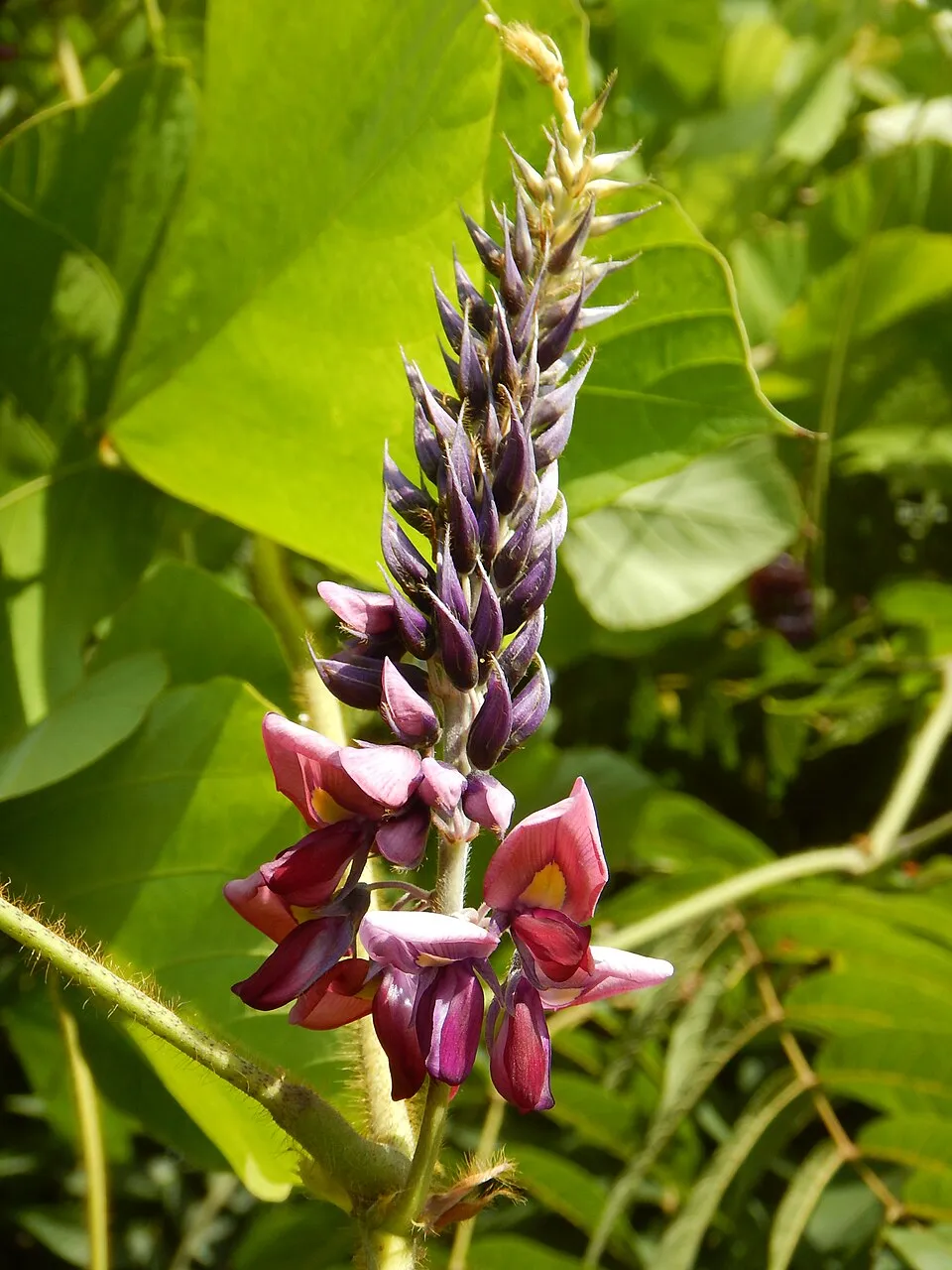
Kuzu, scientifically known as Pueraria montana (formerly Pueraria lobata), is a robust, perennial climbing vine belonging to the Fabaceae family, which also includes peas and beans. This vigorous plant can ascend to impressive heights of up to 3 meters, spreading rapidly across landscapes with its dense foliage. Its stems, which can range from hairy to nearly glabrous, are incredibly fibrous, contributing to its remarkable adaptability and resilience in diverse environments. A defining characteristic of kuzu is its large, trifoliate leaves, each measuring 10-20 cm in length. The individual leaflets are typically ovate to heart-shaped, featuring prominent venation and a smooth, appealing texture. During its blooming season, Pueraria montana produces striking racemes of flowers, often presenting in shades of lavender to pale purple, with a distinctive tubular shape that efficiently attracts a variety of pollinators, essential for its reproduction.
The plant's bark is generally rough, exhibiting brown to gray hues, and is covered by a thin but dense layer of fibrous material. Native to the verdant landscapes of East Asia, particularly Japan, China, and Korea, kuzu thrives in a range of habitats, from open forested areas to the edges of woodlands and disturbed grounds. Its ability to grow rapidly and colonize new territories has, however, led to its classification as an invasive species in certain non-native regions, notably the southeastern United States, where it can outcompete native flora. Taxonomically, its placement within the Fabaceae family highlights its nitrogen-fixing capabilities, a common trait among legumes that enriches the soil. Historically, the roots of Pueraria montana have been its most prized part. These large, starchy tuberous roots are traditionally harvested in winter, a period when they are richest in bioactive compounds.
Modern research has identified high concentrations of isoflavones within these roots, with puerarin, daidzin, and genistin being the most prominent. These phytochemicals are largely responsible for kuzu’s extensive medicinal efficacy and its long-standing use in traditional Asian medicine systems. Beyond its significant role in herbal remedies, kuzu starch, derived from the roots, has been a staple in East Asian cuisine for centuries, used as a thickener and a soothing foodstuff. The plant's dual utility as a medicinal herb and a culinary ingredient, coupled with ongoing scientific validation of its traditional applic ...[CURRENT TEXT EXISTS: 2806 chars]
1.1.Kuzu — Key Features
- ✓Vigorous, perennial climbing — Vigorous, perennial climbing vine.
- ✓Native to East — Native to East Asia (Japan, China, Korea).
- ✓Large, starchy, tuberous — Large, starchy, tuberous roots.
- ✓Trifoliate leaves with — Trifoliate leaves with prominent venation.
- ✓Produces racemes of — Produces racemes of lavender to pale purple flowers.
- ✓Rich in bioactive — Rich in bioactive isoflavones (puerarin, daidzin, genistin).
- ✓Key herb in — Key herb in Traditional Chinese Medicine (TCM).
- ✓Historically used as — Historically used as a food source (kuzu starch).
- ✓Demonstrated potential for — Demonstrated potential for reducing alcohol consumption.
- ✓Offers support for — Offers support for menopausal symptoms due to phytoestrogenic activity.
- ✓Possesses notable cardiovascular — Possesses notable cardiovascular protective benefits.
- ✓Exhibits strong antioxidant and anti — inflammatory properties.
- ✓Can be an invasive species in non — native regions.
- ✓Requires caution with — Requires caution with certain health conditions and medications.
- ✓Valued for its — Valued for its adaptability and resilient growth habit.
1.2.Kuzu — Snapshot Summary
- ✓Kuzu (Pueraria montana) is a vigorous climbing vine native to East Asia, known for its large, starchy roots.
- ✓Its roots are rich in potent isoflavones like puerarin, daidzin, and genistin, contributing to its medicinal efficacy.
- ✓Traditionally used in TCM for alcohol consumption reduction, cardiovascular health, and menopausal symptoms.
- ✓Exhibits significant anti-inflammatory, antioxidant, and adaptogenic properties.
- ✓The starch from its roots is also a valuable culinary ingredient.
- ✓Requires careful consideration for individuals with hormone-sensitive conditions, liver issues, and those on specific medications.
- ✓Modern research continues to validate many of its historical applications, making it a plant of significant interest.
- ✓Known for its rapid growth and can be invasive in non-native environments.
2.Kuzu — Systematic Position
3.Kuzu — Reference Facts
4.Kuzu — Plant Morphology
5.Kuzu — Where It Grows
6.Kuzu — Historical Applications
7.Kuzu — Bioactive Constituents
- ✓Isoflavones — Key compounds include puerarin, daidzin, and genistin, along with their aglycones daidzein and genistein. These are largely responsible for kuzu's phytoestrogenic, vasodilatory, and antioxidant activities, playing a crucial role in its cardiovascular and menopausal benefits.
- ✓Flavonoids — A broad category of polyphenolic compounds, including quercetin and kaempferol derivatives, which contribute significantly to kuzu's potent antioxidant, anti-inflammatory, and free-radical scavenging properties.
- ✓Saponins — Triterpenoid saponins, such as kudzusaponins A and B, are present and are associated with adaptogenic effects, immune modulation, and potential hypolipidemic activities.
- ✓Coumarins — Compounds like scopoletin can be found, contributing to kuzu's anti-inflammatory and potential anticoagulant effects, though often in lower concentrations compared to isoflavones.
- ✓Alkaloids — While typically in smaller amounts, various alkaloids may be present, exerting diverse pharmacological actions, often contributing to general tonic or protective effects.
- ✓Terpenoids — A group of diverse organic compounds, including triterpenes and sesquiterpenes, which contribute to the plant's aroma and possess anti-inflammatory and antimicrobial properties.
- ✓Phenolic Acids — Such as caffeic acid and ferulic acid, these compounds are strong antioxidants and contribute to the overall anti-inflammatory and protective capacity of kuzu.
- ✓Starches — The root is exceptionally rich in complex carbohydrates, primarily starch (kuzu starch), which provides its traditional culinary utility and demulcent properties for digestive health.
- ✓Glycosides — Many of the active compounds, including isoflavones, exist in glycosidic forms, which are more water-soluble and can be metabolized in the gut to their active aglycones.
- ✓Polysaccharides — Complex sugar molecules that contribute to immune-modulating effects and general tonic properties, supporting overall cellular health and resilience.
- ✓Sterols — Plant sterols like beta-sitosterol are present, which may contribute to cholesterol-lowering effects and anti-inflammatory actions.
- ✓Lignans — Though less prominent than isoflavones, lignans are phytoestrogens with antioxidant properties, contributing to the plant's overall health benefits.
- ✓Fatty Acids — Essential and non-essential fatty acids are present in the plant, supporting cellular structure and various metabolic functions.
8.Kuzu — What Research Suggests
- ✓Alcohol Consumption Reduction — Kuzu has shown promise in helping to reduce the intake of alcohol in heavy drinkers, possibly by influencing alcohol metabolism and brain neurotransmitters. It does not, however, appear to significantly diminish alcohol cravings or improve sobriety.
- ✓Menopausal Symptom Relief — The isoflavones present in kuzu, particularly daidzein and genistin, exhibit phytoestrogenic activity, which may help alleviate common menopausal symptoms such as hot flashes and night sweats by interacting with estrogen receptors.
- ✓Cardiovascular Health Support — Puerarin, a primary isoflavone in kuzu, is known for its vasodilatory effects, helping to improve blood flow and potentially reduce blood pressure. It may also offer protective benefits against myocardial ischemia and arrhythmias.
- ✓Anti-inflammatory Effects — Kuzu’s rich profile of flavonoids and isoflavones contributes to its potent anti-inflammatory properties, which can help mitigate inflammation throughout the body, providing relief for various inflammatory conditions.
- ✓Antioxidant Protection — The diverse array of phenolic compounds, including isoflavones and flavonoids, provides significant antioxidant activity. This helps combat oxidative stress by neutralizing free radicals, thereby protecting cells from damage and supporting overall cellular health.
- ✓Blood Sugar Regulation — Some research suggests that kuzu may possess hypoglycemic effects, potentially aiding in the management of blood sugar levels. This action could be beneficial for individuals seeking to support healthy glucose metabolism.
- ✓Digestive Health Enhancement — Traditionally, kuzu starch is used as a demulcent, offering soothing effects on the digestive tract. It can help alleviate symptoms of indigestion, diarrhea, and dysentery by forming a protective layer over irritated mucous membranes.
- ✓Liver Protective Properties — Certain compounds in kuzu have demonstrated hepatoprotective qualities in preclinical studies, suggesting a potential role in safeguarding liver health against various forms of damage.
- ✓Neuroprotective Potential — Puerarin, due to its ability to cross the blood-brain barrier, has been investigated for its neuroprotective effects, including potential benefits for cognitive function and recovery from ischemic brain injury.
- ✓Immune System Modulation — As an adaptogenic herb, kuzu is believed to support and balance the immune system, helping the body adapt to stress and maintain overall wellness. Its polysaccharides may play a role in this immune-modulating activity.
- ✓Pain and Ache Relief — In traditional medicine, kuzu has been used to alleviate various types of pain, including headaches, muscle aches, and stiffness, likely due to its anti-inflammatory and circulatory-enhancing properties.
- ✓Respiratory System Support — Kuzu is traditionally employed in remedies for common colds, fevers, and flu symptoms, often used to help reduce fever and relieve discomfort associated with respiratory infections.
- ✓Bone Health Maintenance — The estrogenic activity of kuzu’s isoflavones may contribute to supporting bone density, particularly in post-menopausal women, by potentially mitigating bone loss associated with declining estrogen levels.
- ✓Blood Lipid Management — Some studies indicate that kuzu may help in regulating blood lipid profiles, potentially contributing to lower cholesterol and triglyceride levels, which are beneficial for cardiovascular health.
- ✓Antimicrobial Activity — While not its primary use, some phytochemicals within Kuzu may exhibit mild antimicrobial properties, contributing to its traditional use in various supportive health remedies.
- ✓Mood and Stress Resilience — Kuzu has been traditionally used to help manage stress and anxiety, particularly in contexts related to alcohol withdrawal, possibly by modulating neurotransmitter activity in the brain.
8.1.Kuzu — Therapeutic Indications
9.Kuzu — Risk Profile
9.1.Kuzu — Possible Adverse Reactions
- ✓Gastrointestinal Upset — Some individuals may experience mild digestive disturbances such as stomach discomfort, nausea, or diarrhea, particularly with higher doses.
- ✓Dizziness and Headaches — Occasional reports include feelings of dizziness or mild headaches in sensitive individuals or when starting kuzu supplementation.
- ✓Allergic Reactions — Although rare, allergic reactions manifesting as skin rashes, itching, or hives can occur in susceptible individuals.
- ✓Liver Concerns — While generally well-tolerated, there are theoretical concerns that kuzu might exacerbate liver conditions, especially in individuals with pre-existing liver disease; use should be avoided in such cases.
- ✓Increased Bleeding Risk — Kuzu may possess anticoagulant properties, potentially slowing blood clotting. This increases the risk of bruising and bleeding, particularly for those with bleeding disorders or on blood-thinning medications.
- ✓Estrogenic Effects — Due to its phytoestrogenic compounds, kuzu may exhibit estrogen-like effects in the body, which can be problematic for hormone-sensitive conditions.
- ✓Drug Interactions — Kuzu can interact with several medications, including blood thinners, antidiabetic drugs, estrogen therapies, tamoxifen, methotrexate, and hepatotoxic drugs, potentially altering their effects or increasing side effects.
- ✓Vaginal Irritation — When used topically as a vaginal gel, kuzu may cause mild irritation, especially during the initial days of application.
9.2.Kuzu — Safety Overview
- ✓Pregnancy and Breastfeeding — Kuzu should be avoided during pregnancy and breastfeeding due to insufficient reliable information regarding its safety and potential hormonal effects.
- ✓Bleeding Disorders — Individuals with bleeding disorders or those undergoing surgery should avoid kuzu, as it may slow blood clotting and increase the risk of bleeding.
- ✓Hormone-Sensitive Conditions — Due to its estrogen-like activity, kuzu is contraindicated in individuals with hormone-sensitive conditions such as breast cancer, uterine cancer, ovarian cancer, endometriosis, or uterine fibroids.
- ✓Liver Disease — Individuals with liver disease or a history of liver conditions should exercise extreme caution or avoid kuzu, as it might potentially harm the liver.
- ✓Surgical Procedures — Discontinue kuzu use at least two weeks prior to any scheduled surgery due to its potential effects on blood sugar levels and blood clotting.
- ✓Medication Interactions — Consult a healthcare professional before using kuzu if you are taking medications, especially blood thinners, antidiabetic drugs, estrogen therapies, tamoxifen, methotrexate, or any hepatotoxic medications.
- ✓Dosage and Duration — There is no universally established appropriate dose for kuzu. It is possibly safe when used orally for up to 4 months or as a vaginal gel for up to 12 weeks; prolonged use should be discussed with a doctor.
- ✓Children and Infants — Kuzu is not recommended for use in children or infants due to a lack of safety data and potential hormonal effects.
- ✓Allergic Sensitivities — Individuals with known allergies to plants in the Fabaceae family should use kuzu with caution or avoid it.
10.Kuzu — How to Use
- ✓Decoction — The dried kuzu root is commonly prepared as a decoction by simmering in water for an extended period, allowing for the extraction of its active compounds for oral consumption.
- ✓Tincture — A concentrated liquid extract made by soaking kuzu root in alcohol, providing a potent form that can be taken in drops, often diluted in water.
- ✓Powdered Root — Dried kuzu root is ground into a fine powder, which can be encapsulated for convenient dosing or mixed into beverages, smoothies, or food.
- ✓Standardized Extracts — Available in capsule or tablet form, these extracts are standardized to contain specific concentrations of active isoflavones like puerarin, ensuring consistent potency.
- ✓Herbal Tea — The leaves and flowers of kuzu can be steeped to make a milder herbal tea, traditionally used for general wellness and respiratory support.
- ✓Topical Applications — Kuzu gel or poultices, derived from the root, can be applied externally to the skin for soothing irritation or for its purported anti-inflammatory effects.
- ✓Culinary Use (Kuzu Starch) — The purified starch from kuzu roots is used as a thickener in cooking, for soups, sauces, and desserts, and as a soothing, easily digestible food.
- ✓External Washes — A decoction of kuzu root can be used as an external wash for certain skin conditions or to soothe minor irritations.
- ✓Dosage Guidance — Always follow product label instructions or consult a qualified healthcare professional for appropriate dosing, as dosage can vary significantly based on the form and concentration of kuzu preparation.
11.Kuzu — Growing Guide
- ✓Climate — Kuzu thrives in tropical to subtropical climates, demonstrating resilience across a range of temperatures, though it prefers warm, humid conditions.
- ✓Soil Requirements — It adapts well to various soil types but flourishes in well-drained, fertile loams with a slightly acidic to neutral pH (6.0-7.0).
- ✓Sunlight Exposure — Full sun is ideal for robust growth and optimal production of medicinal compounds, though it can tolerate partial shade.
- ✓Propagation — Kuzu can be propagated effectively from seeds, root cuttings, or stem cuttings. Root cuttings are often preferred for establishing new plants with medicinal potential.
- ✓Watering Regimen — While drought-tolerant once established, young plants require regular and consistent watering to support vigorous growth and root development.
- ✓Fertilization — Moderate fertilization is beneficial, particularly with organic compost or a balanced slow-release fertilizer, to support its rapid growth and nutrient demands.
- ✓Support Structure — As a vigorous climbing vine, kuzu requires a strong support structure such as trellises, fences, or trees to facilitate its upward growth and spread.
- ✓Pest and Disease Management — Kuzu is generally robust, but can be susceptible to certain fungal diseases in overly wet conditions. Regular inspection and good air circulation help prevent issues.
- ✓Harvesting — The large, starchy roots, which contain the highest concentrations of medicinal isoflavones, are typically harvested in the late autumn or winter months after the foliage has died back.
- ✓Invasive Species Awareness — In non-native regions, it is crucial to cultivate kuzu responsibly, implementing containment strategies to prevent its invasive spread into natural ecosystems.
Reviewed by the Flora Medical Global Botanical Review Panel
Multi-disciplinary editorial group · Botany · Ethnobotany · Herbal-medicine literature
Who reviewed this: This page was checked by the Flora Medical Global Botanical Review Panel — an in-house editorial group of botany graduates, ethnobotany researchers, and horticulture practitioners who collectively maintain our 7,000+ plant encyclopedia. Meet the team.
Our 4-step verification process
1. Taxonomic verification
Scientific names and synonyms cross-checked against Kew POWO, World Flora Online, and The Plant List.
2. Phytochemical & medicinal cross-reference
Active compounds, traditional uses, and reported activities are cross-referenced with PubMed, USDA Dr. Duke's database, and peer-reviewed ethnobotanical literature.
3. Conservation & distribution check
Distribution, ecology, and conservation status confirmed against GBIF occurrence records and the IUCN Red List.
4. Editorial & safety review
Every entry passes an editorial pass for clarity, originality, and safety notices (toxicity, contraindications, dosage caveats) before publication.
Last reviewed:
Important medical disclaimer: This content is for educational and research purposes only. It is not medical advice and is not a substitute for consultation with a licensed healthcare provider. Do not use any herb to self-treat a medical condition without professional guidance.
Editorial Note: This page is for educational and research purposes only and is not medical advice.
Written by: Flora Medical Global Editorial Team
Reviewed by: Flora Medical Global Botanical Review Panel
Last Updated: June 15, 2026






Kuzu — Comments & Community Reviews
Rate this plant