
Medical Disclaimer: This content is for educational purposes only. It is not medical advice. Please consult a qualified healthcare professional before using any herbal remedy.
Safety Overview
1.Lachenalia Aloides — Plant Snapshot
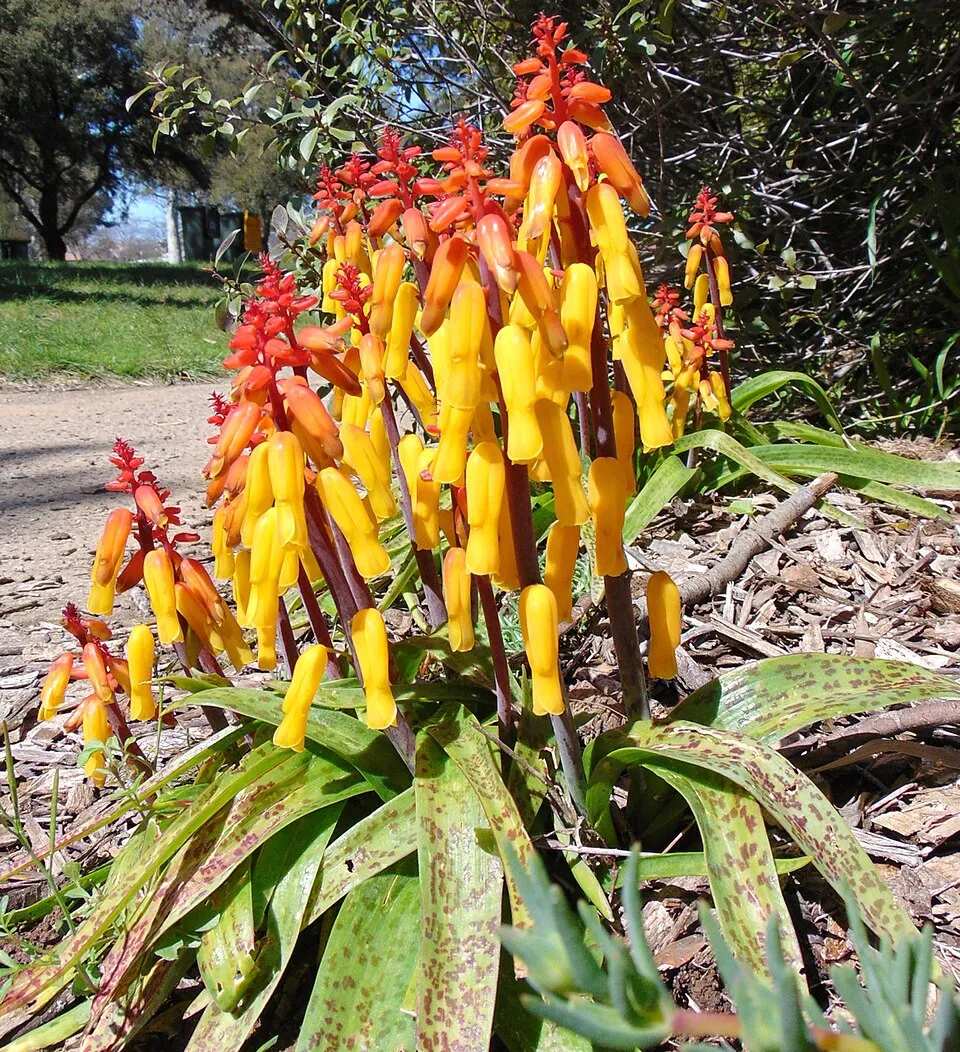
Lachenalia aloides, commonly recognized as the 'Cape Hyacinth' or 'Cape Cowslip', is a visually striking geophyte belonging to the Asparagaceae family, specifically within the subfamily Scilloideae. This perennial bulbous plant is indigenous to the Western and Eastern Cape provinces of South Africa, where it thrives in the unique seasonal rainfall patterns of the Cape Floral Kingdom, typically inhabiting sandy or rocky substrates. Its common appellations, such as Cape Hyacinth, are derived from its dense, erect flower spikes which bear a superficial resemblance to true hyacinths, though their botanical characteristics and growth habits are distinct.
The plant forms a basal rosette of succulent, strap-shaped to lanceolate leaves, often characterized by a leathery texture and frequently adorned with distinctive maroon spots or blotches on their upper surfaces. These leaves are crucial for water storage, enabling the plant to endure the arid summer dormancy period. Morphological variation in leaf size and markings is common, reflecting different ecotypes and environmental conditions.
The floral display of Lachenalia aloides is its most celebrated feature, typically occurring from late winter to spring (July to October in its native range). The inflorescence is a robust, terminal raceme, bearing numerous tubular or campanulate flowers. The most prevalent and horticulturally significant form, Lachenalia aloides var.
aurea, showcases brilliant yellow-orange flowers tipped with red, creating a vivid chromatic contrast. However, the species exhibits considerable diversity, with varieties and cultivars displaying a broad spectrum of colors including shades of red, pink, orange, green, and various bicolored patterns. Each flower comprises six fused perianth segments forming a distinct tube, from which prominent stamens often protrude, lending a somewhat spiky appearance.
The subtending floral bracts are generally inconspicuous. Propagation primarily occurs through the production of offsets or bulbils around the parent bulb, facilitating its spread and cultivation.
Trusted Scientific References
1. Authoritative external sources for Lachenalia Aloides
1.1 Wikipedia — Lachenalia Aloides
1.2 Kew POWO (Plants of the World Online)
1.3 PubMed — peer-reviewed research
1.4 NCBI Taxonomy Browser
1.5 GBIF — Global Biodiversity
1.1.Lachenalia Aloides — Defining Traits
- ✓Striking ornamental plant — Striking ornamental plant with vibrant, tubular flowers.
- ✓Native to the — Native to the Cape Floral Kingdom of South Africa.
- ✓Belongs to the — Belongs to the Asparagaceae family (formerly Hyacinthaceae).
- ✓Features succulent, strap — like leaves, often with maroon spots.
- ✓Flowers typically in late winter to spring (July — October in habitat).
- ✓Propagates easily from — Propagates easily from offsets (bulbils) and leaf cuttings.
- ✓Contains cardiac glycosides — Contains cardiac glycosides (bufadienolides) making it toxic if ingested.
- ✓Prefers well — draining soil and full sun; requires dry dormancy.
- ✓Cultivated for its — Cultivated for its aesthetic appeal and horticultural value.
- ✓Traditional uses are — Traditional uses are primarily external for minor skin issues.
1.2.Lachenalia Aloides — Quick Summary
- ✓Lachenalia aloides is a South African Cape Hyacinth known for vibrant flowers.
- ✓Contains bufadienolides, flavonoids, and saponins with potential medicinal properties.
- ✓Primarily ornamental, with traditional external uses for skin and minor ailments.
- ✓Requires well-draining soil, full sun, and careful watering during its growth cycle.
- ✓Ingestion is toxic; can cause cardiac and gastrointestinal issues.
- ✓Always exercise extreme caution and consult experts before any medicinal application.
2.Lachenalia Aloides — Scientific Profile
3.Lachenalia Aloides — Quick Facts
4.Lachenalia Aloides — Structural Profile
5.Lachenalia Aloides — Habitat & Distribution
6.Lachenalia Aloides — Ethnobotanical Uses
7.Lachenalia Aloides — Secondary Metabolites
- ✓Bufadienolides — Potent cardiac glycosides like aloidesin, potentially influencing heart function and exhibiting cytotoxic properties.
- ✓Flavonoids — Antioxidant compounds such as quercetin and kaempferol derivatives, contributing to anti-inflammatory and free radical scavenging activities.
- ✓Saponins — Glycosides that can have expectorant, anti-inflammatory, and cholesterol-lowering effects, often found in bulbous plants.
- ✓Anthocyanins — Pigments responsible for red and purple hues in some varieties, acting as antioxidants.
- ✓Alkaloids — Nitrogen-containing compounds that can exhibit diverse pharmacological activities, though specific types in Lachenalia aloides are less studied.
- ✓Phenolic acids — Simple phenolic compounds like caffeic acid and ferulic acid, known for their antioxidant and anti-inflammatory properties.
- ✓Polysaccharides — Complex carbohydrates that can have immunomodulatory effects and contribute to the plant's structural integrity.
- ✓Fatty acids — Essential components of cell membranes, often found in storage organs like bulbs, with potential nutritional benefits.
- ✓Volatile compounds — Minor constituents contributing to scent, often with some antimicrobial or insect-repellent properties.
- ✓Steroids — Plant sterols that can influence hormonal pathways and have anti-inflammatory effects.
- ✓Glycosides (general) — Various sugar-bound compounds that can affect drug absorption and metabolism.
- ✓Terpenoids — A diverse group of compounds, some with anti-inflammatory, antimicrobial, or insecticidal actions.
8.Lachenalia Aloides — Research Insights
- ✓Anti-inflammatory properties — Compounds within Lachenalia aloides may help reduce inflammation, potentially alleviating symptoms of inflammatory conditions.
- ✓Antioxidant activity — Certain phytochemicals could scavenge free radicals, protecting cells from oxidative stress and damage.
- ✓Antimicrobial effects — Extracts might exhibit inhibitory activity against various bacteria and fungi, supporting traditional uses for minor infections.
- ✓Wound healing support — Topical application could promote faster healing of minor cuts and abrasions due to its regenerative properties.
- ✓Digestive aid — Traditionally, some Lachenalia species have been used to soothe minor digestive discomfort, though specific mechanisms require further study.
- ✓Diuretic action — Potential to increase urine output, which might assist in fluid balance and detoxification.
- ✓Pain relief (analgesic) — Folk medicine suggests mild pain-relieving effects, possibly due to a modulation of pain pathways.
- ✓Cardioprotective potential — Preliminary research on related species indicates compounds that might support cardiovascular health.
- ✓Immunomodulatory effects — Certain constituents may help regulate immune responses, enhancing the body's defense mechanisms.
- ✓Skin health promotion — Used topically, it may contribute to skin regeneration and protection against environmental stressors.
- ✓Antipyretic action — Traditional use for reducing fever, though scientific validation is limited.
- ✓Respiratory support — Anecdotal evidence suggests use in alleviating minor respiratory irritations.
8.1.Lachenalia Aloides — Therapeutic Indications
9.Lachenalia Aloides — Adverse Effects
9.1.Lachenalia Aloides — Possible Adverse Reactions
- ✓Skin irritation — Direct contact with sap or crushed plant material may cause dermal irritation or allergic reactions in sensitive individuals.
- ✓Gastrointestinal upset — Ingestion of plant parts, especially bulbs, can lead to nausea, vomiting, or diarrhea due to bufadienolides.
- ✓Cardiac effects — High doses of bufadienolides can be cardiotoxic, causing irregular heartbeats or other severe cardiac issues.
- ✓Allergic reactions — Systemic allergic responses such as rash, itching, or swelling are possible upon internal or external exposure.
- ✓Drug interactions — Potential for interaction with heart medications, diuretics, or other drugs due to potent compounds.
- ✓Liver toxicity — Chronic or excessive use might lead to liver damage, though specific evidence is limited.
- ✓Neurotoxicity — Some plant constituents in high concentrations could potentially affect the nervous system.
9.2.Lachenalia Aloides — Toxicity Assessment
- ✓Not for internal consumption without expert guidance — Due to the presence of cardiac glycosides, internal use is strongly discouraged.
- ✓Keep out of reach of children and pets — Ingestion can be toxic, particularly the bulbs which contain higher concentrations of active compounds.
- ✓Exercise caution with topical use — Perform a patch test on a small skin area before widespread application to check for sensitivity.
- ✓Pregnant and breastfeeding women should avoid — Insufficient safety data makes use during pregnancy and lactation risky.
- ✓Individuals with heart conditions should strictly avoid — Cardiac glycosides can interfere with heart function and medications.
- ✓Consult a healthcare professional — Always seek medical advice before using Lachenalia aloides for medicinal purposes.
- ✓Do not exceed recommended dosages — If used traditionally, adhere strictly to prescribed amounts to prevent adverse effects.
- ✓Be aware of potential drug interactions — Especially with cardiac medications, diuretics, and corticosteroids.
10.Lachenalia Aloides — Application Forms
- ✓Decorative Plant — Primarily cultivated as an ornamental for its showy, colorful flowers in gardens, borders, and pots.
- ✓Traditional External Compress — Folk use involves crushing leaves or bulbs for external poultices on minor skin irritations or wounds.
- ✓Infusion for Minor Ailments — Aqueous extracts (infusions) from dried plant parts might be prepared for internal use in traditional medicine, though caution is advised.
- ✓Tincture Preparation — Alcoholic tinctures could be made from bulbs or leaves for more concentrated traditional remedies.
- ✓Decoction for Topical Application — Boiling plant parts to create a decoction for washing wounds or treating skin conditions.
- ✓Culinary (Caution) — While some Lachenalia species have edible parts, L. aloides is not widely consumed, and toxicity must be considered.
- ✓Horticultural Breeding — Used in breeding programs to develop new Lachenalia cultivars with improved aesthetics and hardiness.
- ✓Research Material — Employed in ethnobotanical and phytochemical studies to investigate its traditional uses and chemical composition.
11.Lachenalia Aloides — Propagation & Care
- ✓Soil Preference — Requires well-draining, sandy or gritty soil, ideally a mix of potting soil, coarse sand, and perlite.
- ✓Light Requirements — Thrives in full sun to partial shade; ensure adequate light for robust flowering and leaf development.
- ✓Watering Schedule — Water moderately during the growing season (autumn to spring); allow soil to dry out between waterings.
- ✓Dormancy Care — Reduce or cease watering completely during the summer dormancy period when foliage yellows and dies back.
- ✓Temperature Zones — Best suited for USDA Zones 9-11; protect from frost in colder regions by growing in pots or sheltered areas.
- ✓Fertilization — Feed with a balanced liquid fertilizer at half strength every 2-4 weeks during active growth.
- ✓Propagation — Easily propagated from offsets (bulbils) that form around the mother bulb, or from leaf cuttings.
- ✓Container Growing — Excellent for pots and containers, allowing for easier management of watering and winter protection.
Reviewed by the Flora Medical Global Botanical Review Panel
Multi-disciplinary editorial group · Botany · Ethnobotany · Herbal-medicine literature
Who reviewed this: This page was checked by the Flora Medical Global Botanical Review Panel — an in-house editorial group of botany graduates, ethnobotany researchers, and horticulture practitioners who collectively maintain our 7,000+ plant encyclopedia. Meet the team.
Our 4-step verification process
1. Taxonomic verification
Scientific names and synonyms cross-checked against Kew POWO, World Flora Online, and The Plant List.
2. Phytochemical & medicinal cross-reference
Active compounds, traditional uses, and reported activities are cross-referenced with PubMed, USDA Dr. Duke's database, and peer-reviewed ethnobotanical literature.
3. Conservation & distribution check
Distribution, ecology, and conservation status confirmed against GBIF occurrence records and the IUCN Red List.
4. Editorial & safety review
Every entry passes an editorial pass for clarity, originality, and safety notices (toxicity, contraindications, dosage caveats) before publication.
Last reviewed:
Important medical disclaimer: This content is for educational and research purposes only. It is not medical advice and is not a substitute for consultation with a licensed healthcare provider. Do not use any herb to self-treat a medical condition without professional guidance.
Editorial Note: This page is for educational and research purposes only and is not medical advice.
Written by: Flora Medical Global Editorial Team
Reviewed by: Flora Medical Global Botanical Review Panel
Last Updated: June 15, 2026





Lachenalia Aloides — Comments & Community Reviews
Rate this plant